Eight Races to Determine Control of the Upper Chamber
By: Andrew Nick, Mason Votes Contributor

Control of both chambers of Congress is on the ballot in the upcoming 2026 midterm elections, with all 435 House of Representatives seats and 35 Senate seats up for grabs on November 3rd. With just one week to go, many pundits agree that Democrats will retake power in the House. But control of the Senate is proving more difficult to predict.
The U.S. Senate—once thought of as a safe bet for Republicans to retain their slim majority—has become more and more competitive for Democrats over the past year. Eight states will determine who controls the upper chamber: Georgia, North Carolina, Michigan, Maine, Ohio, New Hampshire, Alaska, and Iowa. All but two of those races are incumbent Senators running for re-election, meaning voters get to decide to renew their contract or elect someone else.
Overall, the current 53-47 Republican Senate majority is going to be tested to see if it can withstand the usual midterm "shellacking" of second term presidents.
Before breaking up the elections into four categories—leaning Democrat, toss ups, leaning Republican, and Democrat reaches—one has to understand the underlying issues facing voters: high costs on everything from gas to groceries to homes, the ongoing war in Iran, and the unpopularity of President Trump.
Democrats will be attempting to convince voters that bringing a check on the president, lowering costs, and stopping the war will improve their lives, while Republicans will be trying to sell the idea that time will lower costs and their opponents do not have a clear vision. The ultimate judge—the voters—will render their verdict on November 3rd.
Click on each state below to learn more the race!
Likely Democrat Wins:
The Candidates:
- Democrat Jon Ossoff (incumbent) VS. Republican Mike Collins
Ossoff: Mentored by the late Congressman John Lewis and raised in the Atlanta metro area, Ossoff was a legislative staffer for Representative Hank Johnson and later CEO of media company Insight TWI. Elected in 2020 in a race against a sitting incumbent, Ossoff is the youngest senator in the upper chamber at 39. He sits on the Judiciary, Appropriations, Rules and Administration, and Intelligence Committees.
Collins: Currently the representative of Georgia’s 10th Congressional District, he is a former president of his local Chamber of Commerce and a board member and chairman of a large Georgia credit union. He currently serves on the House Committees on Natural Resources, Science, Space and Technology, and Transportation and Infrastructure.
Notes from the campaign:
- Spending money in constituent services, Senator Ossoff has invested in his ability to deliver results to constituents
- Collins is underfunded by donations and the national party (the GOP is spending money to defend incumbents in other states)
- Ossoff gained momentum with viral social media posts and speeches attacking the president, creating rumors about his intentions to become a presidential candidate in 2028
- Ossoff has been tying Collins to the president, focusing on the cost of living and attacking Trump, leaving Collins struggling to gain traction with his messaging
Most likely to win: Polling has shown Senator Ossoff comfortably in the lead
The Candidates:
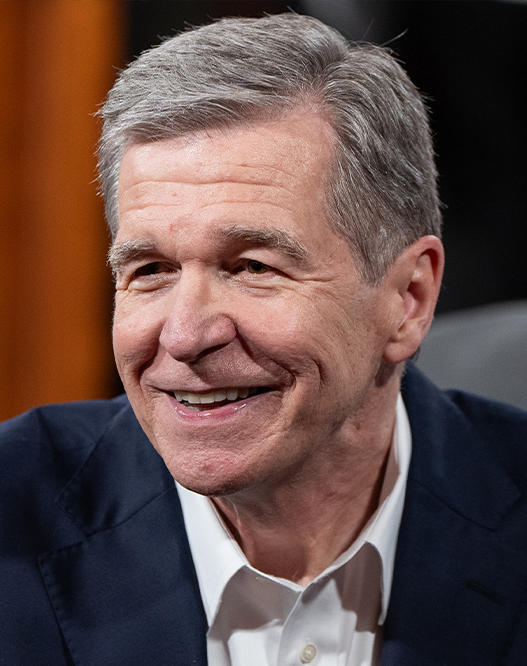
- Democrat Roy Cooper VS. Republican Michael Whatley
Cooper: The 75th Governor of North Carolina from 2017 to 2025, Cooper has spent decades in North Carolina politics ranging from sixteen years as attorney general and fourteen years in the state general assembly. During his time as governor, Medicaid was expanded, teachers received a pay raise, and he oversaw a period of 640,000 jobs added to the state economy. Leaving office with 52% approval rating, Cooper is a popular figure in North Carolina.
Whatley: Coming up the ranks through party leadership, Michael Whatley was chair of the North Carolina Republican Party from 2019 to 2024 and then chairman of the Republican National Convention from 2024 to 2025, raising money and carrying out the message of then candidate President Trump. Prior to joining politics, Whatley had a career as vice president for Consumer Energy Alliance. Following the election and retirement of Senator Tillis, Whatley won every county in the primary with 64% of the vote.
Notes from the campaign:
- Democrats received their "dream candidate" in Cooper, a popular figure who has won statewide elections before
- Current Republican Senator and longtime incumbent Tom Tillis decided not to run for re-election after catching the ire of President Trump after voting against the “Big Beautiful Bill” in 2024
- Running in a swing state during most presidential elections, Whatley has been finding difficulty generating voter excitement due to his political proximity to President Trump
- In attacking Cooper, Whatley has tied the former governor to criminals who were released during COVID-19
- Recently, GOP fundraising has moved away from Whatley to protect incumbents in other states
- Most polls have found Cooper in the lead
Most likely to win: Roy Cooper
Toss-Ups:
The Candidates:
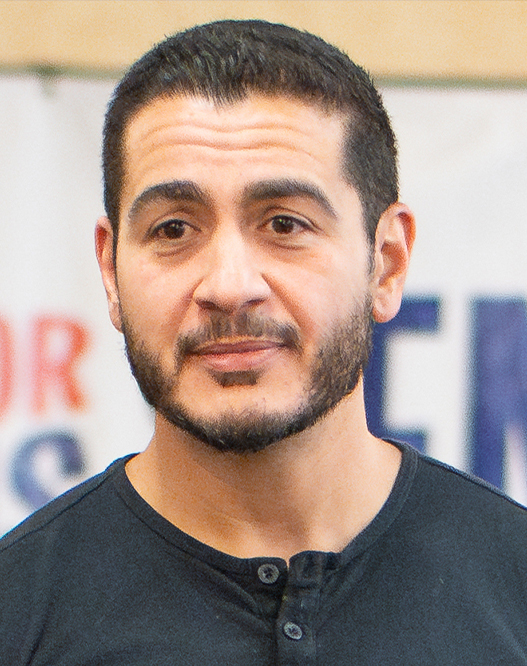
- Democrat Dr. Abdul El-Sayed VS. Republican Mike Rogers
El-Sayed: A Rhodes Scholar from the University of Michigan, El-Sayed is an epidemiologist and former executive director of the Detroit Health Department. Before that he was the director of the Wayne County Department of Health, Human & Veterans Services from 2023 to 2025. Running as an outsider in the race, he gained endorsements from progressive Democrats, defeating Congresswoman Haley Stevens narrowly in the primary to win the Democratic nomination.
Rogers: A former member of the House of Representatives from 2001 to 2015 for Michigan’s 8th Congressional District, he is a former FBI officer and Michigan State Senator. Running for the U.S. Senate in 2020, Rogers was defeated by now Senator Elissa Slotkin by fewer than 20,000 votes despite President Trump winning Michigan in 2024.
Notes from the campaign:
- The recent trade war with Canada has increased costs and trade for Michigan’s #1 trading partner
- After a close primary, El-Sayed needs to repair ties with Haley Steven’s base and voters in Detroit
- Rogers said recently: “The war with Iran needs to end, and end quickly”
- Michigan voted for Trump in 2016 and 2024, but in 2020 voted for Joe Biden, proving it to be an industrial swing state
- Trump’s tariffs have affected the auto industry
- Polls show a close race
Most likely to win: Toss-up, would predict El-Sayed wins
The Candidates:
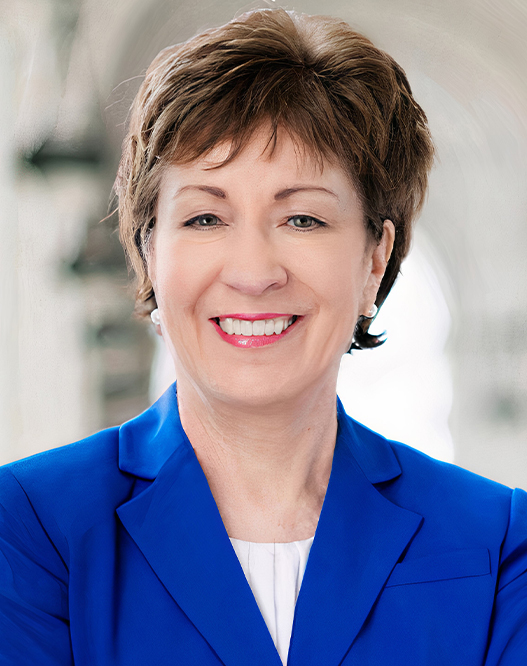
- Democrat Troy Jackson VS. Republican Susan Collins (incumbent)
Jackson: Former Maine Senator from 2008 to 2014 and again from 2016 to 2024, including as Senate president from 2018 to 2024. A fifth-generation logger, Jackson entered politics as a Republican before becoming an Independent and later a Democrat. He previously served in the Maine House of Representatives. Before his U.S. Senate bid, he ran for governor in 2018, finishing third in the Democratic primary with about 29% of first-choice votes (ultimately eliminated in the third round of ranked-choice voting). After Graham Platner dropped out, Jackson won the Maine Democratic Convention to clinch the nomination.
Collins: First elected to the U.S. Senate in 1996, Collins is asking the voters to send her back to Washington for her sixth term. Before entering the Senate, she worked for Senator William Cohen, served as Maine’s Commissioner of Professional and Financial Regulation, and later directed the Small Business Administration’s New England Regional Office. She is the chairwoman of the Appropriations Committee, and also sits on the Health, Education, Labor, and Pensions Committee.
Notes from the campaign:
- Democrats had to replace their candidate and consolidate support for Jackson
- Senator Collins voted for Justice Brett Kavanaugh, who recently voted to overturn Roe V. Wade
- Collins' most powerful play: sitting as chair in the U.S. Senate Appropriations Committee, she has brought home millions in federal investments for Maine
- On October 8th, the candidates had a fierce debate over topics including Iran, abortion, and local politics; each performed well with no political "knockout" landing
Most likely to win: Toss-up, Jackson is running in a favorable environment, but Collins has been counted out before and still won
The Candidates:
- Democrat James Talarico VS. Republican Ken Paxton
Talarico: From Round Rock, Texas, Talarico graduated from the University of Texas at Austin and is serving his fourth term in the Texas State House of Representatives. He is a former middle school teacher, executive director of an education non-profit named Reasoning Mind, and has started to pursue a Master's of Divinity degree at Austin Presbyterian Theological Seminary.
Paxton: Currently serving as Texas attorney general since 2015. He previously served in the Texas House of Representatives and Texas Senate from 2003 to 2015. His tenure as attorney general has been marked by political prominence and legal scandals, including his 2023 impeachment by the Texas House on allegations of abuse of office (voted 121-23), misuse of public resources, retaliation against whistleblowers, and other misconduct. He was acquitted by the Texas Senate. Paxton was also indicted in 2015 on state securities-fraud charges related to conduct before he became attorney general; the charges were later dropped as part of a pretrial agreement.
Notes from the campaign:
- Talarico has raised millions more than Paxton, with President Trump and Senate Majority Leader John Thune’s super PAC having to spend $100 million on ads for their candidate
- When Talarico defeated Rep. Jasmine Crockett in the Democratic primary, he demonstrated his Spanish speaking ability to attract Hispanic support
- Republicans held a rare midterm convention in Texas on September 9-10, which drew criticism for conflicting with NFL games on television
- Paxton has claimed the convention and the president have hurt his numbers
- A debate has not taken place, with Paxton refusing, but President Trump called for them to debate
Most likely to win: Toss-up, Democrats have never had a better chance to win Texas, but it all depends on how motivated Republican voters are to get out and vote for Paxton
The Candidates:
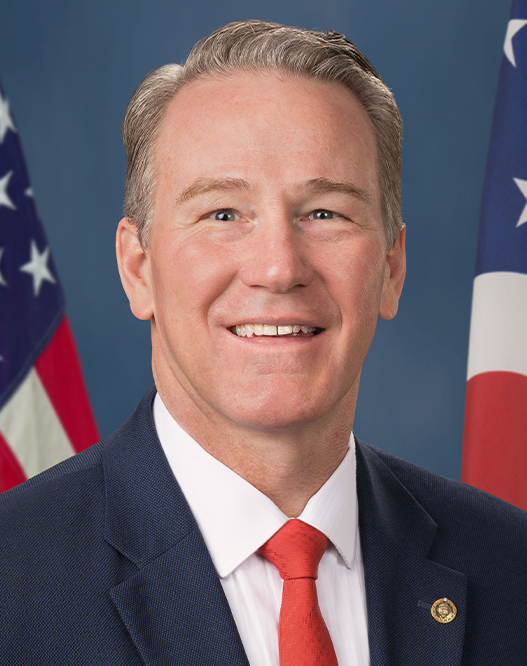
- Democrat Sherrod Brown VS. Republican Jon Husted (incumbent)
Brown: Defeated in 2024 seeking a fourth term in the U.S. Senate, Brown is running to return to Washington. He lost by 3.5% to Bernie Moreno when President Trump won Ohio by 11.2%, vastly outperforming the top of the ticket. He has been a fixture in the Buckeye State: a former state representative in the Ohio House, secretary of state, member of the U.S. House of Representatives, and first elected U.S. Senator in 2006. Brown was chairman of the Senate Banking Committee from 2021 to 2025, an economic populist, and largely outspoken for workers and unions.
Husted: Current U.S. Senator since 2025 when Governor Mike Dewine appointed him to fill the remainder of Vice President J.D. Vance’s senate term. Husted has also been a fixture in Ohio politics: former lieutenant governor, secretary of state, member of the Ohio House and Senate, and Speaker of the Ohio House. Prior to politics, Husted was Vice President of Business and Economic Development at the Dayton Area Chamber of Commerce.
Notes from the campaign:
- Ohio has one of the most competitive governors races, narrowing margins on the upper ballot and necessitating millions in ad spending from each party to promote their candidates
- Due to Brown’s long career in Ohio politics, some voters do not know that Husted is the incumbent
- Husted has been tied to data centers repeatedly—an issue proving to be one of the most unpopular in this cycle—despite his bill in Congress, The Ratepayer Protection Act, aimed at curbing electricity costs that failed to pass
- Crypto companies have spent millions against Brown, a critic of the industry
- There is no official Senate debate between the candidates
- Polls have been back and forth, with Brown in the lead currently
Most likely to win: Toss-up, with Brown slightly ahead of Husted who is struggling with name recognition and data center unpopularity
The Candidates:
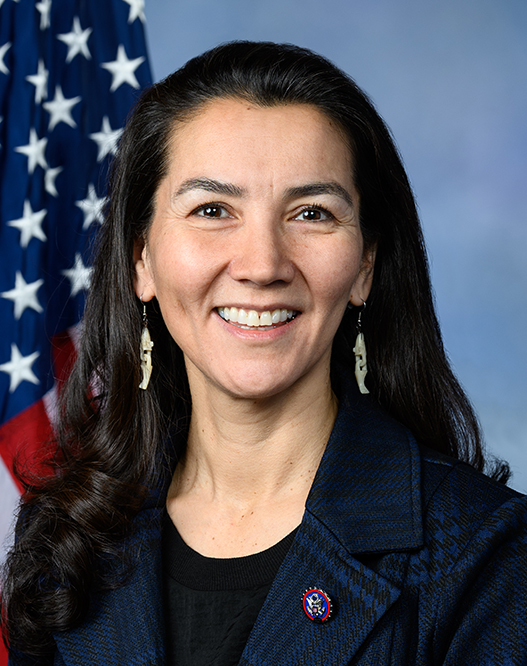
- Democrat Mary Peltola VS. Republican Dan Sullivan (incumbent)
Peltola: A native Alaskan from Kuskokwim, Peltola was an intern in the Alaska Legislature before becoming a member of the Alaska House of Representatives, manager of community development and sustainability for the Donlin Creek Mine, member of the Bethel City Council, and later a judge on the Orutsararmiut Native Council's tribal court. Her deep Alaskan background helped her win Rep. Don Young’s open seat for the U.S. House of Representatives in 2022, winning the special election and general election, but eventually losing in 2024 to Nick Begich III.
Sullivan: Elected in 2014 after defeating incumbent Mark Begich, Sullivan is seeking his third term in the U.S. Senate. Raised in Ohio, he attended Harvard and Georgetown before joining the U.S. Marine Corps. He later clerked for judges in Alaska and became an attorney in 2000 in the Last Frontier. Before being elected to the Senate, Sullivan served in the George W. Bush administration as chief of staff at the National Economic Council, on the National Security Council, and as Assistant Secretary of State for Economic and Business Affairs.
Notes from the campaign:
- Democrats received their "dream candidate" in Peltola, a native Alaskan with a strong resume
- GOP super PACs have spent over $18 million propping up Sullivan, with President Trump and Vice President Vance coming in to support the incumbent
- Peltola has faced reports of poor treatments of staff while serving in the House of Representatives
- Due to her native roots and strong fundraising, Peltola has enjoyed a steady rise up the ranks of Alaska politics
- Diesel and tariff costs, along with local Alaska issues such as oil and fishing, are the main topics of contention
- Incumbent Senator Dan S. Sullivan is also facing an independent challenger named Dan J. Sullivan, creating confusion on the ballot
- Alaska has a ranked choice voting system
Most likely to win: Toss-up, but due to ranked choice voting and the high likelihood of Democrats winning the governor’s mansion, Peltola has an advantage
The Candidates:
- Democrat Josh Turek VS. Republican Ashley Hinson
Turek: An Olympian for wheelchair basketball, Turek won two Summer Paralympics gold medals in 2016 and 2020, and has represented the Iowa House of Representatives from the 20th district since 2022. Despite President Trump winning the 20th district, Turek has continued to win in the district. He is in the NWBA's Hall of Fame since 2023 and worked for NuMotion, a company that provides mobility equipment.
Hinson: Since 2020, Hinson has served as the representative of Iowa’s 2nd Congressional District, defeating an incumbent to win her race. Prior to politics, Hinson was a journalist, winning two regional Emmy Awards. From 2017 to 2021, she was a member of the Iowa State House of Representatives. She served on the powerful House of Appropriations Committee.
Notes from the campaign:
- President Obama cut an ad for Turek, hoping that his former 2008 and 2012 wins in Iowa will rub off
- Hinson has called for the war in Iran to end
- The Iowa governors race is also on the ballot in 2026, with Democrat Rob Sand leading Republican Zach Lahn
- On October 7th, Hinson and Turek debated, with both accusing the other of being extremists, while both claiming to be moderates
Most likely to win: Hinson leads Turek in most polling
The Candidates:
- Democrat Chris Pappas VS. Republican John Sununu
Pappas: Current Representative from New Hampshire’s 1st Congressional District since 2019. He is the first openly gay man to represent New Hampshire in Congress. His career includes being in the New Hampshire House of Representatives, treasurer for Hillsborough County, and a member of the New Hampshire Executive Council, which advises the governor on all matters.
Sununu: Coming from a famous political family, his father and brother were governors, he himself was a former U.S. Senator from 2003 to 2009 before losing re-election to Democrat Jeanne Shaheen. After losing his seat, Sununu joined one of the largest lobbying firms in Washington, D.C., Akin Gump. He is also a former member of the U.S. House of Representatives from 1997 to 2003.
Notes from the campaign:
- The Sununu dynasty is strong in New Hampshire, known as moderate Republicans, John Sununu not running politically in line with MAGA policies
- NH Governor Kelly Ayotte, a Republican, is running for re-election and likely to win, increasing the likelihood of a rare split ticket
- Pappas does not have a strong national profile and is running a campaign with events across the state, unlike Sununu’s high national press coverage
- Polling has Pappas consistently in the lead
Most likely to win: Pappas is the favorite
_____________________________________________________________
Slider & rotunda photos by: Andrew Nick
Candidate photo credits:
- Jon Ossoff: official Senate portrait, public domain, cropped.
- Mike Collins: official photo, 118th Congress, public domain, cropped.
- Roy Cooper: photo by NetwonsBucket, CC BY-SA 4.0, cropped.
- Michael Whatley: photo by Gage Skidmore, CC-BY-SA-2.0, cropped.
- Abdul El-Sayed: photo by Conlan Houston, CC BY-SA 4.0, cropped.
- Mike Rogers: photo by P.J. Siquig, public domain, cropped.
- Troy Jackson: photo by ArenLeBrun, CC0, cropped.
- Susan Collins: official Senate portrait, public domain, cropped.
- James Talarico: photo by Antonioaesparza, CC BY-SA 4.0, cropped.
- Ken Paxton: photo by Gage Skidmore, CC BY-SA 4.0, cropped.
- Sherrod Brown: official photo, 113th Congress, public domain, cropped.
- Jon Husted: official photo, 119th Congress, public domain, cropped.
- Mary Peltola: photo by Leah Herman, House Creative Services, public domain, cropped.
- Dan Sullivan: official Senate portrait, public domain, cropped.
- Josh Turek: Iowa General Assembly, copyrighted free use, cropped.
- Ashley Hinson: Iowa General Assembly, copyrighted free use, cropped.
- Chris Pappas: official portrait, public domain, cropped.
- John Sununu: downloaded from https://www.sununusenator.com/media, cropped.