Mason Votes

Mason Votes Interview: Rep. James Walkinshaw

Continuing Connolly’s Legacy and Engaging Mason Students in the 2025 Election

By: Saahiti Kiran Chamala, Mason Votes Managing Editor
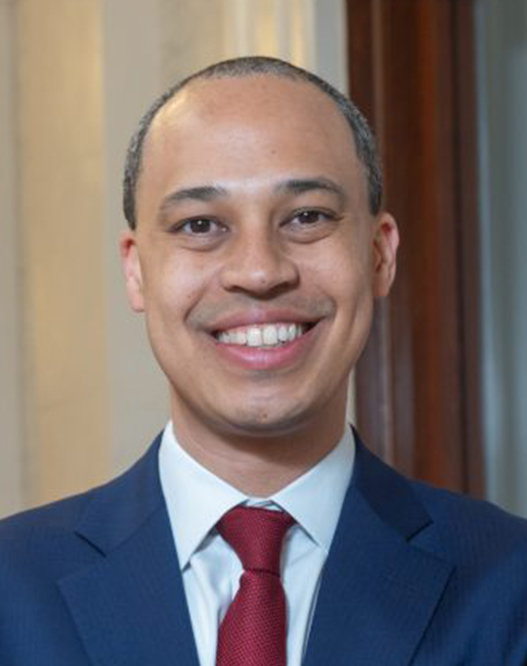
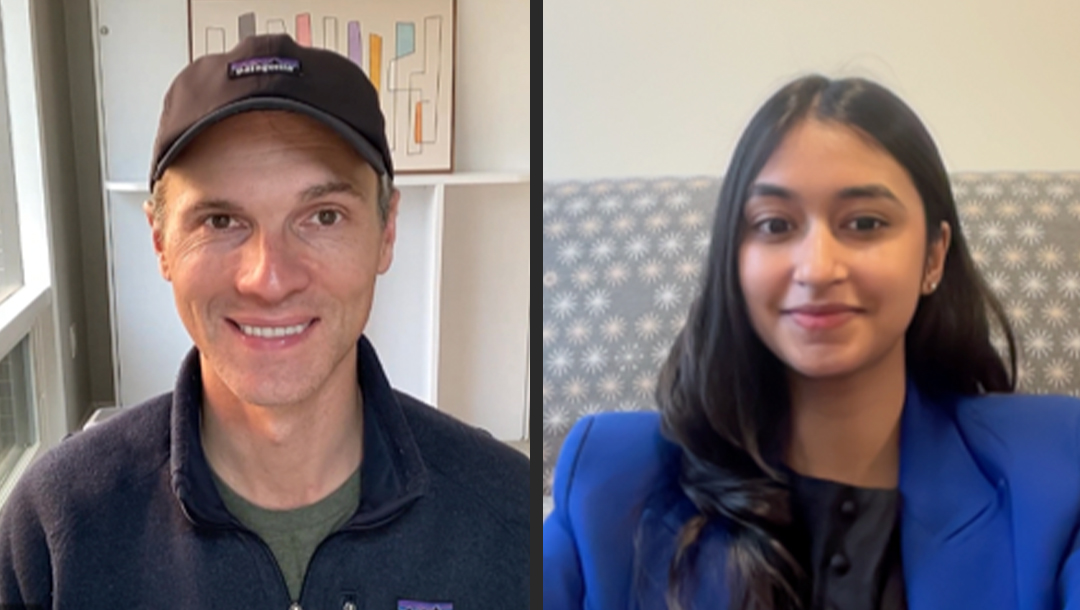
Democratic Rep. Walkinshaw (VA-11) spoke with Mason Votes over Zoom on October 31st.

On Friday, October 31st, Saahiti Kiran Chamala, Managing Editor for Mason Votes, conducted an interview with U.S. Representative James Walkinshaw (VA-11), whose district includes Mason’s Fairfax campus. Walkinshaw was elected to Congress in a special election this September following the passing of longtime Congressman Gerry Connolly.

During the discussion, Congressman Walkinshaw reflected on his connection to George Mason University, his priorities for Northern Virginia, and the importance of student engagement ahead of the upcoming gubernatorial election.

When asked about how his role in Congress intersects with the priorities of Mason students, Walkinshaw emphasized his long-standing connection to the university. “I’ve represented George Mason for the last six years now on the Board of Supervisors and now in Congress. So I spent a lot of time on campus, a lot of time working with the leadership and administration of the university, but also a lot of time with the students,” he said.

He added that his goal is to continue Congressman Connolly’s efforts in strengthening Mason’s role within the district. “In this new role, I want to build on that work and build on that partnership and continue to engage regularly with students, faculty, administration, to make sure that I’m doing everything I can in Congress to ensure that Mason continues to thrive and grow and succeed.”

Discussing current student concerns, Walkinshaw pointed to the economy as a central issue. “Our regional economy, a national economy, obviously here in Northern Virginia, the first 10 months of the Trump administration have created a lot of economic challenges. The unemployment rate in Fairfax is the highest it’s been since we were coming out of COVID,” he said. He noted that his focus is on protecting jobs and pushing back against federal policies that harm local economies. “A lot of my focus now is on pushing back against those policies that are coming out of the White House… trying to use my role to speak out against them, to support lawsuits against them when they’re illegally firing federal workers… I think the most important thing that a member of Congress can do is fight for the community that they represent.”

Walkinshaw also reflected on what he’s hearing from young voters across his district. “Concern about the Trump administration’s policies are number one — policies related to the economy and jobs… cuts to healthcare that are going to drive up costs for families, including students, immigration policies and deportation efforts… and what I view as a concerted attack on universities, including on George Mason University, from the Department of Education,” he said.

Having served as former Rep. Connolly’s chief of staff for over a decade, Walkinshaw spoke about continuing his predecessor’s dedication to the region. “I had the opportunity to serve as Congressman Connolly’s chief of staff for 11 years… I saw the way that he put his entire mind, body, and soul into serving and representing this community, including George Mason University, and I’m working very hard to take exactly the same approach.”

On the topic of housing, Walkinshaw highlighted his past and ongoing efforts to address affordability. “Housing affordability [is] a really critical issue in our region and in Fairfax… I led an effort to build a new community of affordable homes in front of the main Fairfax County Government Center that’ll have 279 new units with child care on the ground floor,” he said. He also discussed his support for federal housing reform. “There’s bipartisan legislation in Congress called the Road to Housing Act that I’m supporting… It creates an innovation fund for local governments… and streamlines a lot of the red tape and bureaucracy that prevents new housing units from being built.”

Walkinshaw expressed hope for bipartisan collaboration to protect federal workers, many of whom live or work near Mason. “One of the things I’m working on is establishing a federal workforce caucus in Congress which will be a group of members of congress who are committed to working productively to support federal workers and support making the federal government more effective and efficient.”

He reminded students of the importance of voting in every election, not just presidential ones. “It’s actually the local government and the state government who most impact your day-to-day lives… The state government obviously, very tangibly, you know, has a role in providing state support and funding for universities like George Mason, and when they provide less funding from the state it generally means tuition has to go up,” he said. “When an election has lower turnout and you vote, your vote kind of counts even more… You can have an outsized impact.”

When asked how students can remain engaged after Election Day, Walkinshaw encouraged them to take initiative. “It’s really important for young people and students to engage with their elected officials… Elected officials are always generally excited to hear from young people and get their perspectives… Know your power.” He also offered practical advice for those hoping to start in public service. “Reach out to your local government officials… One of the things I tried very hard to do with somewhat limited success… was to recruit George Mason students to serve on the various Fairfax County boards, authorities, and commissions… They’re always looking for younger folks who are interested in getting engaged in that way.”

As the interview wrapped up, Walkinshaw reaffirmed his connection to the Mason community. “I’m honored to represent George Mason and the entire Mason community and look forward to engaging with the Mason community for many years to come. I live right up the road, so the campus and the Mason community are an important part of my life and my family’s life, and I look forward to deepening the relationship.”

_____________________________________________________________

Zoom Interview Screenshot by: Saahiti Kiran Chamala
Spanberger Campaigns at AAPI Event in Fairfax County

Spanberger Attends Event Recognizing the Local Asian American and Pacific Islander Community

By: Rithvik Hari, Fourth Estate Staff Writer

This story was originally published on gmufourthestate.com. Fourth Estate is Mason’s official student-run newspaper.

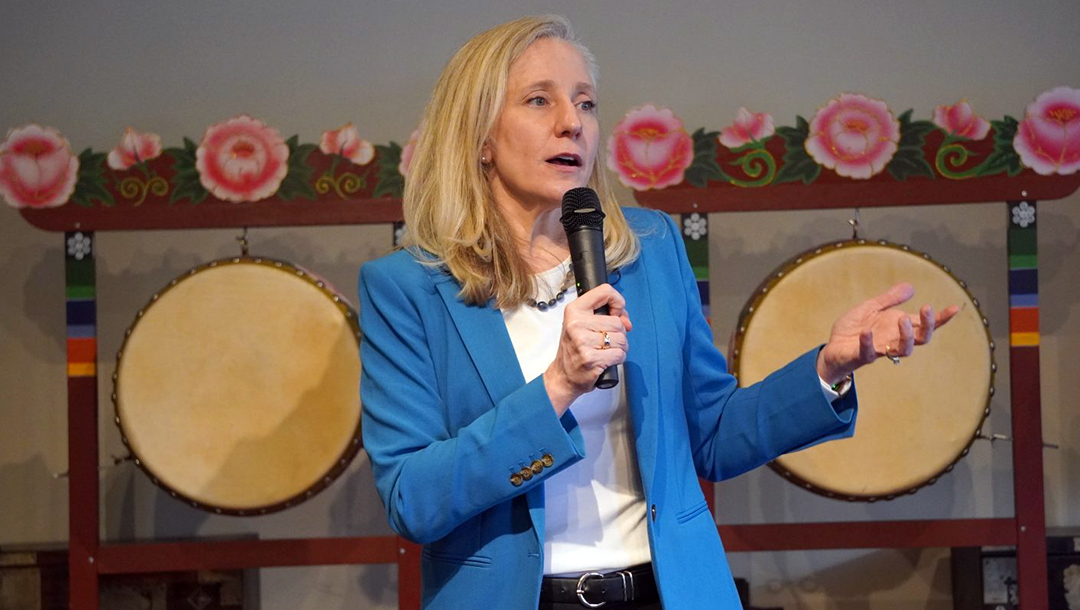
Photos by: Sam Douglas/Fourth Estate

With election day right around the corner, candidates are making their final rounds throughout the state with the intention of locking in every vote.

In one of her many stops around Virginia during her “Virginia Votes Bus Tour,” gubernatorial candidate Abigail Spanberger visited Soricha Tea and Theater, a Korean tea house in Annandale, Va. to recognize the Asian American and Pacific Islander community.

Annandale, known for its large Korean-American population, has become a key area for politicians to visit because of its ties to the AAPI community.

As attendees entered the tea house on Oct. 30, they checked in with campaign staff and passed through metal detectors operated by private security. The tea house was filled to capacity, with attendees standing along the back wall and holding campaign signs.

Spanberger was welcomed with a standing ovation and cheers from supporters, including former and current representatives and delegates of the local and state government.

Delegate Kathy Tran, representing the 18th district of Va., welcomed attendees to the event and acknowledged other high profile attendees including former Virginia Delegates Mark Keam and Ken Plum, as well as current delegate JJ Singh.

City of Falls Church Mayor Letty Hardi and Democratic Asian Americans of Va. Caucus Chair Shyamali Hauth was also in the crowd during the event.

Tran then introduced Amanda Chiem, Soricha’s assistant manager, who conducted a traditional Korean tea ceremony. The ceremony is a centuries-old practice that emphasizes harmony, tranquility and mindfulness.

When asked about the significance of the experience, Chiem said, “I do the tea service every day for customers, so it was just another service.”

Following the traditional Korean tea ceremony, attendees witnessed a Korean drum performance by the Hasang Korean School Traditional Drum Team, led by Director Wonyong Chong.

After the performance, Spanberger took the stage to address the crowd. She began by expressing how grateful she was that Republican gubernatorial candidate and current Lieutenant Governor Winsome Earl-Sears and her team were okay after their bus caught fire en-route to a campaign event.

Spanberger continued by sharing how her then 5-year-old daughter helped convince her to move back to Virginia after her career as a CIA analyst.

She then moved to the government shutdown.

“The current government shutdown is hurting so many Virginia families,” Spanberger said.

In recognizing the AAPI Community, Spanberger added, “I want to ensure we celebrate the dreams, culture and people that make Virginia, Virginia.”

Spanberger also mentioned how through this election, “We will set an example for the rest of the country when communities bond together.”

“I want to put Virginia’s public schools on the path to be the best public schools in the nation.” She said, concluding her speech to applause from the crowd.

Spanberger then met with the crowd for photos and conversation before departing for her next campaign event in Manassas.

_____________________________________________________________

Photos by: Sam Douglas/Fourth Estate

2025 NYC Mayoral Race Recap

Definitely Not Your Usual Mayoral Contest

By: Renata Pernegrova, Mason Votes Contributor

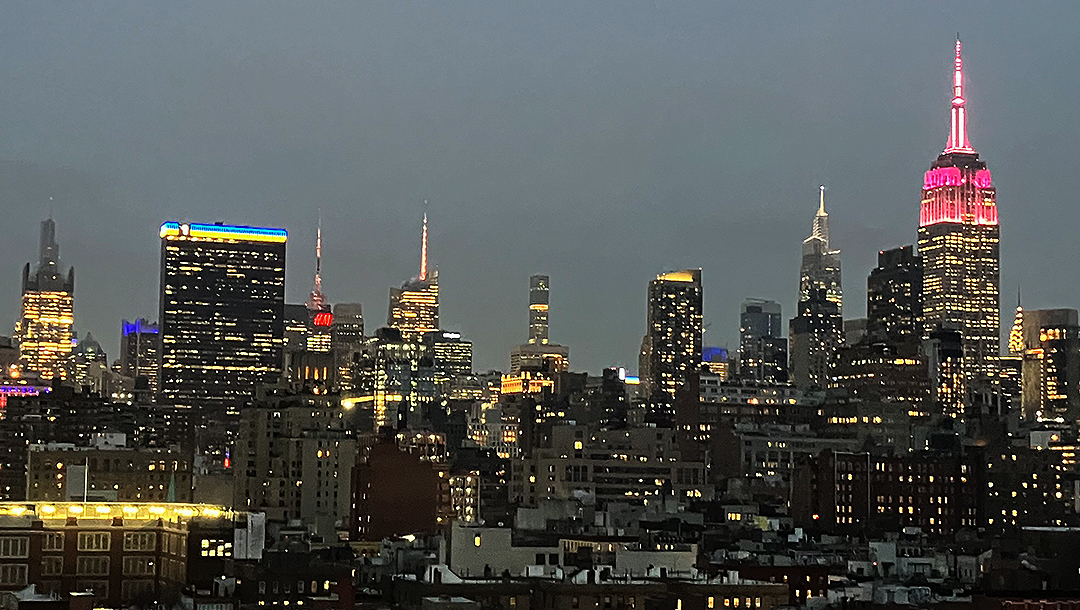
On November 4th, New Yorkers will head to the polls to elect their new mayor. Unlike past races, this contest for governing control of the Big Apple has captured national attention. And the results are expected to have an impact nationally.

Incumbent Mayor Eric Adams dropping out at the end of September left the race with three candidates who have very little in common. With national midterm elections just a year away, the mayoral contest between Republican Curtis Sliwa, independent Andrew Cuomo and Democrat Zohran Mamdani is deemed important for the country as well as for the city itself.

Republican Sliwa, who, as of Oct. 29 ranked distant third in the polls, is running on restoring safety in the city—an important issue for voters and one that the current mayor promised to resolve when he won the election four years ago. The Adams administration has demonstrated mixed results on this issue. At the same time, Sliwa has distanced himself from President Donald Trump and claimed he would oppose a White House move linked to sending the National Guard to patrol the city. The Republican also has rejected the latest calls for him to step down from the race and endorse Cuomo. That strategy is meant to undermine Mamdani’s winning chances.

Cuomo, an independent candidate who lost the Democratic primary earlier in the year, has had a long career in politics. However, his record was damaged in his last role as New York governor when allegations of sexual harassment in his governor’s office were made public. This, and his response to the pandemic, contributed to him stepping down from his governorship. A recent poll ranked him at 33%, ten points behind Mamdani. Alleged financial ties to Trump and criticism of the Democratic frontrunner have helped to position Cuomo in between the two candidates.

Mamdani emerged last fall as a young, self-described Socialist-Democrat, running on policies such as free buses, rent freezes and small business reforms. His campaign, mainly focused on social media and retail outreach, has captured the nation’s attention and earned him endorsements from high-profile figures within the Democratic Party, although not from all the top national Democrats. Mamdani’s profile—a naturalized citizen of Ugandan heritage and of a Muslim background—has divided the public. However, he has consistently led in the polls, with young voters as well as voters concerned about affordable housing making up his main base, according to recent reporting about his campaign.

New York City is an important commercial and media center. Its demographics include different cultures, religions, ethnicities and political beliefs. Whoever wins the contest and becomes the mayor of the Big Apple for the next four years, experts anticipate an impact that will go far beyond the streets of the city.

Renata Pernegrova is a sophomore at George Mason University studying government and global affairs. This article was submitted as part of a COMM 374: Political Journalism class project.

_____________________________________________________________

Slider Photo by: Jason Hartsel

Mason Students Explain Why They Vote

Registered Voters at Share Motivations Ahead of Tuesday’s Election

By: Rithvik Hari, Mason Votes Contributor

During the September 2025 special election in Virginia’s 11th Congressional District, only 138 ballots were cast out of 2,132 registered voters in Mason’s precinct, a voter turnout of just 6.4%

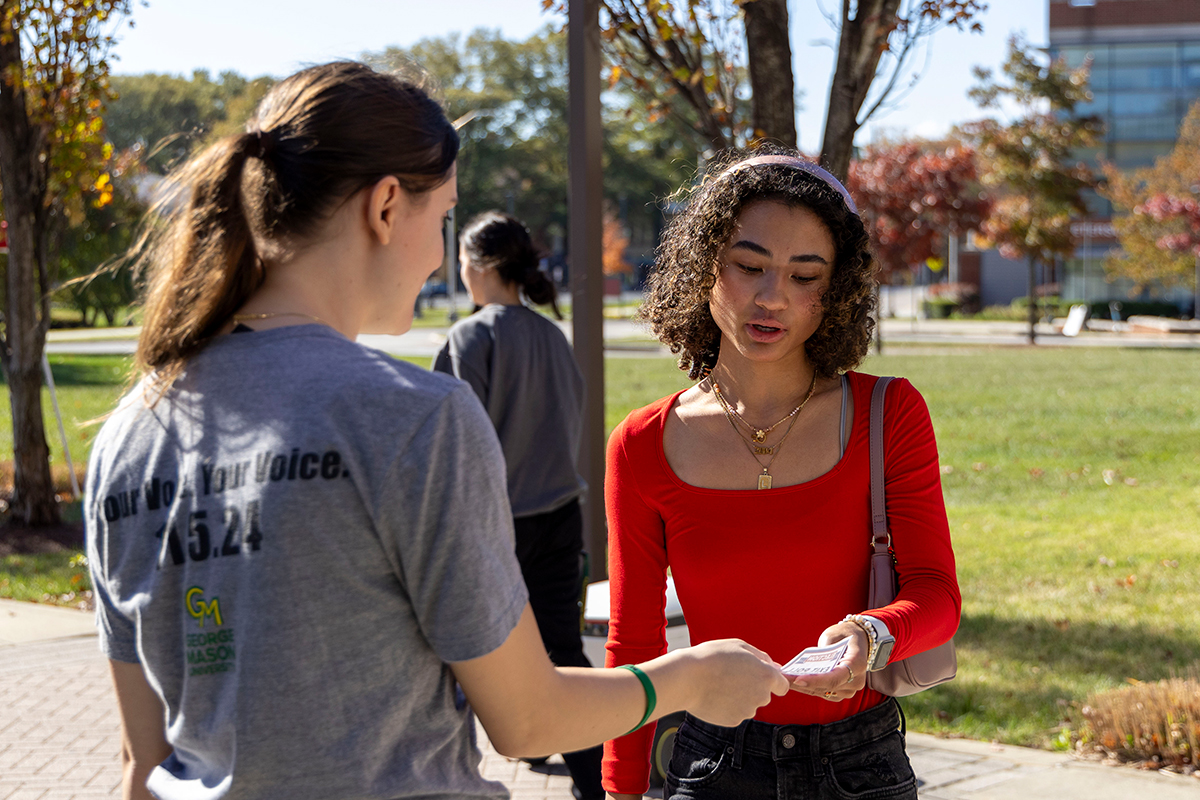
With another statewide election approaching on Nov. 4, some students are reflecting on the importance of civic participation and why they plan to vote. 

Senior Matthew Webster said voting helps ensure that elected officials understand the needs and values of their constituents. “In order to govern, elected officials need a sense of what the people in their communities want and what their values are. One way that they get this picture is through elections, which show what politicians and initiatives people want badly enough to support at the polls. Even if an election is not very competitive, showing the winner what you want means they are more likely to listen to you even if they aren’t who you voted for.”

Junior Alia Daniels highlighted the importance of participation itself. “I think voting is important. If people don’t vote then change will be impossible to accomplish,” Daniels said.

Senior Adam Cook shared that his motivation to vote comes from protecting institutions and limiting government overreach. “I’m voting to protect our university and others from political scrutiny, as well as to protect the state of VA and Americans from federal overreach,” Cook said.

The November 4th election will have a direct effect on the Mason community. The governor of Virginia appoints members of the university’s Board of Visitors, which serves as Mason’s governing body. Voters will also choose the lieutenant governor, attorney general, and delegates representing their districts in the Virginia House of Delegates.

Freshmen Montgomery Vanik and Caleb Beaver both emphasized civic engagement as their reason for voting. “I am voting to be an active member in American democracy and society,” Vanik said. “I am doing my civic duty by voting,” Beaver added.

_____________________________________________________________

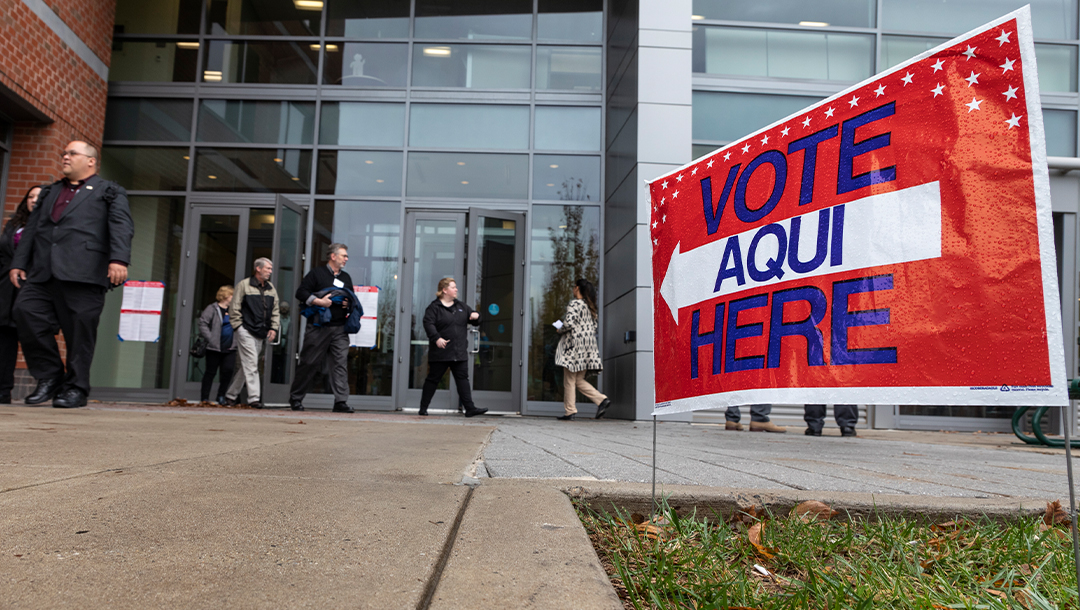
Remember to VOTE on Tuesday, November 4th!

Make sure to look up your assigned polling place so you show up at the right place on Election Day: elections.virginia.gov/casting-a-ballot/polling-place-lookup

Students who registered to vote using their Fairfax on-campus housing address can cast their ballots at Merten Hall. Click here to learn more >

Polls open at 6am and close at 7pm. Voters who are in line by 7pm will still be allowed to vote.

If you missed the voter registration deadline (Oct. 24), you can still vote at your home precinct by utilizing same day registration. Click here to learn more about same-day voter registration and provisional ballots >

_____________________________________________________________

Slider Photo by: Mitchell Richtmyre

Student Government Hosts 2025 Election Forum

Mason Democrats and College Republicans Participate in Debate

By: Rithvik Hari, Mason Votes Contributor

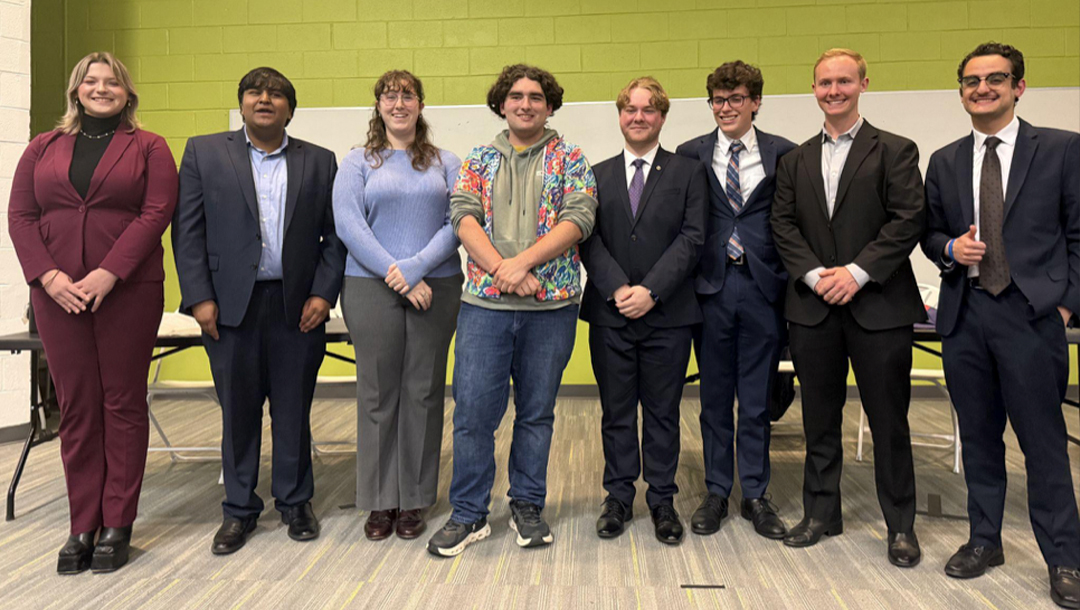
With the November election right around the corner, the Mason Democrats and College Republicans at George Mason University participated in an Election Forum Debate held Oct. 28. Organized by Student Government and moderated by Bridge at Mason, the debate began at 7:30 p.m. and lasted one hour. It included a 30-minute session of predetermined questions followed by a 30-minute session of audience submitted questions. The topics ranged from current federal investigations involving Mason to political violence.

In their opening statement, the Republicans noted that they were representing students who do not identify with the Democrats, while the Democrats noted that they were there for all students regardless of political affiliation. Representing the Democrats were Vice President Keely Calloway and Pranav Choudhary, while President Blake Reed and Ali Motamedi represented the Republicans.

The first topic addressed was the ongoing federal investigations into George Mason. The Democrats, who were asked to respond first, noted that the investigations were “political witch hunts.” On the other hand, the Republicans said the investigations were “completely justified.”

The debate then moved to topics including the regulation of higher education from the federal government and the current state of the economy. Discussion grew more heated during the segment on political violence. The Democrats emphasized that political violence needs to be addressed by the president. Calloway referenced the recent video President Donald Trump had posted on his social media accounts during the No Kings Protests, as well as reports of leaked messages from group chats involving young Republicans across the country. In response, Reed said that continuing civil discourse in the wake of political violence is what this country needs. Alternatively, Motamedi said, “The Democrats shoot people. The Democrats try to kill their president.” The comment drew a strong reaction from the opposing party and audience.

The predetermined question session concluded with conversations about immigration and voting. During this, both sides shared varying opinions. The Republicans said, “International students shouldn’t necessarily come to Mason.” Adding that the taxpayer money that funds Mason should prioritize U.S. citizens. On the other hand, the Democrats welcomed all international students stating, “International students have the same right to come to Mason as any other student.”

On voting, Motamedi said that he believes Americans have the right not to vote and that abstaining can still convey a political statement. He also expressed his disappointment with state and federal funding being spent on Mason Votes, stating that he believed the Mason Votes organization should not receive funding. The Democrats offered an alternative perspective stating, “Everyone eligible should vote”. In response to Motamedi, Calloway said, “Mason Votes is a wonderful program. They’re a nonpartisan program. Their goal is to ensure students [have] proper access to vote and ensure that they continue to vote. They’re a non-political organization, ensuring student access to voting.”

Following a brief intermission, the participants answered submitted questions from the audience.

During this session, both parties agreed on the importance of having elected officials who are accountable to the people rather than long-term bureaucrats. The Democrats also highlighted supporting educators and first responders so they are able to afford to live where they work. Similarly, the Republicans stressed that the welfare of American citizens needs to be the primary focus of the government. However, both parties disagreed on the topic of mid-cycle redistricting. The Democrats said, “It’s really dangerous to only support one side gerrymandering.” While the Republicans said, “Republicans are in a much better place to gerrymander.”

As the debate concluded, each party invited attendees to their regular meetings:

  • The Republicans meet in the Johnson Center, Meeting Room B, on Wednesdays at 8:30 p.m.
  • The Democrats meet in Horizon Hall, Room 3008, on Mondays at 7:30 p.m.

The event concluded with the moderators reminding attendees of Election Day on Tuesday, Nov. 4.

_____________________________________________________________

Photo by: Rithvik Hari

Schar–Washington Post Poll Shows Tight Virginia Attorney General Race

Latest Schar School Poll Finds Attorney General Contest Now Neck and Neck After Recent Developments

By: Saahiti Kiran Chamala, Mason Votes Managing Editor

A new statewide poll from the Schar School of Policy and Government at George Mason University and The Washington Post shows Virginia’s Attorney General race tightening significantly, with Democrat Jay Jones and Republican incumbent Jason Miyares now virtually tied among likely voters.

The findings mark a shift from earlier surveys that had shown Jones leading, reflecting the volatile nature of statewide races as Election Day approaches.

According to the Schar–Washington Post poll conducted by telephone on October 16–20, 2025, both Jones and Miyares received 46 percent support among likely voters. The survey’s margin of error is ±3.5 percentage points, placing the race within statistical parity.

In late September, the same polling partnership found Jones holding a six-point lead—51 percent to 45 percent—before the release of text messages that became a focal point of political discussion earlier this month. The latest numbers suggest a five-point decline in Jones’s support.

The poll also found that 51 percent of registered voters believe Jones should withdraw from the race, while 41 percent say he should continue his campaign. Despite this, the broader Democratic ticket — including the gubernatorial and lieutenant governor candidates — remains ahead in their respective contests.

The new results emphasize the competitiveness of Virginia’s statewide elections and the potential volatility among undecided and independent voters. The Attorney General contest remains within the margin of error, meaning either candidate could have a slight advantage depending on turnout and late-breaking voter decisions.

”People deciding not to vote, when they would have voted for Jones otherwise, could be the difference between winning and losing for him.” Schar School Dean Mark J. Rozell told The Washington Post.

Political observers note that such close margins are common in off-year Virginia elections, where turnout tends to be lower and late campaign developments can have a stronger impact.

The poll surveyed a random sample of 927 registered voters across Virginia drawn from the statewide database. It was conducted by researchers at George Mason University’s Schar School of Policy and Government, in partnership with The Washington Post, continuing a long-standing collaboration on state and regional political research.

This collaboration gives Mason students and faculty a unique role in shaping public understanding of the Commonwealth’s political landscape. The Schar School’s polling program has become a key resource for journalists, policymakers, and voters seeking data-driven insights.

With early voting underway and Election Day approaching, the Attorney General race is expected to remain one of Virginia’s most closely watched contests. Future polling may show whether Jones can regain lost ground or if Miyares will maintain momentum heading into November.

Regardless of shifting numbers, the poll illustrates how quickly campaigns can change course — and how Virginia’s voters continue to play a decisive role in determining the direction of the Commonwealth.

_____________________________________________________________

Slider Photo by: Lathan Goumas/Strategic Communications

Meet the Candidates 2025: Jones vs. Miyares

Virginia’s Attorney General Race: Contrasting Visions for Justice, Safety, and Rights

By: Saahiti Kiran Chamala, Mason Votes Managing Editor
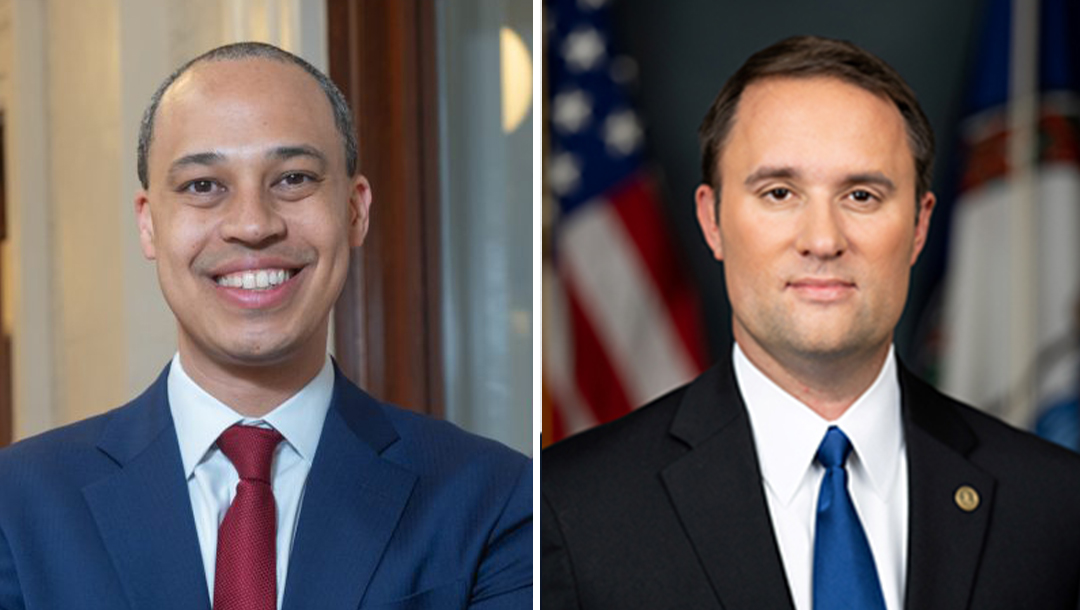
Jay Jones (D)
Jason Miyares (R)

As Virginians prepare to elect their next attorney general, both Jay Jones and Jason Miyares are outlining priorities that reflect differing approaches to law enforcement, justice, and public policy.

The Attorney General serves as the Commonwealth’s chief legal officer — responsible for defending state laws, protecting citizens’ rights, and ensuring public safety.

Jay Jones’ Campaign Vision

Jay Jones, a former member of the Virginia House of Delegates and Assistant Attorney General, is focusing his campaign on civil rights protection, reproductive healthcare access, and economic fairness.

Jones, who previously served on the Virginia Planned Parenthood board, says he would work to preserve reproductive rights in Virginia and establish a reproductive rights hotline to help residents understand their legal protections.

He also plans to create a Civil Rights Division and a Voter Protection Unit within the Attorney General’s Office to address issues such as discrimination, voter intimidation, and access to polling places.

Public safety is another major theme of his campaign. Jones emphasizes collaboration with law enforcement while expanding programs that address mental health, addiction, and community violence prevention. His plans include supporting specialty courts that focus on rehabilitation and expanding regional offices to better connect with local communities.

On the economic front, Jones has proposed stronger consumer protection measures, such as holding large corporations accountable for price increases or environmental violations. He also supports measures to ensure fair housing practices, target predatory lending, and foster innovation in emerging technologies like blockchain and artificial intelligence while safeguarding consumer privacy.

  • To learn more about Jones’ campaign platform and initiatives, visit jayjones.com

Jason Miyares’ Campaign Vision

Attorney General Jason Miyares, who is seeking re-election, highlights his record on public safety, addiction recovery, and protecting vulnerable populations.

Since taking office, Miyares has overseen opioid settlement agreements totaling over $1 billion with companies including Johnson & Johnson, CVS, and Walgreens. The funds are being distributed through the Opioid Abatement Authority to support local programs for treatment, recovery, and prevention.

Miyares has also focused on crime reduction and victims’ rights, emphasizing support for survivors of domestic and violent crimes. He advocates for what he calls a “victim-first” approach and partnerships between his office, local law enforcement, and community organizations.

His campaign also addresses youth safety and mental health, including concerns over social media’s impact on children and accountability for institutions that fail to protect students.

On national issues, Miyares has spoken about border security and the connection between drug trafficking and fentanyl distribution, expressing support for coordinated state and federal efforts to combat the crisis.

  • To learn more about Miyares’ campaign platform and initiatives, visit jasonmiyares.com

Both candidates claim to defend Virginians—but they differ deeply on how to do so. As Election Day approaches, voters will decide which vision they believe will best serve the Commonwealth’s safety, rights, and prosperity.

Virginia voters can cast their ballots early in person, by mail, or on Election Day. Early voting runs through Saturday, November 1, and Election Day is Tuesday, November 4, 2025.

Registered voters can visit their local registrar’s office or any designated early voting location in their county or city. Voters must bring an accepted form of ID, such as a Virginia driver’s license, passport, or student ID from an accredited Virginia college or university.

Your voice matters—every election shapes the policies and priorities of our Commonwealth. Make a plan to vote and help shape Virginia’s future!

_____________________________________________________________

Jay Jones Photo Credit: https://www.jayjones.com/wp-content/uploads/2025/07/homepage-1024×576.jpg, cropped.

Jason Miyares Photo Credit: https://www.oag.state.va.us/our-office/about-the-attorney-general, cropped.

Meet the Candidates 2025: Hashmi vs. Reid

Virginia’s Lieutenant Governor Race: Two Visions for the Commonwealth

By: Saahiti Kiran Chamala, Mason Votes Managing Editor
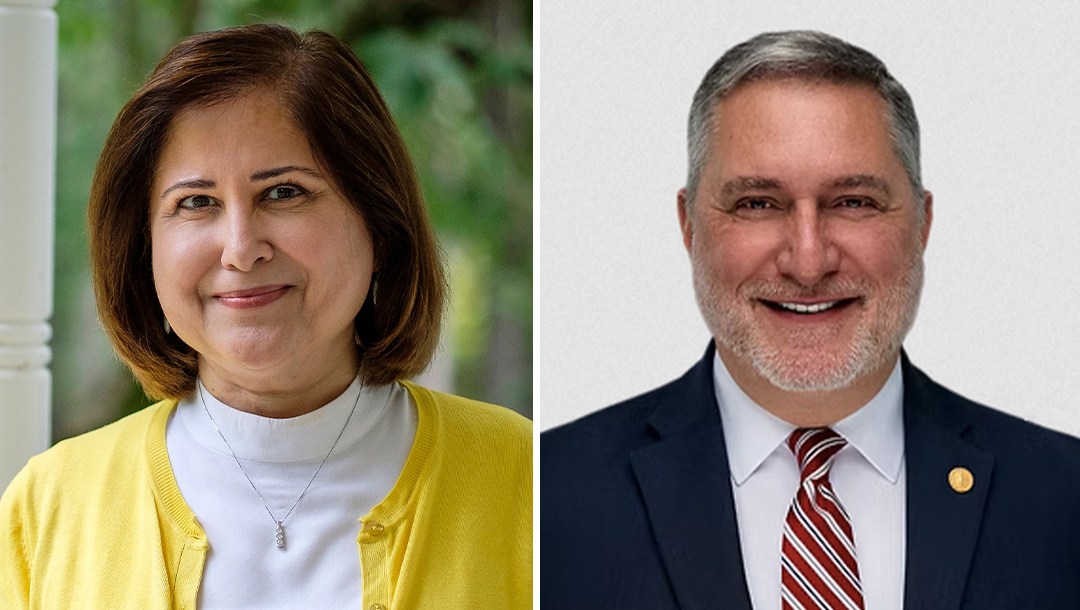
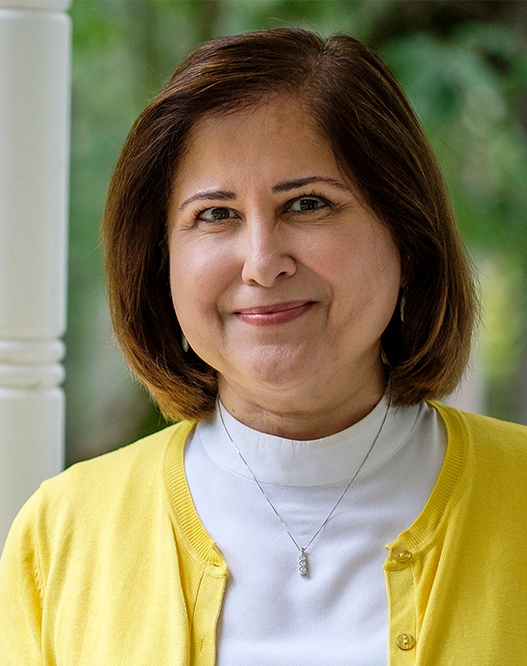
Ghazala F. Hashmi (D)
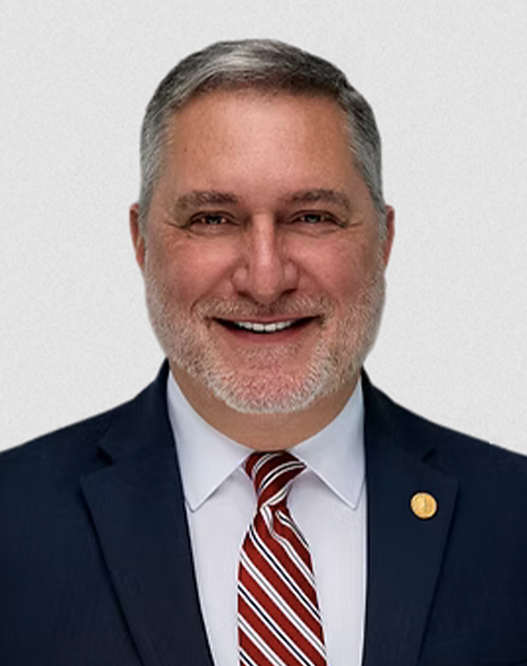
John J. Reid, II (R)

As Virginians prepare to head to the polls for the 2025 gubernatorial elections, the race for lieutenant governor highlights two sharply contrasting visions for the future of the Commonwealth. Ghazala Hashmi and John Reid bring different backgrounds, priorities, and approaches to governance.

The lieutenant governor plays a crucial role in presiding over the Virginia Senate and can cast tie-breaking votes on key legislation, making this race especially significant.

Ghazala Hashmi’s Campaign Vision

Ghazala Hashmi made history in 2019 as the first Muslim and South Asian American elected to the Virginia Senate. Since then, she has risen to a leadership position as chair of the Senate Education and Health Committee, reflecting her long career as an educator and advocate for inclusive values.

Hashmi’s campaign emphasizes access to essential services and defending democratic institutions. Her key issues include:

Reproductive Freedom & Health Care:
She has pledged to protect abortion access and contraception rights, positioning Virginia as a safe haven for reproductive health care in the South. Hashmi also advocates expanding access to affordable health care, lowering prescription costs, and addressing mental health needs statewide.

Education & Workforce Development:
Education is central to her platform. She supports fully funding K–12 schools, hiring more counselors and mental health professionals, and ensuring equitable education regardless of ZIP code. She also emphasizes expanding community college programs and workforce training for emerging industries like technology and clean energy.

Gun Violence Prevention:
Hashmi backs universal background checks, red flag laws, and a ban on assault weapons, describing gun violence as a “public health crisis” that must be addressed through legislative action.

Environment & Climate Action:
She supports transitioning to renewable energy, strengthening coastal resiliency, and advancing environmental justice in communities disproportionately affected by climate change.

Housing & Economic Equity:
Hashmi frames housing as a human right and supports policies to increase affordable housing, strengthen tenant protections, and create more pathways to home ownership.

Democracy & Civil Rights:
She strongly supports expanding voting access, combating bigotry, and defending LGBTQIA, immigrant, and minority communities.

To learn more about Hashmi’s campaign platform and initiatives, visit ghazalaforvirginia.com

John Reid’s Campaign Vision

John Reid comes to the race with decades of experience in media and political communication. A longtime WRVA radio host and founder of The Virginia Council, he previously served as communications director for U.S. Senator George Allen and as chief communications officer for a national veterans’ organization. His background also includes investigative reporting on government accountability.

Reid’s platform focuses on limited government, public safety, and cultural preservation. His key issues include:

Economy & Jobs:
Reid emphasizes lowering taxes, reducing regulations, and preserving Virginia’s Right to Work laws to encourage business investment and job growth. He wants to make Virginia more competitive in attracting businesses while supporting working families through economic expansion.

Public Safety & Law Enforcement:
A vocal supporter of police officers, Reid has pledged to defend law enforcement and prioritize community safety. He argues that strong policing and accountability are essential for stable communities.

Education & Parental Rights:
Reid calls for “first-class learning” focused on core academics, arguing against political or social agendas in schools. He believes parents should be the final decision-makers in their children’s education, including curriculum and school policy.

Cultural & Social Issues:
He supports preserving Virginia’s historical monuments and heritage, framing them as essential to understanding the state’s identity. Reid is also vocal on opposing policies he views as radical in areas such as gender identity, sports participation, and curriculum content.

Taxes & Government Spending:
Reid supports eliminating certain taxes, including the car tax, and cutting government spending. He argues that lower taxes will help families and stimulate economic growth.

Faith, Guns, & Immigration:
He strongly defends religious liberty, opposes new restrictions on gun ownership, and supports stricter enforcement of immigration laws.

To learn more about Reid’s campaign platform and initiatives, visit johnreidforvirginia.com

While both candidates are focused on the future of Virginia’s economy and education system, they approach these issues from opposite directions. Hashmi emphasizes investment in public services, environmental protection, reproductive rights, and expanded access to education and health care. Reid focuses on lowering taxes, limiting government involvement, protecting law enforcement, and promoting individual freedoms and traditional values.

The lieutenant governor will play a pivotal role in shaping Virginia’s legislative agenda, particularly in a closely divided Senate. Voters will head to the polls on November 4, 2025, with early voting and mail-in options available.

_____________________________________________________________

Ghazala Hashmi Photo Credit: https://commons.wikimedia.org/wiki/File:Hashmi_-_Porch_Headshot_(cropped).jpg, cropped. CC BY-SA 4.0.

John Reid: https://www.johnreidforvirginia.com/meet-john, cropped.

A Student’s Guide to Virginia’s 2025 Gubernatorial Election

How Mason Students Can Register, Vote Early, or Mail In Their Ballots

By: Saahiti Kiran Chamala, Mason Votes Managing Editor

The 2025 Virginia gubernatorial election is right around the corner — Election Day is Tuesday, November 4, 2025 — and as students at George Mason University, we’re in a unique position to make a real impact. Whether you’re living on campus, commuting from home, or studying abroad this fall, you still have the power to shape Virginia’s future.

This isn’t just about voting for governor. The ballot will also include other statewide offices and seats in the General Assembly. Participating in elections is one of the most direct ways to make your voice heard — and Virginia makes it pretty accessible to do so. 

For more info on the election itself, visit: elections.virginia.gov/casting-a-ballot/calendars-schedules/upcoming-elections.html

Step 1: Get Registered to Vote (Deadline: October 24, 2025)

Your very first step is to register to vote — this is basically how you let the state know you plan to participate in the election. The deadline to register online or by mail is Friday, October 24, 2025.

If you sign up by this date, you’ll be able to vote normally at your assigned polling place, just like everyone else. But if you miss the deadline, don’t stress — Virginia has what’s called “same-day registration.” That just means you can still register during early voting or even on Election Day itself. The only difference is that your vote will be called a “provisional ballot,” which is just a fancy way of saying it’ll be double-checked and counted after they confirm you’re eligible.

As a Mason student, you get to choose where you register:

  • You can use your campus address (your residence hall), which means your polling place will likely be on or near campus.
  • Or you can use your home address, if you’d prefer to vote back home.

If you’re registering with your campus address, make sure to include your residence hall and room number so they know exactly where you live. Provide your current residence hall’s physical building address (including your residence hall name and room number) as your RESIDENCE (Question #2) on the voter registration application, AND provide your Hub mailing address (4450 Rivanna River Way, PMB #, Fairfax, VA 22030) as your MAILING ADDRESS (Question #4) on the voter registration application.

To register to vote online or to check if you’ve already registered or need to update your info, visit: vote.gov/register/virginia or elections.virginia.gov/citizen-portal/

Step 2: Vote by Mail (Absentee Ballots)

If you don’t want to wait in line on Election Day or won’t be on campus when voting happens, voting by mail is a super easy option. Think of it like getting your ballot delivered to your mailbox instead of having to go to a polling place in person.

In Virginia, anyone can vote by mail — you don’t need to give a reason or meet any special requirements. All you have to do is request your ballot. The deadline to ask for a mail-in ballot is Friday, October 24, 2025, at 5:00 PM.

Once your ballot shows up, you have two simple ways to return it:

  • Mail it back: Just make sure it’s postmarked by Election Day (November 4) and that your local election office gets it by noon on the third business day after the election.
  • Drop it off: You can also hand-deliver it to an official drop box or your local registrar’s office by 7:00 PM on Election Day.

If you’re living on campus, one of the easiest places to drop off your ballot is the Fairfax County Government Center or another designated drop box nearby.

To learn more about voting by mail or to request your ballot, visit: elections.virginia.gov/casting-a-ballot/absentee-voting/

Step 3: Vote Early In-Person (Sept. 19-Nov. 1)

If you’d rather cast your vote in person but don’t want to deal with the busy lines on Election Day, early in-person voting is a perfect option. Think of it as getting a head start on voting — you show up, fill out your ballot, and you’re done!

In Virginia, you don’t need an appointment or a special reason to vote early. Early voting begins on Friday, September 19, 2025, and runs through Saturday, November 1, 2025.

For Mason students, the closest early voting site is typically the Fairfax County Government Center, which is just a quick ride from campus by bus, car, or rideshare. It’s usually less crowded than Election Day, which means less waiting and a much smoother process.

For details on early voting locations and hours, visit: elections.virginia.gov/casting-a-ballot/early-voting-office-locations/

Step 4: Vote on Election Day (Tuesday, November 4, 2025)

If you prefer the classic way of voting — showing up on Election Day — here’s what you need to know. Polling places in Virginia are open from 6:00 AM to 7:00 PM on Tuesday, November 4, 2025.

The most important thing: if you’re in line by 7:00 PM, you still get to vote, even if the line is long. So don’t let a crowd scare you off — as long as you’re there before closing time, your vote counts.

For Mason students who register with their Fairfax on-campus address, your polling place will most likely be the University Precinct in Merten Hall right on campus. That means you can literally walk to your polling location between classes.

If you registered at your home address (like your family’s house), your polling place will be different based on where you’re registered.

To find your exact polling location, visit: elections.virginia.gov/casting-a-ballot/polling-place-lookup/

Step 5: Bring ID or Sign the Statement

When you show up to vote — whether early or on Election Day — you’ll need to bring some kind of ID. In Virginia, this doesn’t have to be complicated. You can use things like:

  • Your student ID from George Mason University,
  • A driver’s license,
  • A U.S. passport,
  • Or another valid government-issued photo ID.

But here’s something a lot of people don’t realize: if you don’t have an ID with you, you can still vote! You’ll just need to sign an ID confirmation statement at the polling place. It’s basically a form saying “Yes, this is me,” and your vote will still count.

For a full list of acceptable IDs, visit: elections.virginia.gov/media/formswarehouse/voter-id/outreach-materials/documents/Voter-Identification-Chart—Revised-07.2025.pdf

For official statewide election info, visit: elections.virginia.gov/

For Fairfax County-specific election info, visit: fairfaxcounty.gov/elections/office-elections

A Final Note from a Fellow Patriot

As Mason students, we talk a lot about leadership, service, and making change — but voting is one of the simplest and most powerful ways to actually make that change happen. Whether you choose to vote by mail, cast your ballot early, or show up on Election Day, your vote matters.

Local and state elections shape the everyday things that impact us as students and young adults: how much funding goes to education, how communities address climate change, what civil rights are protected, and what kind of future we build together.

So here’s the task: take ten minutes this week to double-check your registration, plan how and where you’re going to vote, and remind your friends to do it too. Civic engagement isn’t just for “adults” or “politicians” — it’s for us. This isn’t just another headline. This is our future.

_____________________________________________________________

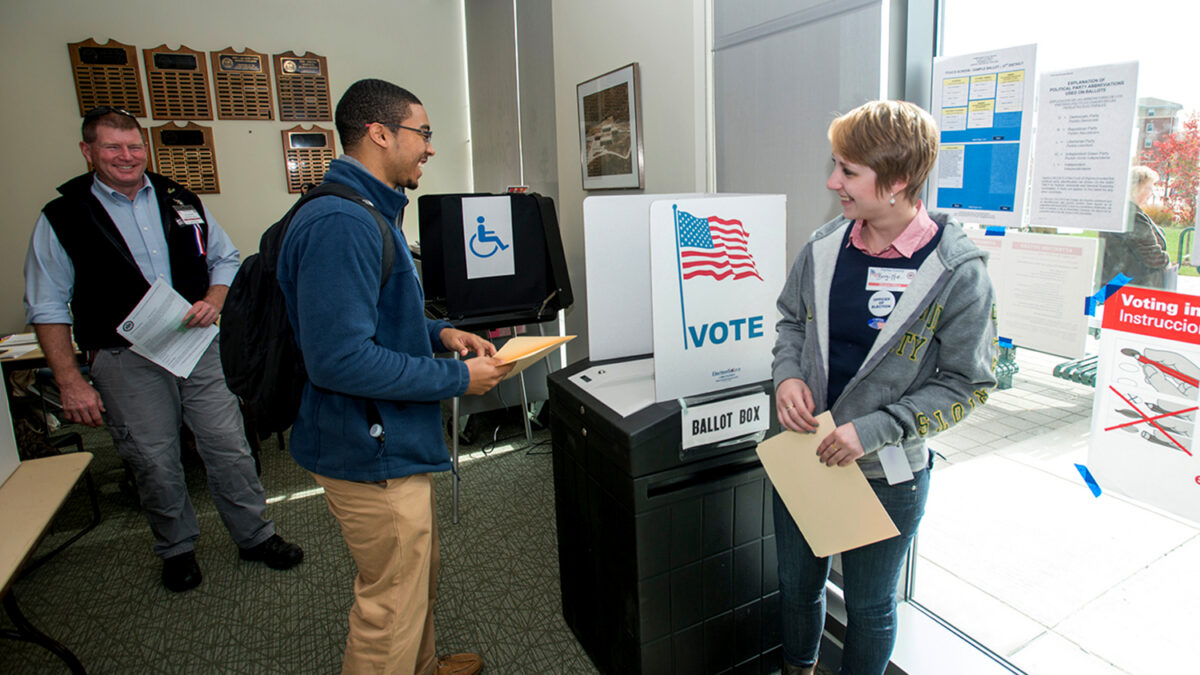
Slider Photo by: Alexis Glenn/Creative Services

_____________________________________________________________

Disclaimer: This post is intended to provide important voting information for Mason students, but always refer to the official Virginia Department of Elections website for the most accurate and up-to-date voter information and guidelines: elections.virginia.gov

Key Takeaways from the 2025 VA Gubernatorial Debate

Spanberger vs. Earle-Sears at Norfolk State University

By: Saahiti Kiran Chamala, Mason Votes Managing Editor

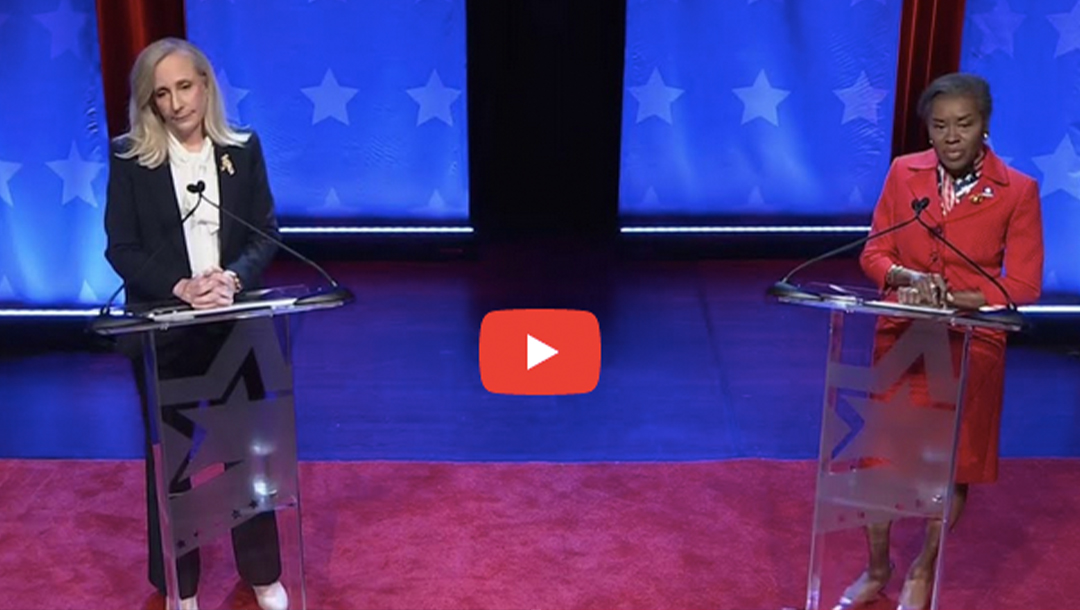
On October 9, 2025, Virginia’s only gubernatorial debate took place at Norfolk State University, bringing together Democrat Abigail Spanberger and Republican Winsome Earle-Sears for an hour-long exchange on issues that directly impact Virginia voters ahead of the November election. Televised statewide, the debate gave both candidates a chance to outline their positions and challenge each other in front of a live audience.

Abigail Spanberger (D)
Winsome Earle-Sears (R)

The evening opened with discussions surrounding recent political controversies, including a heated moment when Spanberger addressed comments made in the attorney general race. “The comments that Jay Jones made are absolutely abhorrent,” she said firmly, emphasizing accountability and voter responsibility. She continued, “It is up to voters to make an individual choice based on this information,” signaling her confidence in the electorate’s ability to decide. Earle-Sears countered forcefully, stating, “I’m asking my opponent to please ask Jay Jones to get out of the race,” an appeal that highlighted how political alliances are shaping this year’s election narrative.

The debate then shifted to social issues, where the clearest contrast emerged between the candidates. On LGBTQ rights, Earle-Sears stated, “That’s not discrimination,” during a tense exchange about protections and state policies. Spanberger, in turn, emphasized her commitment to ensuring equal treatment under state law. Abortion policy became a central flashpoint, with Earle-Sears accusing her opponent of supporting “abortion up until the very hour that the baby could be born,” a statement that drew sharp reactions from both the audience and moderators. Spanberger responded by reaffirming her stance: “I support the constitutional amendment codifying the Roe v. Wade standard.” This exchange underscored how abortion rights have become one of the defining issues of this election cycle.

Education and parental rights also played a significant role in the conversation. Both candidates expressed support for strong public education but offered different approaches to school choice and curriculum oversight. Earle-Sears highlighted parental involvement and local control, while Spanberger stressed protecting public school funding and ensuring students’ rights and safety. This part of the debate reflected the growing national and statewide focus on how schools balance academic achievement, inclusivity, and parental engagement.

Energy and economic development rounded out the discussion. Spanberger reiterated her “all-of-the-above” energy strategy, which includes nuclear power, renewable energy expansion, and job creation in emerging industries. Earle-Sears emphasized economic growth through reduced regulations and lower taxes, aiming to position Virginia as a more competitive environment for businesses. Their differing visions painted two distinct economic paths: one focused on clean energy investment and another emphasizing traditional business incentives.

Throughout the night, both candidates made direct appeals to Virginians to vote, underscoring the stakes of the election.

Election Day is Tuesday, November 4, 2025.

Early in-person voting runs from September 19 through November 1, and Virginians can register through October 24 or use same-day registration at their polling places.

Voters can check their registration status and polling locations using the state’s online Citizen Portal.

Watch the full debate via YouTube: youtube.com/watch?v=30MQ1llUPSE

_____________________________________________________________

Abigail Spanberger Photo Credit: U.S. House of Representatives – https://d12t4t5x3vyizu.cloudfront.net/spanberger.house.gov/uploads/2023/02/118th-Congress-New-Headshot.jpg, Public Domain, https://commons.wikimedia.org/w/index.php?curid=127470320, cropped.

Winsome Earle-Sears Photo Credit: Unknown author – 192wg.ang.af.mil, Public Domain, https://commons.wikimedia.org/w/index.php?curid=157775073, cropped.