Mason Votes

Kritical Konversations Forum took place at Mason

Broadside, George Mason University’s student newspaper, featured a story about the Kritical Konversation program that took place Sept. 24.  Here is an excerpt:

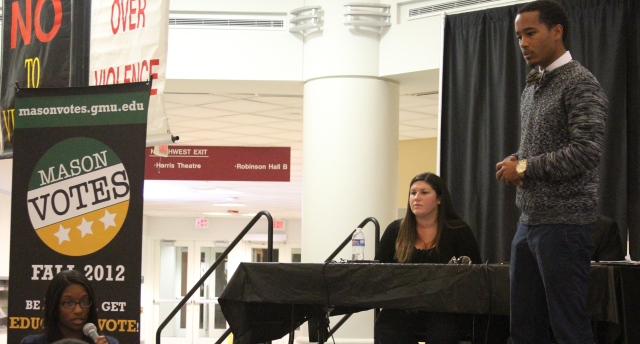
On Monday, Sept. 24, the members of Kappa Alpha Psi Fraternity, Inc., Alpha Kappa Alpha Sorority, Inc., Student Government, Mason Votes and the Lead Office came together to conduct a voter’s forum for the student body. Entitled Kritical Konversation, the event took place in the Johnson Center atrium.

Read the full article here.

Kritical Konversation
Kritical Konversation took place in the JC Oct. 8, 2012

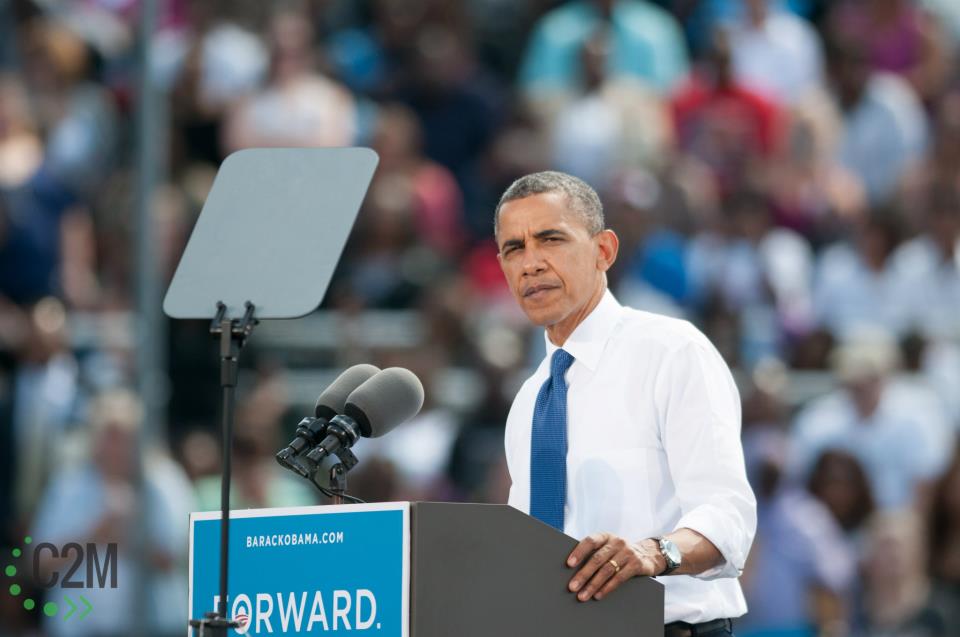
President Obama to Campaign at the Center for the Arts

On Friday, October 5, 2012 at the Center for the Arts, Concert Hall, a grassroots event will occur with President Barack Obama sponsored by Obama for America.

This event is free and open to the public; however, tickets are required. Ticket distribution will begin at 9:00 a.m. on Thursday, October 4, in the lobby of the Center for the Arts, Concert Hall. Tickets will be distributed on a first come first serve basis. A limited number of tickets are being made available to the Mason community. One ticket will be distributed per person with a Mason student, faculty or staff ID.

Cameras are allowed, however, no signs or banners are permitted. Attendees should limit personal items and not bring bags, backpacks or purses. Once filled, the Center for the Arts, Concert Hall doors will close.

First Presidential Debate Tonight

Tonight at 9 PM Eastern, the first of the 2012 Presidential debates will take place at the University of Denver.  Former Massachusetts Governor Mitt Romney will debate incumbent President Barack Obama in what many see as the most anticipated first debate in some time.

Romney comes in slightly trailing the President and vying for some kind of moment to knock the Obama out of his lead.  The conventional wisdom seems to be that debates rarely make that much difference, accept when something unusual or dramatic happens.  Ronald Reagan’s “There you go again” line against Jimmy Carter, Michael Dukakis’ timid answer on the death penalty, or President George H.W. Bush’s glancing at his watch as Bill Clinton made an emotional appeal to a voter.  These unscripted moments are what might make tonight’s debate matter.

In debates that include a sitting President, the challenger usually gets a bump due to the fact that he’s on the same stage as the leader of the free world.  However, that only provides the spotlight.  What Romney does with that time in the spotlight is what will determine how effectively he takes advantage of this opportunity.

President Obama comes into these debates with a slight lead but his advisors are feverishly trying to downplay expectations on the off chance Romney does well and wins the debate.  They have made comments building up Romney’s debating prowess and experience and saying how difficult it is to be a sitting President in these forums.  Playing the expectations game isn’t new or surprising, and the Obama team is taking no chances.

The debate will focus on domestic issues, which should also give the Obama team pause.  It’s there that Romney would have the most chances to attack the President on his handling of an economy that’s still sluggish.  Some politicos have stressed Romney’s need to look more human and conciliatory, while others have stressed a need to attack Obama and forcefully make the case that he is not the right man for the job.

In the 90 minutes the two men will have tonight, one thing is certain: This will be the first opportunity for tens of millions of Americans to see and hear, unfiltered, unedited, the men who vie to be their leader the next four years.

1-on-1 with Mason Votes: SEP Presidential Candidate Jerry White

[youtube]http://www.youtube.com/watch?v=WOEeN6hAdXY&feature=g-upl[/youtube]

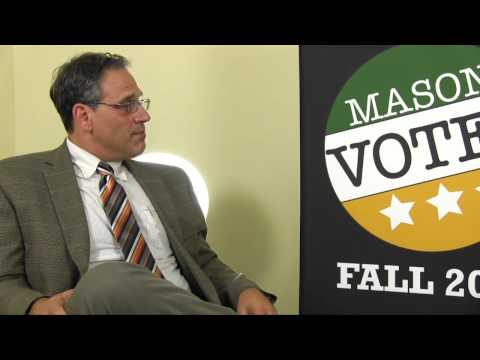
Recently, Socialist Equality Presidential candidate Jerry White visited Virginia to speak at Northern Virginia Community College. Before his speech he stopped by the George Mason campus to deliver a 1-on-1 interview with Mason Votes reporter Nathan Moore.
The interview covered such diverse topics as the relevance of Russian revolutionary Leon Trotsky’s theories in the world today to the SEP’s policies that would benefit college students and free them from debt.

1-on-1 with Mason Votes: GMU College Republicans

[youtube]http://www.youtube.com/watch?v=_UgDAh2vtt0&feature=g-upl[/youtube]


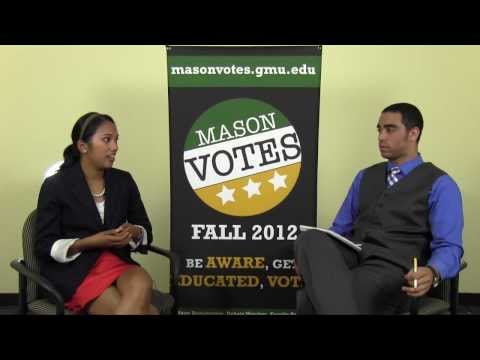
Mason Votes sat down 1-on-1 with Chair of the George Mason University College Republicans Kristie Colorado. She explained what the GMU College Republicans were doing in preparation for this year’s elections. She also spoke about the enthusiasm level that she has experience when speaking to students, registering people to vote, and canvassing neighborhoods.

More information about the Fairfax Republican party, their candidates, and how you can volunteer can be found at their Fairfax Victory Office. The office is located at 4246 Chainbridge Road. Hours of operation are 9:00 am- 9:00 pm.

Debate Watch: Tonight On Campus

Cover Photo Taken by Jasmine Young at the Newseum in D.C.


Tonight, October 3, Mason Votes will be hosting the first of four presidential debate watch parties in the JC Atrium. All students, faculty, and staff are welcome to attend. Leading up to the election it is important for all voters to stay tuned into the debates.

Mason Votes hopes these debate watch parties will help students become aware of the issues, get educated on where each candidate stands, and encourage students to vote on November 6, 2012.

More information about the debate is provided on the 2012 Presidential Election News website:

Topic: Domestic policy
Air Time: 9:00-10:30 p.m. Eastern Time
Location: University of Denver in Denver, Colorado (Tickets)
Sponsor: Commission on Presidential Debates
Participants: President Barack Obama and Governor Mitt Romney
Moderator: Jim Lehrer (Host of NewsHour on PBS)

The debate will focus on domestic policy and be divided into six time segments of approximately 15 minutes each on topics to be selected by the moderator and announced several weeks before the debate.

The moderator will open each segment with a question, after which each candidate will have two minutes to respond. The moderator will use the balance of the time in the segment for a discussion of the topic.

http://www.2012presidentialelectionnews.com/2012-debate-schedule/2012-presidential-debate-schedule/


Escape the “Lesser of Two Evils” Mentality

Recently I have been attempting to examine more deeply the presidential candidates of the smaller parties, mostly Libertarian candidate Gary Johnson as well as the Green Party candidate Jill Stein. After reading over online news articles for a few months now, I have come to predict that there will be quite a significant turn out of 3rd party voters this November, something that has received little to no attention in the main stream media. Many voters have attempted to justify their decision for either Mitt Romney or Barack Obama as voting for whoever they believe to be the “lesser of two evils”, and stating that any vote for a 3rd party candidate is a wasted vote. This made me reflect further and come to the conclusion that the only wasted votes are those of individuals who casts their ballot for a candidate they don’t even agree with.

Third party candidates allow for more niche votes than broader parties like the Republican and Democrat parties, which garner more votes based on their broader appeal. That appeal stems less from ideological consistency and focuses more on what will grow their voting base, regardless of whether or not it conflicts with other platform issues. Many potential voters question the validity of third party candidates due to the lack of coverage by the media before realizing the obvious party biases held by most networks.

I would like to wrap this up by asking if you are one of the many citizens tired of the corruption seen in the two-party system, or perhaps you don’t fit exactly in with the views of either Democrats or Republicans? If you are one of these people, I strongly encourage you to look into candidates outside of the two major parties and educate yourself on the smaller parties’ platforms.  Finally, if you like what you see in one of these parties, I urge you to vote your conscience and not be swayed by the “lesser of two evils” argument.

Post Poll Results Shows Obama Up 8 Points in Virginia

Post Poll: Obama has went up 8 points over Romney in Virginia

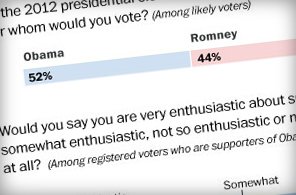
According to a new Washington Post poll, President Barack Obama holds a clear lead over Mitt Romney in Virginia. This information is vital because Virginia is critical to Mitt Romney’s hopes of winning the White House in this November’s election. The lead that President Obama holds in Virginia, has a tremendous amount of support that has been rivaling since 2008 when he was able to bring the Democrats out of a 40-year losing streak in Virginia.

Amongst all registered voters, the current President Barack Obama has 50 percent with the lead to his running mate Mitt Romney’s 43 percent. In reference to likely voters, the poll shows President Barack Obama with 52 percent to his rival’s 44 percent. If Mitt Romney is not able to win over Virginia his path to 270 electoral votes will be more difficult but not impossible.

A separate poll was given by Quinnipiac University and it was made public this past Wednesday, September 12. This poll shows that President Barack Obama had a slightly smaller lead in Virginia over Mitt Romney and that this lead has been unchanged from a month ago. Also, this poll shows that the two candidates are very close with their poll results in Colorado but President Barack Obama is up six points in Wisconsin.


To find out more information about recent poll results visit:

http://www.washingtonpost.com/politics/polling/obama-leads-romney-virginia-washington-post/2012/09/18/fc0bc590-01ad-11e2-bbf0-e33b4ee2f0e8_page.html


Before you Cast Your Ballot

Article By: Ryan Symons

I was recently introduced to an article written by Georgetown University professor Hans Noel. The piece is titled “Ten Things Political Scientists Know that You Don’t”, and generally challenges what some see as conventional wisdom in American Politics. I am in no way attempting to challenge the information laid out in this article, only extending Mr. Noel’s views and research to the readers of Mason Votes. In attempt to educate the uninformed and the “informed” reader during this election season, here are the ten things political scientists know that you don’t:

It’s the Fundamentals, Stupid

If it seems as if networks like CNN, Fox, and MSNBC thrive at over-analyzing political events, especially during an election year, you are probably right. A percentage of Americans rely on the analysis and break down of political events by these networks in order to form an overall opinion on the subject matter or person. Others have a pre-conceived ideological stance, and others could care less. The question is all this analysis necessary? According to Noel, “Presidential elections can be forecast with incredible accuracy well before the campaign really begins.” If you look at the state of the economy, you will have a fare idea how the party in power will do. Noel also points to important facts such as whether the country is at war, and how ideologically moderate the candidate is. The fundamentals can even be applied to midterm elections. With no surprise the voter’s opinion on the President plays a significant role in how the midterm elections turn out. The President’s party usually always loses a significant number of seats during the mid-term elections in a down economy. Political pundits and analysts always like to complicate their predictions, but if you go back to the fundamentals, the answer will be out in the open.


The Will of the People is Incredibly Hard to Put Your Finger on

How do you know when a politician is lying to you? When he or she tells you that they know what “The American People” want. Really, do you actually know what each of the three hundred million plus Americans that live in this country want? Highly unlikely, but yes, we do firmly believe in majority rule. That said, the poll system we use in order to determine how the majority feels is not a fool proof tool. Most people who interpret the polls have no idea how to read the polls, and the pulse of the poll can be severely affected by the wording of the question. In my opinion, there are too many variables and too many opportunities for manipulation to fully trust a poll. Noel has instead offered research findings on public opinion.

1.)    Most people are not very ideological

2.)    Most people do not have strong political opinions

3.)    Most people take cues from political parties and leaders

4.)    Let the polls be the polls – polls are very good when they ask very specific questions.


The Will of the People May Not Even Exist

The best explanation I could give to describe this is to physically show you an excerpt of Noel’s piece outlining collective rational.


Collectively Rational: “The American people,” as a collective, should behave

as though they are rational. This means, for example, that if the group

prefers Obama to McCain and it prefers McCain to Romney, then it ought to

prefer Obama to Romney. Otherwise, we have a cycle that could never be

settled. Individual people may sometimes fail to meet this standard of

“rationality”, of course, but we do not want our system of voting to introduce

more irrationality.”


There is No Such Thing as A Mandate

This section, again, is a section that can be best explained by extracting an excerpt from Noel’s piece. This small excerpt outlines what happens following an election with regards to the “mandate” given to the person who was democratically elected.


“In a narrow sense, winning the election gives you a “mandate.” You are

now legally empowered to exercise your authority. But after every election,

pundits will declare a more complex “mandate.” They will tell you not simply

who won, but what that victory means. The winners won because they promised

X and voters wanted Y and were afraid of Z.”


“These narratives are created after the fact by people who want you to think

one thing or another (Grossback, Peterson, and Stimson, 2006, 2007). Winners

claim a mandate to change everything, and losers explain it all away as an

anomaly. But exit polls saying that some voters cared about some things are thin

reeds on which to spin out the will of the people.”


Duverger: It’s the Law

If you are not familiar with Duverger’s law, it states that the simple-majority simple-ballot system favors the two party system. There have certainly been cases around the world to contradict that notion; however, the American political system seems to be different. If the American people ever wanted a competitive third party, it would need an electoral reform. The Tea Party, Green Party, and Independents might just have to wait until these reforms become a reality to seriously challenge for the White House.


Party On

Forgive me if I am misinterpreting, and I do encourage all readers to read the original piece. It is just a reality, no matter who the American people elect, that they will not come together with other members of Congress to find the best deal for the American people. They will find the best deal for their party, whether that is Democratic or Republican. Each party is elected on the specific platform they presented throughout their campaign and that is what is expected to be carried out. This has led to intense polarization of the parties today and will surely play a role in November.


Most Independents are Closet Partisans

When you hear that the independent vote will be critical in the upcoming election, call the bluff. Noel argues that independents are not all that independent when you look at it closely. Independents tend to vote as an “independent”, but it seems as if their independent vote generally looks rather partisan. If an independent keeps voting for the same party with little to no change are they still considered independent?


Special Interests Are A Political Fiction

All of us are backers of “special interests.” We each tend to favor certain pro-environment, pro-business, pro-union, etc. A special interest is an interest opposed to the “general interest”, but if you subscribe to previous views laid out, there is no such thing. Can we fully grasp the “general interest”? Is there such thing as a “general interest”? If not than there is no way a special interest can exist.


The Grass Does Not Grow By Itself

Grassroots movements, largely, are not actually very root-y at all. Think of it how Noel explained it. People generally don’t just go out and spontaneously rally. Someone hosts a rally and invites people to come. Two examples I can think of were Glenn Beck’s “Rally to Restore Honor” and John Stewart and Stephen Colbert’s “Rally to Restore Sanity and/or Fear.” It is the same thing with grassroots movements; they involve some sort of central planning. So just like the President’s grassroots movement, the Tea Party activists might be saddened to hear that it wasn’t very grassroots-y at all, yet funded from a central organization, probably the Republican party [my own opinion].


We Do Not Know What You Think You Know

A Few things to leave you with:

1. Money buys the votes of the general public. (Maybe savvy donors just

donate to candidates who will win in the hopes of influencing them.)

2. Money buys the votes of elected legislators. (Maybe savvy donors just

donate to candidates who will vote the way they would like, and not to

those who would not.)

3. Parties influence the votes of elected legislators. (Maybe politicians just

sort themselves into the parties they agree with in the first place.)

4. Some candidates are just better campaigners than others.

5. Democracy leads to economic growth. (Maybe economic growth enables

democracy. Or maybe they are spuriously related.)

6. Autocracy leads to economic growth. (Maybe economic performance

enables dictators to hold onto power.)

7. The media is biased. (Maybe they are just trying to tell us what they think

we want to hear.)

8. Voters make choices based on their own self-interest. (Maybe they

rationalize their choices in this way.)

9. Voters choose the candidate that is closer to their own preferences.

10. People are more likely to vote when they think the election will be close.

11. And at least one political scientist, probably many, will insist that some

number of the previous nine items also belong on this list.

To read the original piece I am responding to written by Hans Noel click this link: http://www.ib.ethz.ch/teaching/pwgrundlagen/noel2010_forum.pdf

The views, facts, and opinions introduced in this article are that of the author of the original article, Hans Noel, unless otherwise specified.

Romney: Remarks not “Elegantly Stated”

Article By: Danielle Salanitri

Over the last few of weeks, the Romney/Ryan campaign has made enough gaffes to turn this incredibly tight presidential race into one that is looking increasingly optimistic for President Obama, and this week doesn’t seem to be any different.  Videos of Governor Romney at a fundraiser were leaked to Mother Jones magazine, where he discusses his campaign strategy, intended solely for the ears of his super wealthy donors.  The republican candidate is captured, not only writing off 47% of voters as Obama supporters because they have used some form of government assistance, but that he would have a much easier time winning the election if he were Latino.

He is seen calling the 47% of people who do not pay income tax, often because they do not make enough of an income, as reliant on government programs. These are people “who believe they are victims, who believe that the government has a responsibility to care for them” and that he does not “worry about these people” because he will never “convince them they should take personal responsibility.”  Which is an interesting point for a multimillionaire, who pays a lower income tax rate than the middle-class and hides much of his money in offshore bank accounts, to make.

Not only does Governor Romney seem to forget who his supporters are, he implies that almost half of the nation, or any person that has ever taken out a Stafford Loan or used Social Security, lacks work ethic and is lazy.  This seems like a remarkably large number of people for a nation built on the ideal that hard work and determination lead to success.  He also groups two sets of people together, those that do not pay income tax and those that have received some sort of government benefit, which are not necessarily mutually exclusive.  Due to the slightly progressive tax system in the United States, the people that often do not pay an income tax are lower income families and the elderly, which describes much of the republican base.

The Governor also implies that his chances of winning in November would be increased had his father been born to Mexican parents, rather than just in Mexico.  His implication that being Latino would help him win the election, completely disregards the struggle that many have faced as minorities and the historic privileges that he has received as a white male.  Although, if he were Latino, there would be a greater chance that he too would have needed some sort government assistance in the past, and therefore, be better able to understand the needs of the American people.

But at least we can all be comforted knowing that in his press conference to address these leaked videos, he admitted his statements were not “elegantly” made.

*The views and opinions expressed are solely those of the author.