[This post has been Updated 09/21/2012]
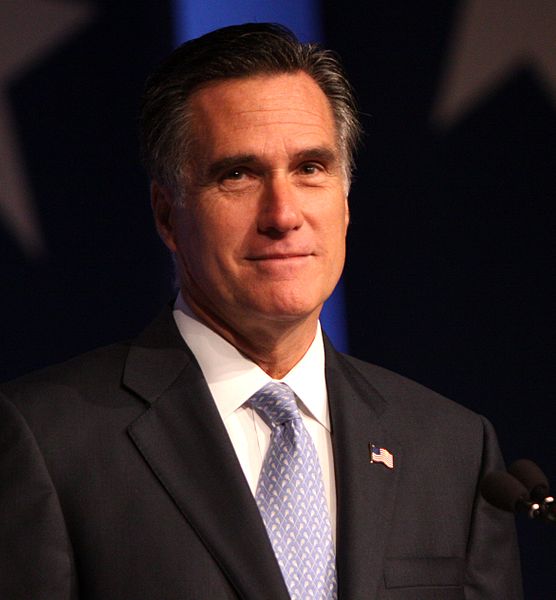
Mitt Romney’s full remarks:
[youtube]http://www.youtube.com/watch?v=FMVLe2kNw3M&feature=g-upl[/youtube]
[This post has been Updated 09/21/2012]
Mitt Romney’s full remarks:
[youtube]http://www.youtube.com/watch?v=FMVLe2kNw3M&feature=g-upl[/youtube]
George Allen Post Debate Press Conference:
[youtube]http://www.youtube.com/watch?v=2TfFmQ9ta9k&feature=g-upl[/youtube]
Tim Kaine Post Debate Press Conference:
[youtube]http://www.youtube.com/watch?v=3jS2506QgkI&feature=g-upl[/youtube]
On Thursday September 2o, 2012 George Allen and Tim Kaine squared off in another debate. The two men are campaigning for the open United States Senate seat from Virginia being vacated by the current Democratic senator Jim Webb. Senator Webb decided not to run for a second term in the senate after serving for six years.
The debate was held at the Capital One Conference Center in McLean, Virginia. Sponsoring the debate was the Fairfax County Chamber of Commerce. David Gregory of NBC, host of Meet the Press moderated the debate. Also joining Mr. Gregory in asking questions were NBC4’s Julie Carey, Aaron Gilchrist, and the Washington Post’s Ben Pershing.
Tim Kaine a Democrat and George Allen a Republican have both been governors of Virginia, and George Allen has held one of the two U.S. Senate seats from Virginia. He lost his re-election bid in 2006. Both men were asked tough questions from David Gregory and the panel. Those questions spanned a wide rang topics; topics such as education, economics, national security/foreign policy, and social issues. Both held there own on the stage and held nothing back when attacking each others records as governor, and in Governor Kaine’s case he also attacked Governor Allen’s record during his service in the U.S. Senate.
The attacks on one another’s records didn’t stop once the debate was over. After the debate both men held press conferences to answer questions from the media who were in attendance. You can watch both press conferences by clicking on the videos above.
Virginia’s senate race is one of the most watched in the country. The winner of this race may have a direct impact on the outcome of whether or not the Democrats hold on to their majority in the senate, or if the Republicans take back control. Recent polling out this week from the Washington Post and Quinnipiac University show Tim Kaine with a 7 to 8 point lead over George Allen. This marks the fifth straight poll showing the Democrat ahead. There are still several weeks until the election, and things can change. Both men will continue to campaign vigorously until Election Day on November 6th, 2012.
[youtube]http://www.youtube.com/watch?v=ey3nT8wxYGA&feature=youtu.be[/youtube]
Cover photo by Dakota Cunningham
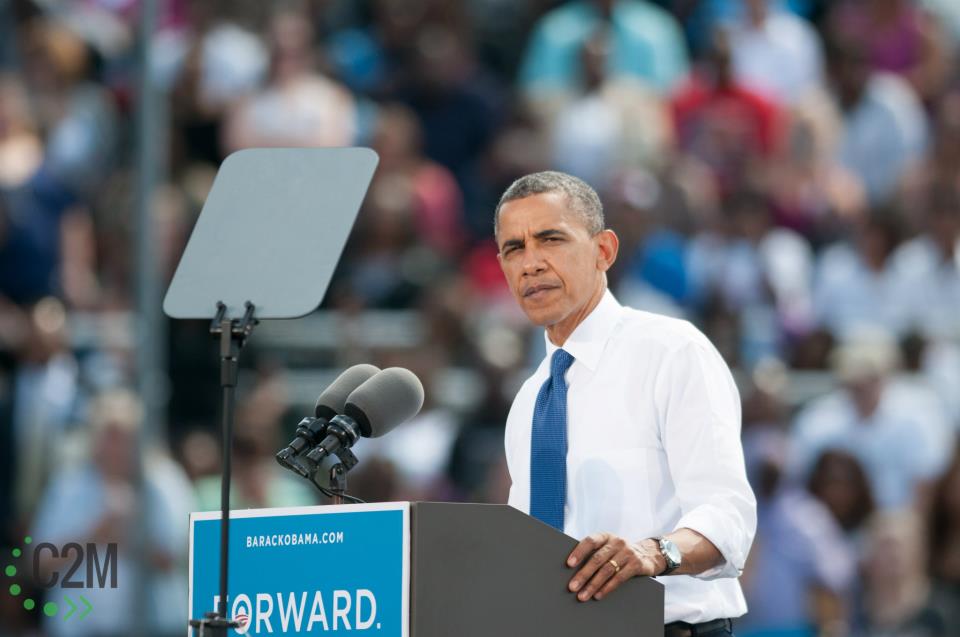
President Obama made a campaign stop in Woodbridge, Virginia this afternoon where he pitched his vision for the country over the next four years. He spoke to a crowd of 12,000 people (according to Lt. Dave Cooper, Fire Marshal for Prince William County) at G. Richard Pfitzner stadium home of minor league baseball team the Potomac Nationals. This campaign event marks his 42nd stop in Virginia since taking office. In 2012 alone he has visited the Commonwealth 13 times.
Before taking the podium the supporters heard from a variety of speakers. Starting things off was George Mason University student Christine Gonzales who performed the national anthem. Following Christine was Jill Borak, a Woodbridge resident and member of OFA-Virginia. She told of the struggles and hardships she and her husband faced in the past. She explained to crowd how she believed the president’s policies helped her family through tough economic times. After Jill came Democratic Senator and former Governor of Virginia Mark Warner.
Senator Warner leveled some attacks at the Republican Presidential candidate Mitt Romney saying, “Romney’s plan is wrong for America”. He also made subtle reference to Mitt Romney’s controversial statement about the 47% of people who pay no federal income tax. He spoke about the progress he has seen during President Obama’s first term. Senator Warner praised the president for his commitment to the brave men and women serving in harms way overseas. He also praised him for keeping his promises to end the war in Iraq and beginning to end the war in Afghanistan. Warner’s most spirited remarks came when he spoke about the meaning of the 2008 election and the importance of this year’s.
President Obama took to the podium with loud cheers and energy from the crowd. He congratulated the Washington Nationals baseball team for bringing playoff baseball to Washington. He made a prediction that the World Series would be a White Sox versus Nationals affair.
The President moved right into the meat of his speech. He said this election is a “choice between two fundamentally different visions for the country”. He continued by criticizing Mr. Romney and Republicans of wanting to continue the practice of “trickle down economics”. The president also made mention of Mr. Romney’s statements about the 47% of Americans who pay no federal income tax saying, “I don’t believe we can get very far with a leader who writes off half the nation as a bunch of victims”.
President Obama said he offers a better plan for the future, one that is “Practical and focuses on creating jobs, growing the middle class, and rebuilding the economy on a stronger foundation”. He broke down his five point plan point by point. First he spoke about exporting more products and outsourcing fewer jobs. His second point focused on controlling more of America’s own energy. The third point focused on education and providing skills the American worker needs to compete in the 21st century. The fourth point of the president’s plan was reducing the deficit. The fifth and final point focused on national security.
President Obama was victorious in Virginia four years ago. It has become a state his campaign has focused in on and looks to carry in 2012.
This is Shane Smith With Mason Votes reminding you to Be Aware, Get Educated, and VOTE!
You can see President Obama’s remarks in full below:
[youtube]http://www.youtube.com/watch?v=IH2F9agmYgs&feature=g-upl[/youtube]
As the conservative blogger here at Mason Votes, I guess it shouldn’t come a great shock that I may have a couple negative words to say about the Democratic National Convention this week. While I whole-heartedly disagree with President Obama and will not vote for him this November, I will attempt to be as fair as I can in covering their convention this week.
The opening act last night featured really two main figures. San Antonio Mayor Jullian Castro and First Lady Michelle Obama. However, the moment that stood out to me was a part of a DNC intro video that said, “Government is the only thing we all belong to.” That line may seem minuscule but it just strikes me wrong. I thought the government belonged to us. We’re in charge. Apparently this video showed the Democrat position the other way. This sounds eerily familiar to President Obama’s infamous line about how “You didn’t build that” business and that people really should give credit to those who built the roads and bridges (i.e. government). While the baseline work of roads, bridges, trash cleanup, water, electricity, etc. are essential for life in general, there seems to be a disconnect between what really builds America or how jobs come and go.
It’s almost framed as a chicken and egg debate. The business doesn’t get built without roads to travel, but how does the government get the money to build the roads? Taxes paid by income generated from the business. In the end, it’s people’s individual pursuits of happiness that drive them to do anything. Taking a talent and marketing it to make money must happen before taxes can be collected. If you have no willingness to pursue anything, you don’t generate income that’s taxable. That’s why the statement that we belong to the government is just backwards. The government relies on us, and in a way, is us. Without us there is no government. Be sure to watch as this statement, coupled with Obama’s “you didn’t build that” is packaged as an accentuated difference between the candidates and political parties, because it is.
The speeches last night were well done, though. Mayor Castro spoke eloquently about his personal story and regardless of our political differences, I can empathize with his struggle and his achievement. So too can I say that Michelle Obama made an impassioned plea for her husband’s reelection. However, these past years should show that speech making feels and sounds good in the moment, but it’s the actions that speak louder. Regardless of the eloquence of Mrs. Obama, her husband’s actions and positions these past four years are really what the American people will use to judge him. The 23 million Americans who are out of work may like Mrs. Obama’s words, but they should focus on Mr. Obama’s policies as part of the reason they are without a job. Borrowing a bit from Clint Eastwood, the Obamas words are quite eloquent, but the results are just empty.
The 2012 Republican National Convention finished last night and it did so with a past, present, and future feel.
Leading off the prime time coverage was Hollywood icon Clint Eastwood, who delivered an adlib, improv performance to an empty chair that was supposed to be Barack Obama. Eastwood’s delivery was slow and quirky, but definitely brought the house down in the building. Predictably he allowed the audience to finish his most signature line, “Make my day,” as well as provide a critique of President Obama’s failed promises. The routine, panned by some in the media, did garner a response from the White House as a little after midnight, Obama’s twitter account tweeted a photo of the President’s chair and him in it with the tweet, “This seat’s taken.” Regardless of people’s opinion of the sketch, it seemed to get to the Obama campaign.
Eastwood’s riff led into Florida’s junior Senator, Marco Rubio. He possesses a remarkable story of rags to riches and the American Dream, which he detailed last night. In filling the role of introducing Romney, Rubio harkened to the future by declaring, the “story of our time will be written by Americans who haven’t yet been born. Let’s make sure they write that we did our part.” Rubio surely is the future of the conservative movement, the Republican Party, and possibly of America itself. By nailing this speech in prime time, Rubio is well positioned for any higher office or higher goals in his career. You will hear from this Senator in the years to come.
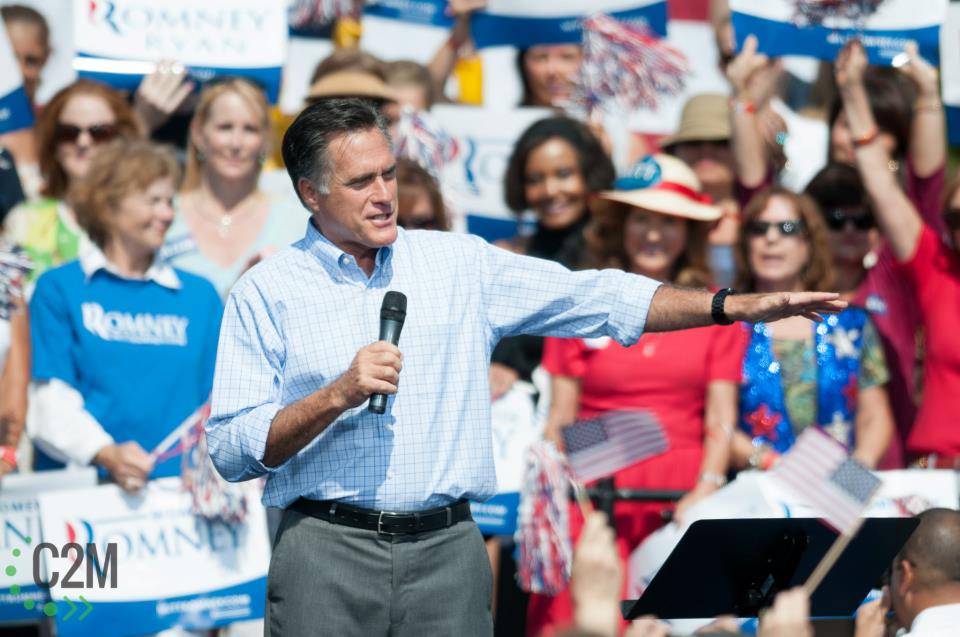
Rubio then introduced the Republican candidate for President, Mitt Romney. Romney came through the crowd looking somewhat like a Presidential State of the Union speech. He then accepted the nomination and began his acceptance speech. Romney then detailed the lofty promises and rhetoric of four years ago. The dreams and hoped of millions of Americans propelled Barack Obama to the White House. However, that hopeful talk has not translated into action. Romney said those high minded ideals Obama embraced were what America “deserved”. And what they got instead is a shame. He explained it this way, “You know there’s something wrong with the kind of job he’s done as president when the best feeling you had was the day you voted for him.”
Romney went on to his personal story. He revealed intimate details from his father’s life. For example, the fact that everyday he would place a rose on his wife’s bedside table. One day a rose did not appear on the nightstand and that was the day George Romney died. This brought many in the hall to tears. Hearing about Ann Romney’s story and Mitt’s aid and comfort he gave her among many other items, humanized Romney in a way not yet done in either of his Presidential campaigns.
What seemed like the theme of Romney’s speech and moreover his campaign from here on out is summed up in the statement, “President Obama promised to begin to slow the rise of the oceans and heal the planet. MY promise…is to help you and your family.” It was a message of telling Americans that the past four years of mediocrity is not acceptable. America deserves nothing less than the best, and that’s what Mitt Romney can provide as President. Our future is meant to be great. Romney concluded, “That future is out there. It is waiting for us. Our children deserve it, our nation depends upon it, the peace and freedom of the world require it. And with your help we will deliver it.”
It was a case of the velvet laced glove as the first punches of the 2012 Republican National Convention were thrown tonight in Tampa. The convention officially got underway following a suspension yesterday due to Hurricane Isaac.
Earlier in the day the convention officially nominated Mitt Romney as their Presidential candidate by going through the roll call vote. The final tally was Romney with 2,061 delegates to the other candidates collective 202. Speakers included former Romney competitor Rick Santorum, as well as House Speaker John Beohner, and a whole host of newly elected Republican Governors. They touted their early successes in the wake of President Obama’s failure.
Later in the night, the convention featured former Democratic Rep. Artur Davis (D-AL) who tore into President Obama after being one of the men who helped nominate Barack Obama in 2008. He said he had been at “the wrong convention”. He also indicted today’s Democratic Party as being more extreme and too reliant on government programs. He said, “John Kennedy asked us what we can do for America. This Democratic party asks what can government give you.”
The highlights of the night, however, were the back to back speeches by Ann Romney and New Jersey Governor Chris Christie. Mrs. Romney spoke of a more personal side to her husband. She vowed, “You may not like all of Mitt Romney policies but no one will work harder to make America a better place to live.” She also emphasized all the good works Mitt does often go unnoticed due to his viewing the help as “a privilege, not a political talking point.” Mrs. Romney did make reference to the President, as she concluded, “We’re too smart to know there aren’t easy answers. But we’re not dumb enough to accept that there aren’t better answers.”
The finale of the evening was the keynote address by Chris Christie. His speech focused on some broad leadership principles he used in New Jersey. Foremost among these is his conviction to rather be respected than loved. He said, “Our current leaders say yes, even when no is what’s required.” He reiterated his focus on being supportive of teachers, just not their union. He attacked President Obama for a lack of leadership and a cow towing of his agenda to polls and interest groups. In his most stinging critique, he said, “Mr. President, real leaders don’t follow polls, real leaders change polls.”
As was mentioned above, the combination of Ann Romney and Chris Christie was that of a velvet outer layer covering an iron core. If Mitt Romney can himself show these same qualities on Thursday and throughout the next couple months, he may very well win this election.
Are you interested in politics, journalism, or both? Mason Votes is looking for reporters, writers, researchers, photographers, and videographers to help cover this year’s elections. It’s important as students and young people to be aware, get educated, and vote.
Mason Votes is a place where students can come and learn where each candidate stands on the major issues. We offer a non-partisan evaluation of their positions and let the facts speak for themselves.
[youtube]http://www.youtube.com/watch?v=Gv7dRGASt3k[/youtube]
Visit studentmedia.gmu.edu to find out more on how you can apply to get involved. You can also visit the Office of Student Media on the ground floor of the Hub (formerly known as Sub 2).
[youtube]http://www.youtube.com/watch?v=sCjjISpixq8[/youtube]
Apathetic, tuned out, disengaged; these are just a few adjectives often associated with the younger generation of Americans. Even as these adjectives persist there is a large group of young Americans who have taken the initiative to organize, mobilize, and make their voices heard. This group of young progressive Americans found themselves gathered together in Washington D.C. for the Campus Progress National Conference.
Campus Progress, part of the Center for American Progress, is a national organization that works with and for young people to promote progressive solutions to key political and social challenges. Attendees at the national conference had the opportunity to hear from policy makers and activist, network, and discuss the issues facing them as young Americans.
Speakers at this year’s conference came from many different backgrounds. Anne Johnson, Director of Campus Progress, politicians like House Minority Leader Nancy Pelosi (D) California, Senator Dick Durbin (D) Illinois, and Democratic National Committee Chair Debbie Wasserman-Schultz. Administration officials Jack Lew President Obama’s Chief of Staff and Secretary of Labor Hilda Solis also spoke. Young activist like José Antonio Vargas founder of Define American and Zach Wahls who’s passionate speech to Iowa House of Representatives defending what he believed to be his lesbian mothers right to marry, stressed the importance of activism. AFL-CIO President Richard Trumka spoke about the importance of labor in America and the values that young progressives and American workers share.
The youth vote was a key constituency for President Obama during the 2008 campaign. He will again need the youth vote energized. The polls continue to show the race for the White House is close, but young progressives activity during this election could be the determining factor.
How do you measure success?
Ask a fiscal conservative like Rand Paul, and he or she will tell you that success is measured in nothing but dollars. Rand Paul expressed this sentiment in the Senate when he suggested that the United States Postal Service should not be bailed out with government money.
“I always ask people would you like to buy the Postal Service?” Paul joked. Then he lamented, “If we could just sell it to somebody.” According to Paul, a public service should be completely privatized, or else abolished, simply because it isn’t making a profit.
Last time I checked, the purpose of a national Post Office is to deliver mail, not to impress shareholders. Paul claims to be a strict constitutionalist, and yet he ignores the fact that the Constitution’s Postal Clause doesn’t require the USPS to be profitable.

Paul acknowledged his idea would be politically unpopular. But his suggestion, that a public service as crucial as the Postal Service should be made into a private company, betrays his elitist attitude: Paul thinks that nothing is successful unless it is profitable. To him, unprofitable government spending always equals failure.
But Paul’s profit-first standard is really elitism of the worst kind. Privatizing or charging more for public services on the grounds of saving money is the worst thing a government can do.
For example, if the Post Office were privatized, many people would stop getting mail.
This is because it’s impossible to make a profit delivering mail to poor, rural areas. Costs outweigh the earnings to be had providing small towns or farms with this service. No private company would do it unless the residents of those places paid a fee to cover the costs. Requiring the Post Office to make a profit would mean extorting some Americans, or else cutting them out of the loop altogether.
If you don’t think a for-profit Post Office would be so cruel to the poor, let me recount the far crueler madness that goes on near South Fulton.
One year the City of South Fulton, Tennessee, was having trouble funding its fire department. The fiscally conservative state government refused to raise taxes to help South Fulton. The city didn’t want to raise taxes on its own people either. Consequently, the city decided that outlying rural areas would have to pay an annual fee if they wanted to keep their fire protection.
Two years ago, a rural man’s house caught fire. He had not paid the year’s fee. South Fulton firefighters showed up—and watched as his house burned.
Yes, really. The firefighters only came to protect the property of neighbors who had paid the fee. Though the poor man begged, the firefighters refused to help him; if they did help, they said, other poor people would stop paying the fee.
The rural man and his family lost their house and everything they owned. Their pets—three dogs and a cat—died in the flames. Another home near South Fulton suffered a similar fate in December last year. There’s no sign South Fulton will put humanity before profit any time soon. One might wonder if Rand Paul ever asks people whether they’d like to buy Kentucky’s unprofitable fire departments.
But let’s pretend for a moment that you don’t feel any empathy for the poor. What has profitless government spending done for you?
You’re a Mason student. Did you apply for any cheap federal loans? Be careful with your answer. According to a 2008 Cornell University study, 53% of students given low-interest student loans from the government claimed they have never benefitted from a federal program. Unless you were born into the Paul family and have thousands of dollars for an up-front payment every semester, you probably did.
Next time your economics-majoring friend complains about government spending, ask him if his family took out any federal loans. If he says no, ask him which iPhone app he invented to cover his $4,000 tuition.
The next time Rand Paul complains about government spending, remember that he’s really annoyed that poor and middle-class people are being helped without a concern for profit.
To be fair, not all government spending is helpful. The grossly inflated defense budget is one such expense. However, most fiscal conservatives aren’t complaining about this years’ $1.4 trillion defense budget.
Maybe the Libertarians are complaining, but they seem to think post offices, fire departments, and student loans are as wasteful as foreign wars. They measure success in dollars, so it’s probably hard for them to see a difference.

In November, Virginians will go to the polls to elect a United States Senator to fill the seat left by retiring Senator Jim Webb. Tim Kaine is hoping Virginians will elect him. As Governor, he improved Virginia’s economy and made education and environmental issues a top priority. In addition to Governor, Tim Kaine has served as Mayor of Richmond, Lieutenant Governor, and Chairman of the Democratic National Committee—Kaine is now hoping to add Senator to that list. Governor Kaine took time from his busy campaign schedule to sit down and answer a few questions for the George Mason community—and for that, we thank him.
1. Your senate race is promising to be one of the most expensive of the 2012 cycle. What steps, if any, is your campaign taking to blunt the impact of out of state money?
There is no question this will be a close election that will require substantial resources to win, but those competing to be Virginia’s next Senator have a responsibility to run races that honor Virginia’s tradition of transparency and accountability in campaign finance. In the very first debate of this campaign, I offered George Allen a chance to run a no-outside money campaign, and he refused. When I gave him a second chance, and asked him to sign a pledge to keep secret money of this race, he turned me down again. Already, outside groups have spent over $1.5 million in our race on false TV ads.
But we have a secret weapon of our own, and that’s our incredible grassroots support. I am fortunate to have a strong base of grassroots support – since the start of this campaign we have received support from more than 20,000 individual donors. We will work hard to continue to build on this momentum, as every phone banker, door knocker and small dollar donor will be critical to win this race.
2. The amount of student debt incurred by today’s graduates continues to grow and has many wondering if college is even worth it. What are your thoughts on this?
Whether students choose to enroll in a university, a community college, technical school or a workforce training program, it’s important that we do more to ensure high school graduates have access to high-quality, affordable options to continue their education and increase their skills. As Lieutenant Governor, I helped shepherd $900 million into expanding the state’s higher education system, and as Governor I led passage of an additional $1.4 billion bond package in 2008 to construct state of the art classrooms and labs. I also allocated millions to need-based tuition assistance for Virginia’s students. As Senator, I will work to increase access to higher education and preserve programs that increase the affordability of higher education, like the Pell Grant program.
But the bottom line is, students should not have to incur extraordinary debt to develop the skills they need to compete in an increasingly tough global job market. We have seen in Virginia that when we invest in education, improve its quality and lower its cost, our students develop skills that attract businesses and contribute to the talent economy that is critical to secure the United States’ position as an economic leader. I will take this Virginia lesson to Washington and pursue the same strategies at the national level, to make sure we have a national talent strategy that matches and exceeds our global competitors.

3. Recent college grads are having a hard time finding good jobs. What is your plan to get Virginia’s young people working?
I am committed to ensuring that Virginia’s higher education system adequately prepares its graduates to find jobs in an increasingly competitive job market. All Virginia students deserve access to affordable higher education, but it’s equally important that the degrees they earn give them the skills necessary for the jobs open today. As I travel around the Commonwealth meeting with business leaders in every region of the state, I hear time and again that they have jobs available but can’t find workers with the appropriate credentials. Improving our workforce training and technical education is absolutely essential to ensuring that today’s workers are prepared to compete for the jobs of today and tomorrow.
4. Everyone seems to agree that something needs to be done about the soaring national debt. Obviously, this is a very complicated issue, but could you give us some insight into the type of debt reducing legislation that you would support as a senator?
The federal deficit is a pressing problem, and I would support legislation that balances significant, targeted cuts with strategic investments to bolster our economy. During my term as Governor, we faced the worst national economic period since the Great Depression. In order to balance Virginia’s budget, we cut over $5 billion in state spending, including my own salary. I made major spending cuts as Governor and left office with a smaller state general fund budget than the one I inherited four years earlier. I know how to make spending cuts. But, we will never get to balance through budget cuts alone.
5. Assuming guaranteed success, what single piece of legislation would you introduce tomorrow?
I would introduce legislation that would expand opportunities for students to afford and access workforce training, community college programs and higher education – investments in our talent would help us attract businesses, grow our economy and create more jobs. For the last century, the United States has been the world’s largest economy and a leader in innovation, but we must continue to invest in education to ensure we remain the most talented nation on earth. If we fix everything else, but do not return America to its status as the best-educated nation, we will cede our role as the most dynamic economy on earth.