After 16 days the Government has reopened as of October 16, 2013.
Was the shutdown Republican provoked?


After 16 days the Government has reopened as of October 16, 2013.
Was the shutdown Republican provoked?


Who is running for a position in Virginia?
Below you will find the candidates that are running in the Virginia 2013 General Election along with their website of their campaigns.
Governor
Ken Cuccinelli – Republican http://www.cuccinelli.com/ Terry McAuliffe- Democratic http://terrymcauliffe.com/ Robert Sarvis- Libertarian http://www.robertsarvis.com/ Lt. Governor Earl W. “E.W.” Jackson, Sr.- Republican http://www.jacksonforlg.com/ Ralph S. Northam- Democratic http://www.northamforlg.com/ Gail Parker- Independent Greens http://www.gailparker.us/ Attorney General Mark D. Obenshain- Republican http://www.markobenshain.com/ Mark R. Herring- Democratic http://www.herringforag.com/

Friday, September 27, 2013 – 2:11pm | Fourth Estate Print Editor Niki Papadogiannakis
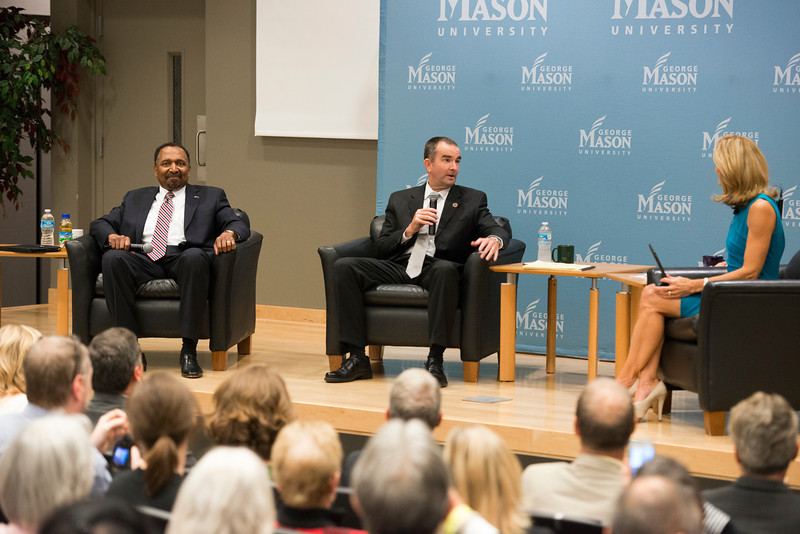
Tuesday night at the Arlington campus, the candidates for Virginia’s Lieutenant governor talked higher education, sequestration and mental health among others in their first appearance together and their only debate of the election.
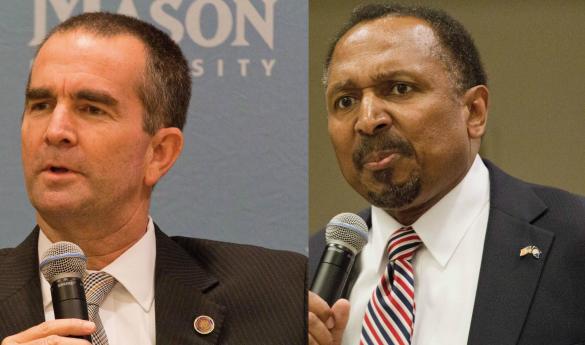
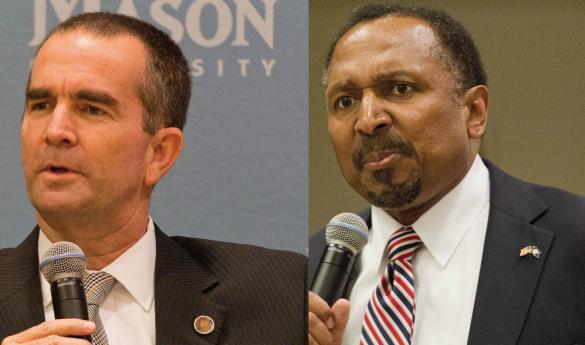
Republican E.W. Jackson and Democrat Ralph Northam took the stage together in Founders Hall to answer debate questions moderated by WUSA reporter Peggy Fox.
On the issue of higher education, Fox asked Northam if he would support privatizing institutions due to the reduction of state funding for public institutions.
Northam opposed the idea, citing his kids’ experiences in higher education and the legacy of public institutions such as the University of Virginia.
“Last thing I would want to see happen is for the University of Virginia to go private and to decrease access for those children of ours who have grown up and want to go to school there,” Northam said.
Jackson said that what needs to be examined is the federal government’s role in providing subsidies that turn into inflation, meaning that the government will overspend their budget and therefore create more debt.
“We should be looking at providing quality education and higher education for everyone who wants it, but I think we have to look at some smart ways of doing it,” Jackson said.
Northam proposed solving the problem of the decreasing enrollment of Virginia students in Virginia colleges by adopting a system that rewards in-state students by waiving tuition fees for good grades.
“We need to make education a priority so that we can compete [with] surrounding states and the world,” Northam said.
Jackson suggested focusing on community college as alternatives to four-year education and providing more distance education.
“We should be looking at providing quality education and higher education for everyone who wants it, but I think we have to look at some smart ways of doing it,” Northam said.
Both candidates acknowledged the effect that the sequestration spending cuts would have in Virginia and that partisanship in congress does not lead to results and that they need to figure out how to work together to make changes.
Jackson emphasized that government has limited power and that it should stay limited, while Northam suggested tourism becoming a bigger industry and investing in education as solutions.
The candidates disagreed on how to deal with mental health issues, a topic that resonates with the area after the Navy Yard shooting. Jackson supports investing in helping the mentally ill, especially veterans, and suggested the way to protect them and protect others is to institutionalize them.
Northam disagreed, saying there are other options to institutionalization such as opening access to mental health resources and turned to gun law reformation, referencing the 2007 Virginia Tech University shooting
Jackson left directly after the debate to attend another event. Northam spoke to reporters after the debate and discussed his plan to use the Medicaid expansion to give higher education more state funding.
http://www.gmufourthestate.com/content/virginias-lieutenant-governor-candidates-debate-mason


McAuliffe and Cuccinelli are facing off for Virginia’s gubernatorial election in November.
But what will happen if the governor gets sick and has to bow out of office?
The Lieutenant Governor will take over.
On Tuesday, September 24th, Lieutenant Governor candidates E. W. Jackson and Ralph Northam met at George Mason University’s Arlington campus for a debate. Lasting ninety minutes, the debate was moderated by WUSA reporter Peggy Fox, who fielded questions to the two candidates.
Ralph Northam, the Democratic candidate, is a pediatric neurologist from Norfolk Virginia. A graduate of the Virginia Military Institute, he served eight years in the military and held office in Virgina’s Senate for six years.
By contrast, E. W. Jackson, the Republican candidate and a preacher, has yet to hold a public office. Jackson, who had an uncertain childhood during which he lived with foster parents, succeeded to earn a law degree from Harvard.
The candidates, initially seated, stood each time they addressed the audience after Jackson established precedent when he stood to introduce himself. Jackson’s years of experience as a preacher were evident as he spoke clearly with diaphragmatic support that projected his voice across the hall. His speech was polished and he spoke with eloquence. By playing off of the crowd’s dynamics, Jackson was able to match the audience’s enthusiasm with his own energy.
Northam spoke with an easy drawl that was slower than Jackson’s pace of speech. It was clear that Northam didn’t have the same experience with public speaking as Jasckson did, as Northam lacked Jackson’s enunciation, projection and drive. Yet Northam was able to endear himself to listeners with references to his children, both graduates of Virginia state Universities and to his wife, a public school teacher. Northam portrayed himself as a family man of stand up values in contrast to Jackson’s “rags to riches” success story.
Throughout the debate, both candidates gave their views on the key issues of abortion, funding for education, transportation, funding for health care and the corporate income tax. In the wake of the Navy Yard shootings, Jackson supports institutionalizing the mentally ill while Northam does not.
The audience enjoyed a smooth, colloquial exchange between the two candidates until the end of the debate, which packed a surprise. In one of his final statements, Northam reminded the audience about Jackson’s former untoward comments towards gays, Democrats and non-Christians. He also stated that he had never filed for bankruptcy, had liens placed against his property or been sued for not paying his taxes. It was implied that each of these things had happened to Jackson.
This was a low blow. When Jackson had the opportunity to speak, it is very much to his credit that he didn’t respond with an equal criticism of Northam’s shortcomings.
For more information about each candidate’s opinion on key issues, check out the Washington Post:
Ralph Nader started with an encounter that he had last week.
While walking through DC, he passed a young man. The man, who was in his early twenties, was walking hunched over, his eyes glued to his cell phone, oblivious to his surroundings. Ralph Nader asked him a question.
“Do you ever feel that you are a prisoner of your own smart phone?”
“Yes, I do.”
The young man didn’t even look up.
Throughout Ralph Nader’s presentation, this man served as a metaphor for the greater American public, complacent victims of corporate crime, government fraud, poor health care and corrupt politicians. When these issues are brought to the attention of Americans, most people shrug their shoulders like the young man with his cell phone and get back to their lives.
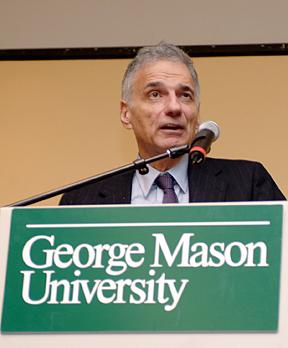
Ralph Nader, a civic activist, spoke at GMU’s Harris Hall on Monday, September 23rd. Nader is responsible for starting and supporting dozens of public activism committees, or PACs, that cover humanitarian, environmental, consumer protection and governmental issues, and he ran for president four times in 1996, 2000, 2004 and 2008 as a write in candidate. Nader initially came to prominence for his efforts to improve the safety of cars.
Nader talked about his first activism campaign when he brought the automobile industry to task for its lack of safety features within its automobiles. Nader was inspired to undertake this campaign by the large number of his friends who had died or suffered severe injuries from car accidents. He began researching safety regulations within the automobile industry while he was in law school and eventually authored a book about his research titled Unsafe at Any Speed.
In his lecture, Nader told the audience that when he first moved to DC to lobby for improved safety standards for cars, he was “all alone.” He learned that in order to implement change within the automobile industry, he had to form an alliance with a senator, find press coverage and make a contact within the white house.
In the beginning, it was hard.
Emphasizing this point, Nader recounted a time when he called a congressman’s office. After introducing himself, the secretary on the other end of the line asked him who he was with.
“At the time, I was standing all by myself in a pay phone!” Nader told the audience. Exasperated, he picked up a nearby dog and held the receiver of the phone to the dog’s mouth. The dog barked. “And that was how I answered the question of who I was with.”
Throughout his speech, Nader encouraged the audience to become politically active. He stressed that the biggest mistake that Americans make is in assuming that they can’t make a difference. Nader told the audience that most major activism movements in the United States started with only one or two people. He encouraged audience members to communicate with each other through local political activism groups, emphasizing how a small group of people spread through every congressional district can effectively influence its representative politicians. He referred to this passion for influencing positive change as having “fire in the belly,” also known by psychologists as emotional intelligence.
Nader provided the audience with a long list of issues that he believes need to be changed within the United States. He wants to provide full health care coverage for everyone, to cut the military’s budget, to hold the “wall street crooks” accountable, to fight pollution and to use solar energy instead of fossil fuels and nuclear power.
A recurring issue throughout the lecture was corporations. Nader stated that multinational corporations control people, that they speculate with employee mutual fund and pension money and that they influence the foreign policy of the United States, even instigating wars. He summed up his feelings by stating that “Corporations are too big to fail.”
Nader is also campaigning to raise the minimum wage, which has not kept up with inflation and the rising standard of living over the past thirty years. Today, the minimum wage is $7.25, although in 1968, the minimum wage was over $10.50 after being adjusted for inflation. More information can be found at Nader’s website, www.timeforaraise.org
A humorous moment occurred when Nader referenced a video game called Grand Theft Central. He called for Americans to allocate a fraction of the time and money that they spend on this video game and to devote it to political activism. After Nader referenced Grand Theft Central several more times, an audience member corrected him: he was actually talking about the video game franchise Grand Theft Auto. Everyone laughed, Nader included.
For all of his fame and accomplishments, Nader was humble and unassuming in his engagement with his audience. In the Q and A that followed in which audience members voluntarily lined up behind a microphone and asked him questions, Nader gave thoughtful and serious responses to each question.
With several funny moments throughout the two hour session, Nader encouraged his audience to effect political change on issues of importance. By forming activism groups, audience members can find support and collaborate with like minded individuals. When people feel that they have power, they will work to effect change.
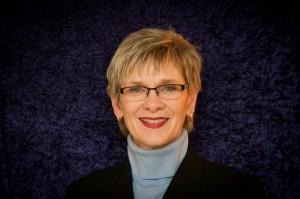
Patrice Winter, a physical therapist, is running for Virginia’s 37th District Delegate. Winter has lived in Fairfax City, located within the 37th District, for 25 years. She believes that her experience with small business, education and health care will give her a unique perspective for this position.
Prior to her campaign, Winter ran her own Fairfax based physical therapy practice for 17 years. It is during this time that she developed an understanding of the challenges that small business owners face in today’s economy. As a delegate, she will work to lower taxes on small businesses and to minimize the burden placed on business by the state government.
Winter now teaches and researches as a faculty member with GMU’s College of Health and Human Sciences. She earned her master’s degree in Health Systems Management from GMU in 2010 and most recently completed her doctorate in Physical Therapy from Shenandoah. As a former alumnae and member of Mason’s faculty, she is an enthusiastic supporter and proponent of George Mason as an educational institution.
Winter has also held a number of service and leadership based positions within the Fairfax community. She has served on her City Council (2002- 2008), the COG Metropolitan Washington Air Quality Committee (2002- 2008) and the Metropolitan Washington Council of Governments (COG) Transportation Planning Board (2004- 2008). She believes that the experience that she has gained with these positions has prepared her for the District Delegate position.
In her attempt to connect with voters, Winter has knocked on the doors of 5,000 residents within the 37th District. She emphasizes her involvement with her community and her desire to represent her voter’s interests in Richmond. Winter aims at “Being a voice for those who think they don’t have a voice.”
To learn more about Patrice Winter’s campaign for Virginia’s 37th District Delegate, visit her website at http://electpatricewinter.com/
(photos taken by Sean Hickey)
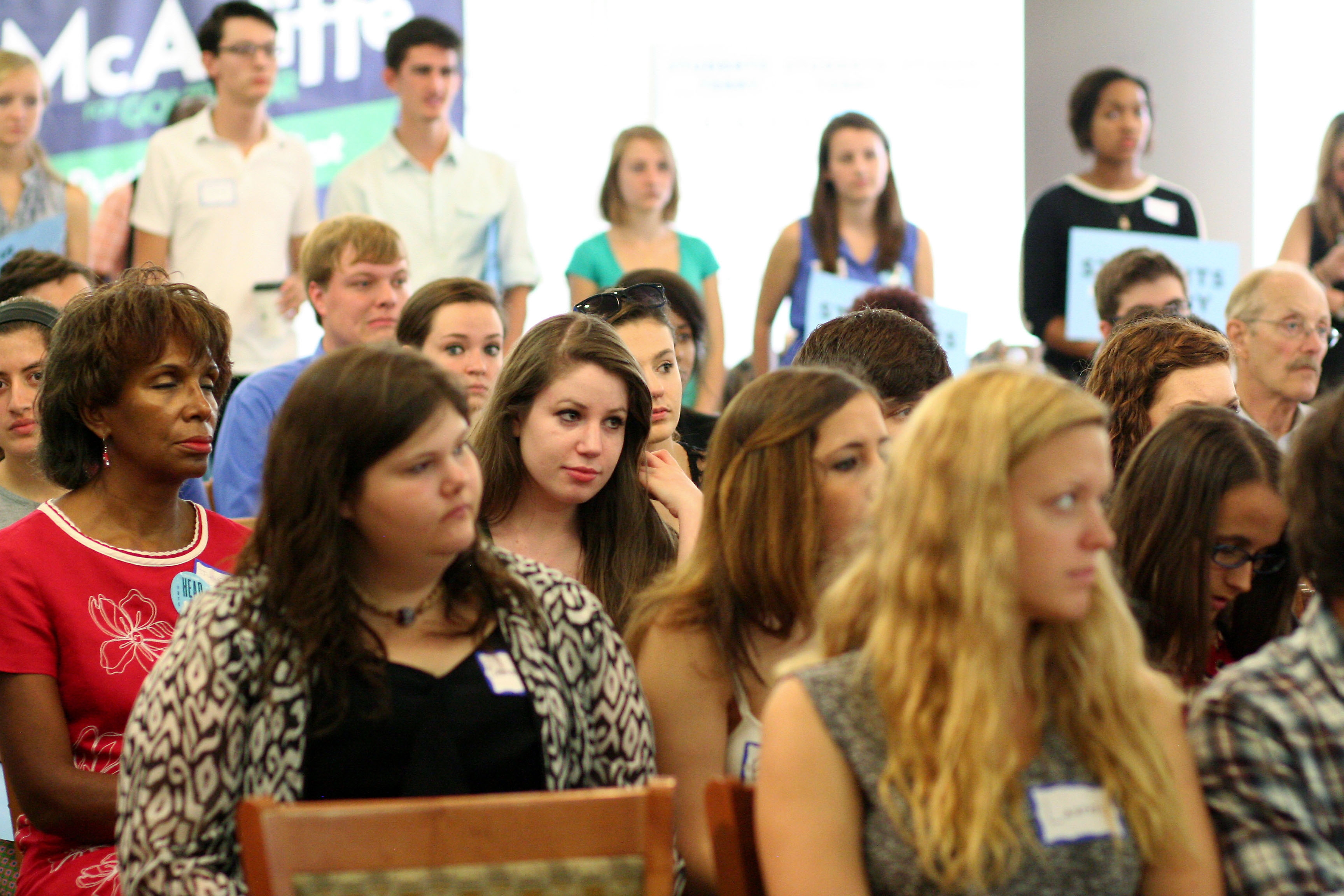
Terry McAuliffe, the Democratic candidate for the governor of Virginia, visited George Mason’s Fairfax campus on Thursday, September 12th. From 9:30- 10:30am, the Democratic candidate answered questions about his campaign and socialized with students. McAuliffe was hosted by the GMU Democrats student organization for a coffee social in George’s restaurant on the third floor of the Johnson Center.
At the meeting, McAuliffe emphasized key points of his campaign platform, which included reforms to Virginia’s metro and transportation infrastructure, healthcare and medicaid expansion and the importance of women being allowed to make their own health care decisions.
McAuliffe, who has lived in Virginia for twenty years, believes that Virginia’s educational system needs reform. He supports an increase in financial aid for higher education, a reform on the SOLs and eliminating overhead costs for higher educational institutions.
At the meeting, the Virginia governor hopeful advised students to pursue what they enjoy doing after graduation and he wants Virginia’s university students to graduate with jobs and minimal student debt.