Check out the Vote Easy tool by Project Vote Smart to find out, “which candidates best represent you.” Find out what the candidates are saying about the issues.

Seven-term Wisconsin Congressman Paul Ryan will make his national debate debut tonight as he steps on the same stage as the Vice President of the United States, Joe Biden.
Ryan and Biden will only have this one encounter on a debate stage this election cycle. Four years ago, Biden went toe-to-toe with Alaska Gov. Sarah Palin. Biden is a Washington veteran of over four decades and has run for president twice. Thus, he is also a veteran of these debates.
Although Biden is widely known as gaffe prone, these incidents normally occur in smaller venues, not in well publicized, high profile events. Biden has done his duty on the campaign trail as the attack dog in 2008 as well as this year. So, Ryan can expect a similar aggressive style from Biden tonight.
Paul Ryan has made quite a name for himself in his 14 years in the House. He became the chairman of the House Budget Committee in 2011 and has been a leader and advocate of a large-scale reform of America’s entitlement programs (Medicare, Medicaid, and Social Security). While his House plan is not the same as Romney’s plan, you can be sure that Biden will attempt to tie his controversial proposal to the ticket as a whole.
There have been very few “moments” in VP debates. One of most memorable was in 1988 when Sen. Lloyd Benson told Sen. Dan Quayle “You’re no Jack Kennedy.” However, It was the Bush/Quayle ticket that eventually prevailed that year. VP debates may sometimes garner a large audience, but their impact on the election as a whole is quite small. Unless either man makes a giant mistake, the dynamic of the race will not change significantly.
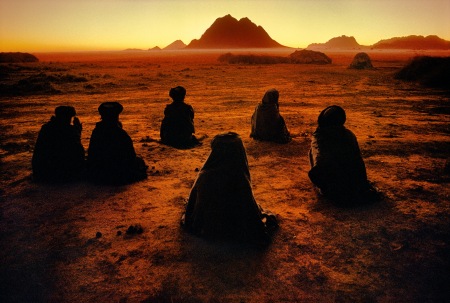
Photo from | http://stevemccurry.wordpress.com
After 9/11, the United States entered Afghanistan to fight back against those who attacked us on our own soil. It’s been about twelve years since we established a ground presence in Afghanistan, yet we are still fighting today. The question I pose is how many people in the United States took the time to educate themselves on those we are fighting? By educating I do not mean listening to what MSNBC, Fox, and CNN have to say about them. I mean did anyone take a real interest in educating themselves through research as to who these people actually are. The answer is, probably and sadly, not many. We are so quick to sputter out reasoning and to publicly accuse the teachings of an unfamiliar religion as being the catalyst to these attacks. So I pitch to you a topic revolving around the lifestyle and cultural make-up of those we are currently at war with. For the ill-informed or wrongly informed, it may surprise.
Islam has always battled for precedence over the tribal communities in Northern Pakistan and Afghanistan. Specifically, the Pashtun tribes of Pakistan and Afghanistan have always been deeply rooted in tribal tradition. It was Muhammad who united the feuding Bedouin tribes and instilled in them the teachings of Islam. Ever since then the Pashtun tribes have seen no distinction between being Pashtun and being a Muslim. The one glaring difference is the tribe’s strict adherence to the ancient honor code of Pukhtunwali. While being a Muslim and being a Pashtun are believed to be one in the same by those who practice, the tribal tradition has continued to take a notable precedence over the teachings of Islam.
The Pashtun tribes are primarily located on either side of the Afghanistan-Pakistan border along the Durand Line and Hindu Kush Mountain Range. It is an area Pashtuns themselves call Pashtunistan because they do not recognize the Durand Line as a legitimate border. Having said that, Pashtun populations are not restricted solely to those areas, as the Pashtun people hold a plurality throughout Afghanistan and inhabit a distinct portion of the Northwest Frontier Province (NWFP), specifically the Federally Administered Tribal Area of Pakistan (FATA) (Barfield). The Afghan Pashtuns are, again, part of the plurality within the population of Afghanistan while the Pashtuns in the FATA are a semi-autonomous group of people with little ties to the state of Pakistan. Pashtuns from more settled areas of the NWFP, however; are centrally governed by the Pakistani state in Peshawar Province (Barfield). These tribes were around centuries before the states of Afghanistan and Pakistan.
The tribal society is broken down into segments. At its lowest level is a sub-section also referred to as a kor, then there is a section or khel, sub-clan or beg, clan, tribe, and eventually the overall Pashtun ethnic group (Amato). As Ahmed said of the Mohmand tribe:
“The Mohmands must be understood within a phyletic context – that of Pukhtuness – and a religious context – that of being Muslim. Every Mohmand carries a blue-print in his mind of five concentric circles that emanate from ego and place him in his universe: the tribal sub-section (Kado Khel in Bela Mohamandan); the clan (Tarakzai); the tribe (Mohmand); the ethnic group (Pukhtun); and the religion (Islam)” (Ahmed, 320).
The Pashtuns are not a tribe but an ethnicity of people. Within the Pashtun ethnicity are a series of tribes, clans, sections, subsections, etc. These tribes are different from one another and often feud. There are two defining characteristics that are shared between the various tribes; the tribal honor code of Pukhtunwali and its roots in Islam. Pukhtunwali was around centuries before the creation of Islamic law.
The tribes of Arabia that predated the prophet Muhammad were characterized by raiding and feuding amongst one another, fighting for livestock, territory, and honor (Salzman). Much like he did with the people of Medina, Muhammad united these tribes under a constitution for all Arabs with an inclusive structure giving tribes a god given identity as Muslims (Salzman). Changing years of societal norms and beliefs did not come easy. The tribes had only known conflict and the mindset of “us against them.” In order for Islam to take root in these tribal societies and garner a distinct umma, it was essential that a balanced opposition was created in the form of the Muslim to the infidel, and the dar al-islam (the land of Islam and peace) to the dar al-harb (the land of the infidels and conflict) (Salzman). A group pitting themselves against another group is the catalyst for the creation of a civilization. In the case of these Arabian tribes, it was the creation of the Muslim civilization. For the Pashtun tribes, it is not as clear. While the Pashtun tribes, and many of the tribes that still exist today, did identify and accept the teachings of Islam, they still strictly adhere to their ancient societal codes. The only difference that is recognized or pointed out is that these Pashtuns strongly believe that their honor code, Pukhtunwali, runs hand in hand with the teachings of Islam.
Pukhtunwali translates literally into “the way of the Pashtuns” and defines the identity of those who follow it (Kakar). Pukhtunwali is an ancient tribal honor code followed by the Pashtun people. In a Pashtun society, to live without honor is to not exist. Pashtuns who no longer follow Pukhtunwali are no longer considered Pashtuns and are secluded from the community and all the benefits it offers (Kakar). Pukhtunwali incorporates many codes, but focus will be put on the codes of nang, melmastia, badal, namus, and jirga.
Nang translates literally to “honor”, but the word honor does not accurately depict the meaning of the word in terms of the Pashto language. Nang is the central authority of Pukhtunwali. Nang is often talked about in two principles: practices in battle and defense of honor (Kakar). As eluded to earlier, to live without honor in a Pashtun society is to not exist. It is considered nang to engage in battle to protect those in your tribe, and it is also nang to act in retaliation to an insult with superior force than that of the insulter (Kakar). With these acts Pashtuns prove their honor through their willingness to fight for the tribe against potential oppressive powers, and also defend the honor of the tribe in the event of insult.
Melmastia is the code of hospitality. Under this code of Pukhtunwali, Pashtuns are required to provide hospitality to anyone who seeks it, including enemies (Jaspal). Pashtuns are required to house, cloth, feed, give gifts, and provide security to their guests (Kakar). While the majority of these aspects are covered under melmastia, providing security falls under a different code called nanawati (Kakar). Nanawati requires Pashtuns to provide security to all of their guests and to fight for them as if they were one of their own. Nanawati is also an outlet where people can ask for revenge-conflict, or badal, to end (Kakar).
Much like melmastia and nanawati, badal is a core element of nang. Badal is the code of revenge to restore honor that often revolves around the variables of women, wealth, and land (Hussain, 21). If insult is brought upon the tribe, under Pukhtunwali it is warranted and encouraged to seek revenge against the insulter in order to restore honor of the tribe. Again, going back to the importance of honor in a Pashtun society, it is often thought that if revenge is not sought after by those that were insulted, then they are exhibiting shameless and dishonorable traits (Hussain, 21). Like the honor of the tribe, the honor of women is also upheld under namus.
Namus involves both men and women but Pashtuns often refer to it as the “defense of the honor of women” (Dupree, 126). Namus is integral in maintaining the gender segregated nature of Pashtun society (Kakar). It is deemed dishonorable if a man enters a women’s compound having no relation to any of the women and is grounds for expulsion from the community (Kakar). Without upholding the honor of women it would be impossible to be involved in jirga which is the governing body of Pashtun tribes.
Jirga is a council set up under Pukhtunwali that has legislative authority to make binding decisions (Dakar). The tribal elders who make-up the Jirga must exhibit great honor and must follow the code of Pukhtunwali strictly. As mentioned above, the FATA of Pakistan is semi-autonomous and has little to no interaction with the state. Jirga is the closest thing you can get to an acting government in this area. Though the Pashtun people of Pakistan, and in some respects Afghanistan, don’t align themselves with a state, they certainly align themselves with a religion; Islam.
I am not trying to say that anyone who belongs to a Pashtun tribe or speaks the Pashto language is at war with the United States. Nor am I saying that any tribe member that just happens to live in Northern Pakistan or Afghanistan is fighting against the United States. All I am doing is trying to inform the reader as to whom it is that make up the majority of people we are engaged in battle with in this region. I do not do this region justice in this adequate but rather simplistic explanation of its people. I challenge you to educate yourself on the matter. Maybe you too will break outside the bubble of a sound-bite media.
After Gov. Mitt Romney’s strong performance in the First Presidential debate last week, he has dramatically reversed his polling deficit he had experienced during the month of September.
National polls across the spectrum and across multiple polling and media outlets have confirmed a Romney bump of around five points. This brings the race to a statistical tie, with just 27 days remaining until Election Day. Gallup put the race at 47-47%.
The state-by state polls contain even more good news for Team Romney. Before the debate, Romney was put in the position of needing to win four states to get to 270: Florida, Ohio, Virginia, and New Hampshire. After the debate, once Obama leaning states have moved to “toss up” status. New Hampshire and Ohio being the most important changes. Also, once Obama leaners Wisconsin and Pennsylvania are now toss-ups. Essentially Romney’s debate performance has successfully expanded the board of states being contested. This forces the Obama campaign to spend time and money in these states to make sure they stay in their column.
Of course, if one debate can cause this dramatic a change, so too can the second debate change back. If President Obama’s performance improves, he may regain his edge in the vital voters categories of trust. After the debate, Romney gained major support for those who are looking for the candidate they most trust to handle the economy. Romney’s personal favorable ratings improved as well after the debate. This may take a hit if Obama brings up his comments about “the 47%” or his record at Bain Capital.
The bottom line is that this race is now a pure toss-up thanks to one debate. Another may decide who gets an edge going forward. One thing is certain, the debates do indeed play a major role in the American people’s impression of the two men seeking the Oval Office.
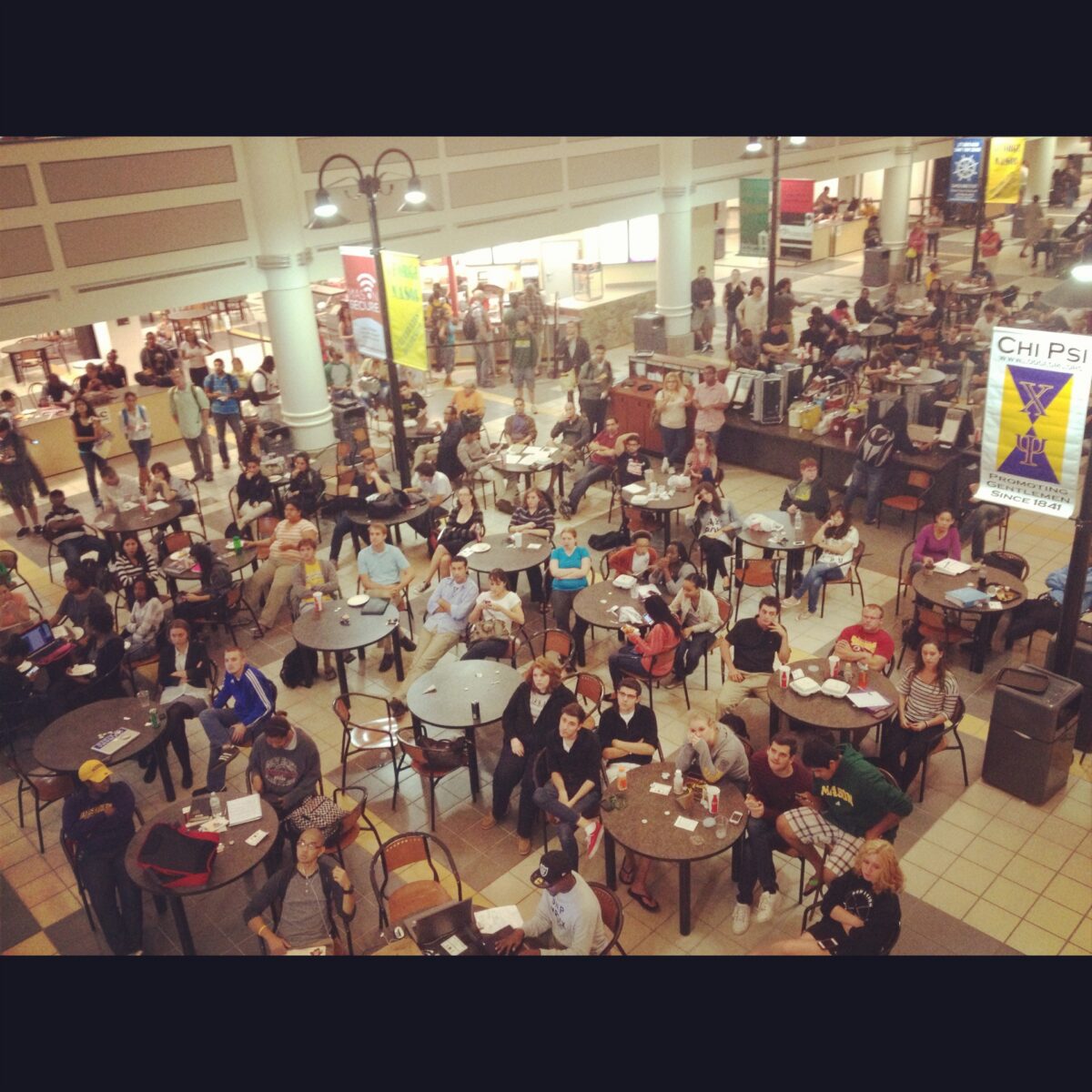
Cover Photo Taken by: Jasmine Young (last debate watch)
The Second Debate Watch party will take place tomorrow in the J.C Atrium. There was a huge turnout at the first debate watch party last week. Tomorrow’s debate will be between Vice- President Joe Biden and Congressman Paul Ryan. The topics for this debate are foreign and domestic policy. Moderating the debate is Martha Raddatz ABC news Chief Foreign Correspondent.
The debate will be divided into nine segments of approx. 10 minutes each which differs from the Presidential debate of six segments of 15 minutes each. Mason Votes hopes to see you tomorrow night. Pizza will be provided and for those interested in registering to vote forms will be available. The debate begins at 9:00 p.m. E.T.
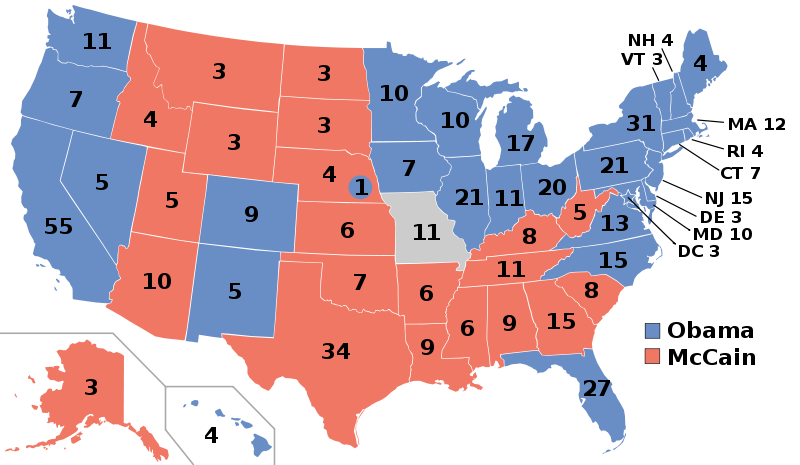
The cover photo is a file from the Wikimedia Commons.
Abigail Fisher is a native of Sugar Land, Texas and was denied admissions as an undergrad applicant to the University of Texas at Austin. She accuses the University of Texas of illegally discriminating against her. Fisher accuses them because she was a part of a pool of applicants who were evaluated using criteria that gave extra consideration to black and also Hispanic criteria.This case was brought before the Supreme Court and raised the question of whether and how race may be used in college- admissions decisions.
This case is similar to a case from 2003 about the University of Michigan law school and how the Supreme Court held that colleges were seeking to promote diversity must give “serious, good faith consideration” to race-neutral alternative to affirmative preferences. The difference between now and 2003 is that it has become more conservative and more hostile to racial preferences. This case affects the 2012 Presidential Campaign because candidates are likely to be faced with questions on affirmative action.
Full story: http://chronicle.com/article/What-You-Need-to-Know-About/134912/
The deadline to register to vote in Virginia is Monday October 15, 2012. Lauren Poe with Mason Votes explains how you can register to vote on campus, where you can vote on November 6, and what you need to bring to the polls.
[youtube]http://youtu.be/nKa73KL7h90[/youtube]
GMU Professor Warren Decker, Communications Dept. and Debate Director, participated in a Oct. 1, 2012 CSPAN video examining the debating styles of Pres. Obama and Gov. Romney.
Here is the CSPAN video description:
Professors Alan Schroeder and Warren Decker examined the debating styles of President Obama and former Governor Mitt Romney, who were to meet the following evening for the first of three debates. White House correspondent Laura Meckler discussed the candidates’ preparation for the debates. Professor John Sides talked about the relevance of presidential debates. C-SPAN archival video from past presidential debates was shown.
Professor Schroeder participated by video link from Boston and Ms. Meckler and Professor Sides from the C-SPAN newsroom.
Broadside, George Mason University’s student newspaper, featured a story about the Kritical Konversation program that took place Sept. 24. Here is an excerpt:
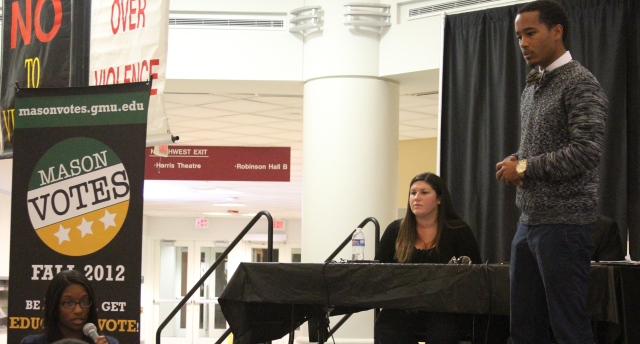
On Monday, Sept. 24, the members of Kappa Alpha Psi Fraternity, Inc., Alpha Kappa Alpha Sorority, Inc., Student Government, Mason Votes and the Lead Office came together to conduct a voter’s forum for the student body. Entitled Kritical Konversation, the event took place in the Johnson Center atrium.
Read the full article here.