
By: Noah Demo, Mason Votes Contributor
This article was originally written as a classroom assignment for COMM 374: Political Journalism and submitted to Mason Votes by the student author for publication.
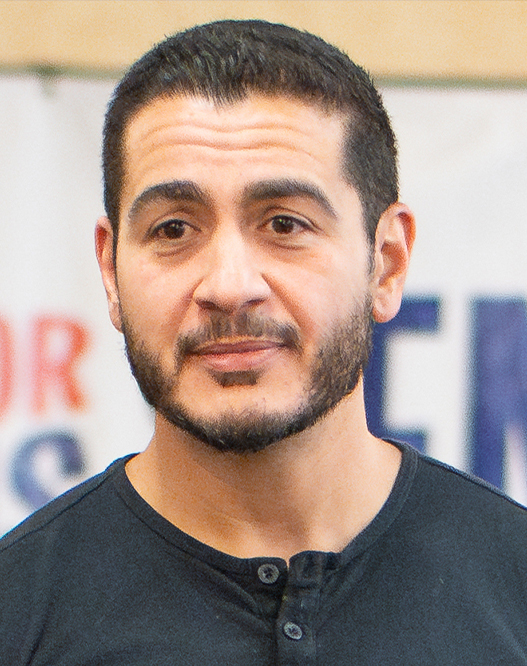

Michigan’s Senate race has become one of the nation’s premier battlegrounds, pitting Democrat Abdul El-Sayed against Republican Mike Rogers in a contest that will help determine control of the chamber. Republicans view the open seat as a rare pickup opportunity, while Democrats are betting that Michigan’s recent history of electing Democrats statewide will once again hold.
The race is testing whether Democrats can maintain their edge in a state that has become a fixture on the national battleground map. El-Sayed is running on a progressive, working-class economic message aimed at mobilizing Democratic voters in Detroit and metropolitan suburbs.
Across the aisle, former congressman Rogers is banking on his national security bona fides and potential appeal to swing voters while benefiting from a political environment that has become increasingly favorable to conservative Republicans in federal races.
The campaign is revolving around the economy, manufacturing, trade, health care and the cost of living. Strategists are tracking whether voter attitudes toward the Trump administration will boost Republican turnout or motivate Democratic voters to return to the polls in opposition.
Students enrolled in COMM 374 (Political Journalism) have been tasked with covering key Senate races across the country this fall and reaching out to local experts. Jonathan Hanson, director of the Master of Public Policy Program at the University of Michigan’s Ford School, and Lauren Gibbons, a senior politics reporter at Bridge Michigan, shared insights into the political divisions, voter turnout challenges and campaign strategies shaping the election in their state.
Despite Michigan’s strong labor unions, large traditionally Democratic Black population, and Democratic state leadership, the state has remained a political battleground since the 2016 election when Donald Trump unexpectedly won the state, handing Republicans their first victory in Michigan since 1988. Hanson explains how this status makes Michigan something of a microcosm for national politics.
“We see a large urban area and, you know, some smaller urban areas in the state. But once you get outside those urban areas, it’s a lot of rural areas, and we see this sort of polarization happening that’s happened elsewhere where the urban areas have tended to be more blue in recent elections and rural areas have trended red,” explains Hanson.
For Hanson, the Democratic candidate faces two related challenges. El-Sayed represents a “progressive wing of the Democratic Party that some people are not comfortable with” and must improve his numbers in Democratic strongholds like Wayne County, which include Detroit and surrounding suburbs, to counteract Republican votes in rural counties.
“El-Sayed did not do especially well in Wayne County in the primaries. And so he has some ground to make up in terms of enthusiasm,” Hanson stated.
National news has focused heavily on Michigan’s unique demographics and the impact of El-Sayed’s statements about Israel on the Jewish vote. According to Gibbons, this lens may overstate the impact of the Jewish vote and the degree to which it’s affecting the race.
“There are some issues that do deserve attention, but perhaps they’re getting a little bit overblown in the national media,” Gibbons said.
“If Black voters don’t show up for Democrats, that poses a problem for Abdul El-Sayed,” Gibbons continued.
Within the key Democratic strongholds that El-Sayed must win, Hanson identified young voters as a “crucial part of the Democratic vote coalition” because of the diverse issues motivating their votes – from climate change and healthcare to insecurity about their economic future.
With tariffs, the war in Iran, and multiple state visits by Trump and Vance, the race between Rogers and El-Sayed is also testing how attitudes about Trump policies will influence voters.
Hanson described the election as a referendum on the state’s support for Trump now. “The senate race in Michigan is a referendum on the direction that the country is headed, and therefore is a referendum on Donald Trump’s performance as a president,” Hanson said.
El-Sayed’s campaign has framed Rogers as “tied at the hip with Donald Trump,” while the Rogers campaign presents El-Sayed as “extreme” and “not one of us,” Hanson stated. Those competing narratives have unfolded amid extensive campaign spending and negative advertising.
Because the race is critical to control of the Senate, it has attracted an explosion of spending from both inside and outside of the state. Gibbons, however, is unsure how much that spending is influencing voters and their decision.
Despite this infusion, Gibbons questions how much it will actually matter in the race. “Haley Stevens had so many ads in support of her, she still lost, even by a small margin,” Gibbons said. This example suggests that financial backing doesn’t always guarantee a victory. “I think there is a limit to how effective all of this money is,” she continued.
Negative campaign ads have captured headlines and prompted fact-checks. However, their impact on the election remains open for debate. Gibbons doubts whether individual ads will motivate voters in the context of a constant stream of advertising.
“If you’re in one of those competitive areas, you’re just getting inundated with ads all the time. And I think what you’re seeing from a lot of voters is, get the election over with already,” said Gibbons.
With Election Day less than a week away, both interviews highlight that local turnout, more than national campaign narratives, could be the defining story the day after the election.
“I think voters should really just keep everything that they’re hearing and seeing with a grain of salt and actually go back through and look through some of their records,” she added.
_____________________________________________________________
Candidate photo credits:
- Abdul El-Sayed: photo by , CC BY-SA 4.0, cropped.
- Mike Rogers: photo by , public domain, cropped.

