Mason Votes

Community Schools and Vocational Training – College Affordability Part 3

When it comes to community and vocational schools, Obama sees them as essential to providing local students with the skills they need and intends to reward community colleges that increase their graduates and transfers to four-year colleges. McCain focuses on retraining workers.

Read more about how the two candidates intend to support community schools and how they want to implement vocational training in Part 3 of Mason Votes’ series on college affordability.
Taking the Cost of Education out of Taxes – College Affordability Part 2

Tax credit programs allow those applicable for a credit to subtract the value from their annual tax payment, or claim it as a deduction. So if you were required to pay $5,000 in taxes this year and you received the $4,000 tax credit that Obama proposes for students, you would only have to pay $1,000 in taxes. Many politicians, including Obama, favor providing tax credits to college students in exchange for public service. However, some college administrators state that tax credit programs force an increase in overall student tuition.

Obama wants to increase tax credits, McCain states he wants to simplify them, but by simplify, does he mean eliminate? Find out in Part 2 of Mason Votes series on College Affordability.

A History of Candidate Positions on College Affordability – Part 1

Senators John McCain and Barack Obama have had plenty to say about Wall Street and Main Street, but they have said little about how the economic situation makes it difficult for students who want to live on University Row. Though college students are expected to be a deciding factor in a number of states, including Virginia, the issue of college tuition barely shows up on both candidates’ radars.

This is Part 1 in a five part series on how the presidential candidates plan to help students pay for college. This section focuses on the College Cost Reduction Act and federal grants.

The 20/20 Politically Incorrect Guide to Politics

ABC’s John Stossel briefs viewers on some of the big issues in the election in a 20/20 special series The Politically Incorrect Guide to Politics. YouTube videos are below and you can find higher quality video at the 20/20 website.

What People in Power Can Do and “Rinkonomics”

Preview: Maxed Out

When Hurricane Katrina ravaged America’s Gulf Coast, it laid bare an uncomfortable reality—America is not only far from the world’s wealthiest nation; it is crumbling beneath a staggering burden of individual and government debt. Maxed Out takes us on a journey deep inside the American debt-style, where everything seems okay as long as the minimum monthly payment arrives on time. Sure, most of us may have that sinking feeling that something isn’t quite right, but we’re told not to worry. After all, there’s always more credit!

Maxed Out shows how the modern financial industry really works, explains the true definition of “preferred customer” and tells us why the poor are getting poorer and the rich getting richer. By turns hilarious and profoundly disturbing, Maxed Out paints a picture of a national nightmare which is all too real for most of us.

From: http://www.maxedoutmovie.com/syn/index.html

Watch the Last Presidential Debate Live

George Mason University will be holding a debate watch party for the third and last presidential debate. The event start at 8 p.m. in the Johnson Center Atrium with a live panel of three speakers and will be followed by CSPAN coverage of the debate at 9 p.m.

The panel’s speakers will be Bassam Haddad, Director of the Middle East Studies Program, Rutledge Dennis, Professor Sociology and Anthropology, and Kmt Shockley, Professor of Educational Transformation.

During the debate, Mason Votes will be hosting a Live Blog, an interactive forum to express views about the debate as it happens. All are invited to participate.

If You Were Running for President, What Would Your Platform Be?

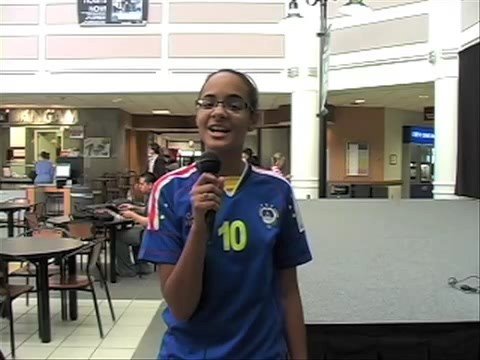
Mason Votes interviews students to find out what the most important issue is for them.

Do Students Support the Wall Street Bail Out?

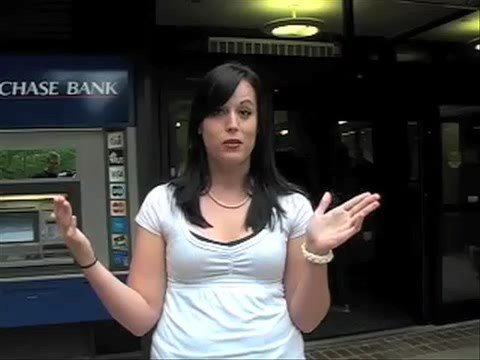
Mason Votes asks George Mason University students how they feel about the Wall Street bail out plan.

Download Now!

Debate Watch Party Tonight

Tonight at 8:30 p.m. Mason Votes will open the Second Presidential Debate Watch Party with a panel of guest speakers at the Johnson Center, who will speak about the youth vote and the digital sphere’s influence on the electoral process. Join Mason Votes on this page for a live blog of the event and the debate.

Instructor Cultivates Patriot Pride Among Youth Voters

By Maria Carabelli – UPI

During the 2004 presidential election, only 47 percent of youth ages 18-24 voted and only 66 percent of those aged 25 or older took to the polls, according to The Center for Information and Research on Civic Learning and Engagement Web site. These statistics concern Jason Warren, communication instructor at George Mason University, Fairfax, Va., who at 26 years old is a young voter himself. With 30,000 students the university is home to a plethora of young voters, many of whom will have the opportunity to vote for the first time in November.

Warren, who was recently recognized as Outstanding New Coach of the Year by the American Forensics Association, teaches students the value of their voice and the ethical obligations of their First Amendment right to free speech. This semester as the presidential campaigns heat up, his free speech and ethics class has no shortage of material to discuss.

As a student in George Mason’s doctoral program in communication, Warren understands there are many life events that might prevent a person from physically going to vote but he also says there is a false ideology that young votes do not make an impact. “Young voters feel they have no personal stake and they feel their vote doesn’t make a difference,” Warren said. He also believes that young voters are less educated about the election and he uses his position as an educator to help his students understand the importance of their vote.

Yet, he can only do so much. The candidates, he asserts, need to find ways to engage young voters and make them feel included in the democratic process. In Warren’s eyes, Democratic Party nominee Barack Obama, has an edge over his Republican Party opponent John McCain. U.S. Sen. Obama, according to Warren, put the spotlight on young voters by working to increase the number of registered young voters and by talking to them about issues that are important to them, such as the economy, education, foreign relations and the War on Terror.

U.S. Sen. McCain, however, has a slightly more uphill battle as his party must be able to convince a skeptical audience that they are a party of change, said Warren. Regardless of either candidate’s current position with young voters, the questions remain: Will young people voice their opinions? Will young people vote in November, or will they continue to give into the idea that they are a powerless demographic?

If Warren has anything to say about it, young people will vote. His students who stand with him in line at the polls will be those who understand the power of free speech, ethics and the right to vote.

From: The Voice of the Young Voter
Published: Sept. 18, 2008 at 5:36 PM