Mason Votes

Primary Debate Watch Party


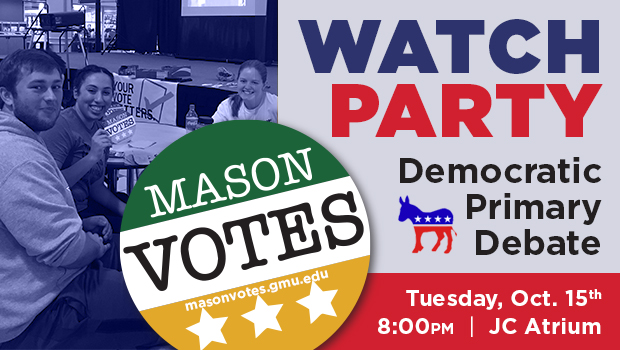
Join Mason Votes for a Debate Watch Party in the JC Atrium at 8pm on October 15th as 12 Democratic primary candidates square off LIVE on CNN. Anderson Cooper (CNN), Erin Burnett (CNN), and Marc Lacey (New York Times) will serve as moderators.

The following 12 candidates will appear together on the debate stage: Sen. Amy Klobuchar, Sen. Cory Booker, Mayor Pete Buttigieg, Sen. Bernie Sanders, former VP Joe Biden, Sen. Elizabeth Warren, Sen. Kamala Harris, entrepreneur Andrew Yang, former Rep. Beto O’Rourke, former Housing Secretary Julián Castro, billionaire and activist Tom Steyer, and Rep. Tulsi Gabbard.

In order to qualify, candidates were required to meet a 2% polling threshold in four pre-approved polls and receive financial contributions from at least 130,000 unique donors (including 400 donors each from at least 20 states).
Click here to RSVP via Mason360.

Planning to Vote on Campus at Mason?

Have you updated your Virginia voter registration information with your campus address?

If not, the deadline to register or update your registration is Tuesday, October 15, 2019 (by mail or in person, or online at vote.virginia.gov by 11:59 pm, Tuesday, October 15th).

All Mason students are encouraged verify their current registration information and make any necessary updates as soon as possible by visiting: www.elections.virginia.gov/registration/

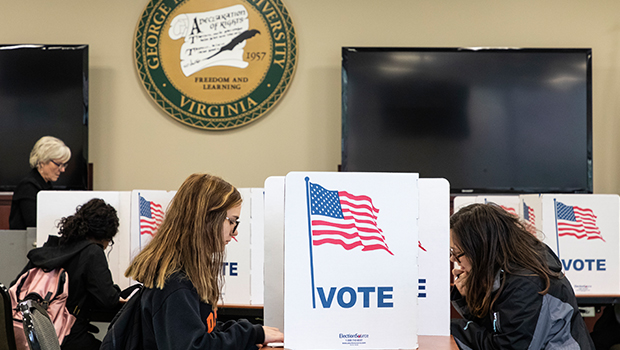
How to vote on campus (Merten Hall polling place):

ON-CAMPUS STUDENTS: Use your HUB mailing address at 4450 Rivanna River Way, PMB #, Fairfax, VA 22030 as your residence address. However, question number 4 on the voter registration form must include the residence hall with your room number in the fillable area, when filling out the form. This will allow you to vote on campus at Merten Hall for the Presidential Election.

ONLY students properly registered at a campus address may vote at the University Precinct located at Merten Hall on the Fairfax campus. All other Mason students and faculty must vote at their registered home precincts.

Required Photo ID: Photo ID is required to vote. Your George Mason Student Photo ID is welcomed on Election Day.

Click here to download a “Pocket Guide for Voters” from the Virginia State Board of Elections.


National Voter Registration Day 2019

Happy National Voter Registration Day!

No time like NOW to make sure you are registered to vote or to update your voter registration with your current address.

Visit vote.gov to find out how. Virginia residents can learn more and register via  vote.virginia.gov/registration

“Every year millions of Americans find themselves unable to vote because they miss a registration deadline, don’t update their registration, or aren’t sure how to register. National Voter Registration Day wants to make sure everyone has the opportunity to vote.”

#MasonVotes #vote #NationalVoterRegistrationDay

________________________

More info about #NVRD from nationalvoterregistrationday.orgNational Voter Registration Day is a national holiday celebrating our democracy. It was first observed in 2012 and has been growing in popularity every year since. Held on the fourth Tuesday of September, National Voter Registration Day will take place on September 24, 2019. The holiday has been endorsed by the National Association of Secretaries of State (NASS). It is further supported by the National Association of State Election Directors (NASED), the U.S. Election Assistance Commission (EAC), and the National Association of Election Officials (The Election Center).

Primary Debate Watch Party


Join Mason Votes for a Debate Watch Party in the Johnson Center Atrium at 8:00pm ET on Thursday, September 12, 2019 as 10 Democratic Primary candidates square off LIVE from Texas Southern University on ABC.

George Stephanopoulos (ABC), David Muir (ABC), Linsey Davis (ABC), and Jorge Ramos (Univision) will serve as moderators.

Down from a much wider field of 20 candidates who qualified for the first two Democratic primary debates, the 10 hopefuls appearing this Thursday night were the only ones to meet the Democratic National Committee’s threshold of both 130,000 individual donors and at least 2% in four qualifying polls.

All 10 qualifying candidates will be appearing onstage together for the first time: former VP Joe Biden, Sen. Bernie Sanders, Sen. Elizabeth Warren, Sen. Kamala Harris, Sen. Cory Booker, Sen. Amy Klobuchar, Mayor Pete Buttigieg, former Housing Secretary Julián Castro, former congressman Beto O’Rourke, and entrepreneur Andrew Yang.


Sen. Mark Warner to Hold Town Hall at Mason

*UPDATE: Click here to watch video from this event.

_________________

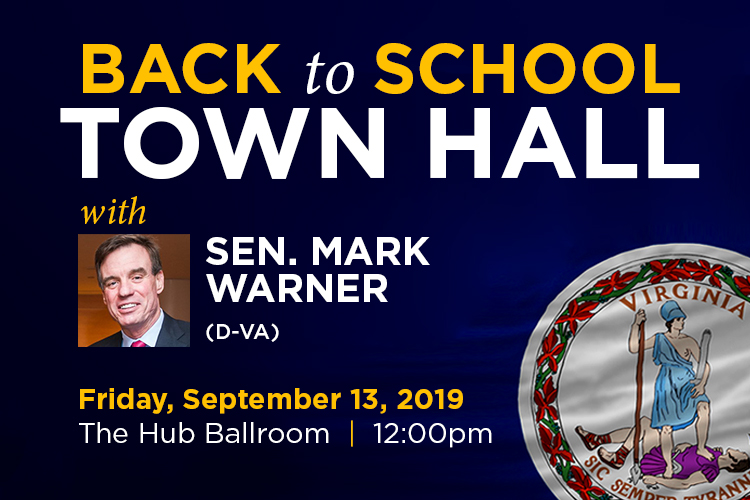
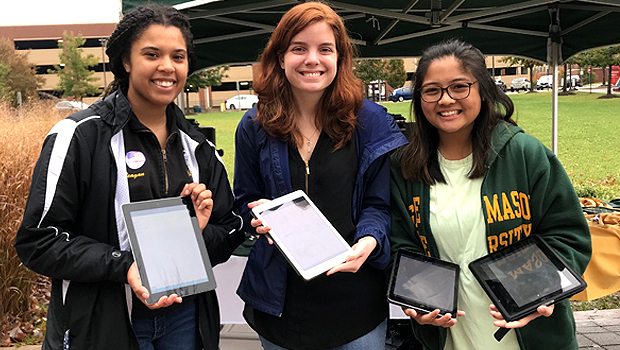
Mason students, faculty, and staff are invited to join Senator Mark R. Warner (D-VA) for a Back to School Town Hall at 12 noon on Friday, September 13, 2019 in The Hub Ballroom on the Fairfax campus of George Mason University.

Senator Warner will provide an update on his legislative initiatives regarding college affordability and take your questions. The Senator looks forward to having this important discussion with the Mason community.

Space is limited, so please REGISTER by Tuesday, September 10, 2019
Register at gmutownhall.eventbrite.com

This is a non-partisan, official Senate event open to George Mason University students, staff, and faculty with a valid GMU ID.

How Did Mason Vote in 2018?

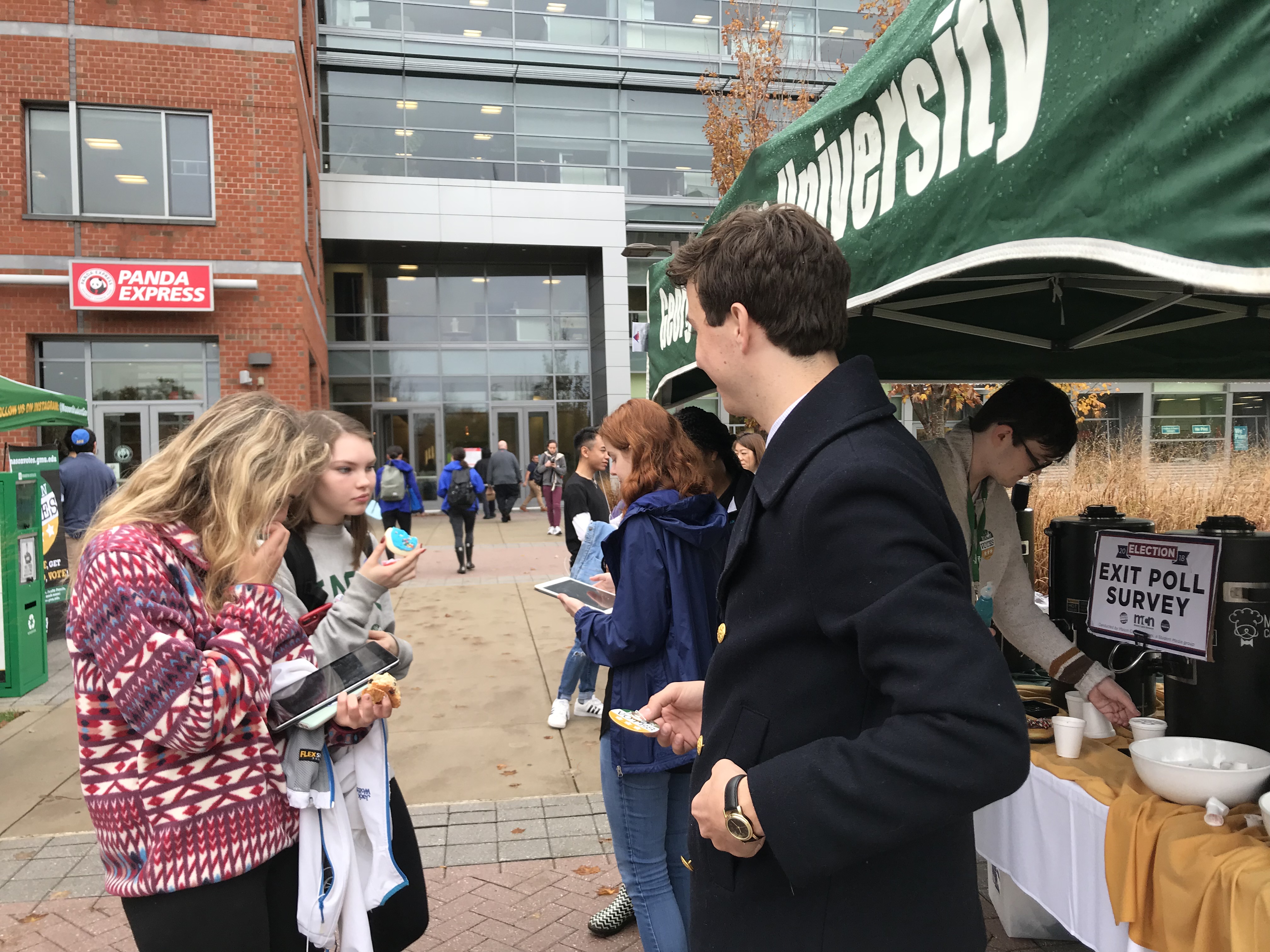
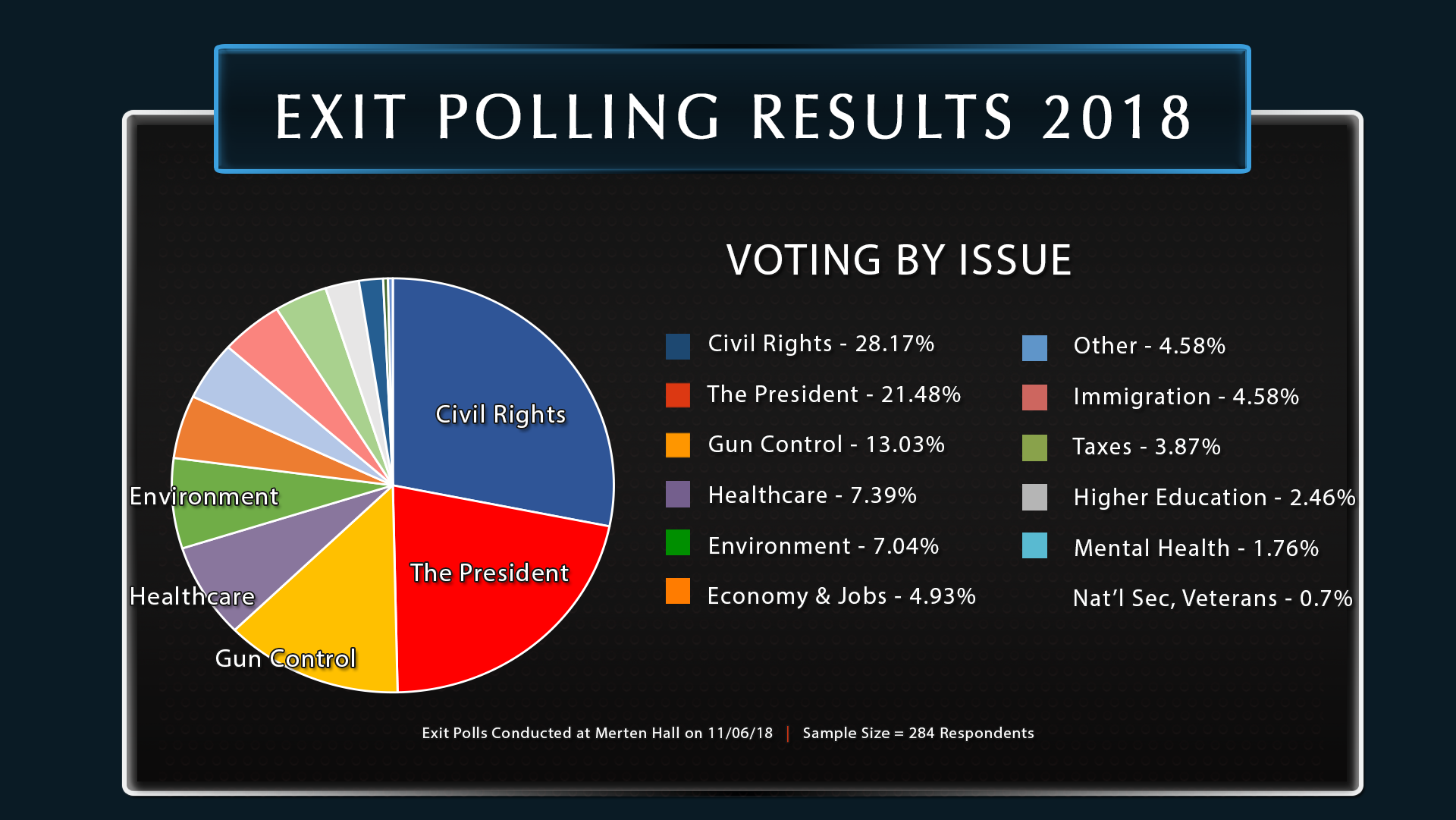
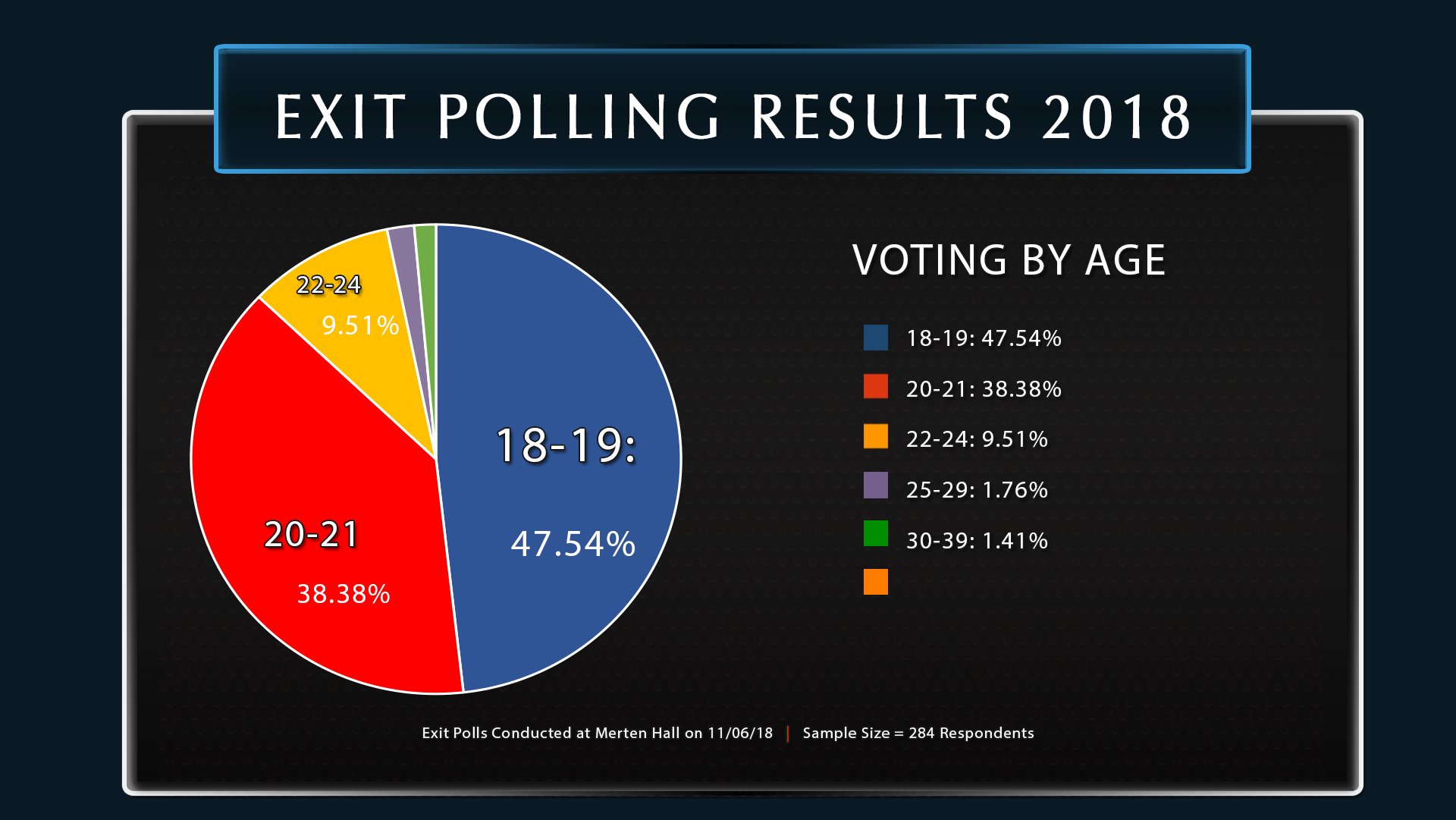
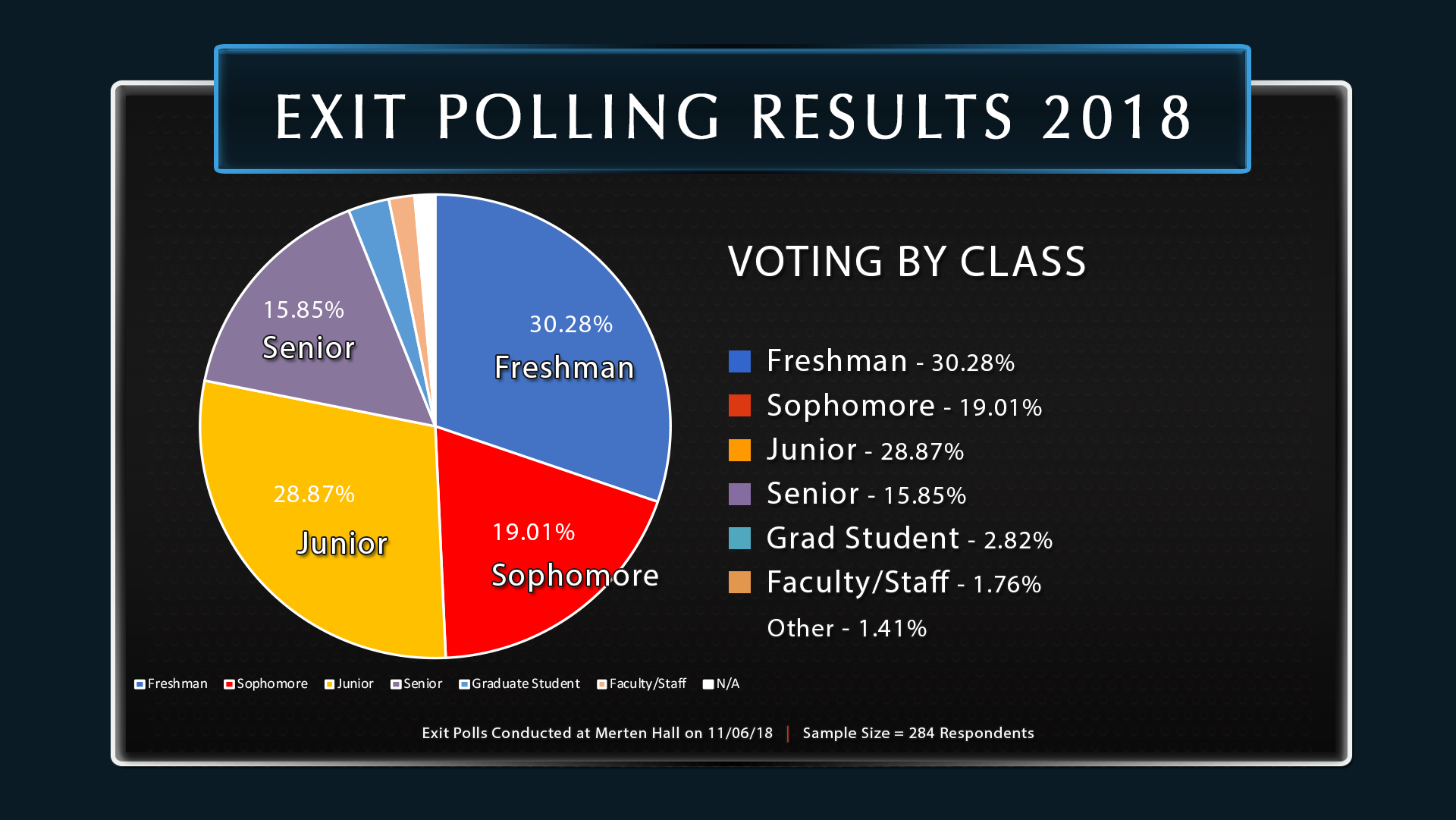
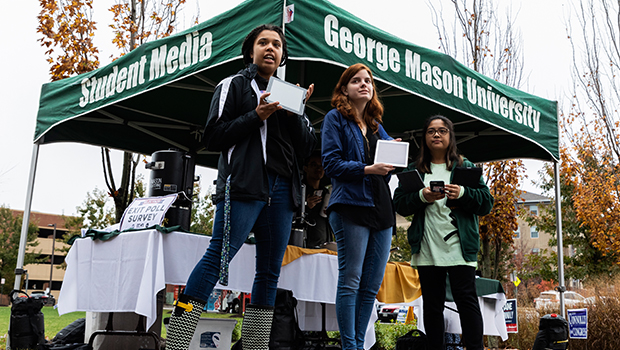
Student Media and Mason Cable Network conducted exit polling outside Merten Hall on Election Day to learn more about what issues and candidates were motivating factors for student voters in the 2018 midterms.

Despite the rain, over 280 students completed a short exit survey after voting at Mason’s on-campus polling place, and the results were announced on Mason Cable Network’s LIVE election coverage on Tuesday evening. Click here to watch MCN’s full election night broadcast on YouTube.

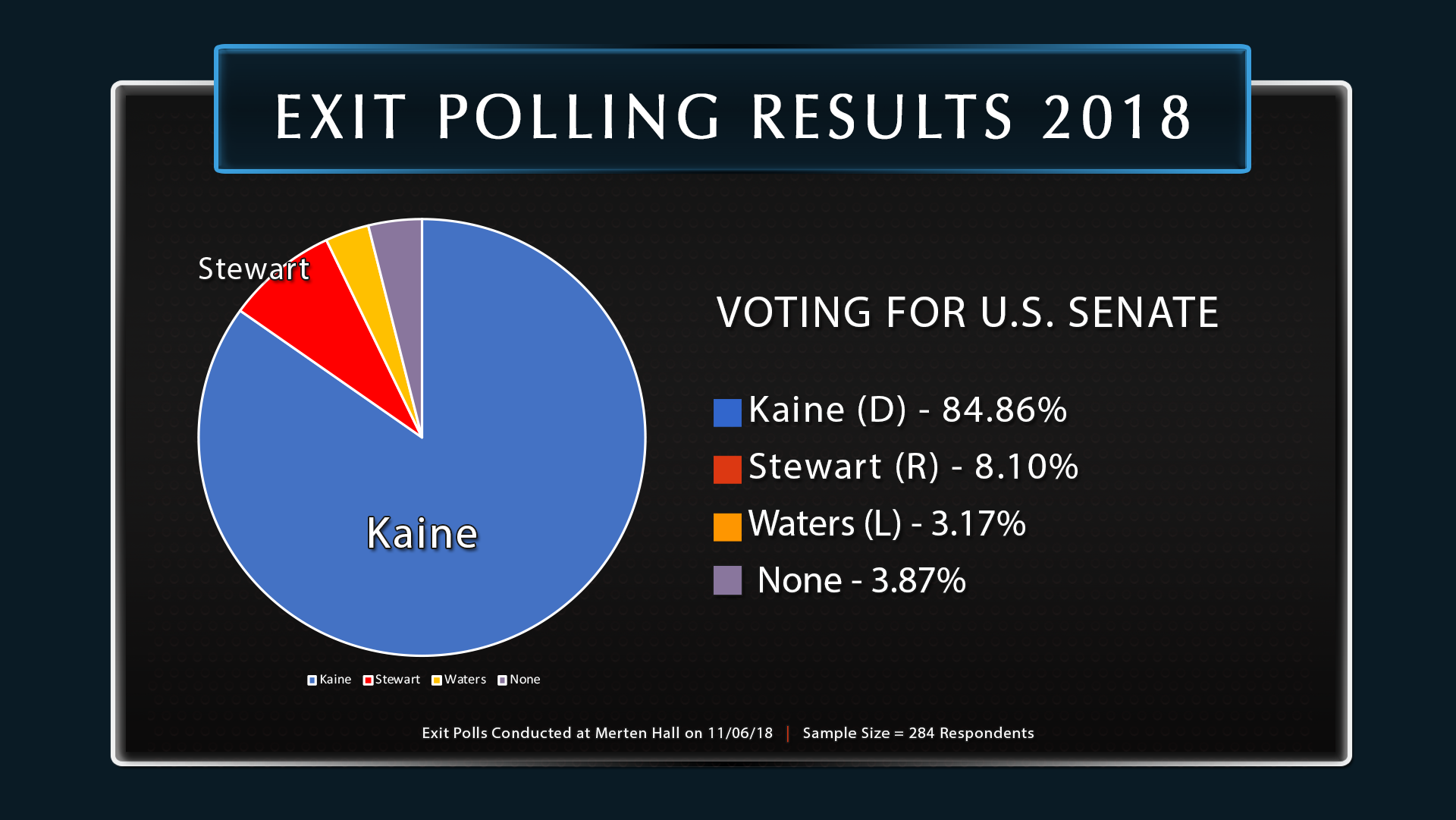
Mason voters overwhelmingly supported Democratic candidates in both the House and Senate races. Sen. Tim Kaine (85%-Kaine, 8%-Stewart, 3%-Waters, 4%-None) and Rep. Gerry Connolly (79%-Connolly, 9%-Dove, 3%-Porter, 9%-None) were both re-elected with comfortable margins.

By far the most important issue to Mason students when casting their ballots in 2018 was Civil Rights, with 28% of respondents selecting that as their top concern. This tracks almost exactly with our 2017 exit poll results when 25% of on-campus voters identified Civil Rights as the most important issue.

The next most important issues to Mason voters in 2018 were The President (21%), Gun Control (13%), Health Care (7%), and the Environment (7%).

Full exit polling results can be found below. Click on an image to enlarge.

Photos courtesy of: Mason Cable Network  |  Exit Poll Graphics by: Erik Truong and Jason Hartsel

A little rain didn’t stop Mason students from visiting the polls

 Story by: Mary Lee Clark  |  Photos by: Lathan Goumas

Rain or shine, George Mason University students showed up for the midterm elections.  

Students demonstrated civic responsibility by casting their ballots and hosting events to encourage voter registration and turnout. Student Government partnered with Virginia21, MasonVotes, the Office of Student Media and Mason Hillel for a Rock the Vote event outside Merten Hall, the polling location for students living on campus.

Merten Hall, the polling place for the 134th precinct, counted 1,695 ballots, which included students, nearby residents, and faculty and staff living on campus.

Student Media conducted exit polling outside of Merten while the student organizations offered warm drinks, games, music and food. Student body vice president Erik Truong, a senior in government and international politics, said it’s important for students be civically engaged not just during the elections but year-round.​

“One quote I heard a while ago was that ‘if you aren’t at the table, you’re on the menu.’ I believe it rings true and emphasizes how important it is to be at that decision-making table,” said Truong. “Millennials and Generation Z will be living on this planet for decades, so whatever decisions are being deliberated on today will directly affect us tomorrow.” keep reading >

Read the full story on Mason’s website: gmu.edu/news/572771

Reprinted courtesy of Mason Strategic Communications

Student Concerns Ahead of Election Day 2018

The students of COMM 145 (Newspaper Workshop I) interviewed a range of students on Mason’s Fairfax campus earlier this week ahead of today’s historic midterm elections.

Students were asked what issues are most important to them and who they planned to vote for on Tuesday, November 6th. Here is what Mason students on campus had to say:

___________________

Autumn Tornetta, Freshman, English

Do you plan to vote on Election Day? Why or why not? “Yes. If you don’t vote you don’t have a right to complain.”

Top three issues:

  1. Health Care (“care about people”)
  2. Immigration
  3. Abortion

Which candidate do you plan to vote for in the US Senate race? Tim Kaine (D)

Which candidate do you plan to vote for in your House district race? Jennifer Wexton (D-VA 10th)

Which candidate did you vote for in the 2016 presidential election? Couldn’t vote.

Why is it important for young people to vote? “Be more involved.”

___________________

Ian Warman, Freshman, Music Education

Do you plan to vote on Election Day? Why or why not? “Yes. I care a lot about politics.”

Top three issues:

  1. Immigration (“my sister is an adopted immigrant”)
  2. Gun Control (“people are losing their lives”)
  3. Health Care

Which candidate do you plan to vote for in the US Senate race? Tim Kaine (D)

Which candidate do you plan to vote for in your House district race? Gerry Connolly (D-VA 11th)

Which candidate did you vote for in the 2016 presidential election? Couldn’t vote.

Why is it important for young people to vote? “Because its our country, too.”

___________________

Anonymous, Senior, Computer Science

Do you plan to vote on Election Day? Why or why not? “Yes. Vote if you feel like it.”

Top three issues:

  1. Legalizing Marijuana (“why not?”)
  2. Abortion (“protect babies”)
  3. Minimum Wage (“should be lower”)

Which candidate do you plan to vote for in the US Senate race? Matt Waters (L)

Which candidate do you plan to vote for in your House district race? Jennifer Wexton (D-VA 10th)

Which candidate did you vote for in the 2016 presidential election? Jill Stein (G)

Why is it important for young people to vote? “To not get drafted.”

___________________

Brianna Broks, Freshman, Creative Writing

Do you plan to vote on Election Day? Why or why not? “Yes, because who is currently in office should not be in office again.”

Top three issues:

  1. Equal Rights (“For both men and women. I want all genders to be on the same playing field.”)
  2. Environment (“Without it, where will we live?”)
  3. Immigration (“We are a country of immigrants, everyone should have the same rights.”)

Which candidate do you plan to vote for in the US Senate race? Undecided.

Which candidate do you plan to vote for in your House district race? Undecided.

Which candidate did you vote for in the 2016 presidential election? Couldn’t vote.

Why is it important for young people to vote? “We are the next generation to be walking on this earth so why not make it a good earth to walk on?”

___________________

Richa Malhotra, Junior, Cyber Security/Engineering

Do you plan to vote on Election Day? Why or why not? “Yes. I feel like it’s important to vote; every vote counts.”

Top three issues:

  1. Women’s Rights (“Women should have the right to chose whether they want an abortion or not.”)
  2. Immigration (“We are a country of immigrants, everyone should have the same rights.”)
  3. No response

Which candidate do you plan to vote for in the US Senate race? Tim Kaine (D)

Which candidate do you plan to vote for in your House district race? Jennifer Wexton (D-VA 10th)

Which candidate did you vote for in the 2016 presidential election? Hillary Clinton (D)

Why is it important for young people to vote? “Every vote counts.”

___________________

Karion Goree, Senior, Criminology

Do you plan to vote on Election Day? Why or why not? “Yes. [It’s an] important election.”

Top three issues:

  1. Social Issues (“Establishing more decency in our culture.”)
  2. Health Care (“As many Americans as possible [should] have decent health care.”)
  3. Criminal Justice Reform (“Important that we are locking up the actual criminals.”)

Which candidate do you plan to vote for in the US Senate race? Tim Kaine (D)

Which candidate do you plan to vote for in your House district race? Undecided.

Which candidate did you vote for in the 2016 presidential election? Hillary Clinton (D)

Why is it important for young people to vote? “It is our future, not to be left in the hands of people who wont see it all.”

___________________

Giorgio Castiglia, Non-Traditional

Do you plan to vote on Election Day? Why or why not? “Yes.”

Top three issues:

  1. Economy (“Important for people to be prosperous.”)
  2. Personal Freedom (“People who want to do something should have the ability.”)
  3. No response.

Which candidate do you plan to vote for in the US Senate race? Tim Kaine (D)

Which candidate do you plan to vote for in your House district race? Undecided.

Which candidate did you vote for in the 2016 presidential election? Gary Johnson (L)

Why is it important for young people to vote? “Discuss why they vote, how it is counted, and understanding the logistics.”

___________________

Mohammed Hussin, Junior, Communication

Do you plan to vote on Election Day? Why or why not? “Yes. I am doing it because people tell me every vote counts.”

Top three issues:

  1. Student Tuition (“For future generations, get as many people educated.”)
  2. Immigration (“Make the whole process more easy and efficient.”)
  3. Health Care (“People do not go to doctor because of lack of insurance.”)

Which candidate do you plan to vote for in the US Senate race? Tim Kaine (D)

Which candidate do you plan to vote for in your House district race? Gerry Connolly (D-VA 11th)

Which candidate did you vote for in the 2016 presidential election? Hillary Clinton (D)

Why is it important for young people to vote? “Every vote counts making sure young people get as many votes as possible.”

___________________

Melissa Carroll, Junior, Criminology

Do you plan to vote on Election Day? Why or why not? “Yes. Midterm elections are important too. It is your right so you should exercise it and it sets a precedent for the next presidential election.”

Top three issues:

  1. Climate Change (“I have done a lot of research in college and high school, our age changes it and impacts everyone.”)
  2. Immigration (“Laws are always subject to change and it impacts people every day.”)
  3. Sexual Assault/Women’s Rights (“As a woman, I should be able to vote and it is an important topic in society more than ever.”)

Which candidate do you plan to vote for in the US Senate race? Tim Kaine (D)

Which candidate do you plan to vote for in your House district race? Gerry Connolly (D-VA 11th)

Which candidate did you vote for in the 2016 presidential election? Hillary Clinton (D)

Why is it important for young people to vote? “In general, it is more important to hear our voice as the younger generation. The laws and policies will impact us especially.”

___________________

Anonymous, Senior, Computer Science

Do you plan to vote on Election Day? Why or why not? “Yes. It’s important because the Left is taking over.”

Top three issues:

  1. Gun Control
  2. Borders (“The caravan is coming.”)
  3. Fighting Socialism

Which candidate do you plan to vote for in the US Senate race? Corey Stewart (R)

Which candidate do you plan to vote for in your House district race? Not sure.

Which candidate did you vote for in the 2016 presidential election? Donald Trump (R)

Why is it important for young people to vote? “It’s important for everyone to vote.”

___________________

Shreya Bhatia, Junior, Computer Science

Do you plan to vote on Election Day? Why or why not? “Yes. Because I think the election and other elections show that is important to vote in all elections.”

Top three issues:

  1. Gun Violence (“It sucks to see all these people being hurt [when the] president makes excuses.”)
  2. Women’s Rights (“Probably one of the most important things is not getting the right to chose what happens to their bodies.”)
  3. LGBTQ Rights (“I think that specifically there’s been a lot of hate towards them recently.”)

Which candidate do you plan to vote for in the US Senate race? Tim Kaine (D)

Which candidate do you plan to vote for in your House district race? Jennifer Wexton (D-VA 10th)

Which candidate did you vote for in the 2016 presidential election? Hillary Clinton (D)

Why is it important for young people to vote? “I think that’s because they are the people who are going to run the country.”

___________________

Eric Ratliff, Freshman, Undeclared

Do you plan to vote on Election Day? Why or why not? “Yes. My family has always been involved with politics, I want to do my part.”

Top three issues:

  1. LGBTQ Rights (“I am bisexual myself, so it is a very personal experience.”)
  2. Immigration (“No person is illegal, its just the whole concept is something I’m not comfortable with.”)
  3. Abortion (“Proper access is important. My aunt had to get an illegal abortion.”)

Which candidate do you plan to vote for in the US Senate race? Tim Kaine (D)

Which candidate do you plan to vote for in your House district race? Jennifer Wexton (D-VA 10th)

Which candidate did you vote for in the 2016 presidential election? Didn’t vote.

Why is it important for young people to vote? “Because turnout among young voters, when not enough young people are voting its important for them to convince others and vote themselves.”

___________________

Better Angels: Bridging the Political Divide

LEAD Office hosts an event bringing opposite political ideologies together

By: Alexander Shedd, Mason Votes Reporter

“The mystic chords of memory, stretching from every battlefield and patriot grave to every living heart and hearthstone all over this broad land, will yet swell the chorus of the Union, when again touched, as surely they will be, by the better angels of our nature.”

These words, spoken by Abraham Lincoln in his first inaugural address, called for peace and unity in an America marked by cultural division. In today’s America, a nonprofit called Better Angels hopes to repair the political divide in the wake of President Donald Trump’s election.

The group held an event at Mason on Monday, Oct. 22, co-hosted by the Leadership Education and Development (LEAD) office and the Office of International Programs and Services.

Better Angels, founded immediately following President Trump’s 2016 election, works with the goal of “learning from difference,” said moderator Trista Schoonmaker.

“It’s about understanding,” she said. “We’re trying to find out what we can learn from each other.”

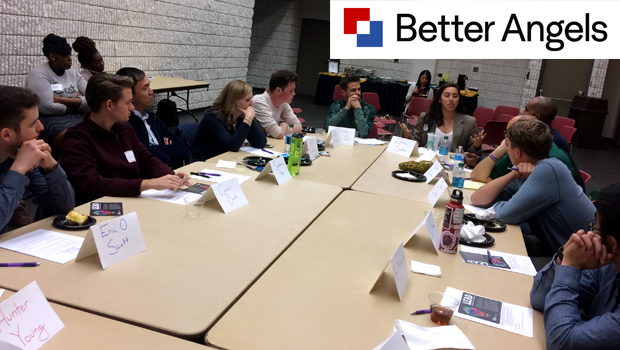
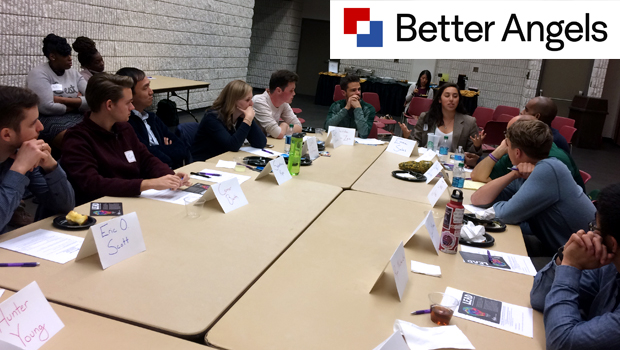
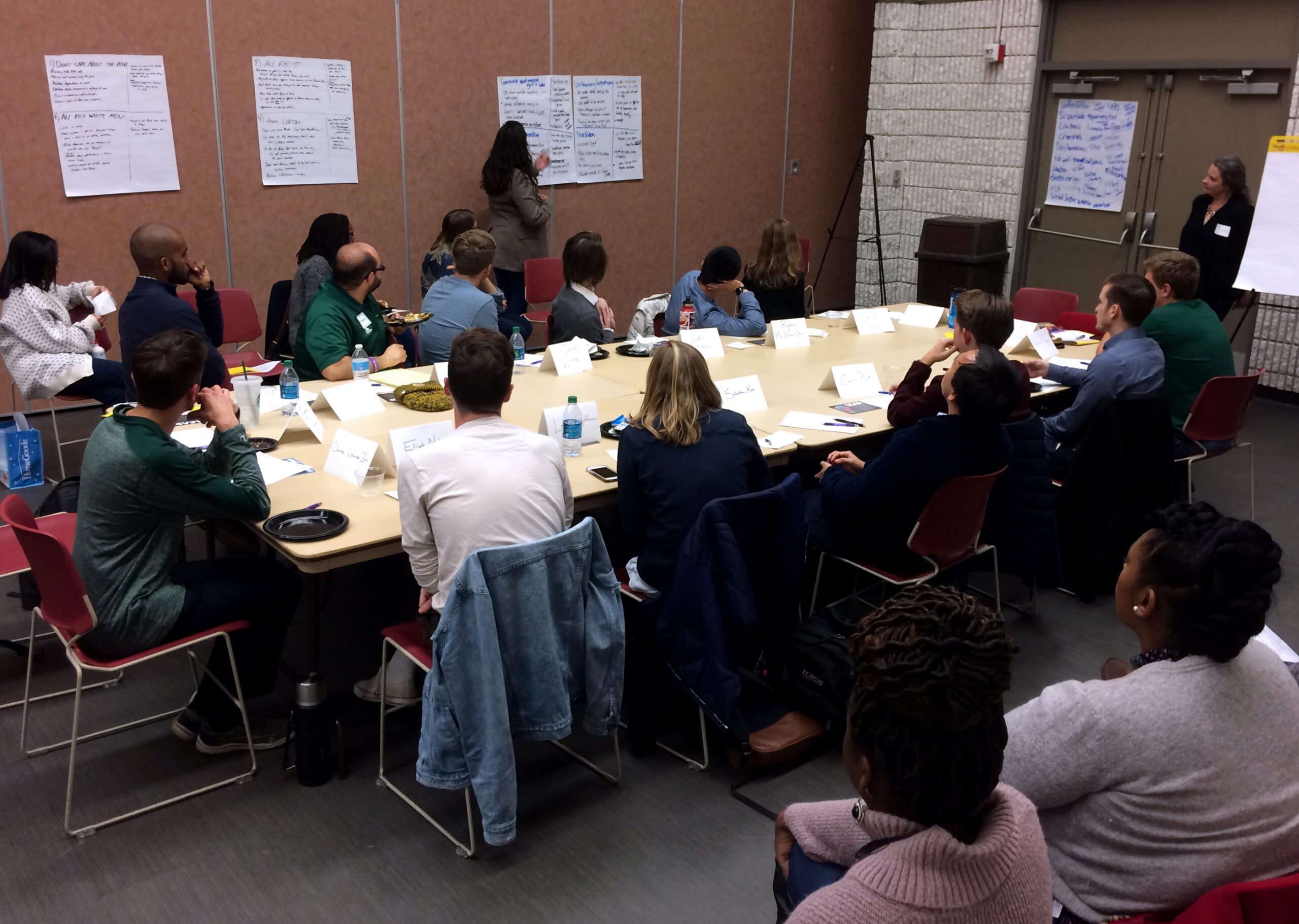
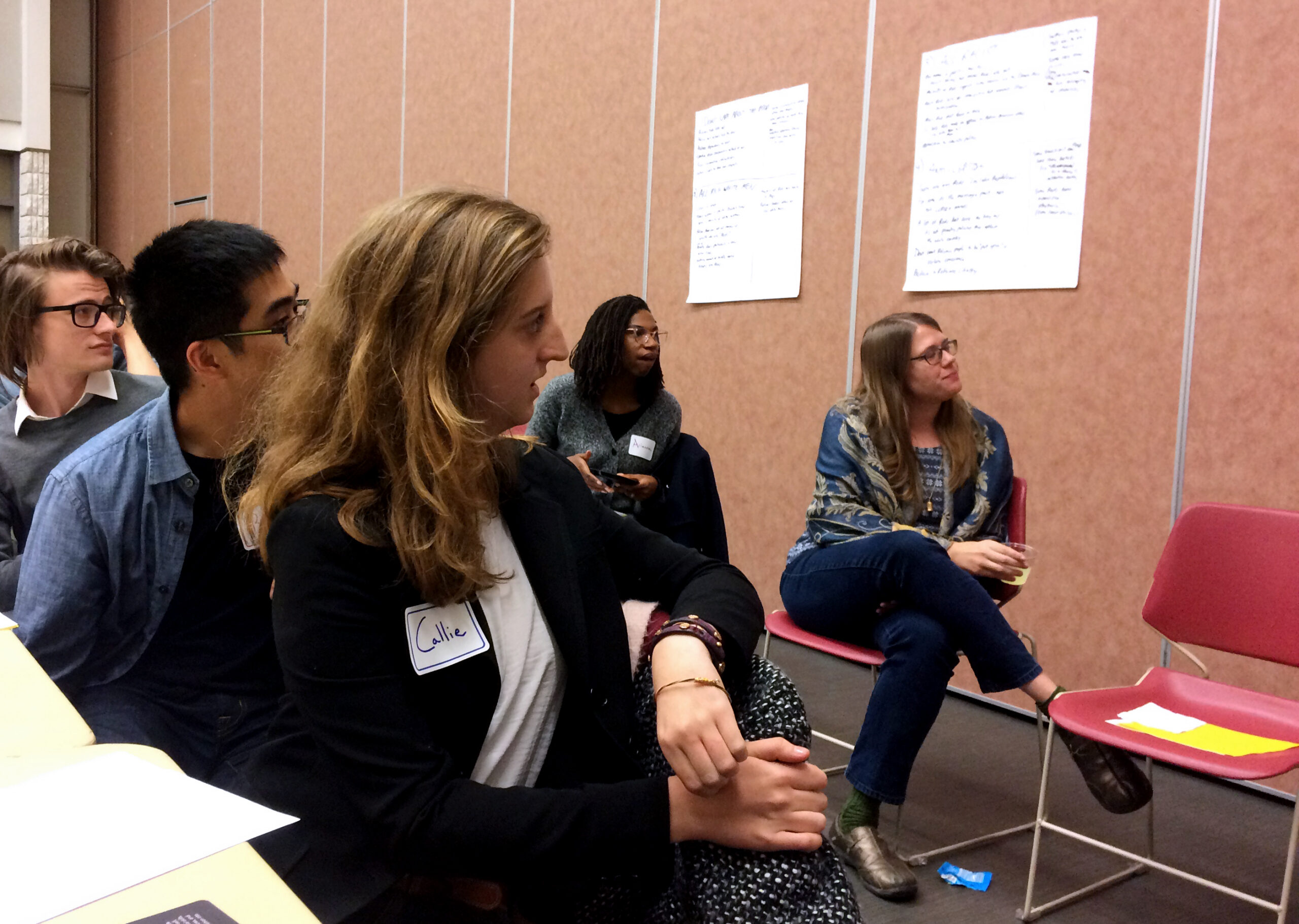
The event, which included six to seven students who identify as left-leaning (“the blues”) and six to seven students who identify as right-leaning (“the reds”), was broken up into several parts in which the two sides attempted to understand the other’s perspectives.

“[I’m here because] I love talking to people and understanding how our differences affect us,” noted blue Elijah Nichols.

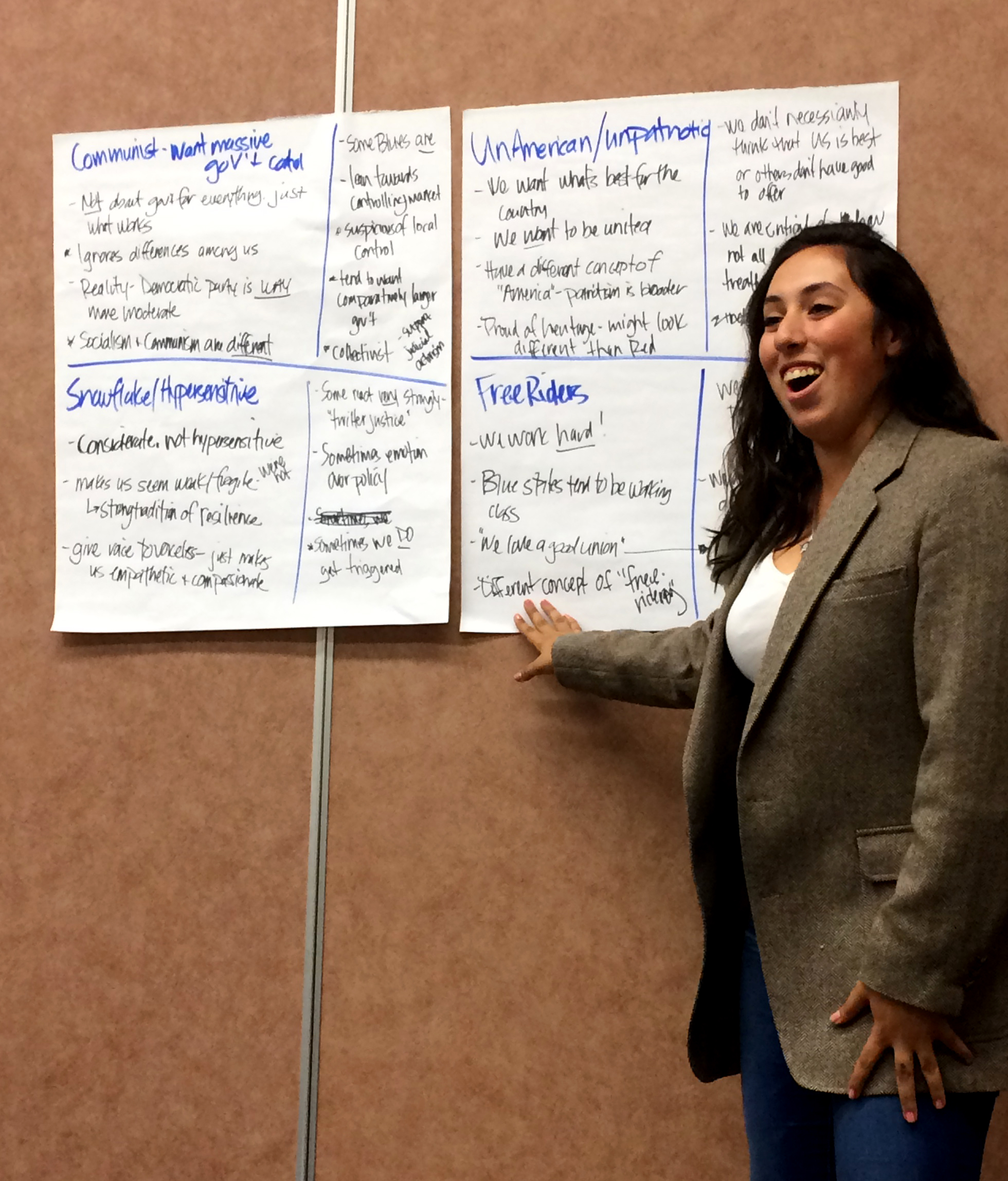
The first part divided the two groups into separate rooms and asked them to identify stereotypes about their political ideology— first by sharing stereotypes they believe the other side believes about them, discussing what is wrong with those stereotypes, and then considering what may be true about them.

Stereotypes that the blues came up with included “communist,” “snowflake (or hypersensitive),” “un-American,” and “freeriders.” Although they agreed that these terms were mostly extreme in describing their ideology, they agreed on certain “kernels of truth.”

For example, the blues discussed the fact that some blues are self-identified communists, that they do tend to be more sensitive to social issues, and that they support a social safety net for all “just for being human.”

The red stereotypes were “not caring about the poor,” “all rich white men,” “racist” and “homophobic.” They agreed that, in reality, they support a more or less “trickle down” economic system, that a large amount of reds are white men, and that a small minority of reds are in fact racist or homophobic— noting, of course, that these things do not represent the whole ideology.

The students involved found the program largely constructive.

“No one thinks they’re the bad guy,” said blue Levi Mitzen. “It’s always interesting to see how the other side sees themselves.”

“[It’s] constructive… having us think about what other people think of us,” agreed red Biruk Esubalen. “[It’s] conducive to a good conversation.”

However, not all participants were impressed with the workshop, believing that it may have missed its mark or not been effective enough in bridging the divide.

“I haven’t heard an opposing viewpoint… [it’s] too polite,” noted red Jace White about an hour into the approximately three hour-long event.

“[It’s] helped me prepare to address [the views] of people on my own side and the other,” red Leah Hoffman added.

Photos courtesy of: Nick Lennon/LEAD Office

What You Need to Know: Virginia Senate Candidates

By: Alexander Shedd, Mason Votes Reporter

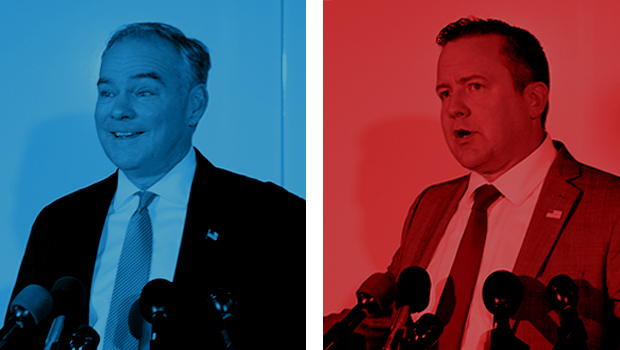
With the 2018 midterm elections quickly approaching, knowing the candidates is essential to casting an informed vote. For those who are first-time voters, casually political, or experienced policy wonks, here’s what you need to know about Virginia’s Senatorial candidates Tim Kaine and Corey Stewart.

Tim Kaine (D)

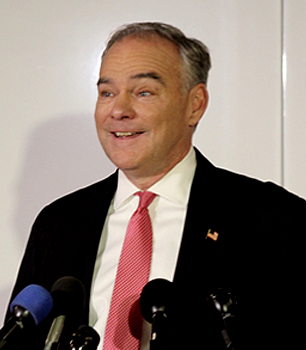
The website of incumbent senator Tim Kaine, the Democratic candidate, touts him as “one of 30 people in American history to have served as a mayor, governor, and United States senator.” Raised in Kansas City, after growing up working in his father’s ironworking shop, Kaine graduated from the University of Missouri with a degree in economics. He soon after managed a technical school in Honduras, where he became fluent in Spanish.

Kaine later graduated from Harvard Law School and became a private practice lawyer in Richmond, Virginia and a lecturer at the University of Richmond School of Law. During his time as a lawyer, he specialized in housing law and represented clients who were victims of housing discrimination.

Kaine won his first public election in 1994 when he was elected to the Richmond City Council. In 1998, he was elected mayor of Richmond, a position which he held until 2001, when he was elected Lieutenant Governor to then-governor Mark Warner (Virginia’s current senior senator).

In 2006, Kaine was elected governor of Virginia. After his term ended in 2010, Kaine was elected senator. Overlapping these two positions, Kaine was the chairman of the Democratic National Committee from 2009-2011 at the request of former President Obama.

In the senate, Kaine currently serves on the Committee on Armed Services, the Committee on the Budget, and the Committee on Foreign Relations. He was also the vice presidential nominee for Hillary Clinton’s 2016 presidential campaign.

Tim Kaine’s voting record shows a staunchly anti-Trump point of view. However, his campaign for reelection focuses primarily on statewide issues. His main issues include fighting for civil rights (including equal voting rights and protection against discrimination), safeguarding Virginia’s environment, expanding the Affordable Care Act, protecting immigrants and DREAMers, and preventing gun violence.

Corey Stewart (R)

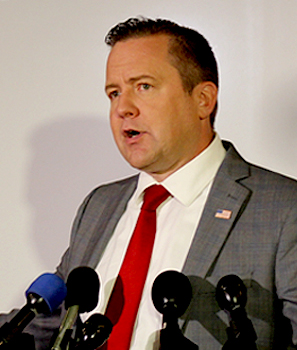
Currently the county chairman of the Prince William County Board of Supervisors, Republican candidate Corey Stewart has been in Virginia politics on the local level since 2003. Originally from Duluth, Minnesota, Stewart moved to the D.C. area when he transferred to Georgetown University, where he was the first member of his family to graduate from college. Stewart returned to Minnesota to study law at William Mitchell College of Law before settling finally in Virginia.

Aside from his duties as county chairman, Stewart works as an international trade attorney. He was originally elected as chairman in 2006 and quickly established a reputation as a hardliner on immigration policy. Stewart touts a record of “more than 8,000 criminal illegal aliens” turned over to Immigration & Customs Enforcement in Prince William County during his tenure as one of his core talking points.

After an unsuccessful bid for the Republican Lieutenant Governor nomination in 2013, Stewart went on to become the chairman of the Virginia chapter of the Donald Trump presidential campaign. Stewart notably stood by Candidate Trump during many of his more infamous campaign scandals.

Later in 2016, Stewart announced his candidacy for the 2017 Virginia gubernatorial race. His campaign was highlighted nationally by his staunch pro-gun rights stances, defense of Virginia’s confederate monuments, and his use of language associated with white nationalists. Stewart narrowly lost the Republican primary to Ed Gillespie.

Stewart declared candidacy for Tim Kaine’s senate seat in July 2017, shortly after the gubernatorial primary, and received the Republican nomination in 2018. A self-described populist, Stewart’s primary campaign issues include supporting President Trump’s legislation, rebuilding infrastructure, defending Second Amendment rights, and combating illegal immigration.

Photos by: Angelique Arintok