Mason Votes

Kaine/Stewart: Face Off in McLean

By: Angelique Arintok  |  Courtesy of Fourth Estate, Mason’s official student newspaper.

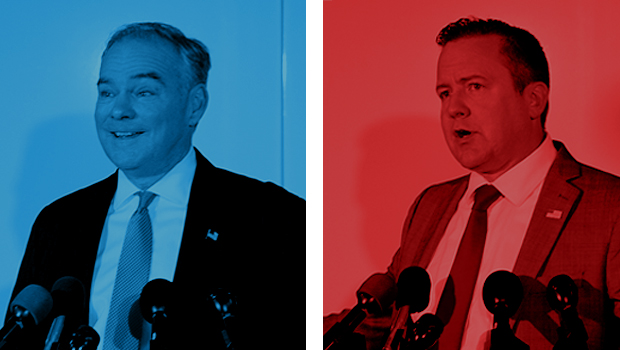
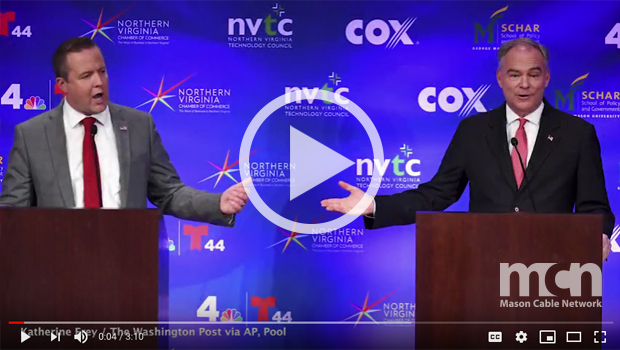
On Wednesday, Sept. 26th, Democratic incumbent for Virginia’s contested Senate seat Tim Kaine, and Republican challenger Prince William County Chairman Corey Stewart, tackled timely issues in a debate moderated by NBC’s Meet the Press host Chuck Todd and hosted by Mason’s Schar School of Policy and Government. The hour-long event sparked conversation about topics like immigration, inquiry of impeachment, confederate statues, the Equal Rights Amendment and transportation.

For Stewart and Kaine, takes on the issues polled are on opposite ends of the political spectrum. Wednesday’s debate made it clear just how different both candidates view certain issues, particularly immigration. In a press conference following the debate, both candidates passionately shared their opinions on the matter.

“There is a big difference between someone who comes here lawfully, supports their family, doesn’t have a criminal background, and somebody who crosses the border illegally and commits crimes,” Stewart said.

Shortly after saying the United States is a nation of immigrants, Kaine further explained, “I am going to fight for the community … and comprehensive reform, and if Corey Stewart becomes Senator, he will always fight against the [immigrant] community.”

The candidates are divided on this matter, but junior communication major Paula Morales believes immigration is the most critical issue coming into this election.

“The issue deals with so much, Deferred Action for Childhood Arrivals (DACA) and Temporary Protected Status (TPS) [and more],”Morales said. “The Trump administration is just going to keep passing laws that’ll keep separating families, creating an even larger fear and distrust for the government.”

Stewart is determined that his approach is the best way. Many times throughout the live debate, he referred to how “he [will] stir things up.”

Stewart notes that he wishes to work across ethnic and racial lines to accomplish what’s needed if elected. Kaine contrasted his campaign to Stewart’s, saying it follows an  “upbeat theme.”

The two candidates may hold drastically different ideals, but both consider the Senate seat as an avenue to compromise with the opposing party. Student voters are certain which issues will carry them to the polls. Now, it’s simply a matter of selecting which candidate aligns with their personal values and beliefs.
Click here to read the full story on gmufourthestate.com.

Congressman John Lewis to Speak at Mason

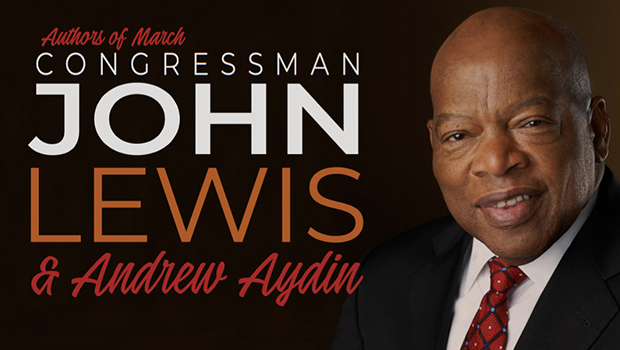
The 20th annual Fall for the Book Festival takes place at Mason this week (October 10-13) and Mason is thrilled to welcome Civil Rights icon and longtime Congressman John Lewis (D-GA) to campus to discuss March: Book One on Thursday, October 11, 2018 in the Center for the Arts. All Fall for the Book events are open and free to the public.

March: Book One, this year’s selection for the Mason Reads program, is the first in the trilogy of graphic memoirs from Congressman John Lewis, written with Andrew Aydin and illustrated by Nate Powell. March follows Lewis’s remarkable journey in the Civil Rights Movement, from his youth in rural Alabama, to meeting Dr. Martin Luther King Jr., to the steps of City Hall. It is a testament of the power of nonviolent protest in the battle against segregation. Lewis and Aydin will speak about the books at this year’s Mason Reads event. Sponsored by University Life and Fall for the Book.

Click here to learn more about the authors and the event.

We Know Mason Votes… But How Much?

The 2018 midterm elections are just over 30 days away and the concept of “voter enthusiasm” is dominating the national media conversation. Do Democrats have an edge because their voters are eager to repudiate the actions of the Trump Administration? Will the Republicans be able to fire up their base with a successful Supreme Court appointment?

No one knows for sure which side will conquer the enthusiasm gap, but one thing is certain: less people turn out to vote in midterm elections than do when the presidency is up for grabs. According to the Pew Research Center, “voter turnout regularly drops in midterm elections, and has done so since the 1840s. In 2008, for instance, 57.1% of the voting-age population cast ballots… [while] two years later only 36.9% voted in the midterm election.”

The same trend holds among Mason voters, but we consistently beat the national average voting rate by wide margins. Recent data from a national study (click on the chart to enlarge it) reveals that nearly 80% of eligible Mason voters turned out in the 2012 and 2016 presidential elections, while only about 30% did so in the 2014 midterms.

If you expand the population to include all Mason students (those who were eligible to vote and those who were not) 64.5% voted in 2016, while only 50.4% of Americans voted nationally. In both of the last two presidential elections, Mason beat the national average voting rate by double digits (+14.5% in 2012 and +14.4% in 2016). Of those students who were eligible to vote on campus at the university precinct polling place located in Merten Hall, a whopping 70% took advantage of that opportunity.

The data also shows that most Mason students who registered to vote (the 2018 deadline is October 15th) actually showed up on Election Day to cast a ballot. Only one-tenth of one percent of students who registered in 2016 failed to vote.

The low attrition rate between registrations and actual votes cast, taken with unusually high turnout in the 2016 election, suggests that Mason students are highly engaged in the political process and have a strong commitment to voting.

Will voter engagement on campus continue grow in 2018, or retreat to more traditional midterm levels? Find out when Mason votes again on Tuesday, November 6, 2018!

By: Jason Hartsel

Top Concerns for Mason Students in the 2018 Midterms

Discover which issues are key as students cast their ballot in November.

By: Angelique Arintok  |  October 1, 2018

Courtesy of Fourth Estate, Mason’s official student newspaper.

Now, more than ever, there is a push for millennials to show up at the polls in November. Mason students, in particular, are paying attention and responding to the issues which matter most to them.

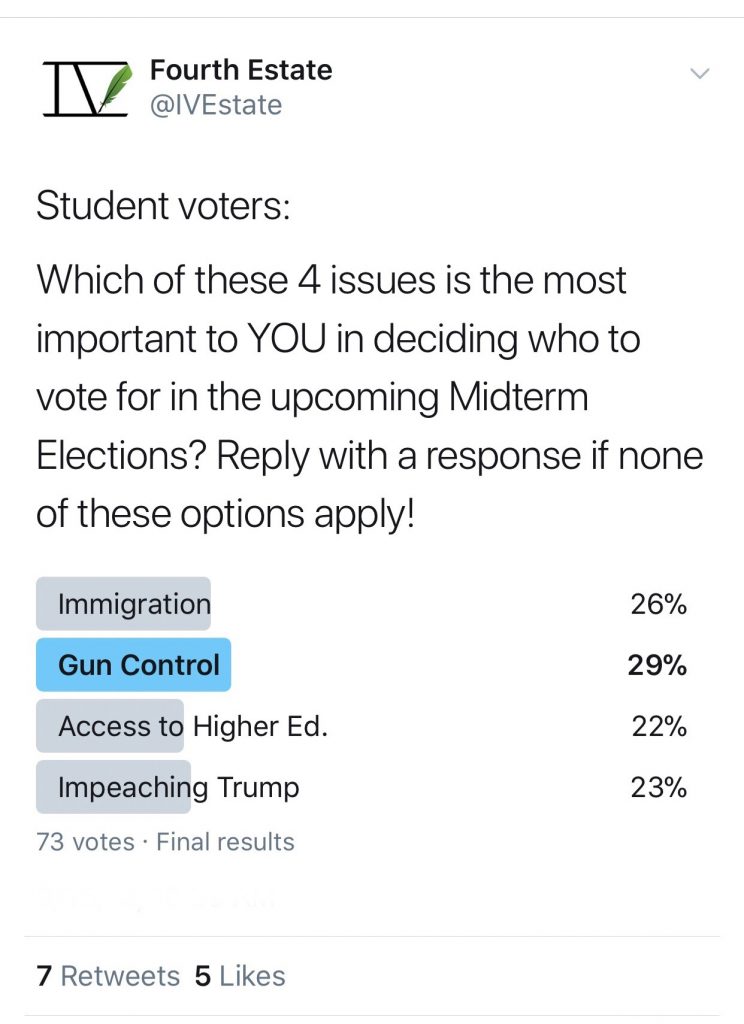
Before Wednesday’s debate, Mason students had clear ideas as to how they’ll vote in the upcoming midterm elections. A recent poll on Fourth Estate’s Twitter account asked student voters, “Which of [the] four issues is the most important to you in deciding who to for?” The options provided were immigration, gun control, access to higher education and impeaching President Trump. However, those with an outlying choice were encouraged to reply.

The responses pooled 73 varying opinions with gun control, leading at 29 percent. The other options came in close with immigration at 26 percent, impeaching Trump at 23 percent and access to higher education at 22 percent.

It is critical to consider that the poll requested only one response, whichever the student deemed most important.

Although topping Fourth Estate’s poll, gun control and gun violence were not mentioned at the live debate.

“Gun control is one of the most important issues for me in the upcoming Midterms,” freshman Film and Video Studies major Abby Clark says. “It’s a very polarizing topic but we need to find a common ground, where both sides can agree in order to protect innocent people from being hurt.”

Stewart and Kaine are running with separate agendas. Stewart dubs his campaign as “Take Back Virginia,” and Kaine is running with the slogan “A Virginia That Works for All.”

Click here to read the full story on gmufourthestate.com.

Photos by: Angelique Arintok

National Voter Registration Day 2018

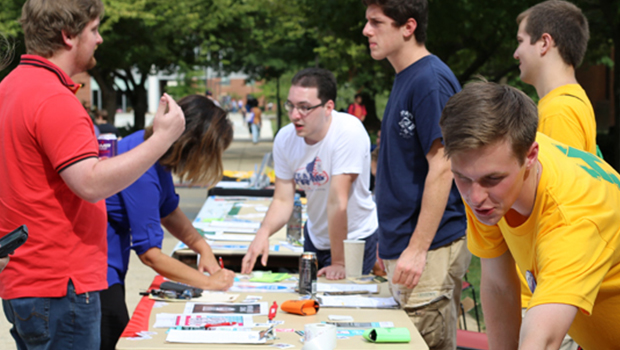
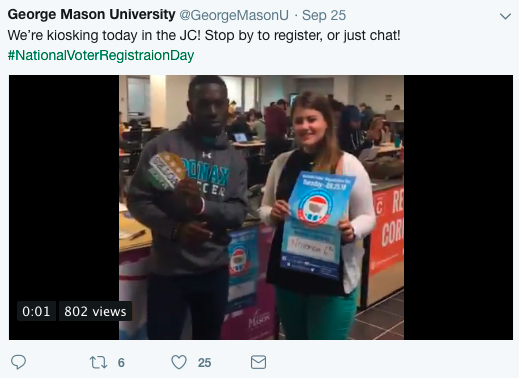
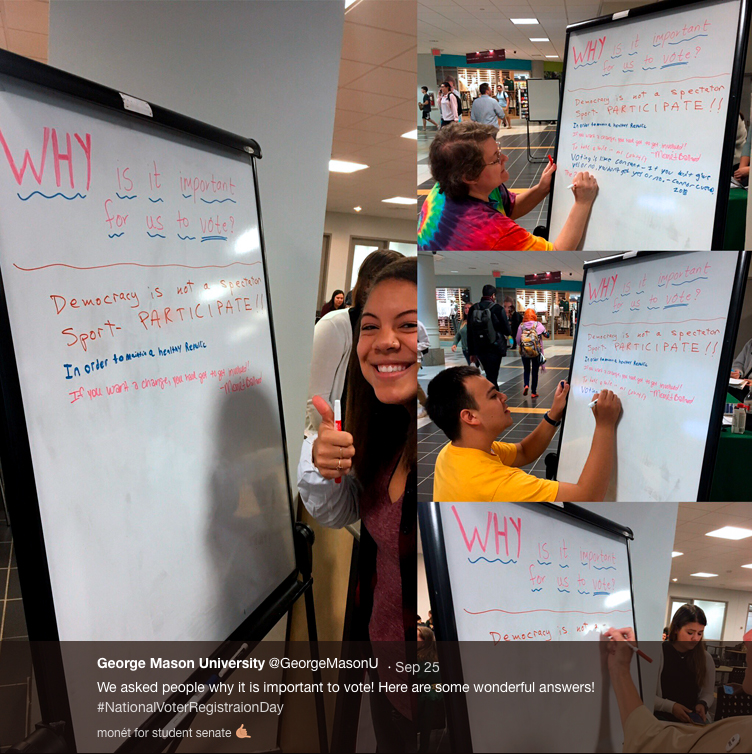
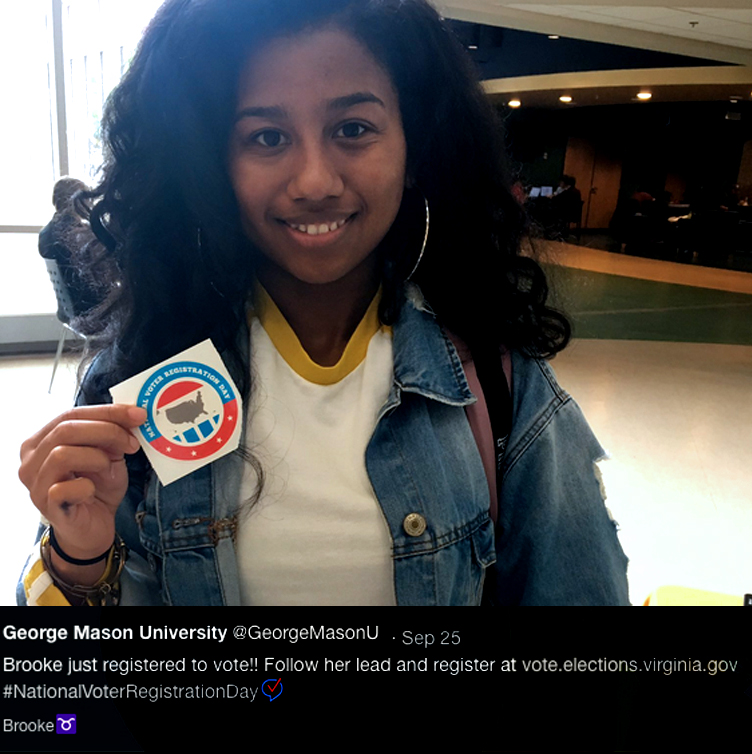
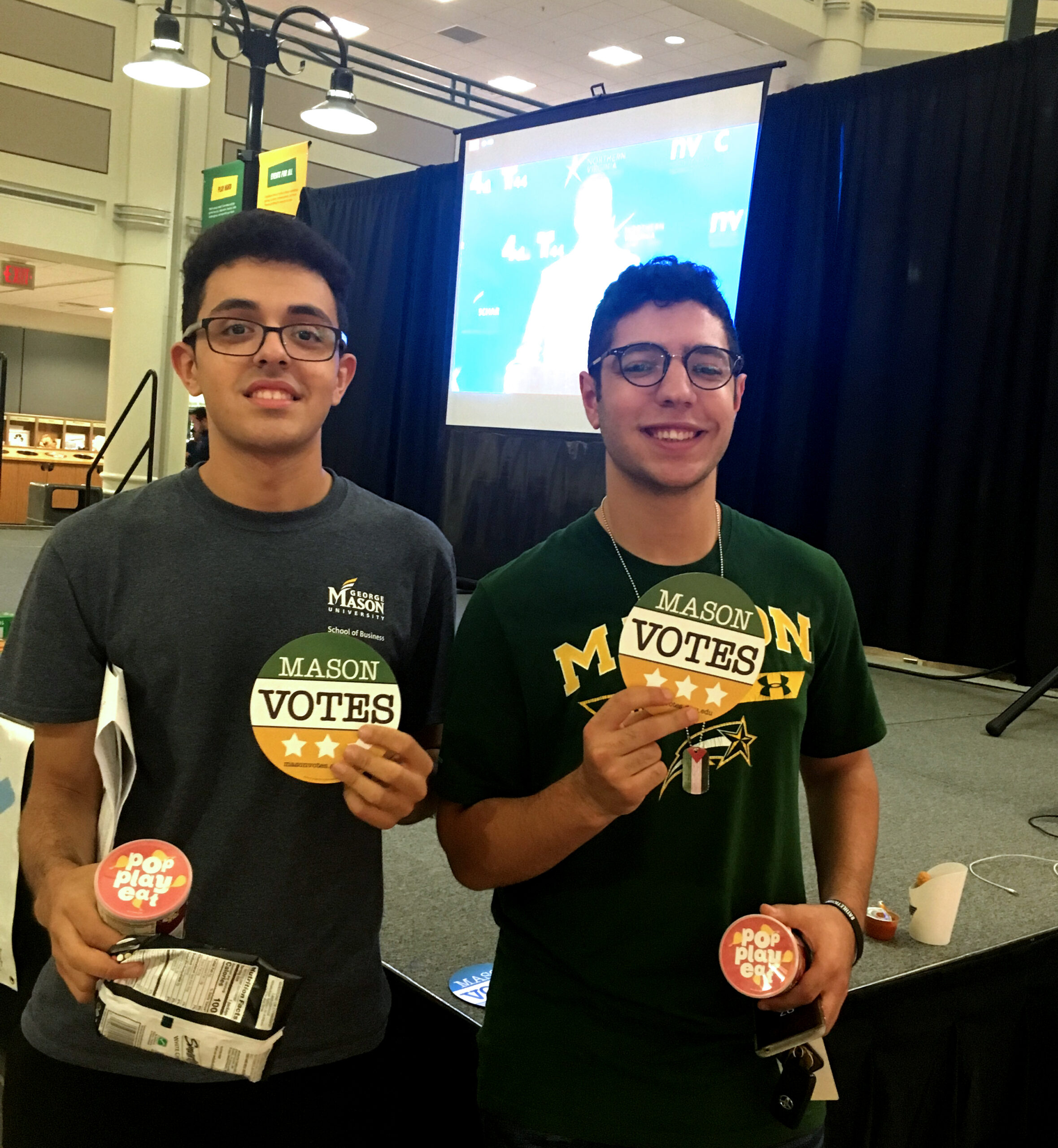
Members of Mason Votes, including College Election Engagement Project (CEEP) fellows Sai Pethe and Alex Abel, hosted a kiosk in the Johnson Center on Tuesday, September 25th as part of National Voter Registration Day.

Voter Registration Deadline: Monday, October 15, 2018 by mail or in person, or online at vote.virginia.gov by 11:59 pm, Monday, October 15th.

Learn more about registration deadlines:

masonvotes.gmu.edu/a-quick-guide-to-voting-as-a-mason-student/

elections.virginia.gov/voter-outreach/

Photos by Sai Pethe

2018 Senatorial Debate Watch Party

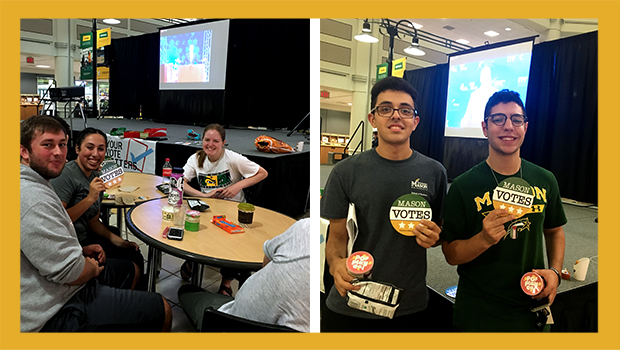
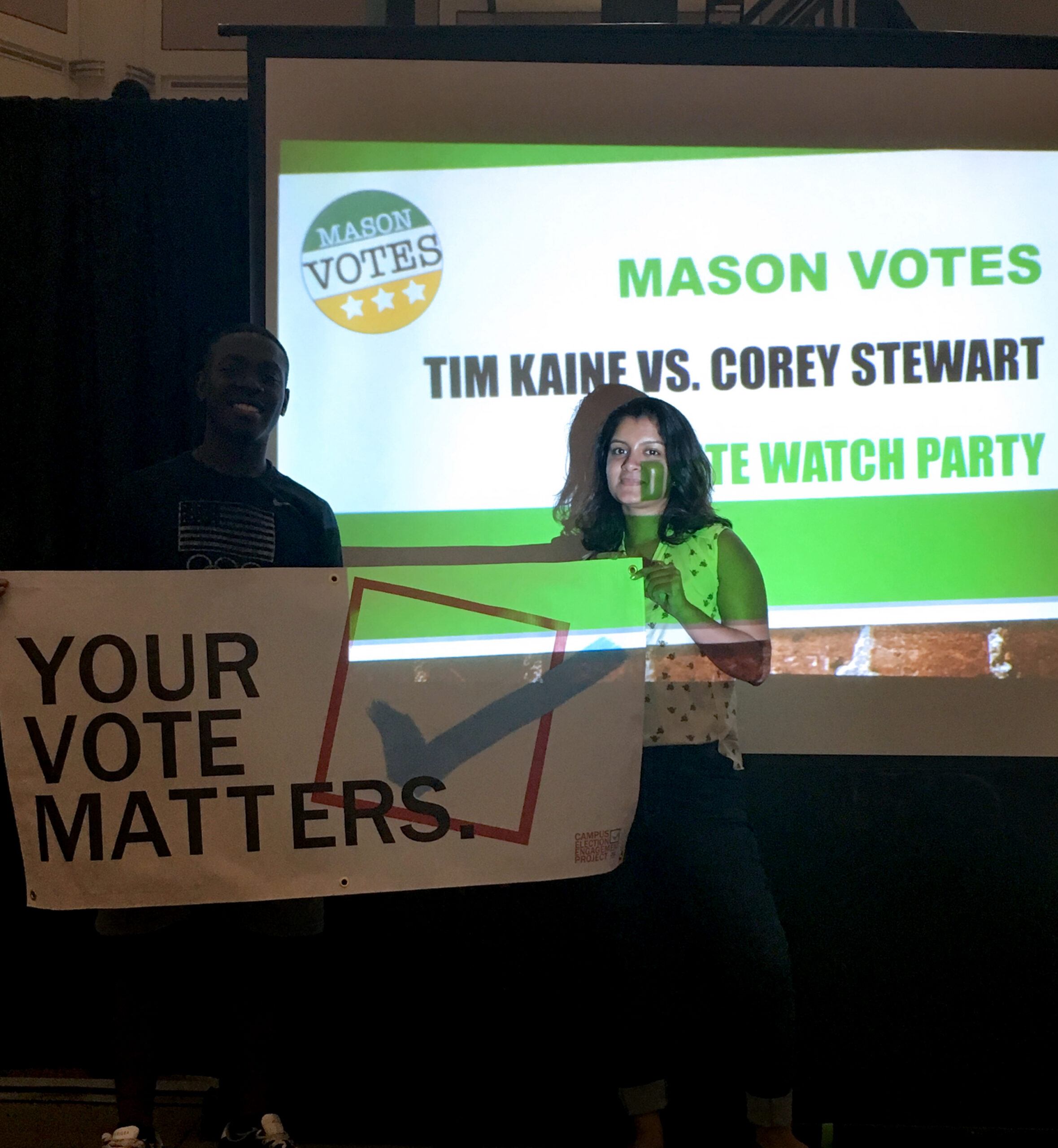
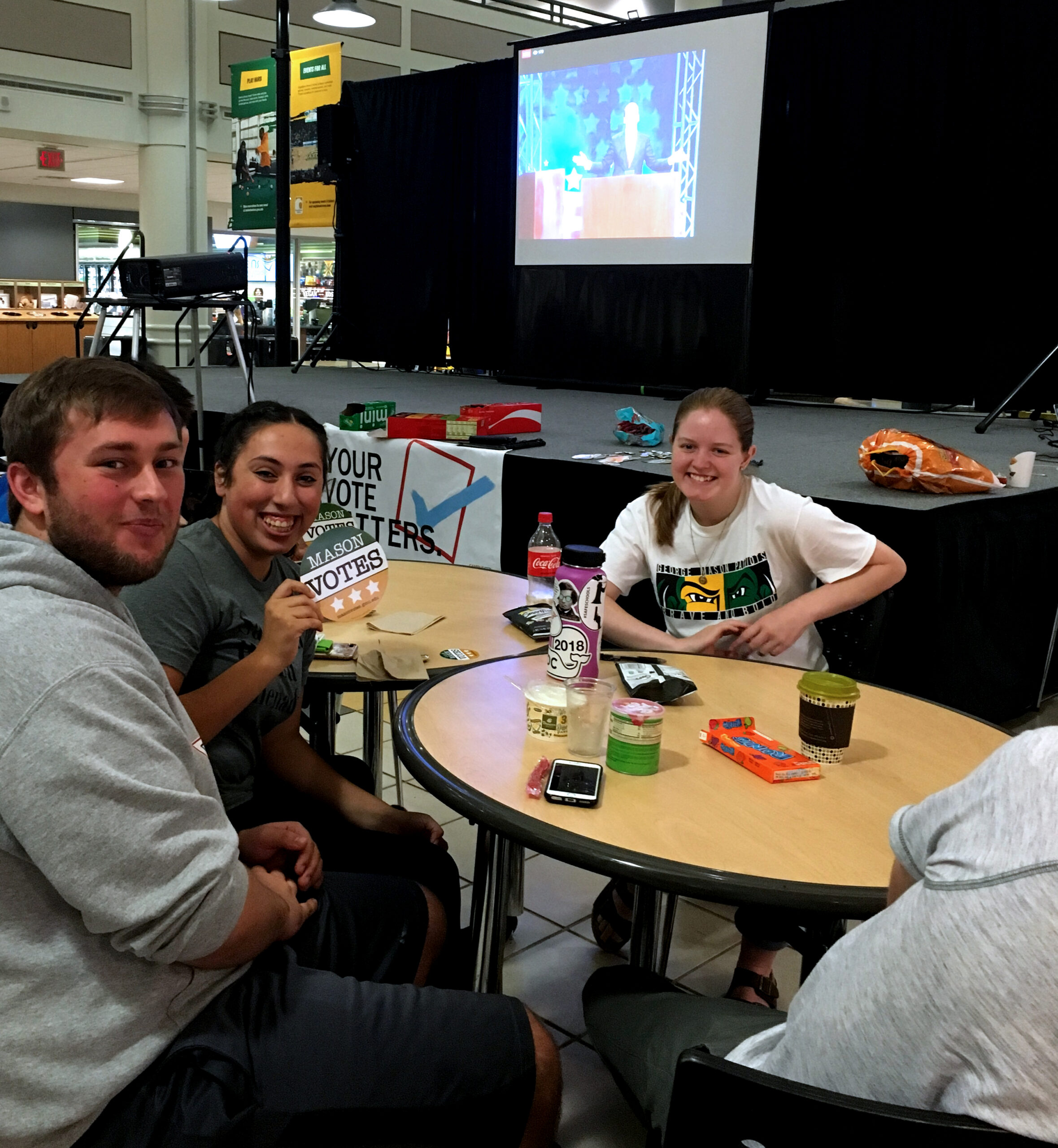
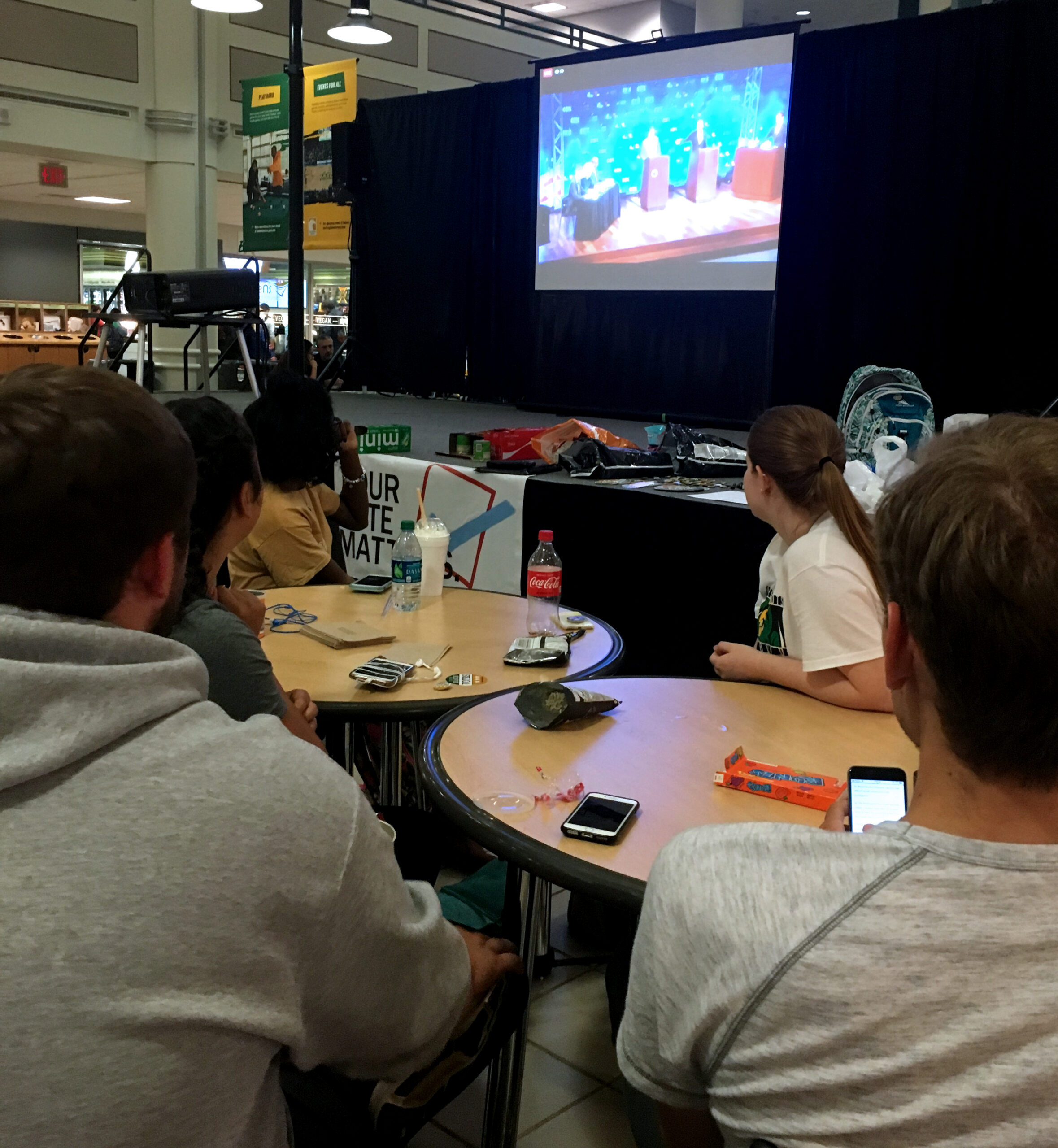
Mason students gathered in the Johnson Center atrium for a 2018 Senatorial Debate Watch Party hosted by Mason Votes on Wednesday, September 26th. Candidates Corey Stewart (R) and Tim Kaine (D) faced off in McLean, VA in a debate moderated by NBC’s “Meet the Press” host Chuck Todd and hosted by Mason’s Schar School of Policy and Government.

Photos by Sai Pethe

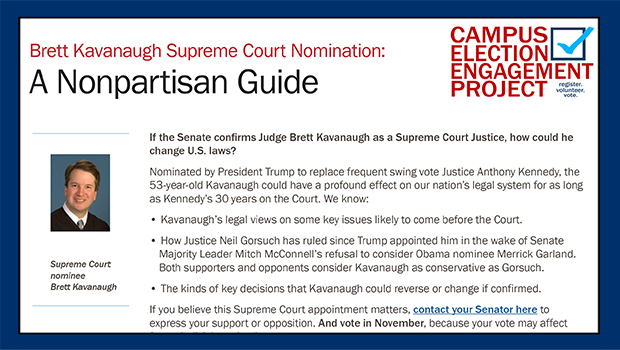
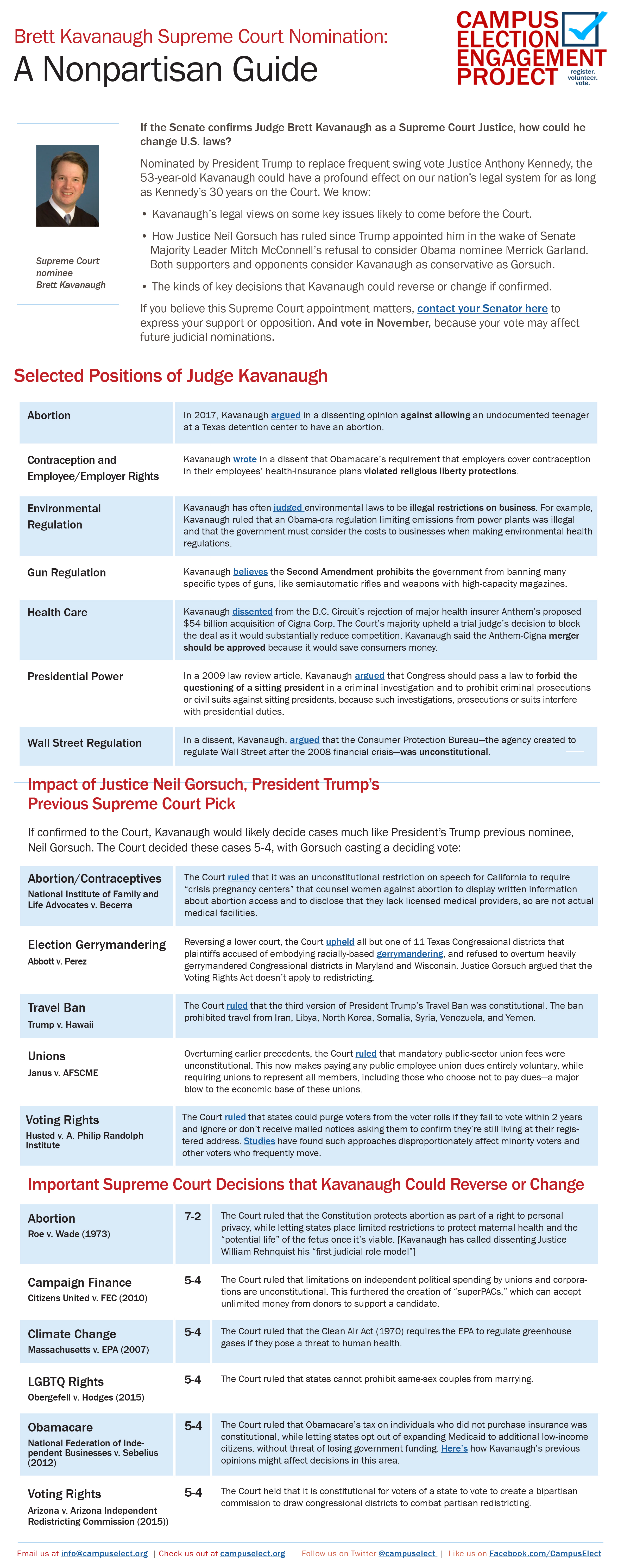
Nonpartisan Guide to Supreme Court Nominee Brett Kavanaugh

Click here to download an interactive PDF version (with hyperlinks) of this handy policy guide from the Campus Election Engagement Project (CEEP).

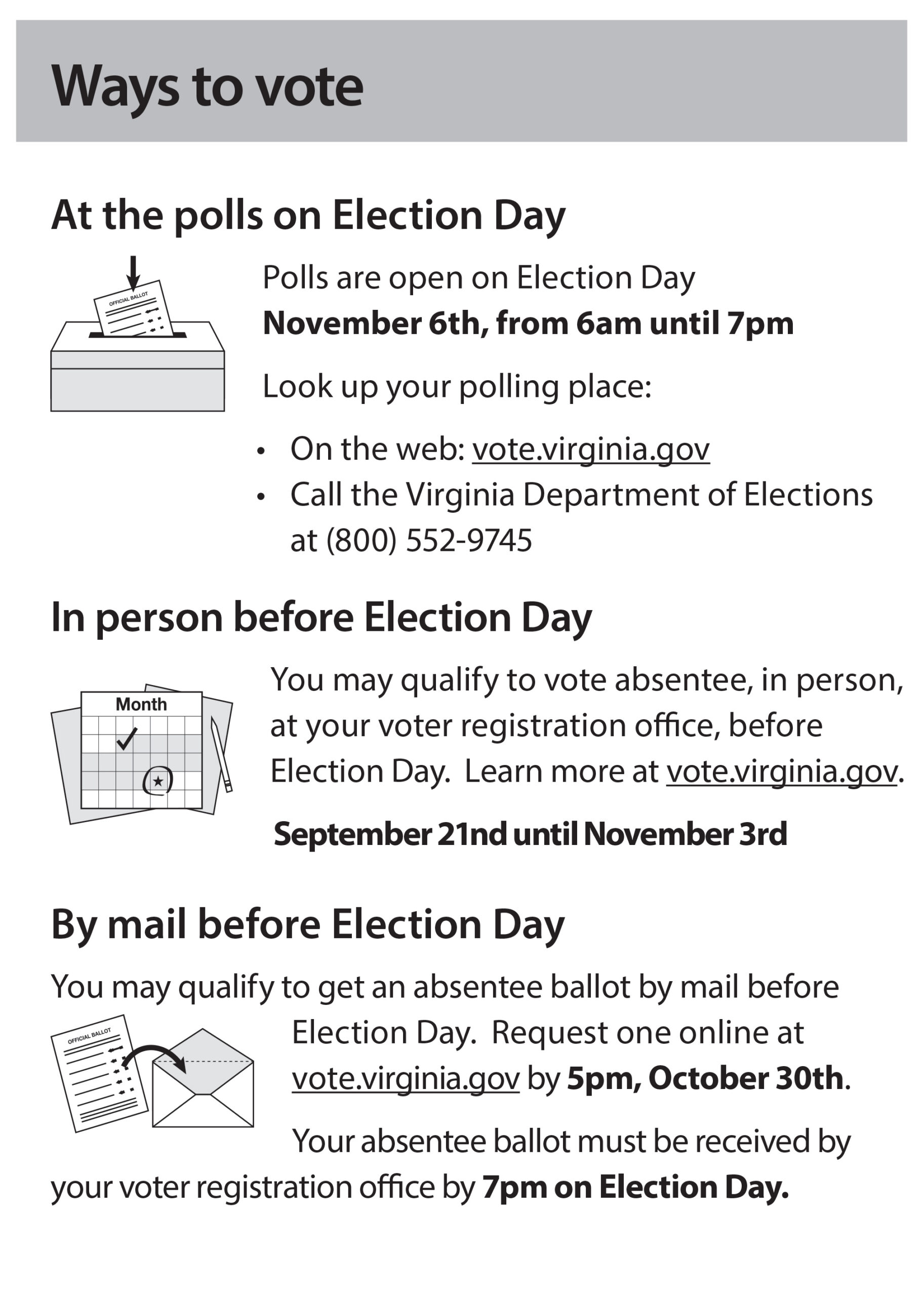
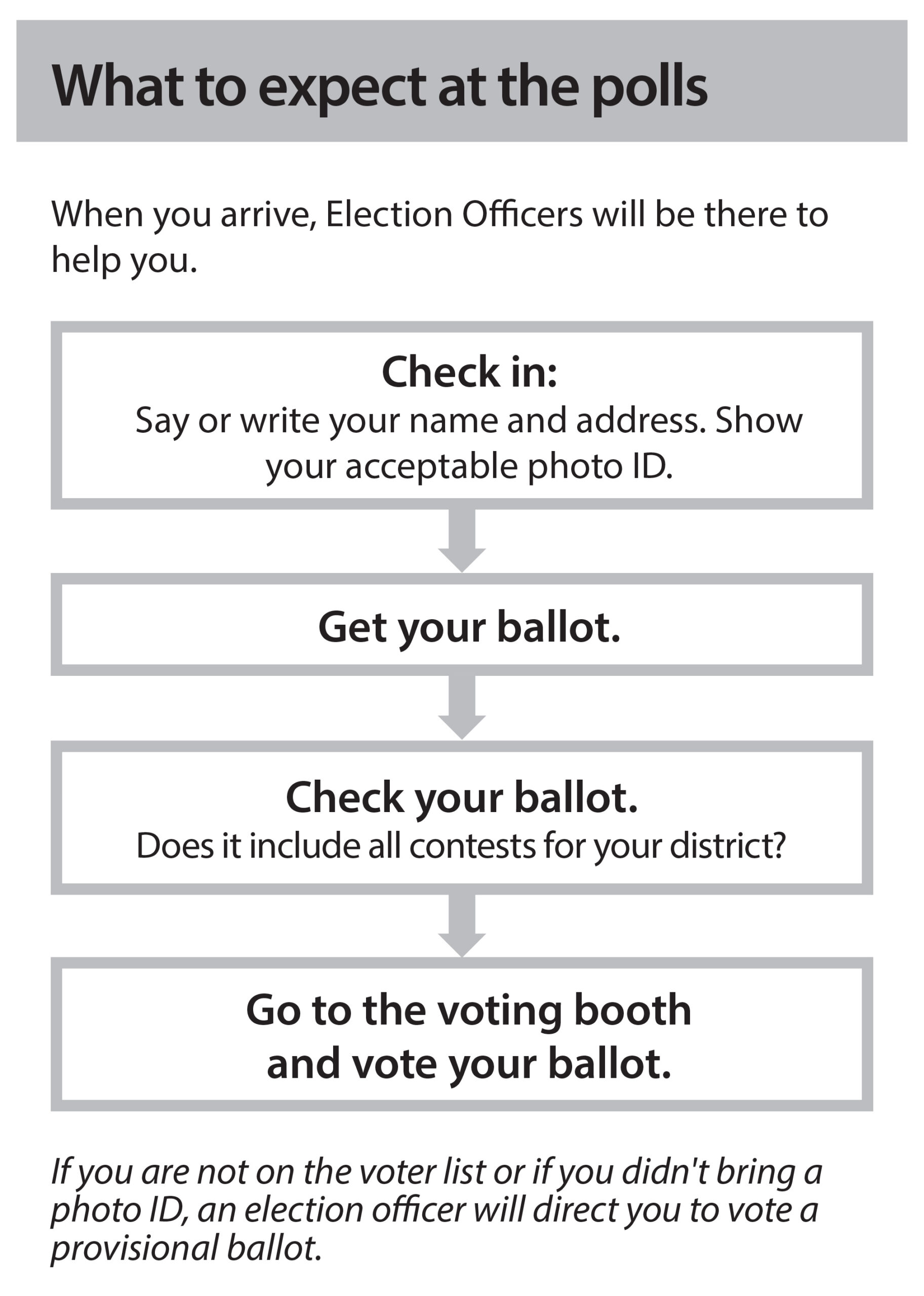
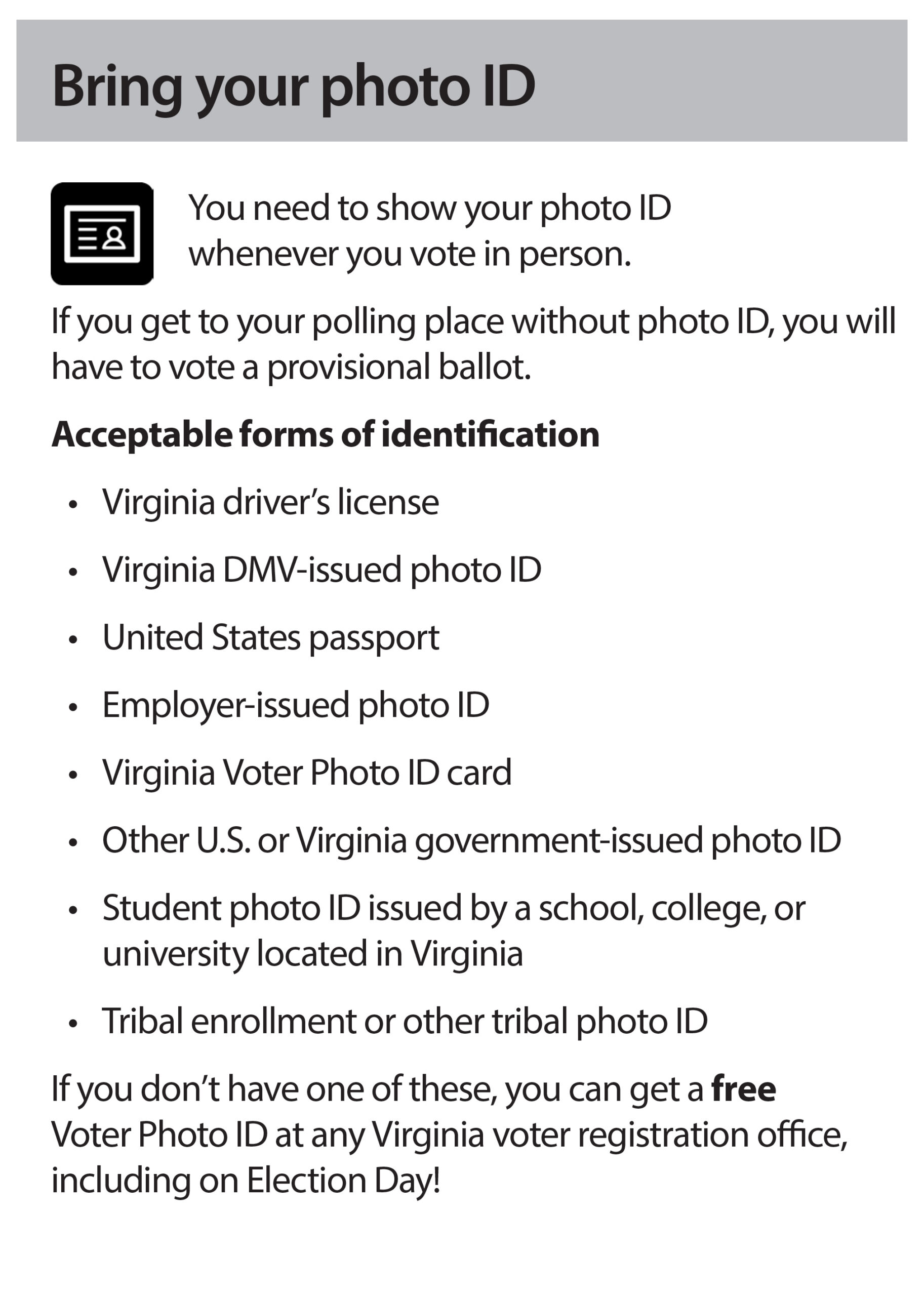
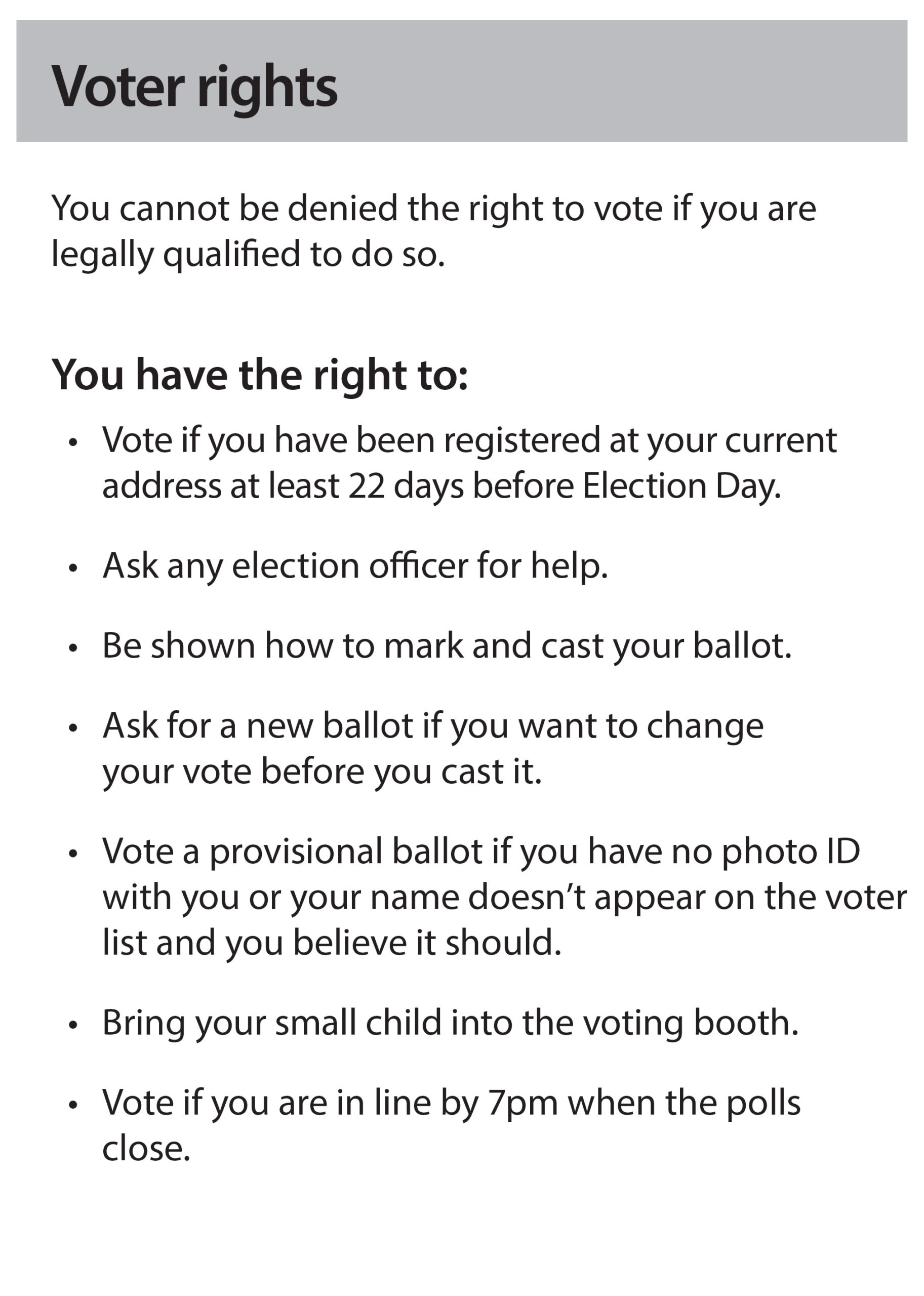
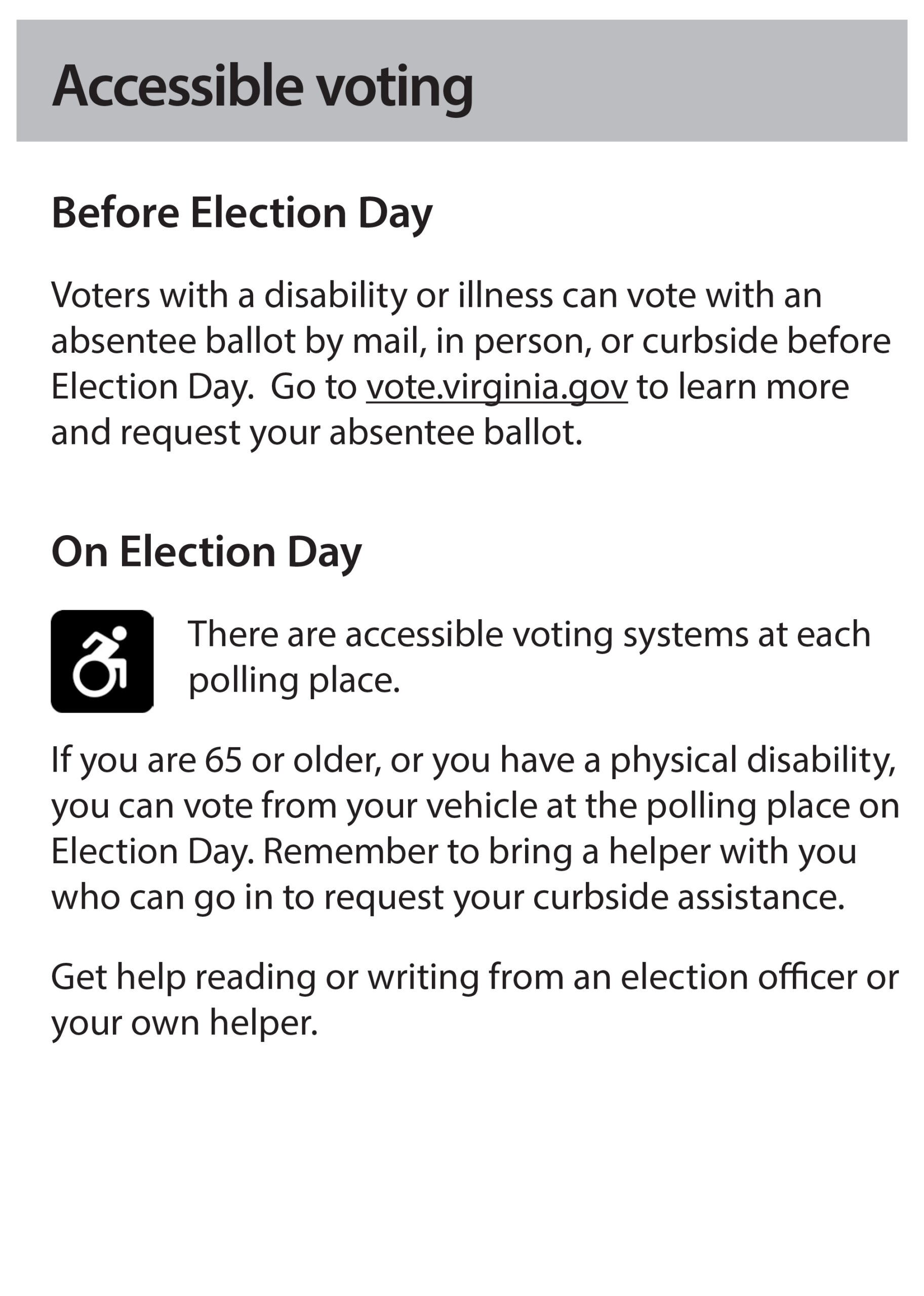
2018 Pocket Guide for Voters

Courtesy of the Virginia State Board of Elections.

Click here to download the “Pocket Guide for Voters” as a PDF.

Learn more: vote.virginia.gov

Pocket-Guide


How Did Mason Vote in 2017?

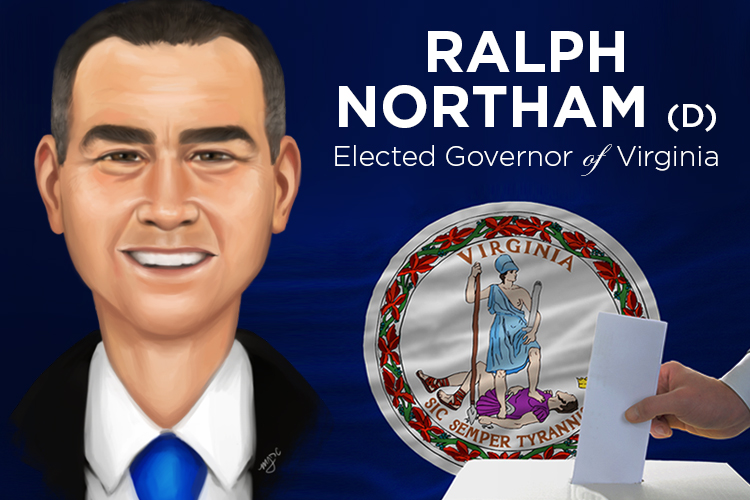
Northam-Elected


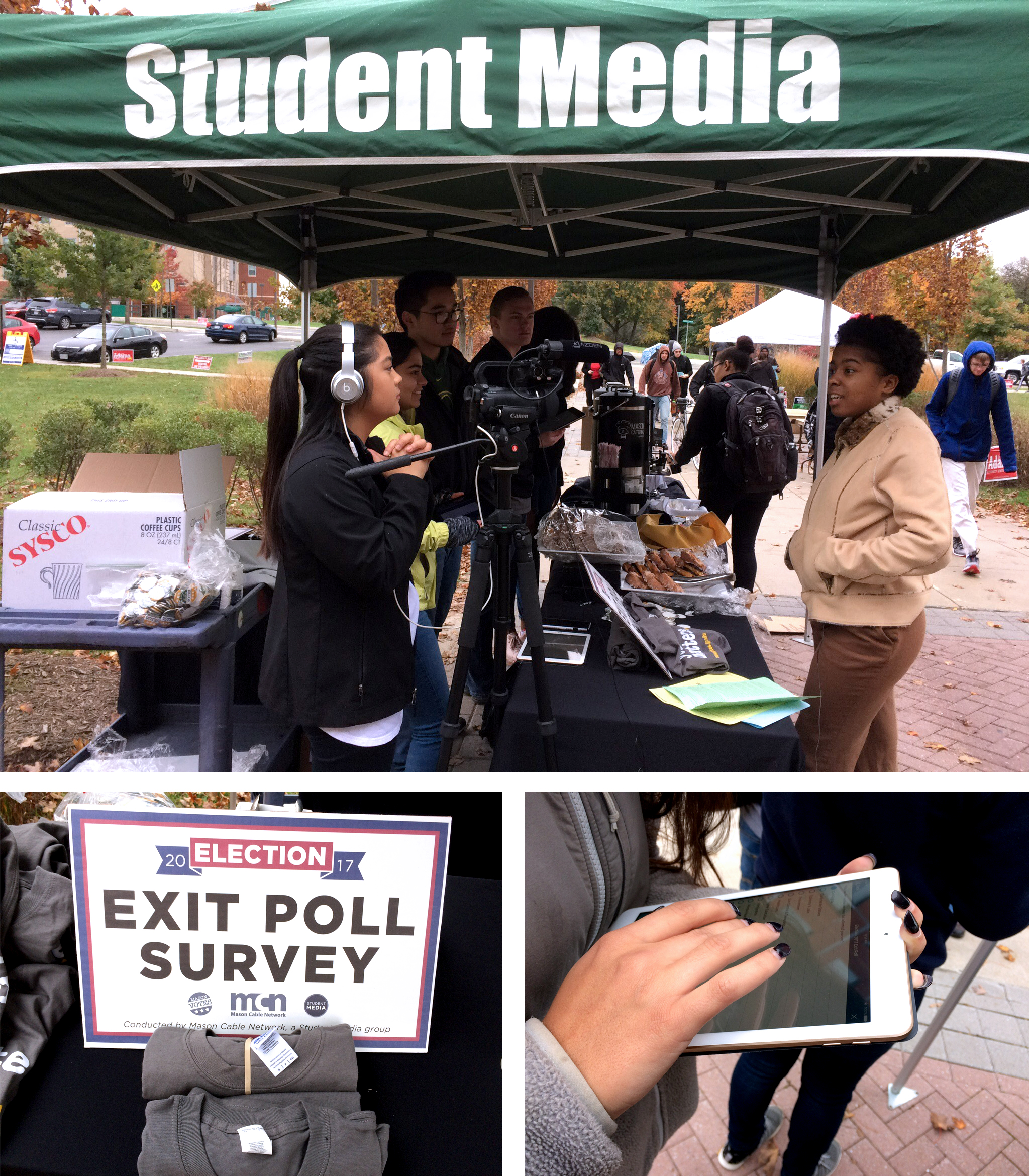
Merten-Hall-Exit-Polling_1117

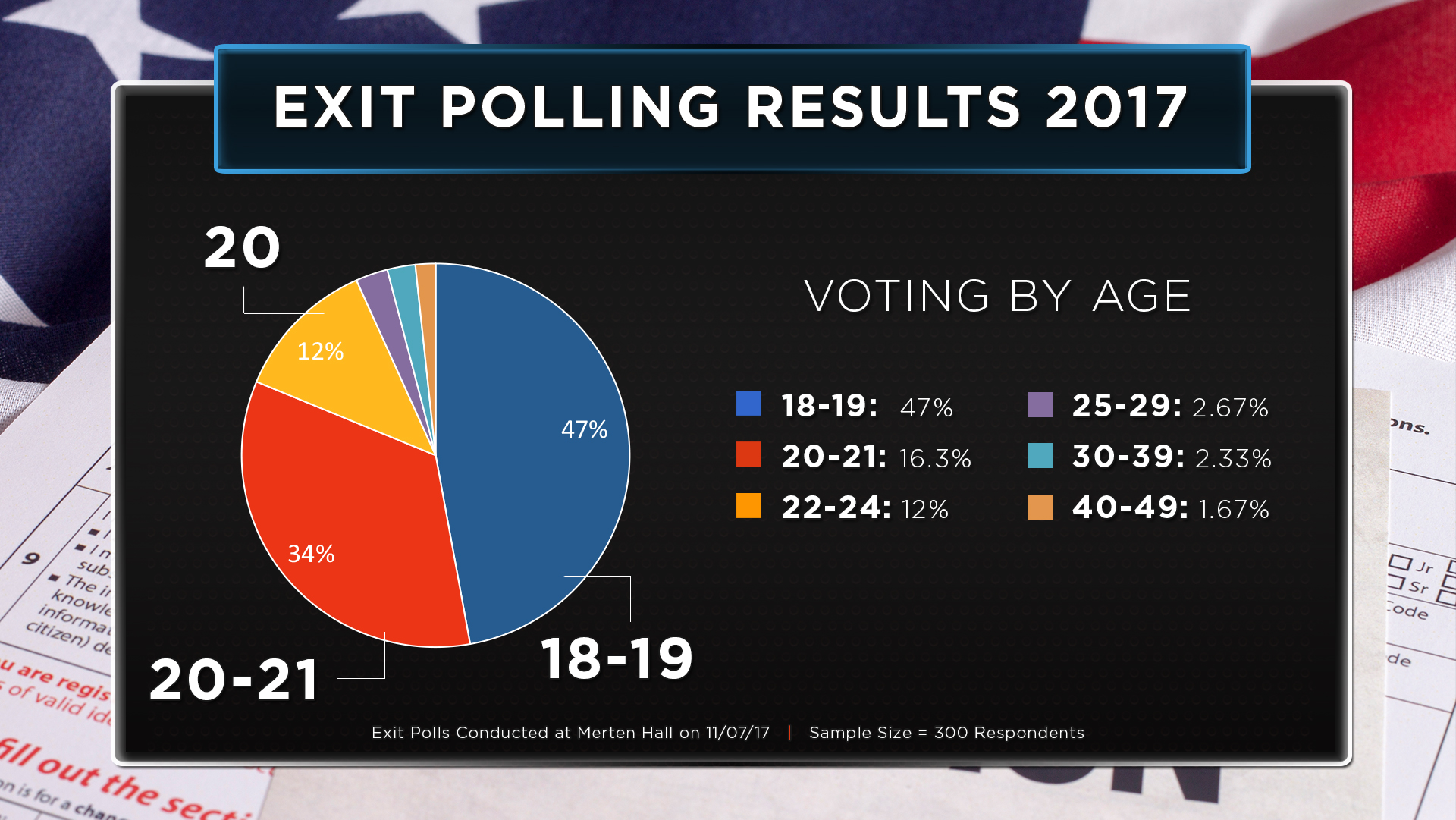
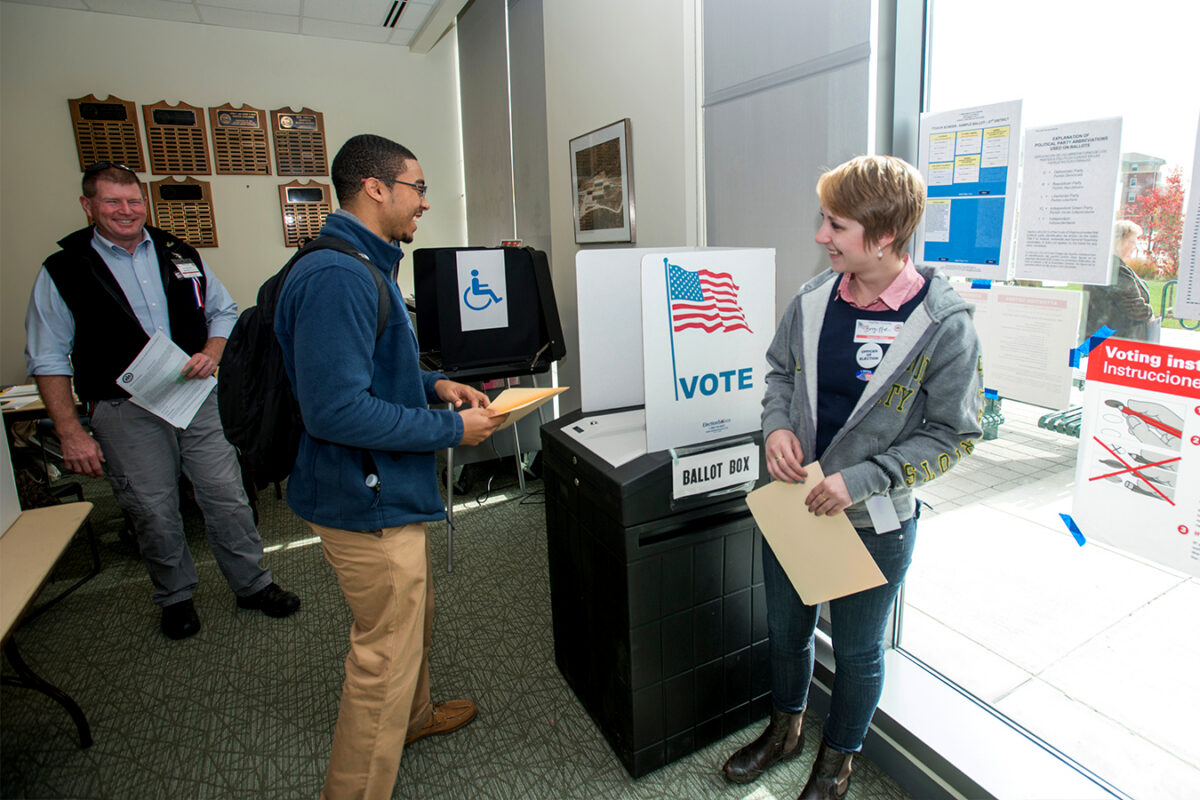
Student Media and Mason Votes conducted exit polling outside Merten Hall on Election Day to learn more about what issues and candidates were motivating factors for student voters in 2017.

Over 300 students were asked to complete a short exit survey after voting at Mason’s on-campus polling place, and the results were announced on Mason Cable Network’s LIVE election coverage Tuesday evening.

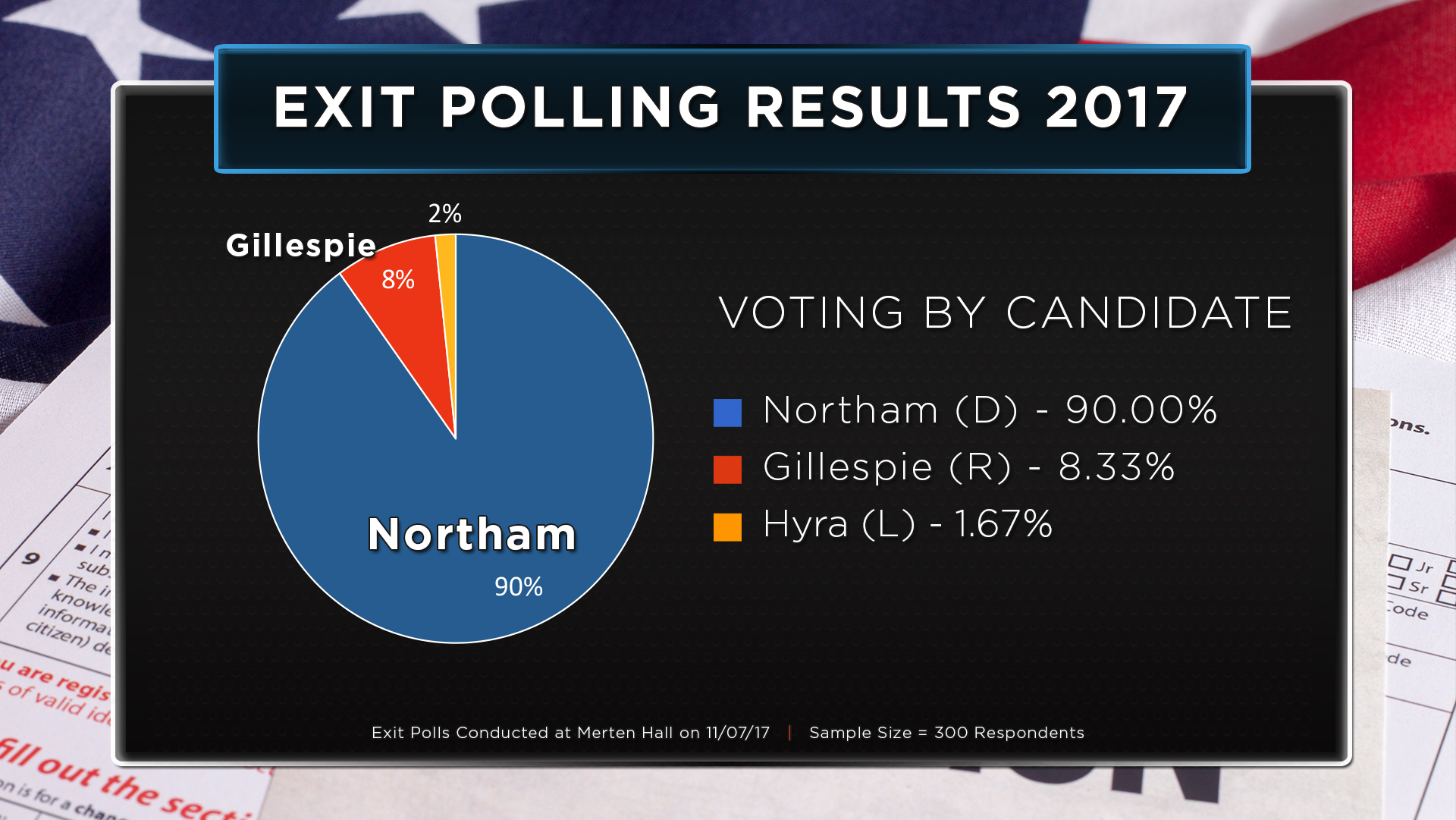
Mason voters overwhelmingly supported Democratic candidate Ralph Northam (90%-Northam, 8%-Gillespie, 2%-Hyra), who was declared the winner of the gubernatorial race about an hour after polls closed across the Commonwealth.

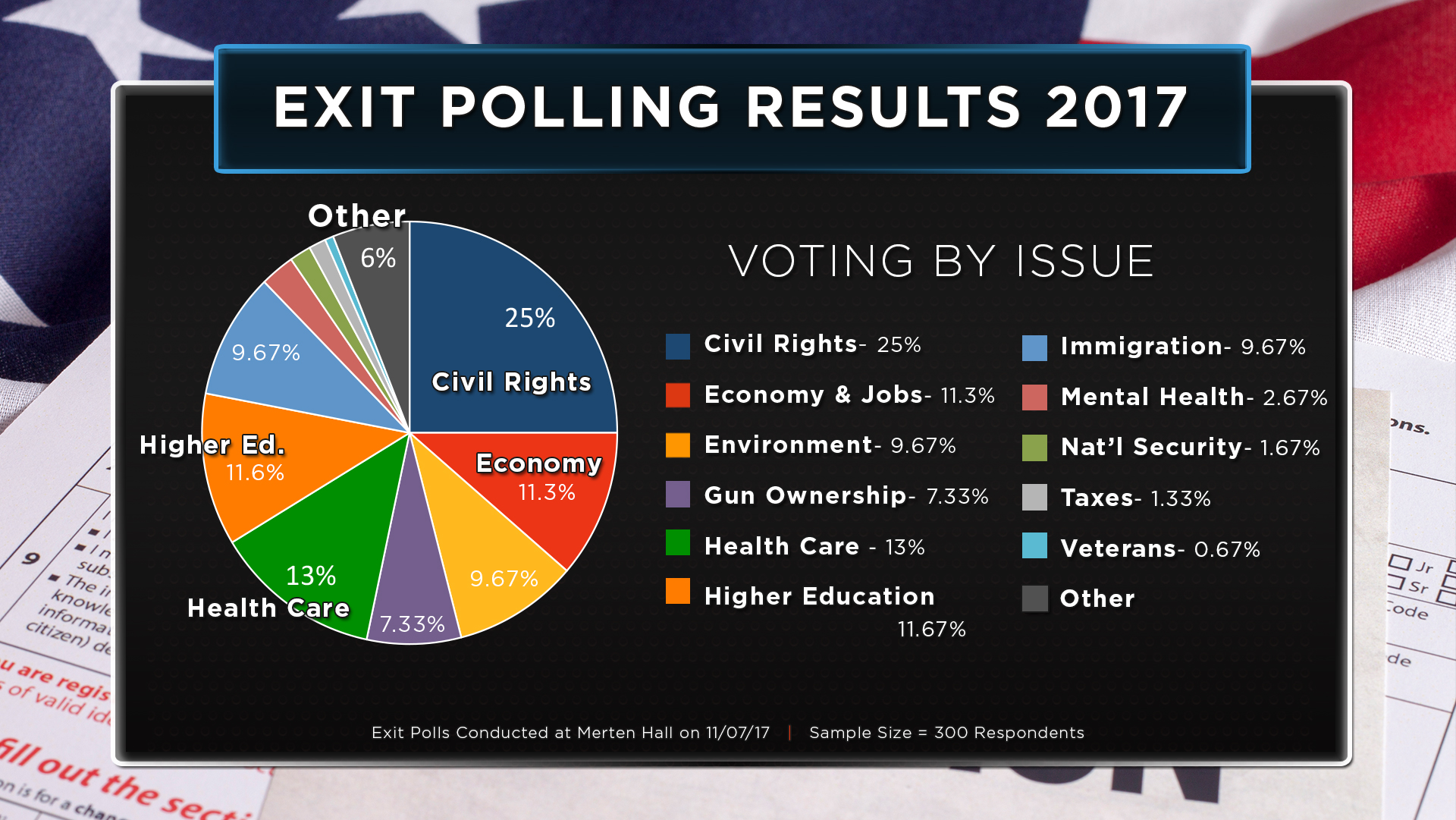
By far the most important issue to Mason students when considering their next governor was Civil Rights, with a full 25% of respondents selecting that as their top concern. Perhaps not a surprising finding given the contentious back and forth between the major candidates on questions of race, identity, protestors’ rights, and removal of Confederate statues in the wake of the tragic events that took place in Charlottesville, VA back in August. By contrast, only 18% of Mason students chose civil rights as their top issue in 2016.

The next most important issues to Mason voters in 2017 were Health Care (13%), Higher Education (11.6%), and Economy and Jobs (11.3%). Rounding out the top five issues by percentage was Immigration (9.67%) and Environment (9.67%), which tied for fifth place.

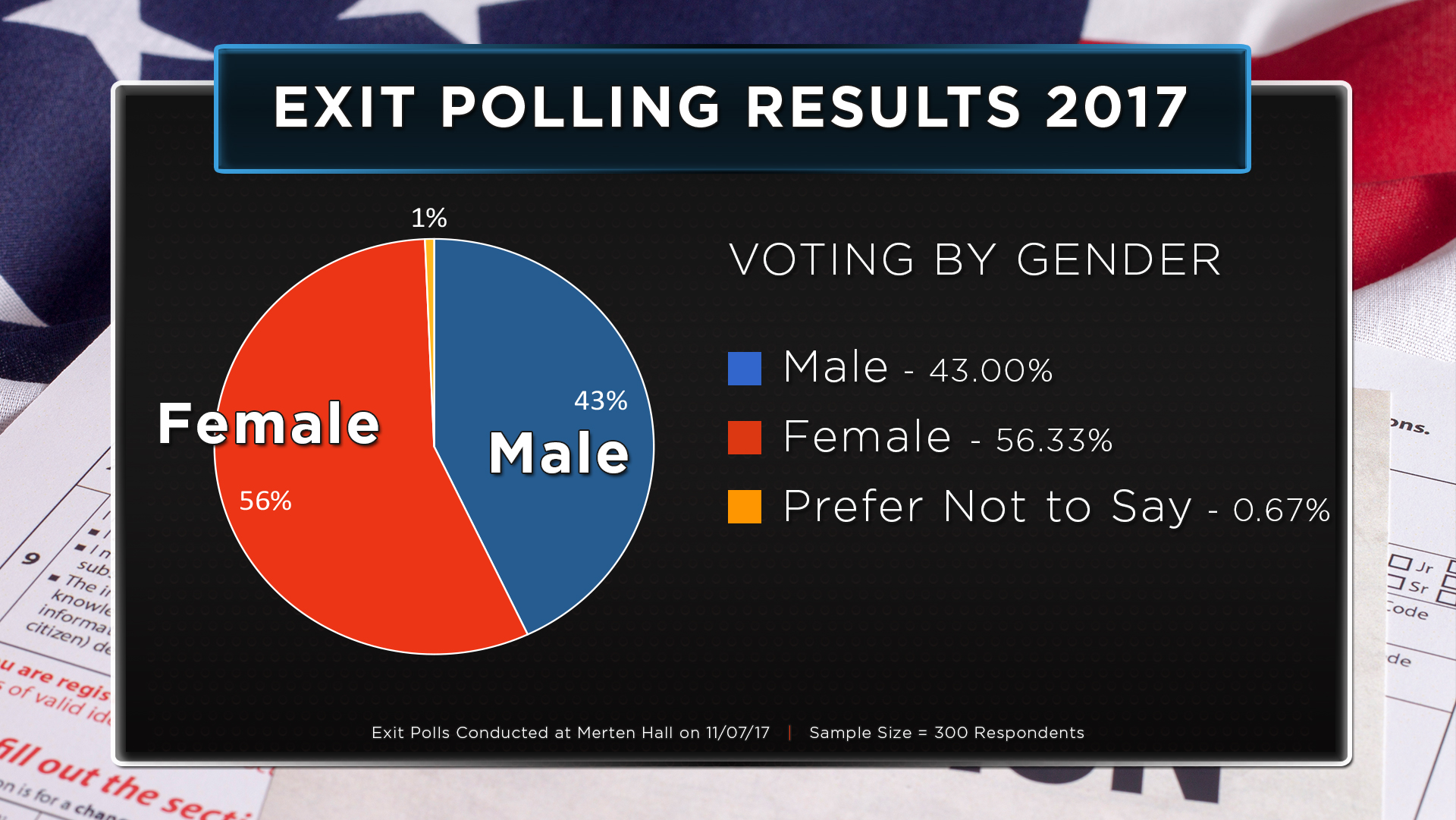
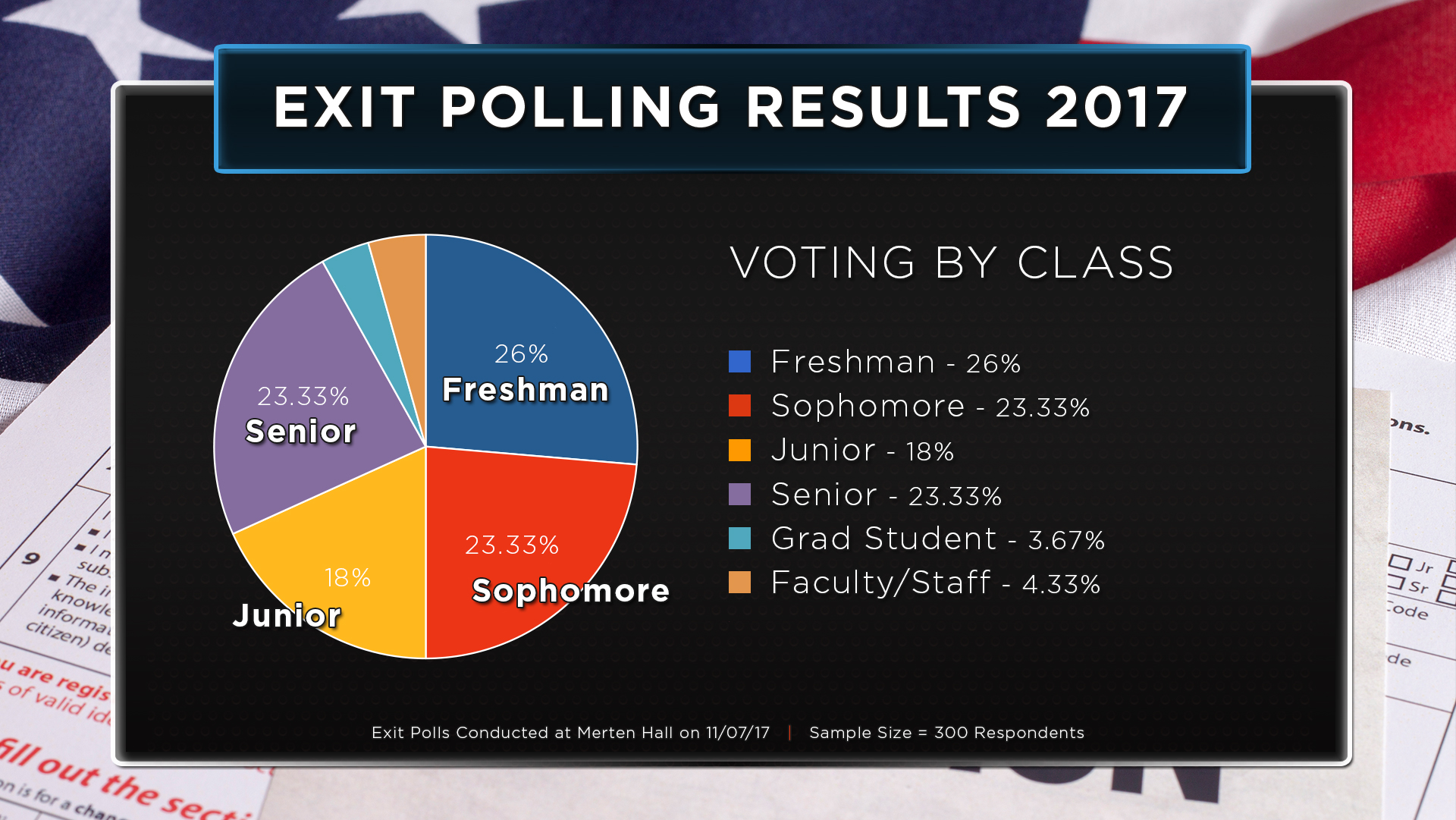
Full exit polling results can be found below. Click on an image to enlarge.Exit-Polling-Results-2017_Candidate

Photos by: Rodger Smith

Exit Poll Graphics by: Erik Truong and Jason Hartsel

What’s Important to Mason Students in 2017?

Both organizations worked together to host a Rock the Vote event in October.

Article by: Mahogani Harper

Interviews conducted by: Sabrina Acerra, Kayla Acheson, Huong Cao, Ressurrection Graves, Kime Howard, Grace Huang, Jennifer Squires, and Bryce Valliere.

The students of COMM 145 (Newspaper Workshop I) interviewed students on Mason’s Fairfax campus ahead of the Virginia gubernatorial election on Tuesday, November 7, 2017.

Student interview subjects were asked about their thoughts on this year’s election and what issues were informing their political decisions. After reviewing their responses collectively, the concerns and priorities most important to Mason students share a common motivation regardless of party — genuine desire for a better future.

There are many reasons why college students don’t or can’t vote, but there are just as many reasons why they do. The consequences of Election 2016 have inspired many millennials to vote in their state and local elections, even in off-year contests like 2017. If unable or unwilling to vote, young people are still getting politically active by supporting the people they want in office as volunteers or organizers at the grassroots level.

Just like their future in this country, college students are realizing more than ever that their votes do matter. Their vote is the future.

But don’t take my word for it. Here is a selection of interview responses from across the political spectrum:


Metaxia Myseros, Freshman, Information Technology

Do you plan to vote next Tuesday? Yes (“It’s my first election since I just turned 18 in August.”)

Who do you plan to vote for in the Governor’s race? Ralph Northam (D)

Top Issues:

  1. Free Community College (“It’s important because everyone should be able to get an education, even if they don’t have the money for it.”)
  2. Immigration (“People have lives here, you can’t just go tearing them apart.”)

Which candidate did you vote for in the 2016 Presidential Election? Wasn’t eligible to vote.

Why do you think it is important for young people and college students to vote? “We’re the future of the country. We will be here longer and suffer the consequences.”


David Devries, Junior, Biology & Chemistry

Do you plan to vote next Tuesday? Yes

Who do you plan to vote for in the Governor’s race? Undecided

Top Issues:

  1. Human Rights (“People are people first, every living thing on this planet has more in common than nothing.”)
  2. Energy Crisis (“Right now we face a lot of scientific illiteracy.”)
  3. Religion (“It’s causing the other two issues to be an issue.”)

Which candidate did you vote for in the 2016 Presidential Election? Jill Stein (G)

Why do you think it is important for young people and college students to vote? “Because there is a bias towards the past.”


Anonymous, Junior, Government

Do you plan to vote next Tuesday? Yes

Who do you plan to vote for in the Governor’s race? Ed Gillespie (R)

Top Issues:

  1. Tax Reform/Economic Policy (“Taxes are too high.”)
  2. Education (“Public schooling and funding is important.”)
  3. Gun Rights (“The Second Amendment should be protected.”)

Which candidate did you vote for in the 2016 Presidential Election? Donald Trump (R)

Why do you think it is important for young people and college students to vote? “It’s important to participate in our democracy.”


Wei Lee, Freshman, Computer Science

Do you plan to vote next Tuesday? Yes

Who do you plan to vote for in the Governor’s race? Undecided

Top Issues:

  1. Diversity (“Different people with different election background can love different opinion.”)
  2. Fairness (“Every race should have fair opportunity for the election of Virginia governor”)

Which candidate did you vote for in the 2016 Presidential Election? Hillary Clinton (D)

Why do you think it is important for young people and college students to vote? “Voting is a way that we people get involved with politics and also it is a responsibility as Virginian citizen.”


Manavi Singh, Junior, AVT

Do you plan to vote next Tuesday? No (“Not a citizen.”)

Who do you plan to vote for in the Governor’s race? Not eligible to vote.

Top Issues:

  1. Planned Parenthood (“It’s just necessary.”)
  2. Pro-Abortion (“Everyone should have a choice.”)
  3. Immigration (“The US is a pretty diverse place and it should stay that way.”)

Which candidate did you vote for in the 2016 Presidential Election? Not eligible to vote.

Why do you think it is important for young people and college students to vote? “We’re the new generation and the future is on us.”


Lindsay Walter, Sophomore, Communication

Do you plan to vote next Tuesday? No (“Not a Virginia Resident.”)

Who do you plan to vote for in the Governor’s race? Not eligible to vote.

Top Issues:

  1. Government Funding of Planned Parenthood (“Because the government doesn’t have the right to have a say in our reproduction rights.”)

Which candidate did you vote for in the 2016 Presidential Election? Gary Johnson (L)

Why do you think it is important for young people and college students to vote? “Everyone’s vote matters and you’re giving up by not voting.”


Ben Exstein, Sophomore, Criminology

Do you plan to vote next Tuesday? Yes (“Our tax rates should be based on our economy, not politics. We are divisive, our division impact major things.”)

Who do you plan to vote for in the Governor’s race? Undecided

Top Issues:

  1. Health Care (“We need to have people alive.”)
  2. Education (“Our students are not good at Math like Chinese and Russian students, we have the best colleges but we have such a high school dropout rate.”)
  3. Economy (“We are to indecisive when talking about what should be taxed, taxing should based on economy not on politics.”)

Which candidate did you vote for in the 2016 Presidential Election? Gary Johnson (L)

Why do you think it is important for young people and college students to vote? “You can’t complain about the President when you don’t even vote. Voting matters when many people do it.”


Tyler Hubbard, Junior, Math

Do you plan to vote next Tuesday? No (“Didn’t register in time.”)

Who do you plan to vote for in the Governor’s race? Not eligible but supports Ralph Northam (D)

Top Issues:

  1. Education (“That’s why I’m here. It’s the answer to everything.”)
  2. Equal Rights (“Everybody no matter what gender/sexual orientation shouldn’t be lower than others.”)
  3. Tax (“They want to cut spending and taxes which is controversial.”)

Which candidate did you vote for in the 2016 Presidential Election? Hillary Clinton (D)

Why do you think it is important for young people and college students to vote? “We should all have our own voice we are young and the future.”


Story photo by Mimi Albano; Slider photo courtesy of Creative Services/Alexis Glenn