Mason Votes

Romney: Remarks not “Elegantly Stated”

Article By: Danielle Salanitri

Over the last few of weeks, the Romney/Ryan campaign has made enough gaffes to turn this incredibly tight presidential race into one that is looking increasingly optimistic for President Obama, and this week doesn’t seem to be any different.  Videos of Governor Romney at a fundraiser were leaked to Mother Jones magazine, where he discusses his campaign strategy, intended solely for the ears of his super wealthy donors.  The republican candidate is captured, not only writing off 47% of voters as Obama supporters because they have used some form of government assistance, but that he would have a much easier time winning the election if he were Latino.

He is seen calling the 47% of people who do not pay income tax, often because they do not make enough of an income, as reliant on government programs. These are people “who believe they are victims, who believe that the government has a responsibility to care for them” and that he does not “worry about these people” because he will never “convince them they should take personal responsibility.”  Which is an interesting point for a multimillionaire, who pays a lower income tax rate than the middle-class and hides much of his money in offshore bank accounts, to make.

Not only does Governor Romney seem to forget who his supporters are, he implies that almost half of the nation, or any person that has ever taken out a Stafford Loan or used Social Security, lacks work ethic and is lazy.  This seems like a remarkably large number of people for a nation built on the ideal that hard work and determination lead to success.  He also groups two sets of people together, those that do not pay income tax and those that have received some sort of government benefit, which are not necessarily mutually exclusive.  Due to the slightly progressive tax system in the United States, the people that often do not pay an income tax are lower income families and the elderly, which describes much of the republican base.

The Governor also implies that his chances of winning in November would be increased had his father been born to Mexican parents, rather than just in Mexico.  His implication that being Latino would help him win the election, completely disregards the struggle that many have faced as minorities and the historic privileges that he has received as a white male.  Although, if he were Latino, there would be a greater chance that he too would have needed some sort government assistance in the past, and therefore, be better able to understand the needs of the American people.

But at least we can all be comforted knowing that in his press conference to address these leaked videos, he admitted his statements were not “elegantly” made.

*The views and opinions expressed are solely those of the author.

Mason’s Annual Constitution Day Lecture

The year 2013 marks the 150th anniversary of the signing of the Emancipation Proclamation. To commemorate this event, Mason will hold a watch party of Emancipation Nation: Celebrating Freedom on National Constitution Day, sponsored by the National Endowment for the Humanities, the Smithsonian Institution and the History Channel. The discussion will be led by University of Richmond President Ed Ayers and feature a panel of top emancipation historians who will discuss thinking about the emancipation experience in new ways.

The watch party will take place in the Meese Conference Room in Mason Hall from 1-3pm.

*Photo By Dakota Cunningham

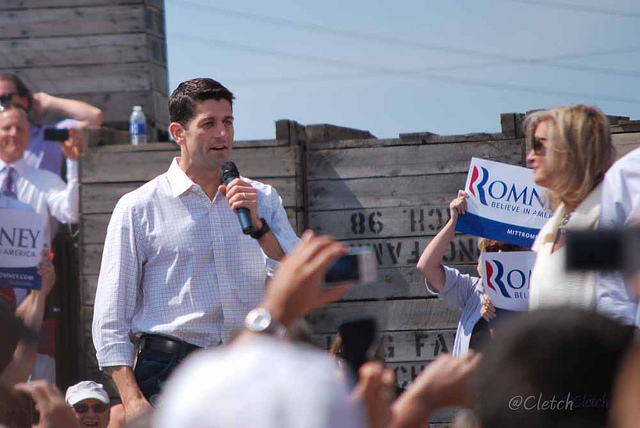
VP Candidate Paul Ryan speaks to Values Voters in DC

Republican Vice Presidential candidate Rep. Paul Ryan spoke this morning at the Values Voter Summit in Washington, DC this morning.  The gathering is the premiere assembly of social conservatives in the nation.  Mason Votes was on hand to cover the speech.

Ryan spoke on a number of topics and they weren’t limited to social issues like abortion or gay marriage.  What made headlines was his words on the American embassy attacks this week that left four U.S. workers killed, including the Ambassador to Libya.  He said, “We know who we are dealing with in these attacks.  They are extremists who operate by violence and intimidation.  And the least equivocation or mixed signal only makes them bolder.”  He further declared, “American foreign policy needs moral clarity and firmness of purpose.”

Ryan then shifted to a major line of attack on the President’s record regarding the economy.  “The Obama agenda failed not because it was stopped, but because it was passed.”  He pointed out the amid all the talk of Mitt Romney leaving out certain words or topics from his convention speech, President Obama left out the words ‘unemployment’, ‘record’, and ‘recovery’.  Ryan slammed Obama for a failure to keep his promises saying, “If Barack Obama’s promises weren’t good then [2008], what good are they now?”

The main meat of the Ryan address was debunking what he called the President’s “straw man arguments”.  He said of Obama, “No one is better at rebuking nonexistent opinions.”  On the President’s promise to bring the poverty rate down, Ryan argued that, “After four years…just about every segment of society is worse off.”  Ryan also rebuked the line from the DNC that “government is the only thing we all belong to” by saying that during his seven swearing ins to Congress he never swore an oath to the government, he swore it to, “support and defend the Constitution of the United States under which government is limited and people are sovereign.”  Ryan also maintained his strong pro-life stance as well as attacking Obama for his support of abortion.

Ryan did have to contend with two separate interruptions from liberal protesters.  Each time, Ryan seemed to brush it off and the crowd chanted the protesters down.

Ryan finished by citing that a majority of Americans believe we’re on the wrong path.  His solution is to point out “there’s an exit up ahead and it’s marked: November 6, 2012.”

You can watch the full speech HERE.

Ryan’s VP moment caps off a night of stars

Last night was the second night for speeches at the 2012 Republican National Convention in Tampa Bay, and the stars sure shined bright.

The three main speakers of the evening kicked off with former Secretary of State Condoleezza Rice.  She delved into her expertise of foreign affairs and critiqued the Obama administration for “leading from behind” among other acts that lowered America’s stature in the world.  She then pivoted to a personal story of overcoming obstacles of birthplace and circumstance by saying, “”In America, it does not matter where you came from, it matters where you are going.”  Rice, who is a college professor at Stanford, also touched on education and the poor quality of it in inner cities.  She called the topic, “the civil rights issue of our day.”

Following Rice came the first female Hispanic Governor in American history, Susana Martinez (R-NM).  As a daughter of a small businessman, she again torched President Obama’s “you didn’t build that” comment and explained some of her biography.  The convention was brought to their feet when she explained that after a lunch with friends, she turned to her husband and exclaimed, “I’ll be damned, we’re Republicans!”

Finally, it was time for the Vice Presidential nominee, Paul Ryan to take the stage.  He once again showed why he is the best explainer the conservative movement has to offer.  It’s his primary appeal and it’s the reason he’s Mitt Romney’s running mate.  He emphasized a key point that the campaign earlier had trouble articulating.  No one blames President Obama for causing our original problems.  The issue is the fact that he hasn’t fixed them.  Ryan asked, “”Without a change in leadership, how would the next four years be different than the last four?”  Ryan lit into Obamacare and through that defended Medicare in a more powerful way than many Republicans have since the program’s adoption in the 1960’s.  In fact, Ryan said Obama is really Medicare’s biggest threat.  But his main critique of the President was on the topic of leadership.  He said, “”We have suffered no shortage of words from the White House. What’s missing is leadership from the White House.”  He also emphasized Romney as the one who can solve America’s problems, “”Before the math and the momentum overwhelm us all, we are going to solve this nation’s economic problems.”  “You are entitled to the clearest choice possible,” Ryan claimed.  In framing this choice, Ryan didn’t throw bombs or attack the President personally.  He simply laid out the competing visions for America.

Paul Ryan pretty much laid out the GOP’s rationale for governing.  A clear, sober, problem solving team that promises no less than an American comeback.  Ryan ended the night on a crescendo of “We can do this!”  It’s that bright eyed optimism paired with determination that will be the draw of this Republican ticket.  Come January, Mitt Romney may be the Commander in Chief, but Paul Ryan will be the explainer in chief and will be the administration’s intellectual core.

UPDATE: Republican National Convention

Due to tropical storm Isaac the Republicans have suspended the start of their national convention being held in Tampa, Florida. The convention will kick off tomorrow at 2pm when they vote to approve the party platform. Check back with Mason Votes for up to date information on the Republican national convention.

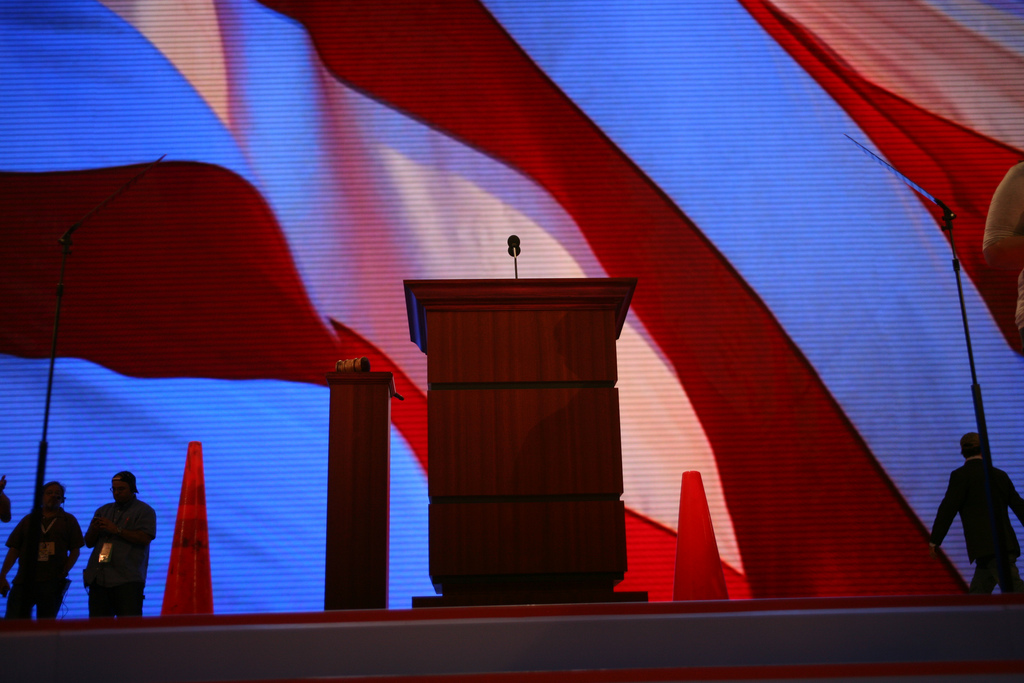
Photo: “Podium” by Tom LeGro, PBS NewsHour

A Week for the History Books

This week in Washington D.C. was one that won’t soon be forgotten.

The week began with the United States Supreme Court striking down three of the four major provisions of SB 1070 Arizona’s immigration law, while upholding it’s most controversial provision, the so called, “show me your papers” law. The law states that Arizona law enforcement has the right to check the immigration status of anyone they suspect to be in the country illegally. Critics of SB 1070 argue that such a law is or will lead to racial profiling of Hispanics and other minorities. Arizona has one of the highest populations of illegal immigrants in the country, however reports have shown the number of illegal immigrants in the state have fallen dramatically over the past few years. Even though the Supreme court upheld the controversial provision critics of the law were pleased that the court left open the possibility for further hearings on the law if racial profiling results from Arizona’s implementation.

That was only the beginning of what was a busy week in the nations capitol. Another historic moment came Thursday when the House of Representatives voted to hold United States Attorney General Eric Holder in contempt of Congress. Chairman of the House Oversight Committee, Darrell Issa called for the vote, accusing the Attorney General of deliberately withholding documents relating to the botched operation run by the Bureau of Alcohol, Tobacco, and Firearms known as Fast and Furious. The contempt vote marked the first time in United States history that a sitting cabinet member has been held in contempt of Congress. Republicans in the house voted unanimously, with 17 democrats joining them in finding the Attorney General in contempt of Congress. The remaining Democrats, led by the Congressional Black Caucus, staged a walk out as a sign of protest. Many Democrats felt the vote was political for a variety of reasons. Some clamored that the unprecedented move was an attempt embarrass the White House in an election year. Others claimed the contempt vote was payback against the Attorney General, whose Justice Department is challenging a number of voter I.D. laws across the country. Some Republicans even floated the theory that Fast and Furious was an attempt to push what they called the president’s anti-2nd Amendment agenda.

As historic as the contempt vote was, it paled in comparison to the other notable event that took place Thursday. In the last session of the year the U.S. Supreme Court handed down its decision on the controversial “Patient Protection and Affordable Care Act”, also referred to in the political lexicon as “Obamacare”. The decision was one that many experienced court watchers were not expecting. The Supreme Court upheld the law by a 5-4 vote. The court upheld a majority of the law including the individual mandate requiring everyone to have health insurance. However, the court did strike down the provision forcing states to expand Medicaid programs. Instead, the Court ruled that states should have the ability to opt-out of the expansion. Four of the five votes came from liberal justices Stephen Breyer, Ruth Bader Ginsberg, Sonia Sotomayor, and Elena Kagan. It was the fifth and deciding vote that came as a surprise, especially to conservatives. Chief Justice John Roberts, who was appointed to the court by former President George W. Bush in 2005, was the deciding vote. It is worth noting that during his confirmation hearings then Senator Barack Obama voted against his nomination to become Chief Justice. In the end it was Roberts who saved the president’s most notable legislative achievement.

The implications of the health care ruling on the 2012 presidential election are still unknown. It will be interesting to see what political ramifications come from the law being upheld, and the political calculations made by the campaigns over the next five months. The presumptive Republican nominee for president, former Massachusetts Governor Mitt Romney, has vowed to “repeal and replace Obamacare,” but President Obama and his re-election campaign have already begun to reiterate how the bill will help all Americans. President Obama has said in the past that much of the “Patient Protection and Affordable Care Act” was based off a similar law Mitt Romney passed as Governor of Massachusetts, especially the individual mandate. As Governor, Romney called the individual mandate “essential for bringing the health care costs down for everyone and getting everyone the health insurance they need.” Nothing is certain in politics, but what we can expect for the next five months until the election is for the “Patient Protection and Affordable Care Act” to be debated vigorously.

False Profits: Rand Paul and Government Spending

How do you measure success?

Ask a fiscal conservative like Rand Paul, and he or she will tell you that success is measured in nothing but dollars. Rand Paul expressed this sentiment in the Senate when he suggested that the United States Postal Service should not be bailed out with government money.

“I always ask people would you like to buy the Postal Service?” Paul joked. Then he lamented, “If we could just sell it to somebody.” According to Paul, a public service should be completely privatized, or else abolished, simply because it isn’t making a profit.

Last time I checked, the purpose of a national Post Office is to deliver mail, not to impress shareholders. Paul claims to be a strict constitutionalist, and yet he ignores the fact that the Constitution’s Postal Clause doesn’t require the USPS to be profitable.

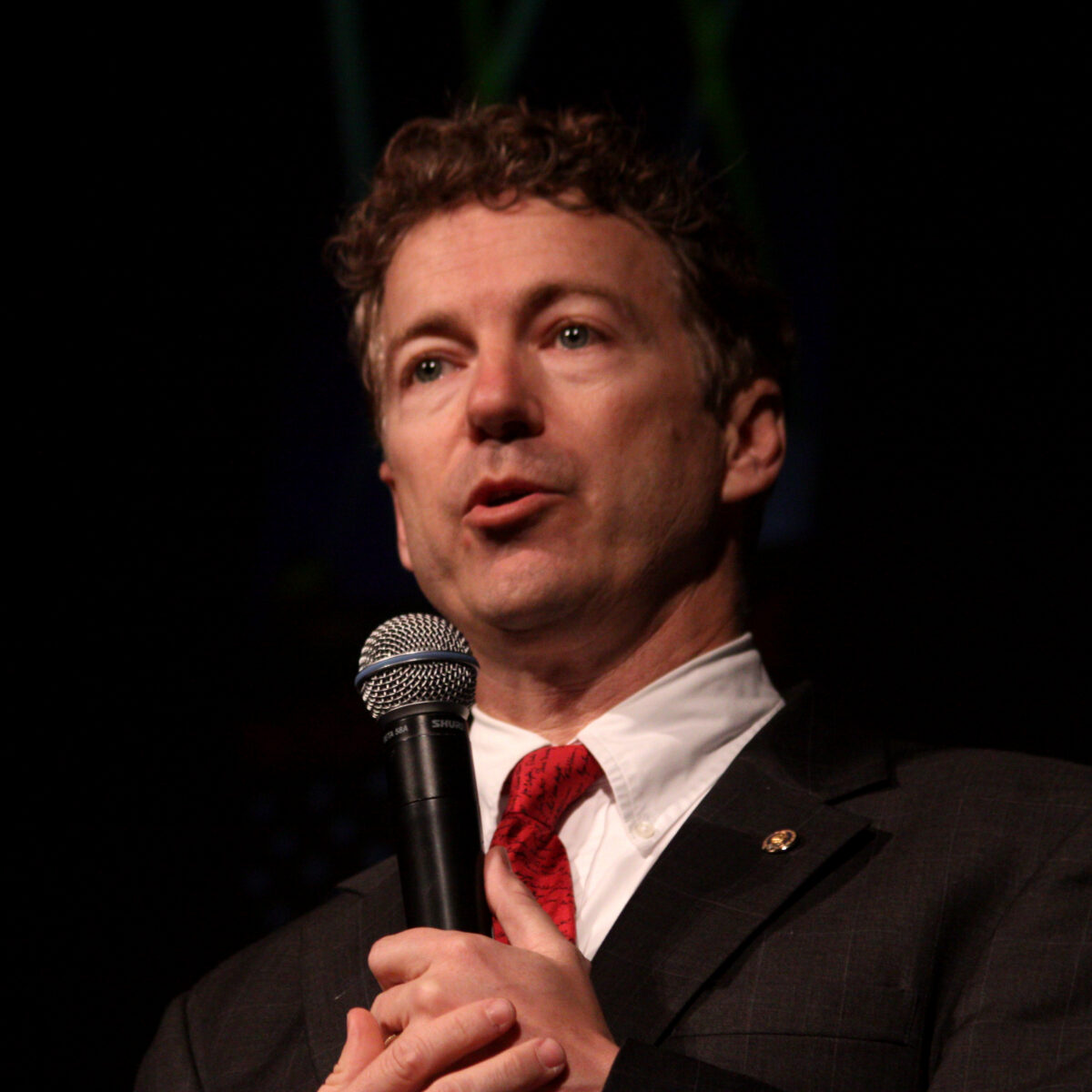
Official portrait of United States Senator (R-KY).
Official portrait of United States Senator (R-KY). (Photo credit: Wikipedia)

Paul acknowledged his idea would be politically unpopular. But his suggestion, that a public service as crucial as the Postal Service should be made into a private company, betrays his elitist attitude: Paul thinks that nothing is successful unless it is profitable. To him, unprofitable government spending always equals failure.

But Paul’s profit-first standard is really elitism of the worst kind. Privatizing or charging more for public services on the grounds of saving money is the worst thing a government can do.

For example, if the Post Office were privatized, many people would stop getting mail.

This is because it’s impossible to make a profit delivering mail to poor, rural areas. Costs outweigh the earnings to be had providing small towns or farms with this service. No private company would do it unless the residents of those places paid a fee to cover the costs. Requiring the Post Office to make a profit would mean extorting some Americans, or else cutting them out of the loop altogether.

If you don’t think a for-profit Post Office would be so cruel to the poor, let me recount the far crueler madness that goes on near South Fulton.

One year the City of South Fulton, Tennessee, was having trouble funding its fire department. The fiscally conservative state government refused to raise taxes to help South Fulton. The city didn’t want to raise taxes on its own people either. Consequently, the city decided that outlying rural areas would have to pay an annual fee if they wanted to keep their fire protection.

Two years ago, a rural man’s house caught fire. He had not paid the year’s fee. South Fulton firefighters showed up—and watched as his house burned.

Yes, really. The firefighters only came to protect the property of neighbors who had paid the fee. Though the poor man begged, the firefighters refused to help him; if they did help, they said, other poor people would stop paying the fee.

The rural man and his family lost their house and everything they owned. Their pets—three dogs and a cat—died in the flames. Another home near South Fulton suffered a similar fate in December last year. There’s no sign South Fulton will put humanity before profit any time soon. One might wonder if Rand Paul ever asks people whether they’d like to buy Kentucky’s unprofitable fire departments.

But let’s pretend for a moment that you don’t feel any empathy for the poor. What has profitless government spending done for you?

You’re a Mason student. Did you apply for any cheap federal loans? Be careful with your answer. According to a 2008 Cornell University study, 53% of students given low-interest student loans from the government claimed they have never benefitted from a federal program. Unless you were born into the Paul family and have thousands of dollars for an up-front payment every semester, you probably did.

Next time your economics-majoring friend complains about government spending, ask him if his family took out any federal loans. If he says no, ask him which iPhone app he invented to cover his $4,000 tuition.

The next time Rand Paul complains about government spending, remember that he’s really annoyed that poor and middle-class people are being helped without a concern for profit.

To be fair, not all government spending is helpful. The grossly inflated defense budget is one such expense. However, most fiscal conservatives aren’t complaining about this years’ $1.4 trillion defense budget.

Maybe the Libertarians are complaining, but they seem to think post offices, fire departments, and student loans are as wasteful as foreign wars. They measure success in dollars, so it’s probably hard for them to see a difference.

Enhanced by Zemanta

GMU Study on Primary Coverage Misconstrued

Study published by the Center for Media and Public Affairs wrongly interpreted by the O’Reilly Factor and Media Matters

http://storify.com/nosliwneelloc/gmu-study-on-primary-coverage-misconstrued

Enhanced by Zemanta

Mason Asks: Tim Kaine

Photo courtesy of: kaineforva.com

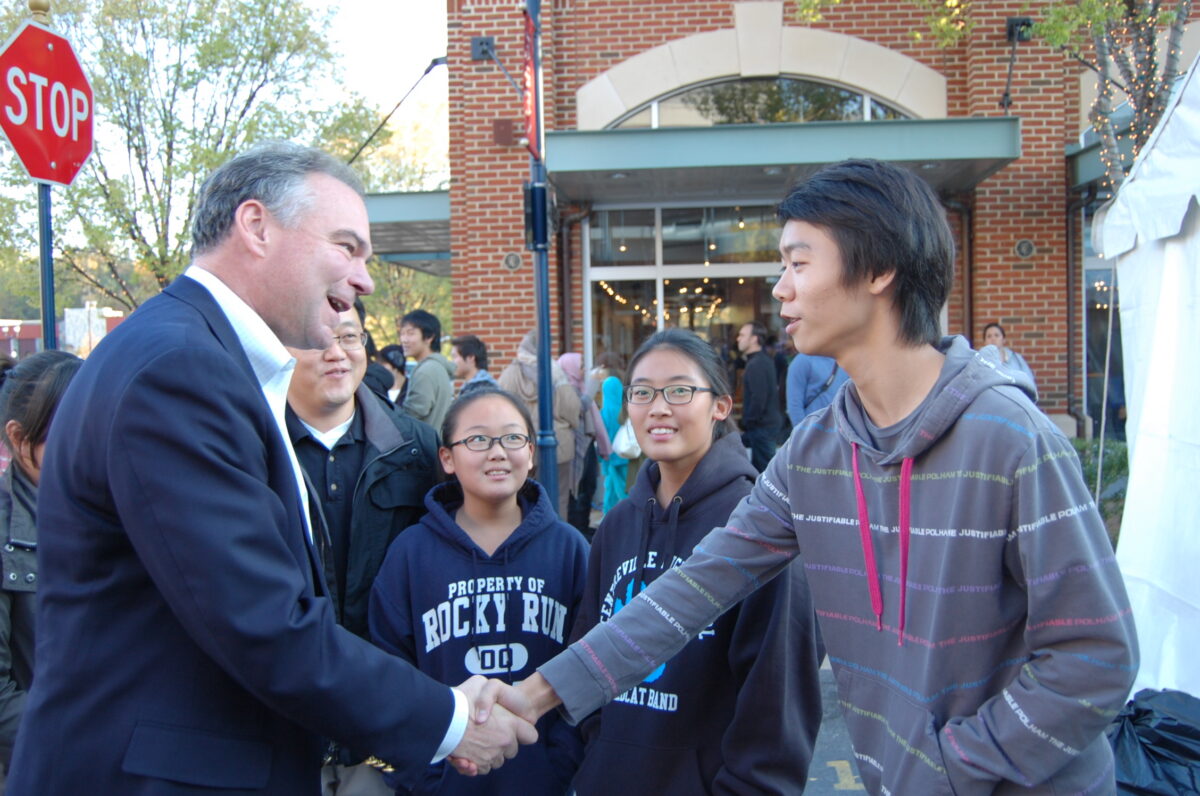
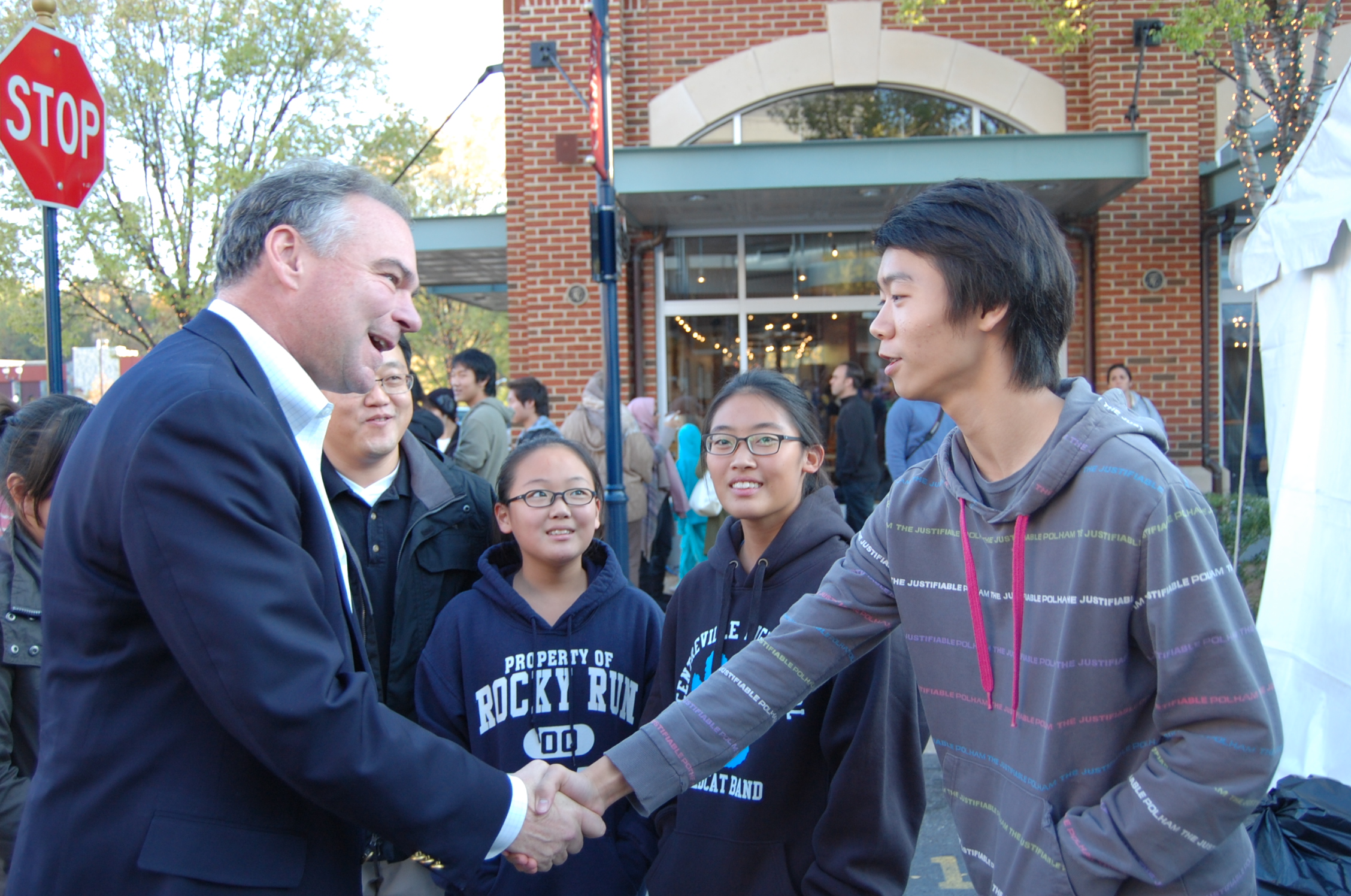
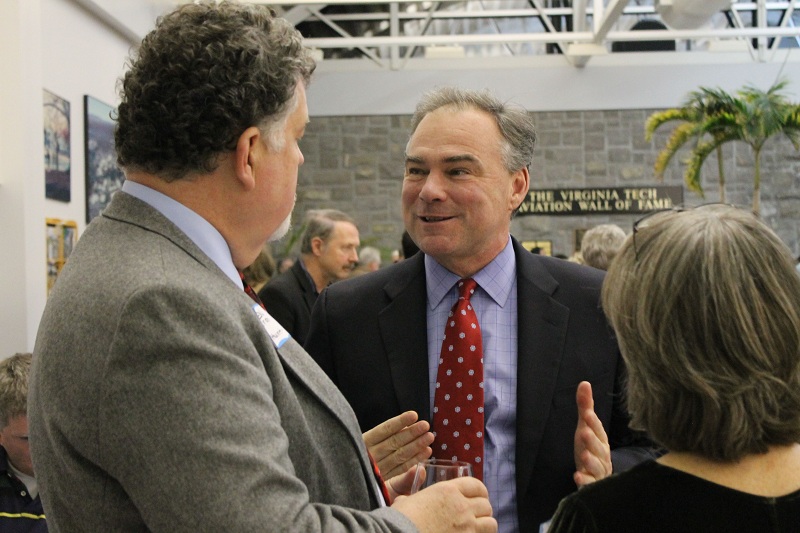
In November, Virginians will go to the polls to elect a United States Senator to fill the seat left by retiring Senator Jim Webb.  Tim Kaine is hoping Virginians will elect him.  As Governor, he improved Virginia’s economy and made education and environmental issues a top priority.  In addition to Governor, Tim Kaine has served as Mayor of Richmond, Lieutenant Governor, and Chairman of the Democratic National Committee—Kaine is now hoping to add Senator to that list. Governor Kaine took time from his busy campaign schedule to sit down and answer a few questions for the George Mason community—and for that, we thank him.

1. Your senate race is promising to be one of the most expensive of the 2012 cycle. What steps, if any, is your campaign taking to blunt the impact of out of state money?

There is no question this will be a close election that will require substantial resources to win, but those competing to be Virginia’s next Senator have a responsibility to run races that honor Virginia’s tradition of transparency and accountability in campaign finance. In the very first debate of this campaign, I offered George Allen a chance to run a no-outside money campaign, and he refused. When I gave him a second chance, and asked him to sign a pledge to keep secret money of this race, he turned me down again. Already, outside groups have spent over $1.5 million in our race on false TV ads.

But we have a secret weapon of our own, and that’s our incredible grassroots support. I am fortunate to have a strong base of grassroots support – since the start of this campaign we have received support from more than 20,000 individual donors. We will work hard to continue to build on this momentum, as every phone banker, door knocker and small dollar donor will be critical to win this race.

2. The amount of student debt incurred by today’s graduates continues to grow and has many wondering if college is even worth it. What are your thoughts on this?

Whether students choose to enroll in a university, a community college, technical school or a workforce training program, it’s important that we do more to ensure high school graduates have access to high-quality, affordable options to continue their education and increase their skills. As Lieutenant Governor, I helped shepherd $900 million into expanding the state’s higher education system, and as Governor I led passage of an additional $1.4 billion bond package in 2008 to construct state of the art classrooms and labs. I also allocated millions to need-based tuition assistance for Virginia’s students.  As Senator, I will work to increase access to higher education and preserve programs that increase the affordability of higher education, like the Pell Grant program.

But the bottom line is, students should not have to incur extraordinary debt to develop the skills they need to compete in an increasingly tough global job market. We have seen in Virginia that when we invest in education, improve its quality and lower its cost, our students develop skills that attract businesses and contribute to the talent economy that is critical to secure the United States’ position as an economic leader. I will take this Virginia lesson to Washington and pursue the same strategies at the national level, to make sure we have a national talent strategy that matches and exceeds our global competitors.

Photo courtesy of: kaineforva.com

3. Recent college grads are having a hard time finding good jobs. What is your plan to get Virginia’s young people working?

I am committed to ensuring that Virginia’s higher education system adequately prepares its graduates to find jobs in an increasingly competitive job market.  All Virginia students deserve access to affordable higher education, but it’s equally important that the degrees they earn give them the skills necessary for the jobs open today. As I travel around the Commonwealth meeting with business leaders in every region of the state, I hear time and again that they have jobs available but can’t find workers with the appropriate credentials.  Improving our workforce training and technical education is absolutely essential to ensuring that today’s workers are prepared to compete for the jobs of today and tomorrow.

4. Everyone seems to agree that something needs to be done about the soaring national debt. Obviously, this is a very complicated issue, but could you give us some insight into the type of debt reducing legislation that you would support as a senator?

The federal deficit is a pressing problem, and I would support legislation that balances significant, targeted cuts with strategic investments to bolster our economy. During my term as Governor, we faced the worst national economic period since the Great Depression. In order to balance Virginia’s budget, we cut over $5 billion in state spending, including my own salary. I made major spending cuts as Governor and left office with a smaller state general fund budget than the one I inherited four years earlier. I know how to make spending cuts. But, we will never get to balance through budget cuts alone.

5. Assuming guaranteed success, what single piece of legislation would you introduce tomorrow?

I would introduce legislation that would expand opportunities for students to afford and access workforce training, community college programs and higher education – investments in our talent would help us attract businesses, grow our economy and create more jobs. For the last century, the United States has been the world’s largest economy and a leader in innovation, but we must continue to invest in education to ensure we remain the most talented nation on earth. If we fix everything else, but do not return America to its status as the best-educated nation, we will cede our role as the most dynamic economy on earth.

Enhanced by Zemanta

Santorum Drops Out of Republican Primary Race

In a surprise announcement, Rick Santorum dropped out of the race for the Republican primary bid today at an event in Gettysburg, Pa.

Santorum had previously pledged to continue through the primaries until the Pennsylvania primary, which will be held on April 24, but reconsidered today after poll numbers show that he was not ahead in the polls in his home state. His daughter Bella’s ailing health was also cited as a reason for his withdrawal from the race.

According to Yahoo News, Santorum called Mitt Romney to inform him of his decision to pull out.

With Santorum gone, Romney, Newt Gingrich and Ron Paul are the only three candidates left in the primaries. Gingrich, who is millions of dollars in debt from his campaign, said that Romney is “far and away the most likely” Republican nominee.

Paul, who has trailed behind in the polls, is adamant that he will stay in the race until the end. In an interview with Piers Morgan, Paul reiterated his stance.