Mason Votes

The 2012 Republican Presidential Primaries

The presidential primary season is reaching its halfway point. On April 4 Mitt Romney swept the GOP presidential primaries in Maryland, Wisconsin and the District of Columbia, bringing him another step closer to securing the Republican nomination and the general election in November.

With another three primaries now over, it’s a good time to look at the race for the Republican presidential nomination as it stands now.

Who won which states so far:

  • Mitt Romney – New Hampshire, Florida, Nevada, Maine, Michigan, Arizona, Wyoming, Washington, Alaska, Ohio, Virginia, Vermont, Massachusetts, Idaho, Northern Marianas, Guam, Hawaii, American Samoa, Puerto Rico, Illinois, Maryland, Wisconsin, District of Columbia
  • Rick Santorum – Iowa, Missouri (non-binding primary), Minnesota, Colorado, Oklahoma, Tennessee, North Dakota, Kansas, Alabama, Mississippi, Louisiana
  • Newt Gingrich – South Carolina, Georgia
  • Ron Paul – Virgin Islands

Latest delegate tally:

  • Mitt Romney – 655
  • Rick Santorum – 278
  • Newt Gingrich – 135
  • Ron Paul – 51

Though Romney boasts a clear lead, he still needs a total of 1,144 delegates to secure the nomination.

Also on Tuesday, President Obama formally clinched the Democratic nomination.

The next primaries will be held on April 24 with Pennsylvania, New York, Connecticut and Delaware.

Sources:

The Washington Post, “Mitt Romney wins Wisconsin, Maryland, D.C. primaries”

Fox News, “Romney sweeps 3 primary contests, eyes general election battle”

2012 Presidential election schedule


Virginia wind turbine approved for construction by Bob McDonnell

Virginia is in the process of approval to build a 479 foot tall wind turbine off the coast of Cape Charles in the Chesapeake bay. If the turbine passes review from the U.S. Army Corps of Engineers and the U.S. Coast Guard, the project could be complete as early as 2013, making Virginia home of the first wind turbine generator in the states.

“This is an important next step in developing all of Virginia’s domestic energy resources to help power our nation’s economy and puts Virginia at the forefront of clean energy technology development,” Gov. Bob McDonnell said in a statement announcing the marine commission’s unanimous vote.

The purpose of the project is to test the prototype developed by Gamesa Energy USA LLC’s new offshore WTG technology, the G11X. If proven successful, the prototype could be transitioned to worldwide markets by 2015. The life expectancy of the prototype is projected to be 20 years.

McDonnell touts the project as a step forward in his all of the above energy approach, in which he plans to increase wind, oil, coal, nuclear and renewable energy sources to make Virginia the energy capital of the east coast.

The turbine will provide up to five megawatts of clean renewable windpower to the Virginia transmission grid for public use. The governor hopes that this will decrease use of fossil fuel and improve Virginia air quality.

According to the The Virginia Marine Resources Commission, the structure will not have a negative impact on the environment. Instead, fish will be attracted to the shade and shelter, increasing recreational fishing opportunities.

“This is an exciting project,” said VMRC Acting Commissioner Jack Travelstead in an article posted on the Virginia governor’s website. “This will bring jobs, energy, important new scientific information and enhanced fishing opportunities for recreational anglers.”

Enhanced by Zemanta

Paul wins University precinct, more than doubles 10 votes for Romney

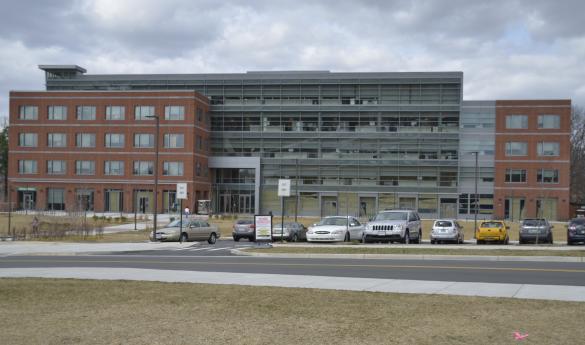
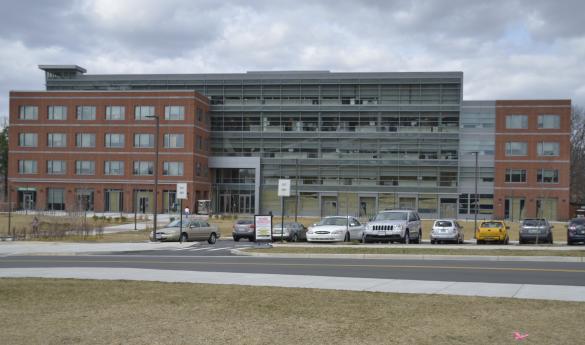
University Hall
Photo of University Hall, where the University precinct is located, taken one day following the election. (Jake McLernon)

Ron Paul won the new University precinct on Super Tuesday with a total of only 22 votes.

Mitt Romney, who was declared the state-wide Virginia winner on Wednesday, received 10 votes in the precinct in which registered on-campus students can cast their ballot. The two GOP rivals were the only candidates on the March 6 ballot.

The total of 32 ballots means roughly 3 percent of registered voters in the precinct participate in the Republican Primary. A total of 1,144 people had registered to vote in the precinct as of March 3, according to the State Board of Elections registrant counts.

“We’re very ecstatic about the results [of Paul winning],” said Sonia Jeffers, events coordinator for Mason’s Youth for Ron Paul group. “We can see how much his popularity and message has spread.”

Prior to Tuesday’s vote, Youth for Ron Paul helped organize advertising and carpooling to get students to Springfield, VA for the Feb. 29 Ron Paul “Leap Day” rally. The group also worked with Mason’s College Republicans to register voters on campus and set up a kiosk in Johnson Center to hand out pocket Constitutions and Ron Paul fact sheets, according to Jeffers.

But Jeffers was surprised by the overall turnout.

“Those numbers are shockingly low,” Jeffers said.

A lack of awareness of the University precinct among on-campus residents, according to some in the Mason community, could have been a factor.

Approximately 6,000 students live on-campus who would be eligible to vote at the precinct’s polling location in University Hall, as long as they are registered at their campus address. The rest of the university’s 33,320 students include a majority commuter population whose precincts would differ based on where they reside. Additionally, a portion of the campus’s residents, could have voted absentee and mailed in their ballot.

Jeffers, who said she hadn’t been politically active until her involvement with Youth for Ron Paul this year, didn’t know about the on-campus precinct until Election Day.

“I had no idea [the University precinct] existed,” said Jeffers. “I was surprised because I didn’t know there was a polling location on campus.”

Tuesday’s primary is the second time ballots have been cast in the University precinct. Established in summer 2011, the precinct was first functional for the Nov. 8 general election, where 76 ballots were cast.

A commuter student herself, Jeffers voted off-campus near her home and said she hoped that other students who didn’t vote on-campus had cast absentee ballots or voted at off-campus precincts. She said she also heard of at least four students who tried to vote at the University precinct but were unable to meet eligibility requirements.

Darren Kessler, a junior at Mason, said he didn’t vote on Tuesday at least In part because he couldn’t identify a candidate that he really liked.

“There’s not really a candidate that stands out that I like,” said Kessler. “[But the vote total] is kind of a crazy thing to hear.”

College of Health and Human Services Professor Naomi Gerber said she notices a big difference between students’ political engagement during this year’s election cycle versus 2008.

“Many [faculty members] have talked at the water cooler about the difference between now and four years ago,” said Gerber. “I walk around and I don’t see fliers or kiosks opening.”

In addition to a lack of student activity, no GOP candidate, in a field which also includes former Senator Rick Santorum and former House Speaker Newt Gingrich, has held a rally on campus since the election cycle began. Obama, the Democrat incumbent in November’s general election, last held a large event at Mason in the spring of 2010 addressing students on his health care initiative.

Although Jeffers said Paul’s rally in nearby Springfield drew great support —around 2,000 attendees according to reports—she hoped Paul would come to the Fairfax campus and speak at the Patriot Center where more students and community members might attend.

“We were trying really hard to get him to campus,” said Jeffers.

Former Massachusetts Governor Mitt Romney, who holds the most delegates in the GOP field, came to Fairfax in late October. His rally, less than a mile from Mason’s main campus, was held to support Virginia state legislators prior to the Nov. 8 general election.

Calling voter turnout at the University precinct “pathetic,” Gerber said she is concerned because she considers the issue of engagement an important one.

A Maryland resident, Gerber said she recently received an email from a Maryland campaign person who was attempting to gather Marylanders to help “stimulate” voter registration in Virginia. She said this might suggest that voting apathy is a statewide issue.

“It seems like Virginia has been identified as a place where a lot of people don’t vote,” said Gerber, who added that she would love to see campus enthusiasm return to where it was in 2008 when both Democratic candidates, Senator Hillary Clinton and then-Senator Barack Obama, came to Mason’s campus prior to the election.

“There was so much energy and enthusiasm,” Gerber said. “It was palpable.”

This article was originally published on 3/9/2012 on Connect2Mason, George Mason University’s student online news source. It is by Adam Sylvain, C2M Managing Editor. The photo is of University Hall and is by Jake McLernon.


Enhanced by Zemanta

Mid-day Report: Super Tuesday Primaries

Today, March 6, is Super Tuesday. The polls are underway but, at least in the state of Virginia, voter turnout has been on the low side.

According to The Washington Post, counties like Loudoun are not even expected to reach the projected 10 percent voter turnout, noticeably down from the 2008 presidential primary, which saw numbers closer to 32 percent. In some counties, the numbers are currently as low as 1.5 percent.

One significant factor behind the lack of enthusiasm among Virginia voters for the 2012 Republican presidential primary is the absence of any apparent suspense or competitiveness. Only two candidates, Mitt Romney and Ron Paul, qualified for the Virginia ballot, and Romney is expected to win by a large margin.

The other states holding primaries or caucuses today are Alaska, Georgia, Idaho, Massachusetts, North Dakota, Ohio, Oklahoma, Tennessee and Vermont.

Ohio is one of the most-watched states on Super Tuesday, and The Washington Post reports that Santorum and Romney appear to be in a virtual tie there.

Newt Gingrich must win Georgia, his home state, in order to still be considered a genuine candidate. Though he had a head start and was polling with a double-digit lead over Romney and Santorum, few people believe that he has an real chance at winning the nomination, let alone beating President Obama. Polls in Tennessee and Oklahoma both showed Santorum with the lead over Romney.

Enhanced by Zemanta

Everything You Need to Know about Voting in Virginia

Virginia’s GOP primary is fast approaching. On March 6, also known as Super Tuesday, Virginia will vote alongside several other states to help determine who will receive the 2012 Republican nomination for president. Here are a few things you need to know to be ready for the primary and the presidential election in November.

First, some background information about Virginia voting laws and how elections work in the state is important. Voting and elections in the Commonwealth of Virginia are run by the State Board of Elections, which oversees voter registration, implementation of election procedures, etc. for local, state and national elections.

Especially for college students, it is also important to know how to register to vote in Virginia. Voter eligibility requirements are as follows:

  • Be a resident in Virginia
  • Be a U.S. citizen
  • Be 18 years of age by the time of the next general election (those who are 17 but will be 18 by the time of the general election are permitted to register early and to vote in any primaries or other elections prior to the general election)
  • Not be registered and plan to vote in another state
  • Not be currently declared mentally incompetent by a court of law
  • If convicted of a felony, you must have your right to vote restored

Registration applications may be found at any number of locations, including a local voter registration office, online, DMV offices, public libraries and the State Board of Elections office. The completed application should be filed with your local registration office or mailed to the address printed on the form. The registration deadline for both primaries and general elections is 22 days before the election is held.

College students must establish residency in Virginia in order to vote in this state’s elections. According to the Virginia State Board of Elections website, residency is established by a physical location the voter intends to stay at for an unlimited amount of time. Students are allowed to use their dorm or college address for this.

Any students who wish to register to vote in Virginia but are already registered in another state or district must cancel their other registrations first. Students attending a school in a different location from where they are registered may vote using an absentee ballot (see more information below).

Voter ID Requirements and Other Information about Going to Vote

In order to vote, all voters must bring identification to the polls. People who registered to vote by mail and are voting for the first time in a federal election are subject to special requirements:

  1. A current and valid photo ID (e.g. driver’s license)
  2. OR a current utility bill, bank statement, government check or paycheck that shows name and address
  3. OR another government document that shows name and address (e.g. voter card)

All other voters must present any of the following forms of ID:

  • Virginia voter ID card
  • A valid Virginia driver’s license
  • Military ID
  • Any federal, Virginia state or local government-issued ID
  • Employer-issued photo ID card
  • Social security card
  • Anything else as specified in this table

In Virginia, polls are open from 6:00 AM to 7:00 PM on the day of the election.

How to Vote with an Absentee Ballot

Anyone who will not be present at his or her registered voting location at the time the polls are open can apply to vote using an absentee ballot. In order to apply for an absentee ballot, you must either complete an online application or get an application from your local Voter Registration Office.

The application must be received by the Voter Registration Office by 5:00 PM EST on the Tuesday prior to the day you choose to vote. In-person absentee voting lasts from at least 45 days before the established election day and generally ends the Saturday before the election. A new, completed application must be sent in for every election you intend to vote absentee.

Now that you have the right information, you can register to vote and be prepared to vote in either the upcoming GOP primary or in the November presidential general election. Remember every vote counts.

For additional and more detailed information about registration and voting in Virginia, you can visit these websites:

http://www.sbe.virginia.gov/cms/Index.html

http://www.fairfaxcounty.gov/eb/

Enhanced by Zemanta

Students for Ron Paul Spread Libertarian Message

Junior Olivia Valentine, secretary for Patriots for Ron Paul, was tired as she headed to a CPAC conference last year. Despite her exhaustion from getting up early, she was motivated because she was going to meet the man that she had researched and read about since summer. She was going to meet Ron Paul.


After her experience at the CPAC meeting, Valentine furthered her involvement in Ron Paul’s campaign, and eventually joined Patriots for Ron Paul, a student group on campus dedicated to helping Ron Paul’s campaign in the 2012 presidential election.

Patriots for Ron Paul had their first official meeting Wednesday in Sandbridge. The meeting was not a discussion of tactics or strategies to help Paul’s campaign; it was organizational in nature and the group decided on officers including president and vice president.

Patriots for Ron Paul has not been recognized as an official group on campus yet. Instead of waiting for official certification — which will be forthcoming — to begin conducting business, the members have gone ahead with meetings.

The meeting drew many different people who are attracted to Paul for different reasons.

“I guess I came to him through my experience here as an economics major,” said junior Joseph Taylor, president of Patriots for Ron Paul. “I support him mainly because of his message of freedom [and his] respect for individual rights and the Constitution.”

“We got what we needed,” Valentine said. “We went over the Constitution, which was required.”

One of the group’s goals is to get Ron Paul to speak at George Mason University.

“Our main goal right now is to bring Ron Paul to campus,” Valentine said. “We have a petition going around to gather signatures for people to say that they support him coming here to give a speech.”

Valentine added that with Super Tuesday coming up on March 6, Mason is in the running for Paul to give a speech, given the university’s involvement with Austrian economics and its convenient location only four miles away from one of Paul’s headquarters.

In addition to getting Paul on campus, Patriots for Ron Paul also has another goal. “Our broader goal is just to spread the message of limited government, free markets and civil liberties.”

Patriots for Ron Paul has different events in mind, which include fundraisers and lectures by professors on key topics. The group openly invites students to come to one of their meetings.

“[They should come] to learn,” Valentine said. “I don’t think people really understand Ron Paul. They just write him off as a cranky old grandpa. I don’t think people understand the power behind Ron Paul.”

This article was originally published in the 2/20/2012 issue of Broadside, George Mason University’s student newspaper. It is by Justin Lalputan, news editor.

President’s Approval Rating Reaches 50 Percent

Barack Obama’s approval ratings are at 50 percent. According to Donald Garrett, a  student senator, “Barack is doing great things for our country. In order for his numbers to be higher, he needs to work towards more bipartisan solutions.” Conversely, economics major Brett Baker has been “disappointed overall” and wishes President Obama had chosen not to continue the Patriot Act, as it “infringes significantly on our freedoms.” See? Fifty percent approval.

But in all seriousness, a poll conducted by CNN and the Opinion Research Corporation International did show Obama’s approval rating to be, in a steady fashion, up to the halfway mark. It’s surprising even to me that his approval ratings are so high — about the same as Ronald Reagan’s at this point in his first term and higher than George W. Bush’s — and it leads me to wonder what he’s done recently that’s so right.

On the domestic front, he signed the National Defense Authorization Act into effect — legislation that includes a wildly unpopular clause which allows the government to detain suspected terrorists — only a few weeks ago. And just this alone has been seen as a permanent blemish on his record by conservatives and liberals alike. He has not closed down nor has he ended the Bush tax cuts — both promises on which he ran his 2008 campaign. On the other hand, he also saw that the outdated policy of ”don’t ask, don’t tell” was put to rest under his administration. And he has taken a harder line concerning the top few percent paying their share in taxes. His health care law is either popular or unpopular, depending on your personal political leaning. In fact, it seems Obama rides precariously towards the middle when it comes to issues, yet somehow has a unique power to be blindingly polarizing. So has he done something internationally to spark such a favorable rating?

I’ve heard many people describe his international policies as “invasive,” some even going so far as to call him an “imperialist president.” I think it’s inaccurate to call Obama an imperialist, but I do concede people’s concerns over the potential of his policies to be intrusive. I think it’s important to put yourself in the shoes of a country being occupied, as Ron Paul said in one of his more popular speeches on international policies. Describing a fictional scenario in which China maintained military bases in Texas, he went on to describe the Chinese forces on those bases as occupiers to whom the laws of the U.S. Constitution did not apply. This hypothetical occupation was supplemented by the murders of thousands of innocent civilians who weren’t totally sure why the Chinese were here. Paul’s speech invokes the  war and it is 100-percent accurate in its claim that we’re all too often seen as intruders. In fact, after Saddam Hussein was removed from power under Bush, many Iraqis felt that the   United States had no further role. They were left wondering why a country would promise stability and democracy, but at the same time carelessly drive tanks through mental hospitals and leave as if they hadn’t just released hundreds of unstable sentient beings into the street to be killed, mugged and God knows what else. Why would a country that promises democracy be arrogant enough to believe democracy is something that a broken country can just download, all the while being sanctioned by the U.S. government under the auspices of international security? You’ve removed the thug from power, so get out of the country.

I have no doubt the concern is that Obama’s policies will lead to occupation of countries currently experiencing uprisings. But in almost every circumstance, the  government has aided to no greater a degree than was asked for by the given regime’s protesters. So imagine your leader, whom the United States supported for the past 30 years, is bombing your family; imagine your leader is torturing you for disagreeing with his opinion. Would you not shake hands with the Devil if you knew it would offer you security and hope? Recently I’ve heard that a Syrian ambassador pleaded for help for the plight of his country and those protesting against Assad. He didn’t care who came to Syria’s aid. He just wanted help. So people need to draw a line between “imperialism” and “aid,” because the two concepts differ greatly. And while I do not believe in occupying a country in brutal civil war, I do think the president’s policies of offering limited aid to countries in need will go down in the history books as being the right choice. Domestic politics can obviously be more partisan, but I do think President Obama has a fairly good record on job creation, especially with his new focus on bringing jobs back to the United States. I also think he’s underrated when it comes to his social policies. He’s hired more LGBT people than any administration in history and has included the harassment of LGBT people in his hate crime legislation.

All things considered, I think Obama’s trying — and sometimes that’s all you can do. The more politically involved I became at Mason, the more I hoped for Obama to be one of the best presidents in history; now it’s obvious that all hope of his face being carved into Rushmore is gone. But with the current Republican lineup and the president’s approval ratings at 50 percent, I just don’t see anyone beating him.

This article was originally published in the 2/20/2012 issue of Broadside, George Mason University’s student newspaper. It is by Will Rose, columnist.


The State of Virginia’s 2012 GOP Primary

For Virginia, Super Tuesday may not be so super after all. Due to a law in the state’s constitution requiring presidential candidates to gather 10,000 signatures of registered Virginia voters in order to be put on the ballot, the majority of the Republican candidates running for president in 2012 will not appear on voter’s ballots in the March 6 primary.

Only former Massachusetts governor, and current frontrunner, Mitt Romney and Texas Rep Ron Paul gathered the requisite amount of signatures by the set deadline and were thus deemed eligible.

On December 27 of 2011, Rick Perry, accompanied by fellow candidates Newt Gingrich, Rick Santorum and Jon Huntsman, filed a lawsuit arguing that this eligibility requirement is unconstitutional and requested that his name be added to the ballot.

However, on January 13, U.S. District Judge John Gibney ruled against Perry and co., saying that, regardless of the constitutional validity of the requirement, they took too long to make any challenges to the rule, given that officials need a sufficient amount of time to print the ballots so that they may be distributed to overseas and absentee voters on time.

Rick Perry and Gingrich both filed an appeal the following day, but their bid seems futile as the court also refused to stall the printing process while waiting for an official court decision. Though the case was still pending, Gingrich subsequently dropped his suit.

So, how will this affect the primary and the overall race? Though Perry has dropped out of the presidential race completely, many, including Judge Gibney himself, agree that this eligibility requirement disenfranchises voters and is unconstitutional.

The biggest winner in this scenario might be Ron Paul, who could potentially give his campaign a boost if he manages to coalesce the anti-Romney vote that would otherwise have been split between several candidates. However, recent polls suggest that Romney has an overwhelming lead among Republican voters. More importantly, Obama has the edge over both primary candidates, though he is ahead of Romney by only a slim margin.

This divisiveness is setting up Virginia as a key battleground state not only for the upcoming GOP primary, but for the general election as well.

Mason Votes Calls 11th District for Connolly

By Christian Smith
9:56 A.M. Nov. 6

Mason Votes is calling Virginia’s 11th congressional district race for Gerry Connolly (D). The Virginia Board of Elections’ unofficial results say that with 100 percent of precincts reporting, Connolly received 111,695 votes, or 49.22 percent, while Keith Fimian (R) had 110,727 votes, or 48.79 percent.

The last word from the Fimian camp came in a statement released Nov. 3 where Tim Edson, Fimian’s campaign manager, wrote, “In an election this close, it is important to take the time to get the result right by seeing the counting and canvassing process through. When that process is complete, Keith
Fimian is confident that he will be declared the winner.”

On Nov. 4 George Burke, a spokesman for Connolly, said, “We are confident of Connolly’s win. We believe that mathematically, there is no chance that a recount (which is just a glorified canvass) can turn it around.”

Once the race is officially called the the Board of Elections, Fimian will be entitled to request a recount if his vote totals are certified to be within one percent of Connolly’s.

11:30 P.M. Nov. 2
With 98 percent of Virginia’s 11th congressional district’s polls reporting, the race between Gerry Connolly (D) and Keith Fimian (R) is too close to call. As of 11:24 p.m., Connolly had 108,572 votes to Fimian’s 107,660 votes, according to The Washington Post.

This election has been watched around the nation because of the candidates’ history. Fimain lost to Connolly in the 2008 U.S. House of Representatives race but has been fighting back essentially ever since. Then, Connolly won with 54 percent of the vote to Fimian’s 43 percent, a divide that is only distant memory now.

At 11:15 p.m. Connolly addressed his supporters and gave a speech seemingly claiming victory. But with over 26,000 absentee ballots still being counted tonight, victory is far from either candidate’s grasp.

Fimian Hosts Election Results Headquarters at Mason