Mason Votes

Mason Asks: Tim Kaine

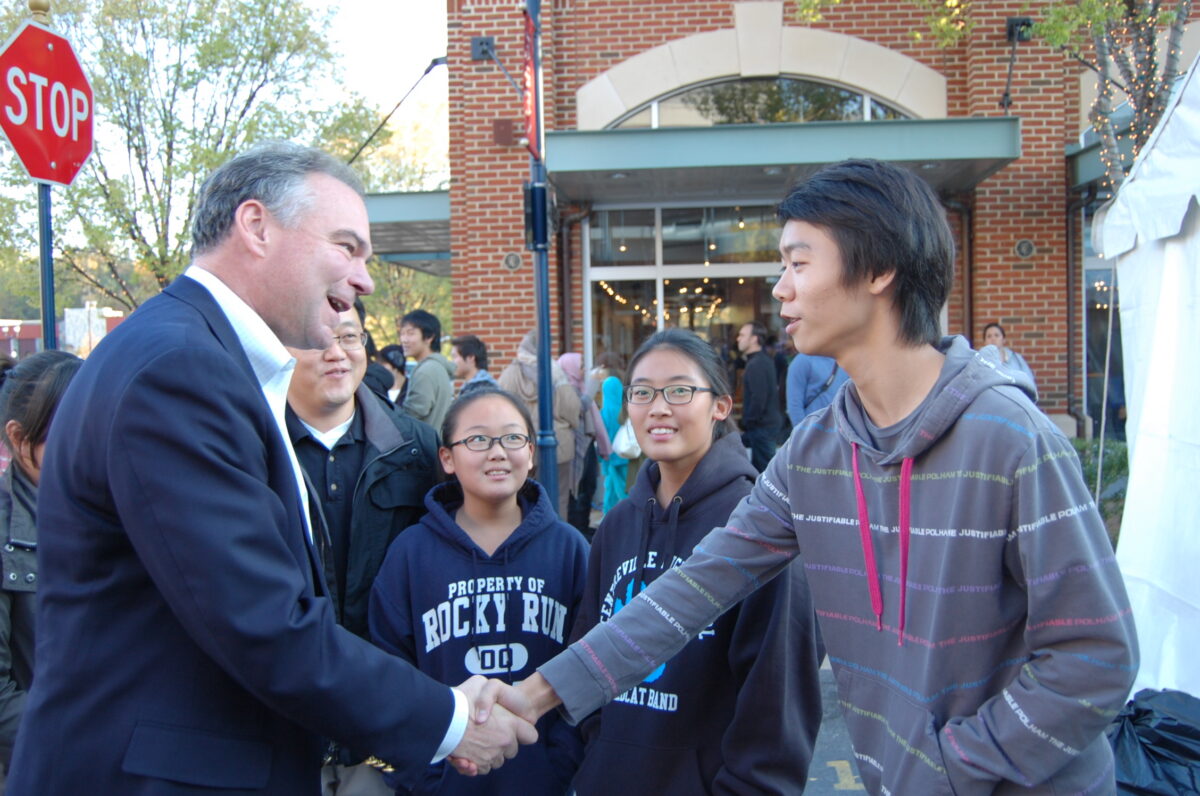
Photo courtesy of: kaineforva.com

In November, Virginians will go to the polls to elect a United States Senator to fill the seat left by retiring Senator Jim Webb.  Tim Kaine is hoping Virginians will elect him.  As Governor, he improved Virginia’s economy and made education and environmental issues a top priority.  In addition to Governor, Tim Kaine has served as Mayor of Richmond, Lieutenant Governor, and Chairman of the Democratic National Committee—Kaine is now hoping to add Senator to that list. Governor Kaine took time from his busy campaign schedule to sit down and answer a few questions for the George Mason community—and for that, we thank him.

1. Your senate race is promising to be one of the most expensive of the 2012 cycle. What steps, if any, is your campaign taking to blunt the impact of out of state money?

There is no question this will be a close election that will require substantial resources to win, but those competing to be Virginia’s next Senator have a responsibility to run races that honor Virginia’s tradition of transparency and accountability in campaign finance. In the very first debate of this campaign, I offered George Allen a chance to run a no-outside money campaign, and he refused. When I gave him a second chance, and asked him to sign a pledge to keep secret money of this race, he turned me down again. Already, outside groups have spent over $1.5 million in our race on false TV ads.

But we have a secret weapon of our own, and that’s our incredible grassroots support. I am fortunate to have a strong base of grassroots support – since the start of this campaign we have received support from more than 20,000 individual donors. We will work hard to continue to build on this momentum, as every phone banker, door knocker and small dollar donor will be critical to win this race.

2. The amount of student debt incurred by today’s graduates continues to grow and has many wondering if college is even worth it. What are your thoughts on this?

Whether students choose to enroll in a university, a community college, technical school or a workforce training program, it’s important that we do more to ensure high school graduates have access to high-quality, affordable options to continue their education and increase their skills. As Lieutenant Governor, I helped shepherd $900 million into expanding the state’s higher education system, and as Governor I led passage of an additional $1.4 billion bond package in 2008 to construct state of the art classrooms and labs. I also allocated millions to need-based tuition assistance for Virginia’s students.  As Senator, I will work to increase access to higher education and preserve programs that increase the affordability of higher education, like the Pell Grant program.

But the bottom line is, students should not have to incur extraordinary debt to develop the skills they need to compete in an increasingly tough global job market. We have seen in Virginia that when we invest in education, improve its quality and lower its cost, our students develop skills that attract businesses and contribute to the talent economy that is critical to secure the United States’ position as an economic leader. I will take this Virginia lesson to Washington and pursue the same strategies at the national level, to make sure we have a national talent strategy that matches and exceeds our global competitors.
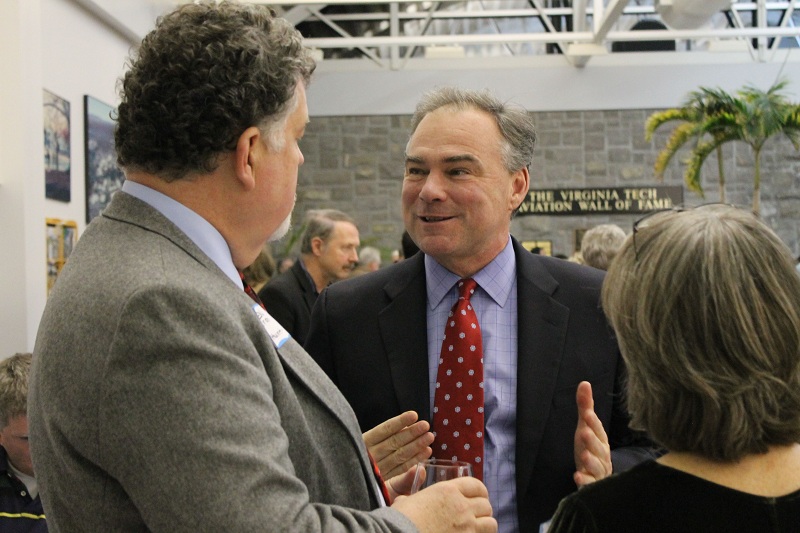
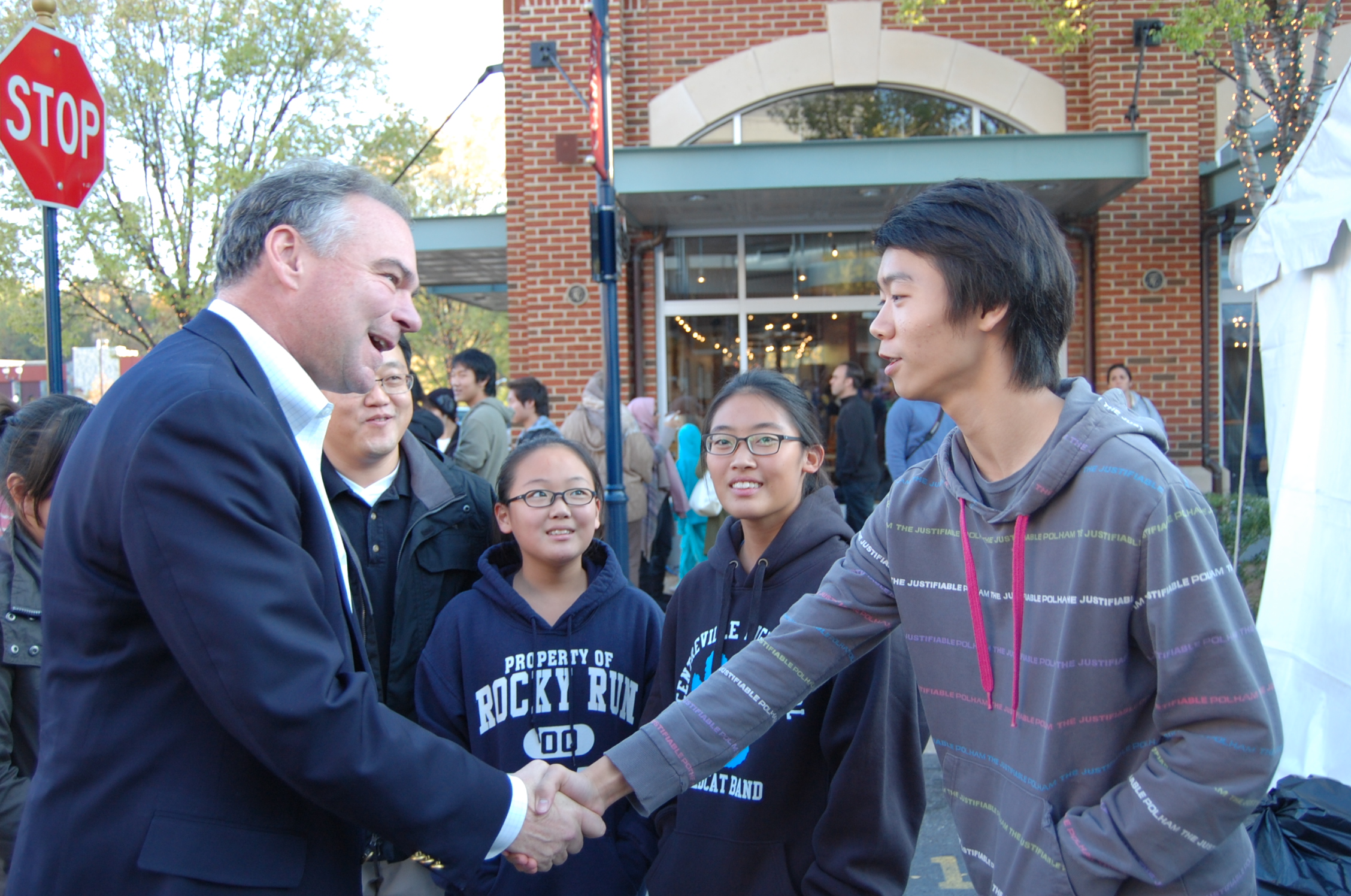
Photo courtesy of: kaineforva.com

3. Recent college grads are having a hard time finding good jobs. What is your plan to get Virginia’s young people working?

I am committed to ensuring that Virginia’s higher education system adequately prepares its graduates to find jobs in an increasingly competitive job market.  All Virginia students deserve access to affordable higher education, but it’s equally important that the degrees they earn give them the skills necessary for the jobs open today. As I travel around the Commonwealth meeting with business leaders in every region of the state, I hear time and again that they have jobs available but can’t find workers with the appropriate credentials.  Improving our workforce training and technical education is absolutely essential to ensuring that today’s workers are prepared to compete for the jobs of today and tomorrow.

4. Everyone seems to agree that something needs to be done about the soaring national debt. Obviously, this is a very complicated issue, but could you give us some insight into the type of debt reducing legislation that you would support as a senator?

The federal deficit is a pressing problem, and I would support legislation that balances significant, targeted cuts with strategic investments to bolster our economy. During my term as Governor, we faced the worst national economic period since the Great Depression. In order to balance Virginia’s budget, we cut over $5 billion in state spending, including my own salary. I made major spending cuts as Governor and left office with a smaller state general fund budget than the one I inherited four years earlier. I know how to make spending cuts. But, we will never get to balance through budget cuts alone.

5. Assuming guaranteed success, what single piece of legislation would you introduce tomorrow?

I would introduce legislation that would expand opportunities for students to afford and access workforce training, community college programs and higher education – investments in our talent would help us attract businesses, grow our economy and create more jobs. For the last century, the United States has been the world’s largest economy and a leader in innovation, but we must continue to invest in education to ensure we remain the most talented nation on earth. If we fix everything else, but do not return America to its status as the best-educated nation, we will cede our role as the most dynamic economy on earth.

Enhanced by Zemanta

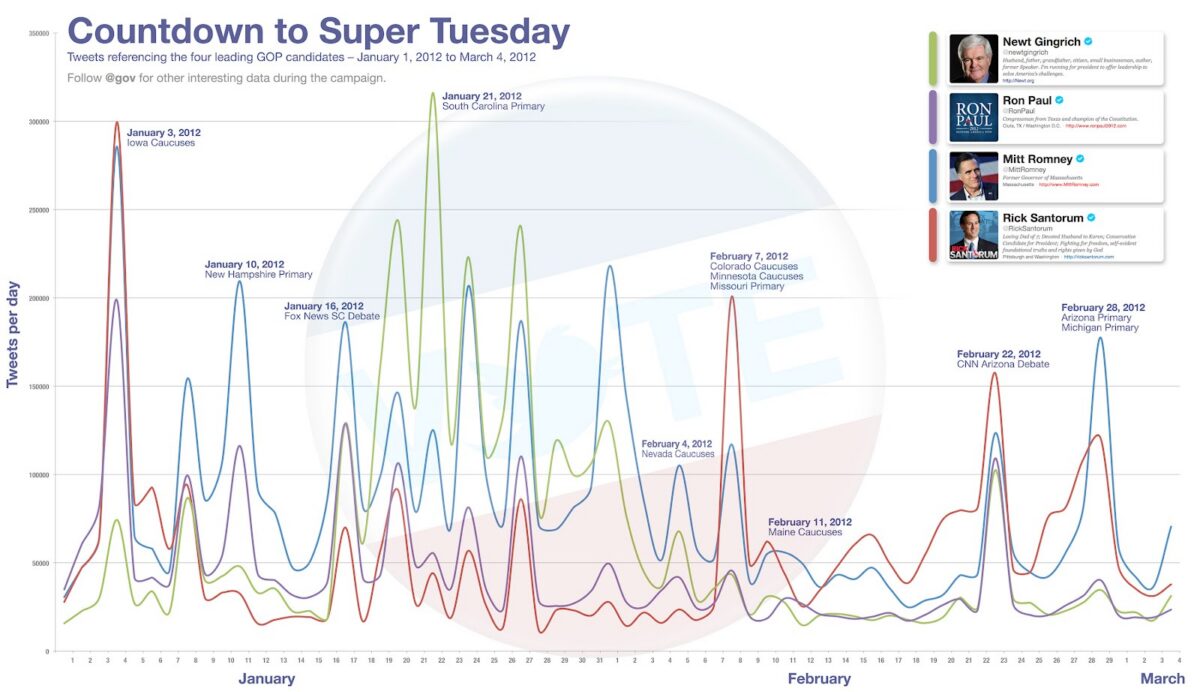
Super Tuesday 2012

http://storify.com/nosliwneelloc/super-tuesday-2012

Voting on campus at Mason

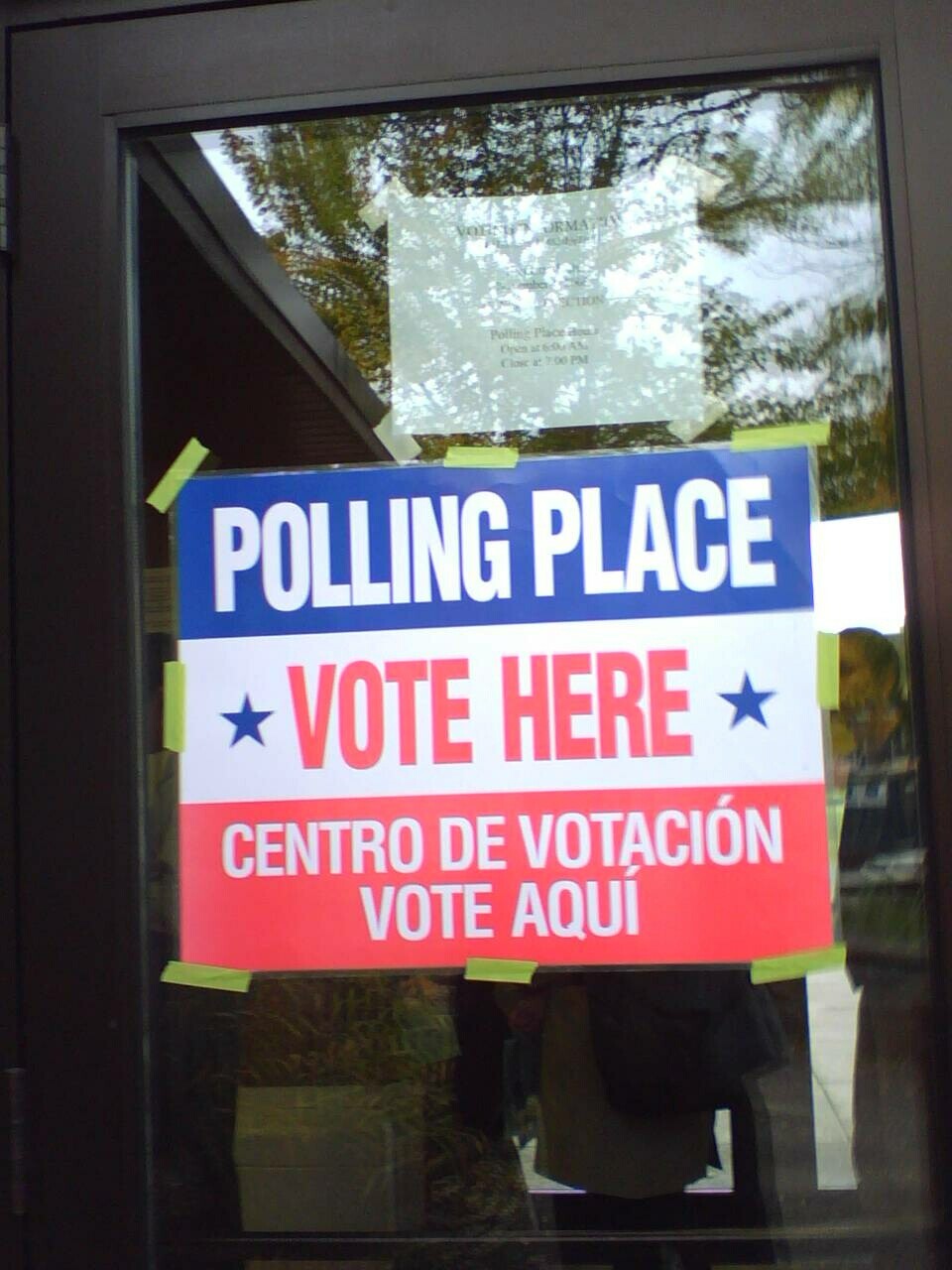
Election season is coming up fast. Voting will be easier than ever for George Mason students, who can now use an on-campus polling place.

Voting at George Mason is easy. If you need to register to vote or you are registered to vote in a different state or location, you can pick up a voter registration form at several locations around the George Mason University campuses. List your dorm/college address as your permanent address in order to vote at Mason’s on-campus polling site.

Photo courtesy of Mrs. Gemstone on flickr

The polling will happen in the new University Hall building. Polls will be open from 6:00 a.m. to 7:00 p.m.

Even if your registration included a photo ID, you should bring a government-issued photo ID to insure that the process goes smoothly. Your driver’s license or passport is preferred. If you do not have either you should bring your Mason ID and any other government-issued ID you might have.

Before going to vote, especially if it has been a while since you registered, you should check to make sure your registration is still valid. You can do so online through Virginia’s Election and Registration Information System.

Everything You Need to Know about Voting in Virginia

Virginia’s GOP primary is fast approaching. On March 6, also known as Super Tuesday, Virginia will vote alongside several other states to help determine who will receive the 2012 Republican nomination for president. Here are a few things you need to know to be ready for the primary and the presidential election in November.

First, some background information about Virginia voting laws and how elections work in the state is important. Voting and elections in the Commonwealth of Virginia are run by the State Board of Elections, which oversees voter registration, implementation of election procedures, etc. for local, state and national elections.

Especially for college students, it is also important to know how to register to vote in Virginia. Voter eligibility requirements are as follows:

  • Be a resident in Virginia
  • Be a U.S. citizen
  • Be 18 years of age by the time of the next general election (those who are 17 but will be 18 by the time of the general election are permitted to register early and to vote in any primaries or other elections prior to the general election)
  • Not be registered and plan to vote in another state
  • Not be currently declared mentally incompetent by a court of law
  • If convicted of a felony, you must have your right to vote restored

Registration applications may be found at any number of locations, including a local voter registration office, online, DMV offices, public libraries and the State Board of Elections office. The completed application should be filed with your local registration office or mailed to the address printed on the form. The registration deadline for both primaries and general elections is 22 days before the election is held.

College students must establish residency in Virginia in order to vote in this state’s elections. According to the Virginia State Board of Elections website, residency is established by a physical location the voter intends to stay at for an unlimited amount of time. Students are allowed to use their dorm or college address for this.

Any students who wish to register to vote in Virginia but are already registered in another state or district must cancel their other registrations first. Students attending a school in a different location from where they are registered may vote using an absentee ballot (see more information below).

Voter ID Requirements and Other Information about Going to Vote

In order to vote, all voters must bring identification to the polls. People who registered to vote by mail and are voting for the first time in a federal election are subject to special requirements:

  1. A current and valid photo ID (e.g. driver’s license)
  2. OR a current utility bill, bank statement, government check or paycheck that shows name and address
  3. OR another government document that shows name and address (e.g. voter card)

All other voters must present any of the following forms of ID:

  • Virginia voter ID card
  • A valid Virginia driver’s license
  • Military ID
  • Any federal, Virginia state or local government-issued ID
  • Employer-issued photo ID card
  • Social security card
  • Anything else as specified in this table

In Virginia, polls are open from 6:00 AM to 7:00 PM on the day of the election.

How to Vote with an Absentee Ballot

Anyone who will not be present at his or her registered voting location at the time the polls are open can apply to vote using an absentee ballot. In order to apply for an absentee ballot, you must either complete an online application or get an application from your local Voter Registration Office.

The application must be received by the Voter Registration Office by 5:00 PM EST on the Tuesday prior to the day you choose to vote. In-person absentee voting lasts from at least 45 days before the established election day and generally ends the Saturday before the election. A new, completed application must be sent in for every election you intend to vote absentee.

Now that you have the right information, you can register to vote and be prepared to vote in either the upcoming GOP primary or in the November presidential general election. Remember every vote counts.

For additional and more detailed information about registration and voting in Virginia, you can visit these websites:

http://www.sbe.virginia.gov/cms/Index.html

http://www.fairfaxcounty.gov/eb/

Enhanced by Zemanta

Your Chance to Amend the Virginia Constitution

By Christian Smith

This Tuesday, Virginia voters will have the opportunity to vote on three constitutional amendments. Ballots will include three questions that specify which article of the Constitution is up for change and the change that is being considered. The questions are listed and explained below.

Question 1: “Shall Section 6 of Article X of the Constitution of Virginia be amended to authorize legislation that will permit localities to establish their own income or financial worth limitations for purposes of granting property tax relief for homeowners not less than 65 years of age or permanently and totally disabled?”

Explanation: Currently the law requires that there be “an extraordinary tax burden” on homeowners who are at least 65-years-old or permanently and totally disabled. The change would take out the “extraordinary tax burden” requirement and allow localities to independently determine income or financial worth minimums for homeowners who are at least 65-years-old or permanently and totally disabled to be exempt from taxes.

Question 2: Shall the Constitution be amended to require the General Assembly to provide a real property tax exemption for the principal residence of a veteran, or his or her surviving spouse, if the veteran has a 100 percent service-connected, permanent, and total disability?

Explanation: If passed, the amendment will compel the Virginia General Assembly to exempt veterans who are permanently and totally disabled due to a service related injury from paying local real estate taxes on their primary home. This exemption would also apply the surviving spouse as long as they keep the residence as their primary home and do not remarry.

Question 3: Shall Section 8 of Article X of the Constitution of Virginia be amended to increase the permissible size of the Revenue Stabilization Fund (also known as the “rainy day fund”) from 10 percent to 15 percent of the Commonwealth’s average annual tax revenues derived from income and retail sales taxes for the preceding three fiscal years?

Explanation: The Commonwealth has a rainy day fund. It decides what the amount of that fund should be by averaging the previous three years’ income and retail sales taxes collected by the state. Currently, the fund is limited to 10 percent of that average and the amendment would increase it to 15 percent.

Vote Vans to Take Students to Polls

Vote Vans, an initiative started by Zach Golden and Claire Forman in 2007, is coming back again this year to help students make voting easier. It will be shuttling students from Mason to W.T Woodson High School where they will be able to vote.

Vote Vans will have a tent set up in the grassy area between Enterprise Hall and Science and Tech II and also at the Sandy Creek Circle to educate students about the voting process as well as this year’s candidates running for office.

“Our main goal is to transport students who don’t have cars but are passionate about voting,” says Melissa Jackson, organizer for Vote Vans.

Vote Vans will also be handing out electronic surveys via iPod touches to students in hopes to raise awareness about higher education issues and budget cuts. This information will then be used to go to Richmond on Lobbying Day to lobby on the student’s behalf.

Come out and show your support and vote for your favorite candidate!

By Aisha Jamil

Mason Votes is Back!

It’s that time of the year again and Mason Votes is back!

Election Day is coming up in less than a month and Mason Votes is prepared to have students pumped up and ready to vote!

College-aged students are one of the most apathetic age groups when it comes to voting, but the last presidential election definitely turned over a new leaf. It got the masses excited. It got us excited. It got everyone excited!

So, in order to keep that excitement going, Mason Votes is coming back this year to raise voter awareness for Mason’s student population.

Come visit us at the Johnson Center -Tuesday, Oct. 26, from 11:30 a.m. to 1:30 p.m. to have some free snacks (homemade brownies and such) learn about voter registration and become our fan on Facebook. Keep checking our website for more articles, news and updates about the coming mid-term elections in the next few weeks cause it’s bound to become a tough battle!

– Aisha Jamil

ELECTION RESULTS

Percent of Precincts Reporting: 99%
GOVERNOR RACE
Creigh Deeds (D) – 41.23%
Bob McDonnell (R) – 58.64% (winner)

LT. GOVERNOR RACE
Bill Bolling (R) – 56.41% (winner)
Jody Wagner (D) – 43.51%

ATTORNEY GENERAL RACE
Ken Cuccinelli (R) – 57.52% (winner)
Steve Shannon (D) – 42.39%

13th DISTRICT HOUSE OF DELEGATES RACE (Prince William Campus) – 100% of Precincts Reporting
John Bell (D) – 38.6%
Bob Marshall (R) – 61.3% (winner)

37th DISTRICT HOUSE OF DELEGATES RACE (Fairfax Campus) – 100% of Precincts Reporting
David Bulova (D) – 67.56% (winner)
Christopher DeCarlo (I) – 24.74%

40th DISTRICT HOUSE OF DELEGATES RACE – 100% of Precincts Reporting
Susan Conrad (D)* – 36.81%
Timothy Hugo (R) – 63.06% (winner)

47th DISTRICT HOUSE OF DELEGATES RACE (Arlington Campus) – 100% of Precincts Reporting
Eric Brescia (R) – 31.87%
Patrick Hope (D) – 63.89% (winner)
Josh Ruebner (I) – 4.11%

*George Mason University graduate student

Students Ride the Mason Vote Van to Polls

Mason Votes Van Will Again Shuttle Students to Polls

By Mason Votes Staff Writer Ethan Vaughan

For the second year in a row, the Mason Votes Vans will ferry students from George Mason University’s Fairfax campus to their designated polling place, Woodson High School in Fairfax.

The Mason Votes Vans will run from 8 a.m. to 7 p.m. on Tuesday, Nov. 3, and will pick students up from the front of Sandy Creek Parking Deck, where the shuttles and Gunston Go Bus usually run.

Staffed by drivers from Student Government, the two seven-passenger mini-vans will alternate trips, with one heading to the polls while the other is departing, with the goal of ensuring that no student has to wait more than a few minutes for a ride.

Students at the stop will be provided with snacks, drinks and campaign literature from all candidates.

The program provided 400 students with transportation to the polls in 2008, though SG officials acknowledge that fewer people are likely to participate this time around.

“2008 was a historic election so it was easier to promote,” said Student Senate Speaker Mhehvish Khan. “This year, we’ll be working even harder to do that.”

Pete Danjczek, chief of staff to SG President Devraj Dasgupta, said he thought there would be “far fewer riders in 2009, but qualified that SG would try to make up for the deficit with “the passion of last year.”

Danjczek said that members of the fraternity Pi Kappa Alpha would be dispersed throughout the Johnson Center and near Southside letting people know about the shuttle service and distributing campaign literature.

“We want students to understand why they’re voting,” Danjczek emphasized. “We’re handing out an unbiased page of platforms from the candidates’ websites, using their wording. We’re not doing much interpretation.”