Mason Votes

2024 Presidential Election Debrief @ Mason Square

University Life Hosts Pizza & Perspectives Post-Election Event

By: Emma Schaible, Fourth Estate Staff Writer

This story was originally published on gmufourthestate.com. Fourth Estate is Mason’s official student-run newspaper.

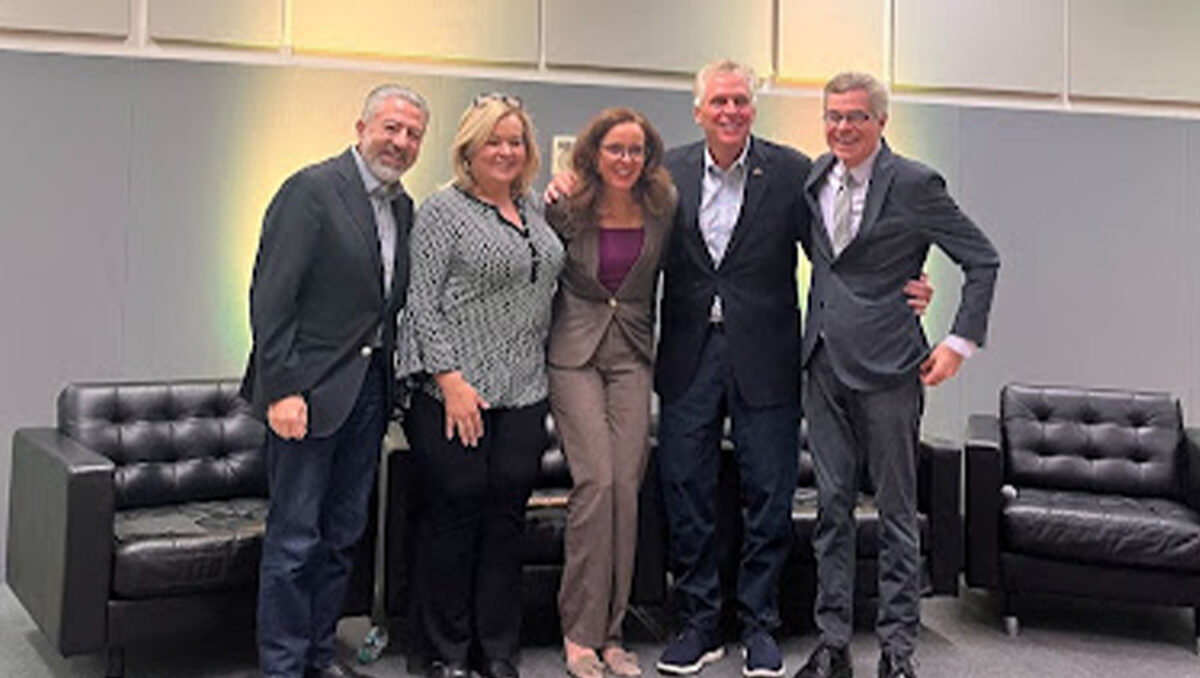
2024 Election Debrief panelists pose for a photo after the November 11th event at Mason Square. Photo by: Emma Schaible/Fourth Estate

On Nov. 11, University Life at Mason Square, in partnership with Mason Votes and the Schar School of Policy and Government, continued the tradition of hosting “Pizza & Perspectives.” The collaborating organizations provided free pizza and hosted a panel to discuss major news stories happening at a national level. The panel topic was the results of the 2024 presidential election, with four panelists exploring key factors that capped critical moments in Virginia and national politics.

The panel consisted of one moderator and three panelists. “A political scientist by training” and Dean of the Schar School of Policy and Government Mark J. Rozell served as moderator. Within Rozell’s line of questioning to panelists, there was an overarching question on whether the election signified a party realignment.
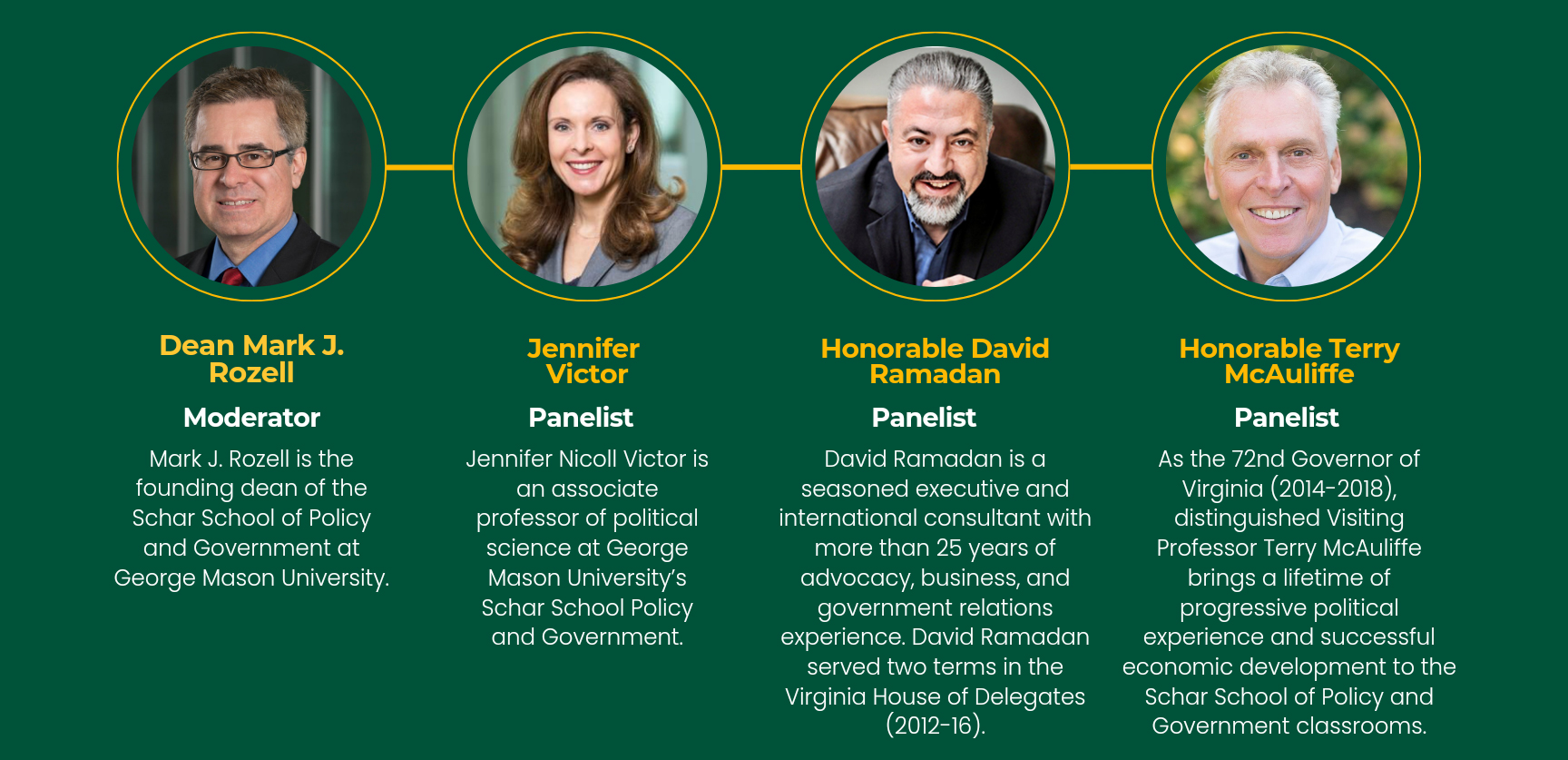
The 2024 Presidential Election Debrief panel included several Mason faculty members and former Virginia Governor Terry McAuliffe. Click the image above to enlarge.

The first to respond was associate professor Jennifer Victor. Victor’s expertise comes in analyzing the United States Congress, legislative organization and behavior and more. Currently, Victor also runs the First-Year Democracy Lab, a Schar School learning community. Victor argued that it was still too close to the 2024 election in order to have a confident consensus. “Liberals were Democrats, conservatives were Republicans…that sounds like a normal way to organize politics, but it’s not.” Victor said that the current system in which American politics are organized is unstable.

Former member of the House of Delegates David Ramadan continued this dialogue, speaking on how voters perceived several key issues this election cycle. Ramadan is currently a Professor of Practice in the Schar School. While the economy was one of the biggest issues for many voters this year, he discussed how the United States currently has one of the best economies in history, with the stock market at its highest and unemployment at its lowest.

Ramadan said that many working-class Americans stepped away from the Democratic Party because they failed to recognize issues that were important to the working class and other subpopulations.

Professor Victor discussed the pattern of characteristics for winning presidential campaigns as seen for nearly the last 60 years. She said that these patterns have nothing to do with candidates, but circumstances. Included were the characteristics of the approval rating of the sitting party, the growth of gross domestic product (GDP) and length of time the incumbent party has been in office. Overall implying that Vice President Kamala Harris had the cards stacked against her.

The third panelist, former Gov. of Virginia Terry McAuliffe, commented on the trifecta that has been developing in the federal government, as Republicans were projected to win both houses of Congress. Many political analysts believe that the Republicans winning both houses of Congress and the presidency will be a great test of political efficiency.

The panel was then opened to receiving questions from the audience. Members including undergraduates, graduate students and community members from Arlington asked questions ranging from changes the presidency will make in education to the role of misogyny in American elections.

The panel closed with each panelist giving their own advice to the audience on where Americans need to go from here. Professor Victor encouraged everyone to read the news and get involved in the community, saying “building community is building democracy… that is the fabric of where democracy really happens.”

“You’re going to win some. You’re going to lose some. Don’t ever despair. Stay engaged,” McAuliffe said. Ramadan closed out the discussion by asking everyone to call out misinformation and reach across political lines to make friends.

_____________________________________________________________

Photo by: Emma Schaible/Fourth Estate
 

Election 2024: Political Journalism Class Spotlight

Students Review, Examine Historic Presidential Contest

By: Eugenio Mulero, Adjunct Faculty, Department of Communication
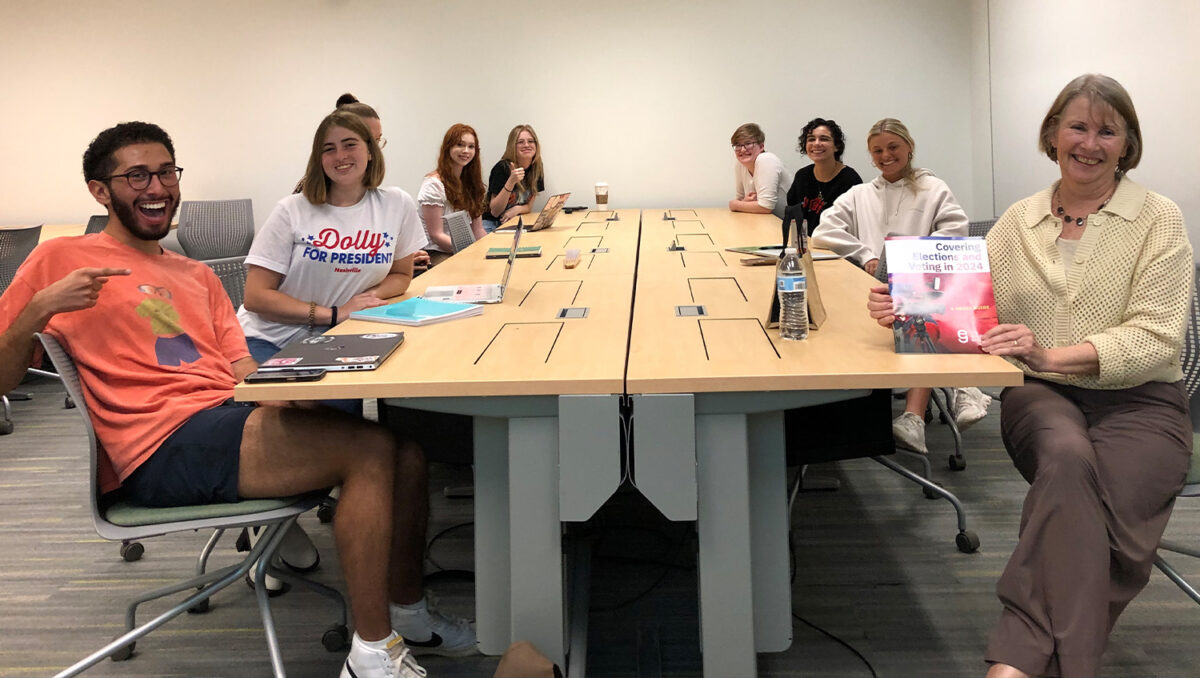
Political journalism students discuss the 2024 election in the classroom with former NPR correspondent Pam Fessler. Photo by: Eugenio Mulero
It’s easy to view the 2024 presidential election as historic. Since the start of the year, the country has witnessed a torrent of plot twists from the major party’s campaigns.
With millions of Americans casting their votes to determine the Oval Office’s next occupant, Vice President Kamala Harris and former President Donald Trump, and their teams, promised different visions for Americans for the next four years.
Political journalism students at George Mason University’s Department of Communication have been tracking this consequential moment in the nation’s history. Since late summer, the contest between the Harris-Walz and Trump-Vance campaigns has served as the political journalism class’ primary case study.
To arrive at a better understanding of the media arena and political landscape, students crafted analytical features on policies ranging from voter demographics to immigration. They also covered high-profile press conferences, highlighted polling and campaign finance data and are finalizing in-depth profiles of Harris and Trump.
On Election Day eve, members of the class collaborating with Mason Votes reflected on their reporting:
“One of the biggest things I learned this election cycle was how much politics does have a role in everyday life,” said Madalyn Godfrey, a communication major with a concentration in journalism and public relations. She has a minor in political communication.
“Not only is this the first presidential election that I am voting in, but this is a very historical election as well. We have two candidates that if Harris wins then she is the first woman president, which is great, you know. And then if Trump wins, then you’re having a president since [President] Grover Cleveland who won a two non-consecutive term.” Godfrey explained she also has gained a deeper appreciation of federal contests’ role in shaping state and municipal policymaking.
For her, this race has been partly marked by demographic diversity. As she put it, “I think what I really love about this election cycle is there is a little bit more of an emphasis towards Gen Z.” Specific to news coverage, studying the major candidates’ social media strategies has revealed that focus: “Not only are these candidates reaching out to Gen Z in these ways, but they’re receiving free national attention through other people using these soundbites.”
Lauren Splett, a government and international politics major with a minor in political communication, also studied the campaigns’ social media strategies: “Sending out polls through, like [X], Instagram, Facebook—something like that is seeming to get to that younger crowd of voters.”
Splett described Trump’s attempted assassination as a “scary moment for democracy.”
“That was definitely an ‘oh-my-gosh, I-can’t-believe-this-is-happening’ moment that I think changed the course of the election,” she observed. During a campaign rally in Pennsylvania on July 13, the former president was injured on his right ear by a 20-year-old man killed by the Secret Service.
Overall, the Harris v. Trump election enhanced Splett’s understanding of news outlets. “I’ve always really been interested in how the media affects and interacts with the election cycle,” she said. “That’s partially why I wanted to minor in political communication, because that’s always spoken to me. … So I really learned a lot about how the media has affected these candidates.”
For Brandyn Fragosa, a communication major with a concentration in journalism, examining the Trump campaign’s immigration proposals helped expand his perspective about national political systems. By crafting comprehensive analyses of the former president’s calls for additional border protections vis-a-vis certain supporters’ anti-migrant rhetoric sharpened his approach to journalism.
“Since my policy point is immigration, I’ve been able to dive into all these documents, pull quotes from Donald Trump as well as … speakers at his rallies,” Fragosa said, pointing to the portfolio he’s produced this semester.
A memorable moment for him was President Joe Biden’s decision this summer to drop out of the race. Fragosa recalled: “I was driving at the time and I just remember my phone blowing up; being like, ‘Look at the news. Look at the news. This is crazy. This is huge.’ Like, ‘we don’t know what we’re going to do. This is insane.’ But then eventually Kamala stepped up.”
Prof. Mulero teaches political journalism. He is a professional journalist covering Congress and national politics.

_____________________________________________________________

Photo by: Eugenio Mulero

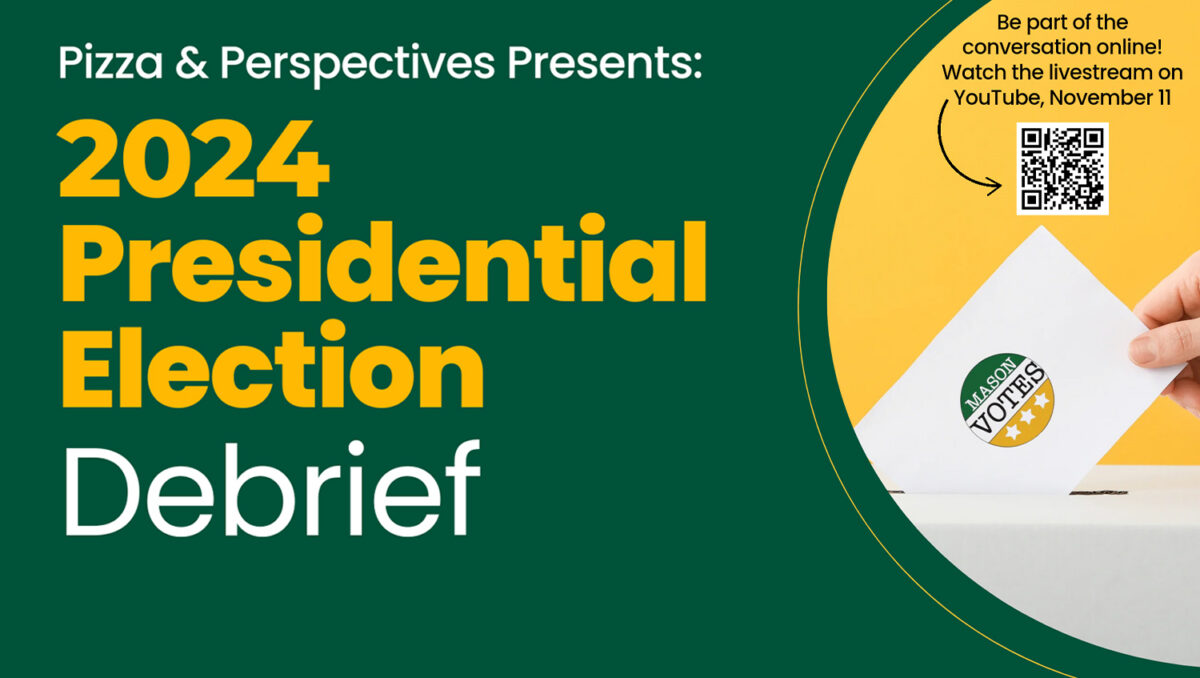
RSVP or Watch on YouTube: 2024 Presidential Election Debrief

2024 Presidential Election Debrief

Watch the live stream via YouTube or RSVP using the link below to participate in person at Mason Square.

Date: Monday, November 11, 2024

Time: 6:00-7:15pm

Live Stream Link:  https://www.youtube.com/live/jdNTVmhdfpI?si=pGsvZhohh6MFu0VX

Location: Mason Square Campus, Van Metre Hall Room 125 & 126

Mason360 RSVP Link: https://cglink.me/2d7/r2275170

Food Provided (free pizza!)

This event is open to students, faculty, staff, alumni, and the community.

Event Description: Join us for a vital panel discussion on the 2024 election, exploring the key factors shaping this critical moment in Virginia and national politics. Expert panelists will analyze the current political climate and the potential impact of the 2024 Presidential election. Enjoy free pizza while gaining valuable insights and connect with fellow attendees!

Panelists:

Dean Mark J. Rozell: Mark J. Rozell is the founding dean of the Schar School of Policy and Government at George Mason University.

Jennifer Victor: Jennifer Nicoll Victor is an associate professor of political science at George Mason University’s Schar School Policy and Government.

Honorable David Ramadan: David Ramadan is a seasoned executive and international consultant with more than 25 years of advocacy, business, and government relations experience. David Ramadan served two terms in the Virginia House of Delegates (2012-16).

Honorable Terry McAuliffe: As the 72nd Governor of Virginia (2014-2018), distinguished Visiting Professor Terry McAuliffe brings a lifetime of progressive political experience and successful economic development to the Schar School of Policy and Government classrooms.

Hosted by: University Life Mason Square | Website | View More Events

2024 Election Day Activities @ Merten Hall

Mason Students Turn Out to Vote On Campus

Photos by: Mitchell Richtmyre, Mason Votes Photographer
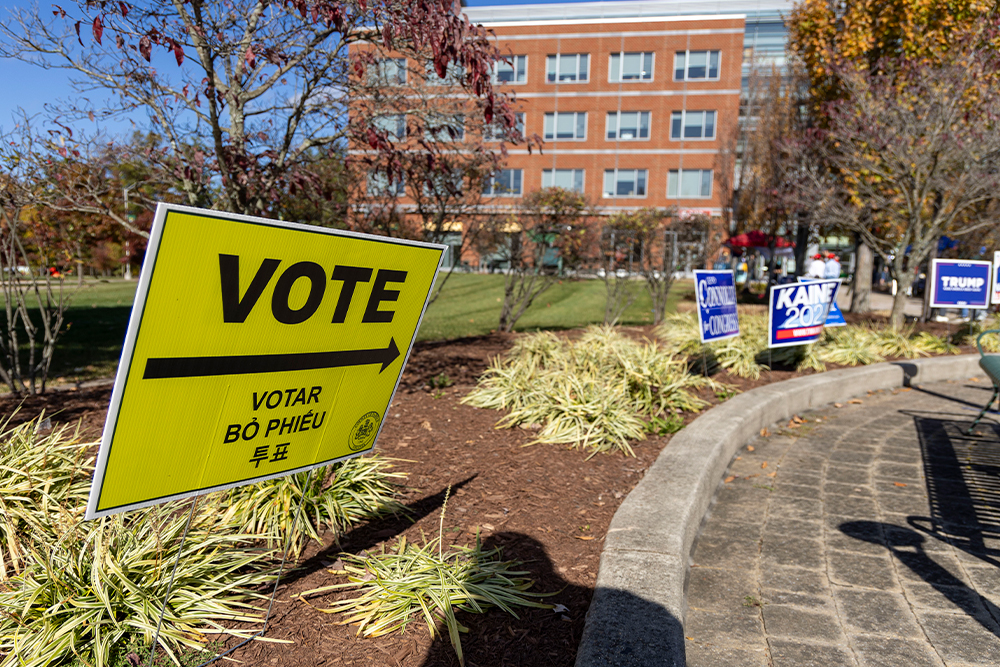
Mason’s College Republicans encourage students to vote for their slate of 2024 candidates, including Donald Trump for president and Hung Cao for U.S. Senate.

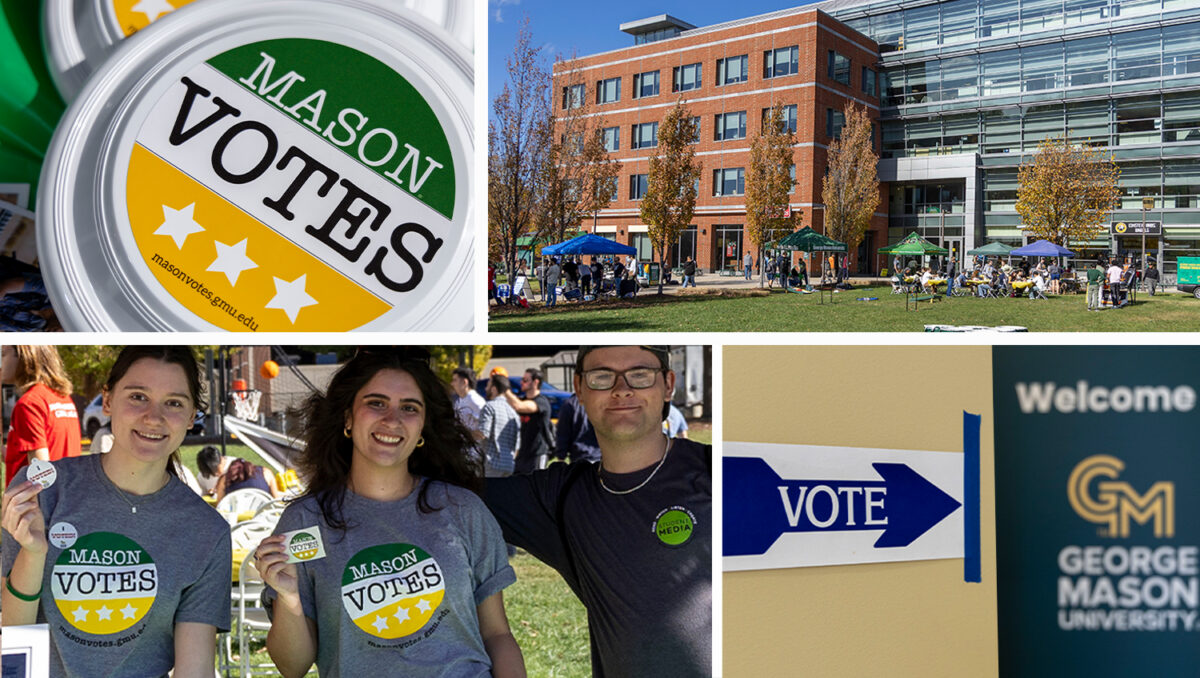
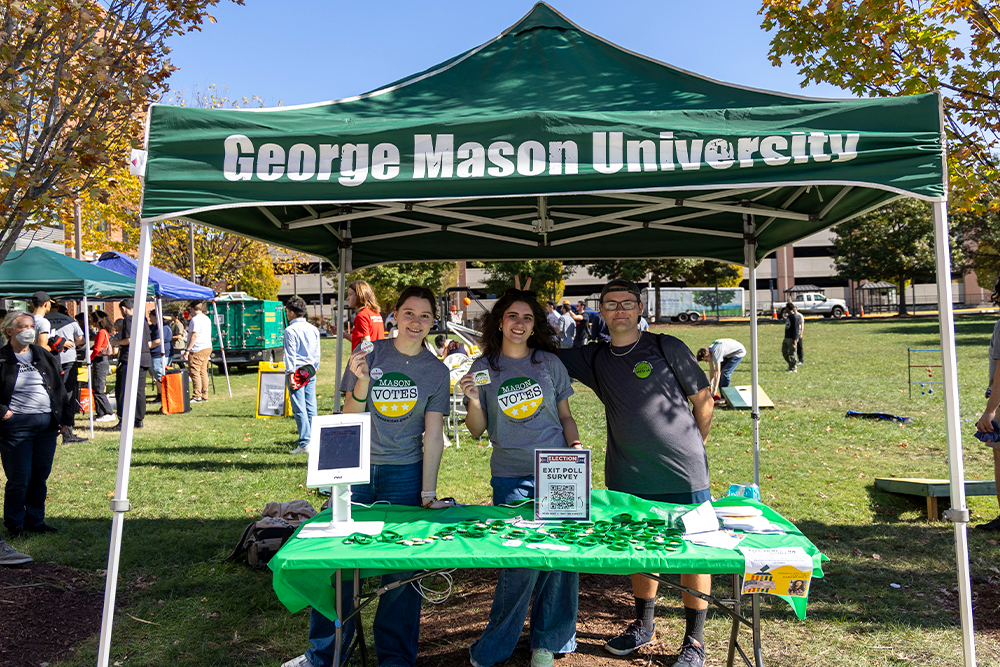
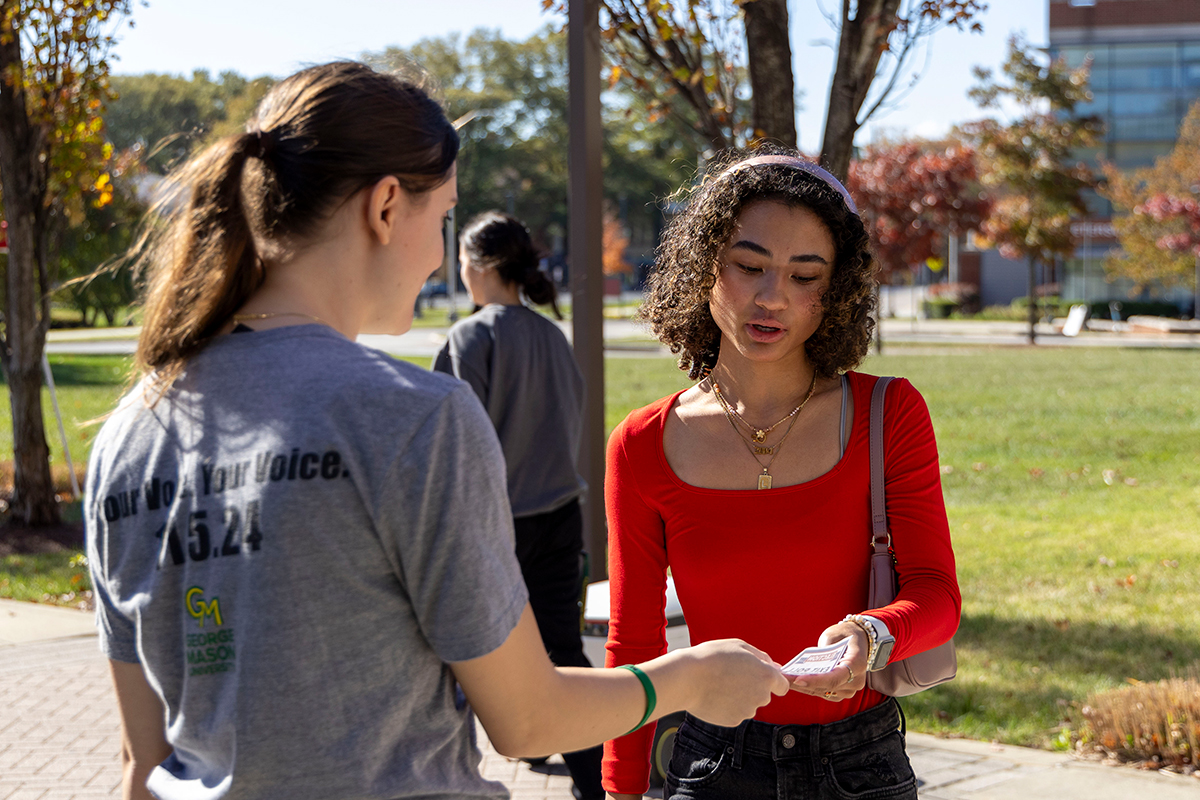
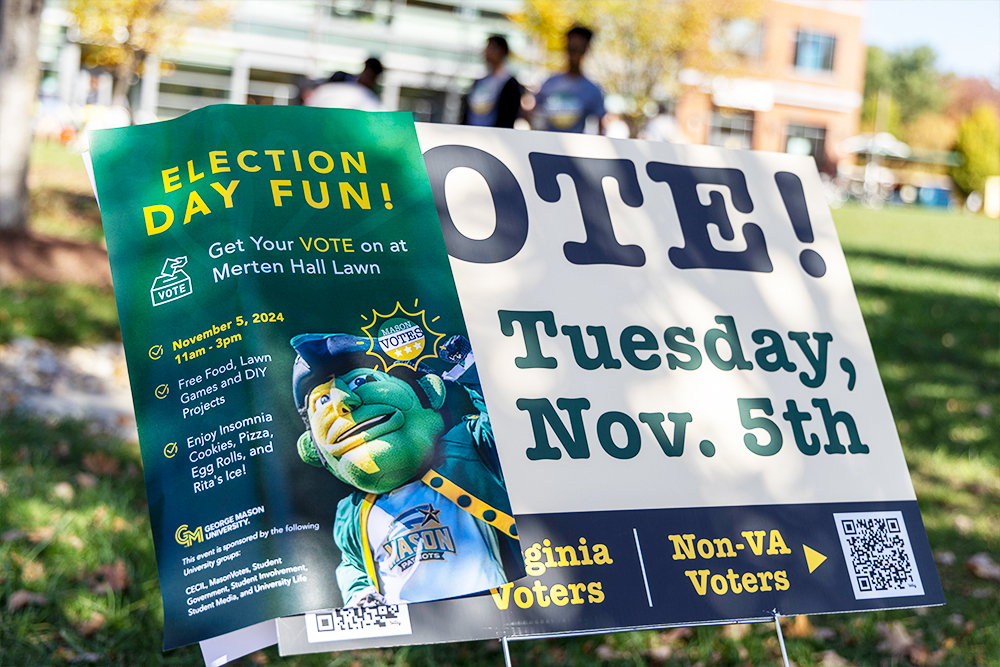
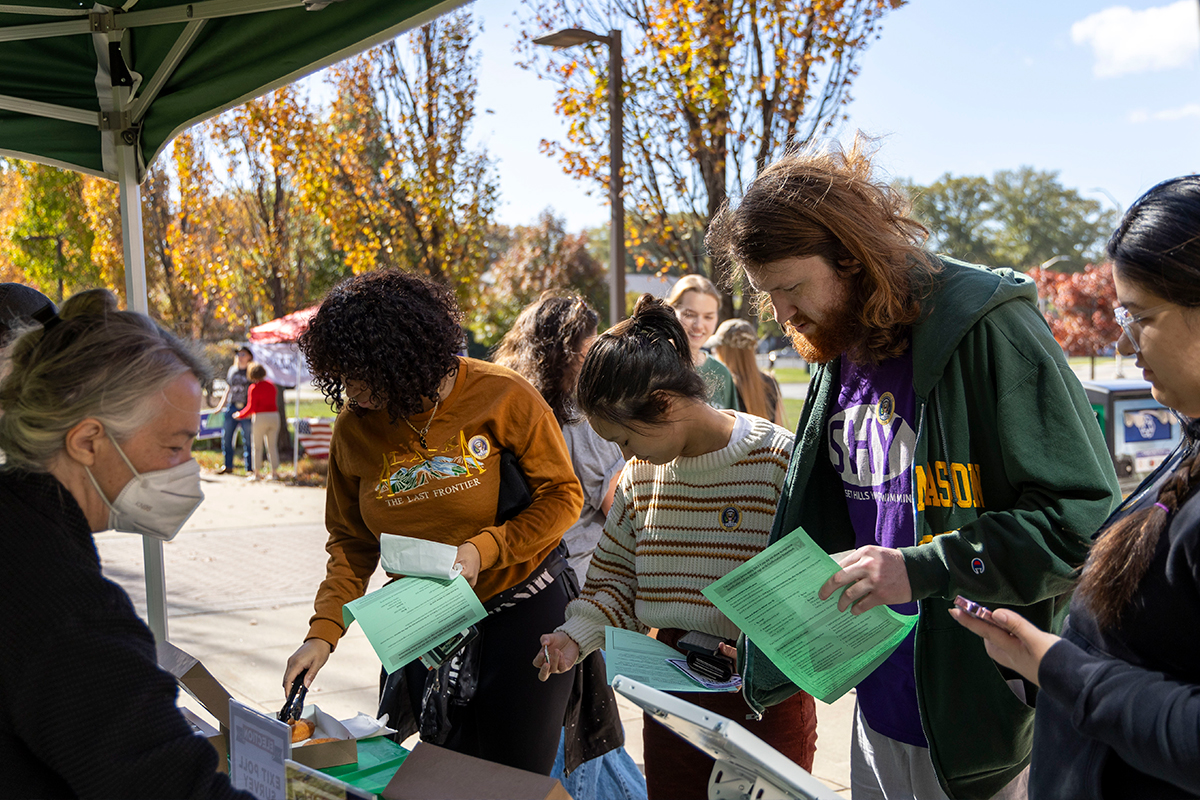
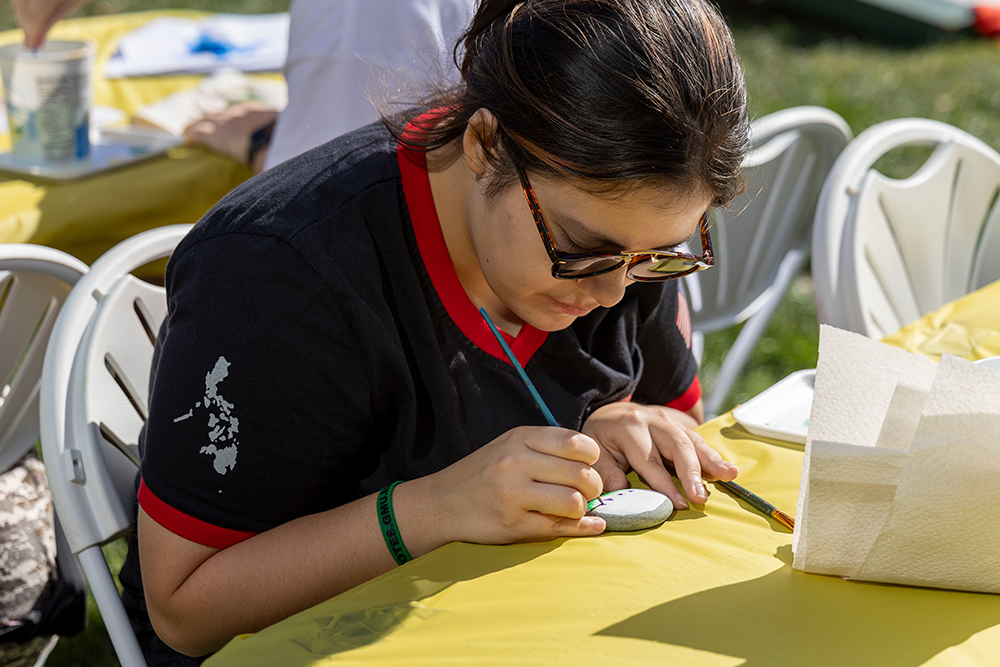
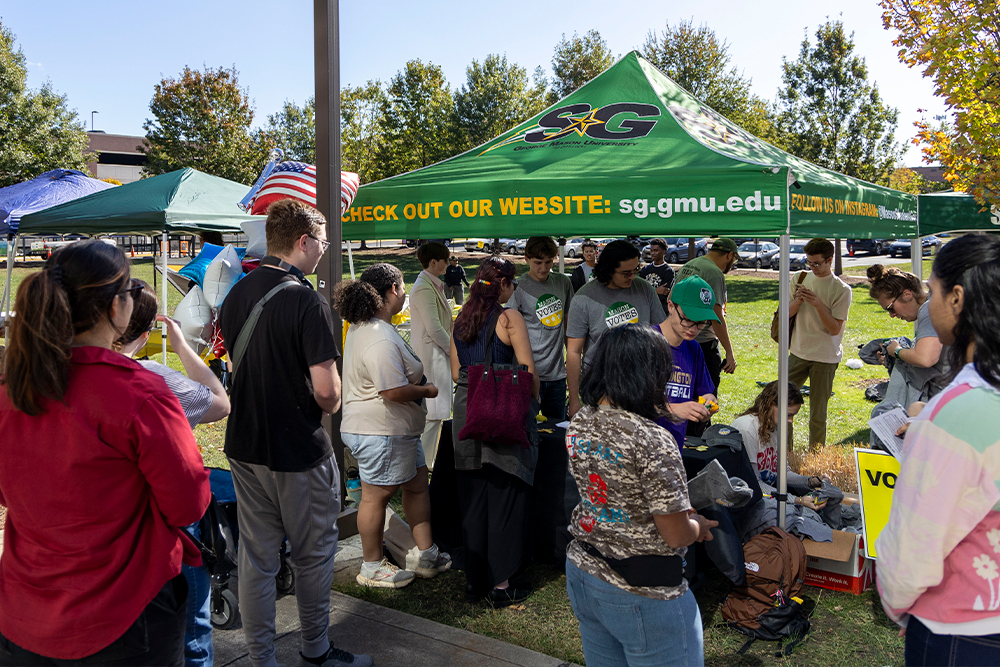
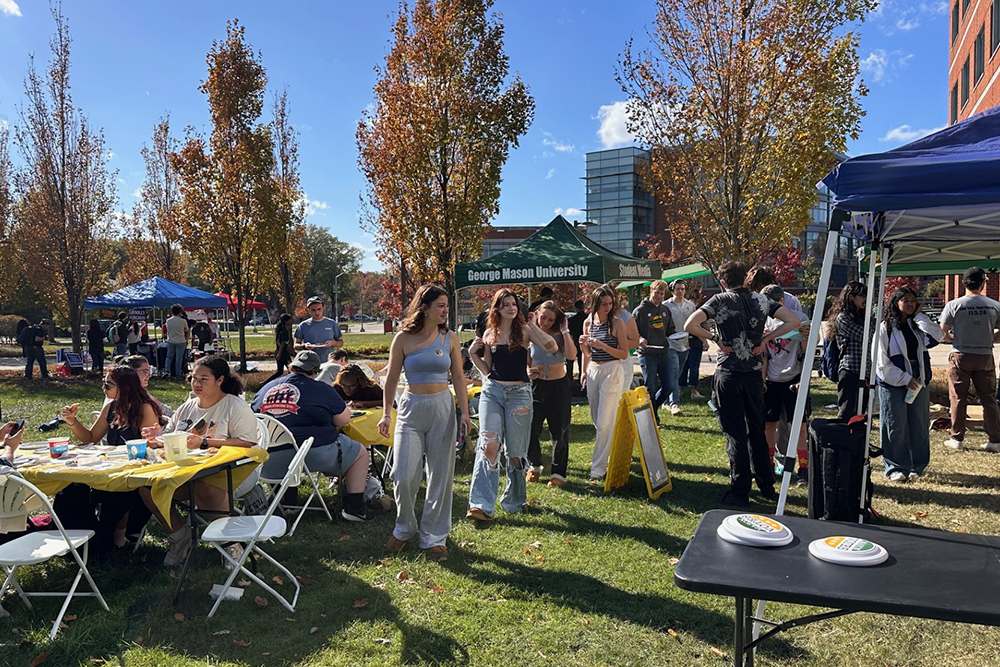
The Mason community turned out to Merten Hall on Tuesday, November 5th in large numbers to cast their ballots and enjoy some “Election Day Fun,” including music, food, exit polls, rock painting, yard games, and more.

Merten Hall is the home of Fairfax’s University Precinct, the local polling place for residential students and nearby residents.

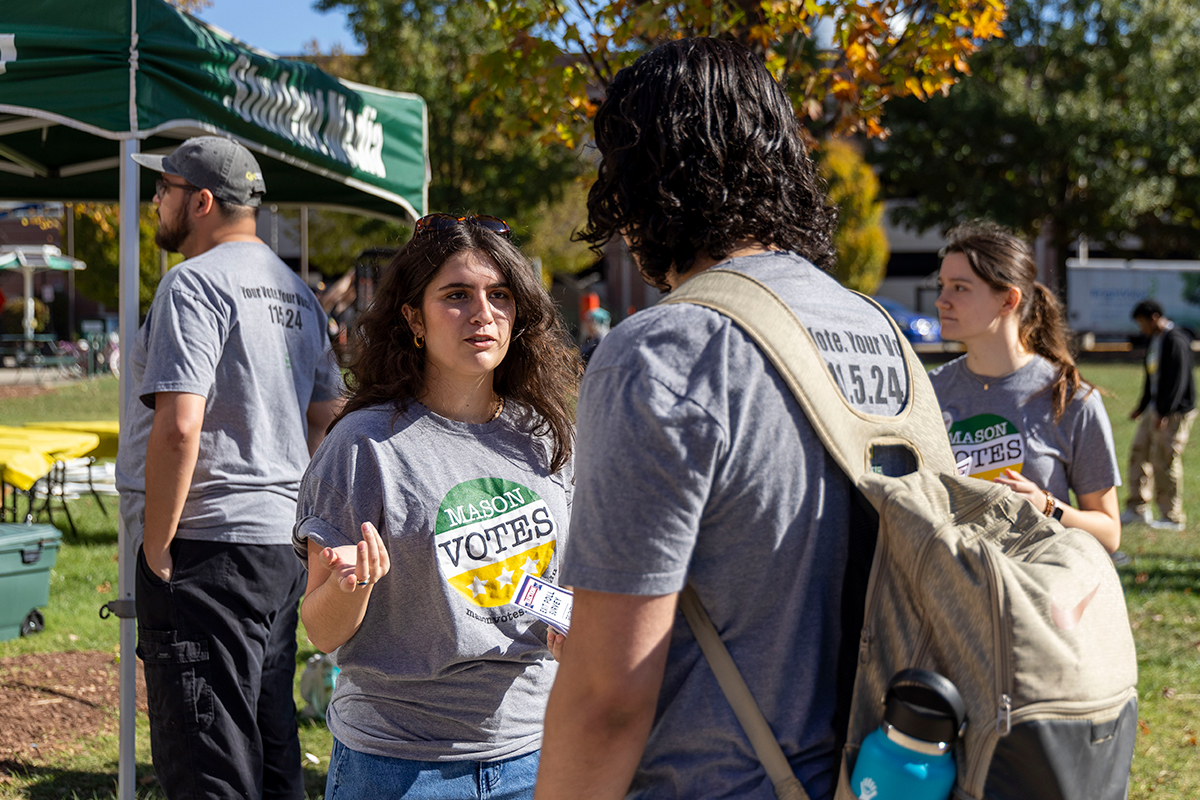
Student Media was on site conducting voter exit surveys and handing out free donuts, while Student Involvement, Student Government, and the Office of Community Engagement and Civic Learning (CECIL) worked together to create a celebratory atmosphere for those who tuned out to vote and participate in this historic election.

George Mason Democrats encourage students to vote for their slate of 2024 candidates, including Kamala Harris for president and Tim Kaine for U.S. Senate.

While the results are not yet known, Election Day voter turnout at Merten Hall was brisk and energy was high among the students, faculty, and staff that showed up to exercise their civic duty.

If you haven’t yet cast your ballot, there is still time! Polls in Virginia close at 7:00pm and anyone still in line when the polls close will still be allowed to vote.

2024 Election Day @ Mason Photo Gallery:

Click on any image below to enlarge!

Photos below by: Alissa Karton


VIDEO: What’s Up Mason? 2024 Election Edition

Students Voice Their Opinions Ahead of Election Day

Join hosts James Hamilton (Student Media Intern) and Mary J. Demarco (SPJ Chapter President) as they interview Mason students about what issues are motivating them to vote in 2024.

“What’s Up Mason?” 2024 Election Edition, Part 1:

“What’s Up Mason?” 2024 Election Edition, Part 2:

Video Editor: Patrice Pannell

Don’t Forget to VOTE on Tuesday, November 5th!

Make Your Voice Heard in 2024

Election Day is Tuesday, November 5th. Early voting has concluded in Virginia, but you still have time to return mail-in ballots or vote in person on Election Day. Here are more details about each option:

Vote In Person on Election Day


Click here to learn more about casting a ballot on Election Day >

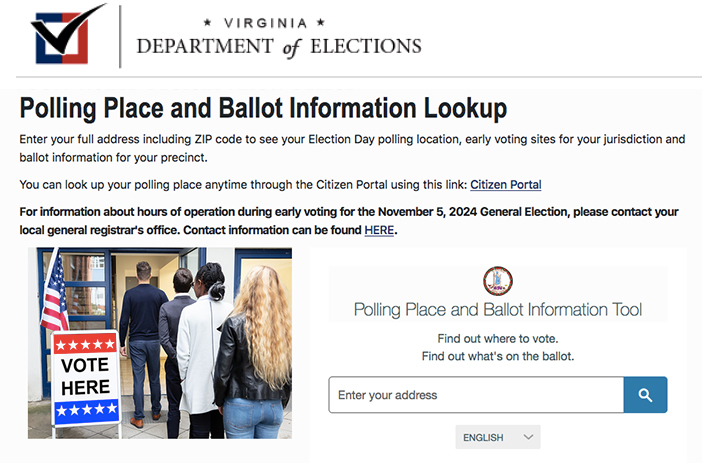
Make sure to look up the address of your local polling place before you leave home on Election Day by visiting elections.virginia.gov.

Virginia Voters: Click here to find your local polling place in VA >

Out-of-State Voters: Click here to find your local polling place by selecting your home state >

If you missed the voter registration deadline (Oct. 15th), you can still vote with “same day registration”! Virginia voters can register in-person through Election Day and vote using a provisional ballot. This applies to Mason students voting on- or off-campus. Click here to learn more about same day voter registration and provisional ballots >

Here are a few things to know about voting in person on Election Day:

  • Polls are open 6:00am – 7:00pm on Election Day.
  • Anyone still in line at 7:00 p.m. will be allowed to vote!
  • Your George Mason University Student Photo ID is welcomed on Election Day! Vote using either your physical Mason ID card OR electronic Mason Mobile ID. However, you may not vote using a photo of your physical ID card. Click here to learn more about acceptable forms of ID >
  • Accessible voting options are available. Click here to learn more about accessible voting >
  • Mason has its own University Precinct for on-campus residents registered at their Fairfax on-campus address only, so you don’t have to leave campus to cast your ballot!
    • ONLY students registered at their current Fairfax on-campus address may vote on Election Day at the University Precinct located in Merten Hall (next to Panda Express).
    • All other Fairfax County voters must vote at their home precincts. Click here to find your local polling place >

Vote by Mail (Absentee)

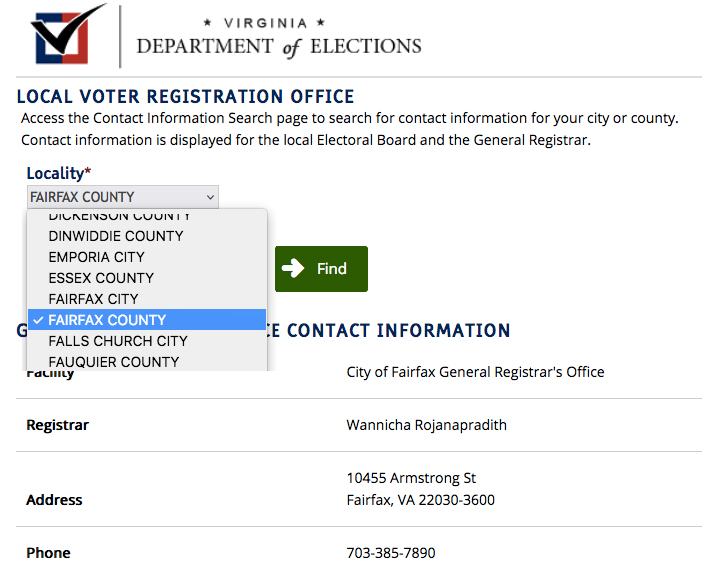
Visit elections.virginia.gov to find your local general registrar’s office location. Make sure to follow all instructions included with your mail-in ballot and return before the deadline by mail or at a drop-off location.

Unfortunately, the deadline to request a mail-in ballot has passed (Oct. 25th), but you still have time to return a mail-in ballot you’ve already received.

Click here to learn more about early and absentee voting in VA >

Here are a few things to know about absentee voting by mail:

  • You must complete and return your ballot to your local general registrar’s office by 7:00pm on Election Day (Tuesday, November 5th). Click here to find your local voter registration office >
  • Carefully review the instructions mailed with your ballot and double-check your ballot before mailing or utilizing the drop-off option.
  • You may return your absentee ballot to a drop-off location. For more information on drop off locations in your locality, review the absentee instructions provided in your absentee ballot mailing.
  • If you are returning your ballot by mail, it must be postmarked on or before Election Day and received by your general registrar’s office by noon on the third day following the election (in the event that that day is a holiday, the deadline is moved to the following business day).
  • You may cast an “emergency absentee ballot” if you meet specific criteria set forth by law. Click here to learn more about emergency absentee voting >
  • You do not need an excuse to vote absentee in the Commonwealth of Virginia.

Always refer to the official Virginia Department of Elections website for the most accurate and up-to-date voter information and guidelines: elections.virginia.gov

Feeling Stressed About the 2024 Election?

Mason Offers Resources to Support Your Well-Being

Click on the image above to enlarge.

When sociopolitical events occur, it is normal to feel anxious or overwhelmed, especially during a close election like we’re experiencing in 2024.

Uncertainty about which candidate will win, which laws or freedoms might change, or how the outcome of the election might impact your everyday life can leave students, faculty, and staff feeling worried about the future.

Luckily, Counseling and Psychological Services (CAPS) has created a tip sheet to help you embrace self-care, prevent feelings of isolation, and prioritize your own well-being.

Here are a few tips from the experts to help you stay healthy despite the tension and stress of election season:

  1. Take breaks from social media and news to prevent emotional overload.
  2. Acknowledge your feelings, create space for them, and then release them.
  3. When feeling judgemental towards yourself or others, try to view things with a curious mind.
  4. Create a daily routine to provide predictability in your life and bring a sense of control and structure.
  5. Ask for help if you’re feeling overwhelmed or isolated.
  6. Be kind to yourself and offer the same grace to others.

Remember, you are not alone! If you need help, don’t be afraid to ask for it.

Here are a few options available for FREE to all Mason students:

  • TimelyCare App: Access 24/7, on-demand emotional support to talk about anything, including anxiety, relationships, depression, and stressors.
  • Counseling and Psychological Services (CAPS): Offers in-person and virtual, free and confidential mental health services for enrolled students. Visit Student Union Building 1 (SUB 1), Suite 3129 or call 703-993-2380.
  • Student Support & Advocacy Center (SSAC): Offers assistance students who are encountering a life crisis or significant barriers that impact their academic and personal success by making connections to appropriate on and off-campus resources.


Out-of-State Students Go the Extra Mile in 2024

Mason Students Share Why Voting at Home Matters

By: Katie Perschau, Mason Votes Contributor
Edited by: Vivien Trent, Mason Votes Copy Editor
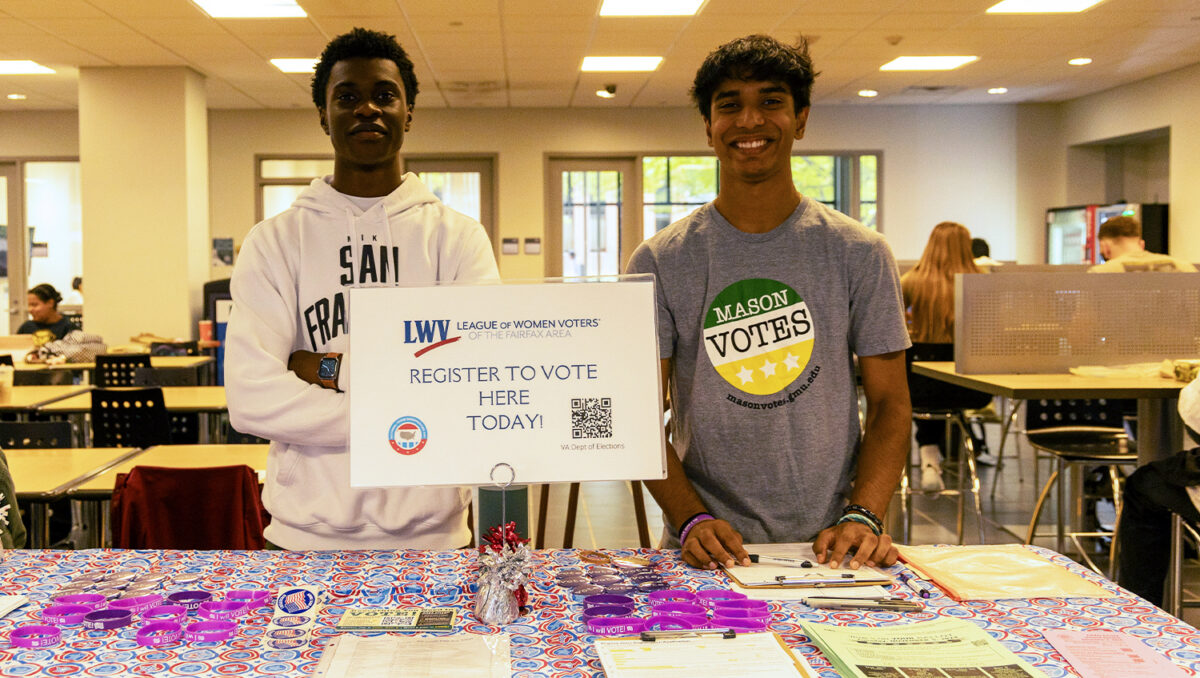
Mason students host a kiosk in the Johnson Center on National Voter Registration Day to promote engagement in the 2024 election. Photo by: Mitchell Richtmyre

Many of Mason’s out-of-state students are preparing to vote in their home states during the 2024 presidential election, despite the existence of an on-campus polling location for residential students in Fairfax.

Even though the process may involve requesting and returning mail-in absentee ballots, soliciting help from faraway family members, or even taking a road trip back home on election day, important state and local issues are still driving them to vote in their states of origin.

When asked how they plan to vote, out-of-state students were prepared with plans that showed the different ways to vote out of state. Matteo Scalise, a Mason student from Colorado, said, “My mom will mail me the ballot and then I will mail it back.” Meagan Raubenolt, a student from Ohio, shared that she will be voting via absentee ballot. Additionally, Zev Schlossburg, a student from New Jersey, stated that he will drive back to his hometown to vote.

According to public data from Mason’s Office of Institutional Effectiveness and Planning, out-of-state students make up 22% percent of the 2023-2024 student population. Many of these students return home for school breaks or plan to live in their home state after finishing school, so issues and laws in their home states can still directly affect them.

Raubenolt said she feels that voting at home on the issue of reproductive freedom is important to her because in the past, Ohio has had strict abortion laws. “Even though I’m not there, I know women that live in Ohio: my mom lives in Ohio, my female friends live in Ohio, and I might live in Ohio for the rest of my life, so I think women’s issues are the most important.” She also said that being exposed to many diverse mindsets on campus has made her excited to vote on issues in Ohio.

While moving from Colorado to Virginia has made him less enthusiastic about the election because he is separated from the results of his voting choices, Scalise is still concerned about the issues at stake in Colorado. “I am very passionate about amending the Colorado constitution to include same sex marriages, amending [it] to protect abortion, and introducing ranked choice voting to the voting system,” he said.

When asked if they felt the voting process was challenging because they attend an out-of-state school, Raubenolt, Schlossburg, and Scalise all agreed that despite the inconvenience, it is worth their time. “I don’t think [out-of-state voting] is really that difficult of a process to do,” said Raubenolt. “People talk about how difficult it is as a reason to not vote, but it’s still important because there are issues that might be fine [in Virginia], but they’re not at home.” Schlossburg, who is traveling back home to vote, stated, “I think the process is worth everyone’s time because of how important it is.”

Every vote matters in an election, and out-of-state Mason voters are willing to go the extra mile to ensure that their voices are heard.

_____________________________________________________________

Election Day is Tuesday, November 5th…

Don’t Forget to VOTE!

_____________________________________________________________

Photo by: Mitchell Richtmyre

Is the “Swift Effect” Swaying Mason Voters?

Students Shake Off the Impact of AI and Celebrity Endorsements

By: Benjamin Spitler, Mason Votes Contributor
Taylor Swift endorsed Democrat Kamala Harris on Instagram moments after the only Trump/Harris presidential debate. Photo credit: “TAYLOR SWIFT by Eva Rinaldi from Sydney Australia” by roberthuffstutter is licensed under CC BY 2.0.

In the minutes following the September 10th presidential debate between Republican nominee Donald Trump and Democratic nominee Kamala Harris, megastar musician Taylor Swift took to social media encouraging individuals to “do their research” on important topics and stances of the candidates.

Later in Swift’s Instagram post, she endorsed Kamala Harris for President: “I will be casting my vote for Kamala Harris and Tim Walz in the 2024 Presidential Election.”

Swift’s official endorsement followed an AI-generated image depicting Swift dressed as Uncle Sam suggesting she was endorsing then-candidate Joe Biden that was later edited and shared by a pro-Trump user on Truth Social with the text: “Taylor wants YOU to vote for Donald Trump.”

Trump’s own Truth Social account liked the altered pro-Trump version of the image a day later, with the former president adding, “I accept!”

Swift addressed the pro-Trump image directly in her endorsement post: “Recently I was made aware that AI of ‘me’ falsely endorsing Donald Trump’s presidential run was posted to his site. It really conjured up my fears around AI, and the dangers of spreading misinformation. It brought me to the conclusion that I need to be very transparent about my actual plans for this election as a voter. The simplest way to combat misinformation is with the truth.”

The AI-generated Swift endorsement image is just one instance of how the new frontier of artificial intelligence is influencing American society and elections, complicating our understanding of reality with highly-realistic fakes.

Earlier this year, The Economist noted the rise of AI-generated content: “From the printing press to the internet, new technologies have often made it easier to spread untruths or impersonate the trustworthy… The trouble is that fakes are rapidly getting harder to spot.”

The problem is simple, the highly advanced technology challenges the trust of everyone involved; which calls for adaptation in education and understanding of the available technology now and into the future. But that is a topic for another time.

NPR analyzed the impact of Swift encouraging her legion of followers to register and vote, finding that the nonpartisan group Vote.org recorded more than 35,000 new voter registrations (the “most since 2020” and “a 23% jump over last year”) following her National Voter Registration Day post on social media: “It’s not clear exactly how many of the registrations were tied to Swift’s Instagram. Vote.org reported a 1,226% jump in participation in the hour after the post.”

Taylor Swift’s Harris endorsement made headlines across numerous news outlets, highlighting the implication of AI in elections and potentially influencing voters across the country. However, the Mason student body does not appear to have been significantly impacted by her endorsement.

Among Mason students, many of those planning to vote said they weren’t even aware that Taylor Swift had endorsed Harris. Furthermore, several said that her endorsement does not affect their decision to vote or their choice of candidate.

Granya Curran, an international politics major, remarked, “I hate that people will be swayed in politics because of celebrities. [Voters] need to use logic and vote on who they think will be better for the country.”

This sentiment seems to resonate with many Mason students.

Alexis Lembke, a biology major, echoed this by stating, “I make choices based on my own opinions and beliefs—not that of celebrities who have their own agenda.”

In addition, many students expressed concerns about the misuse of AI in influencing potential voters.

Cameron McKay, a mechanical engineering major, voiced his worries, saying, “AI is getting out of control, and eventually, we won’t be able to tell what is real.”

As highlighted by The Economist, growing mistrust in the vast amount of information available, fueled by AI, is becoming a significant concern, not only across the nation but also here at Mason as we approach this election and those to come.

_____________________________________________________________

Election Day is Tuesday, November 5th…

Don’t Forget to VOTE!

_____________________________________________________________

Photo credit: TAYLOR SWIFT by Eva Rinaldi from Sydney Australia” by roberthuffstutter is licensed under CC BY 2.0. Cropped.

VIDEO: “I Vote Because…” Featuring Mason’s Student Athletes

Patriots Share Why They Plan to Vote in 2024

Watch the video below or on YouTube: youtube.com/watch?v=aFs0_z606aY

Special thanks to Mason Athletics for their participation and Student Media for producing this video!

Video edited by: Patrice Pannell