Mason Votes

False Profits: Rand Paul and Government Spending

How do you measure success?

Ask a fiscal conservative like Rand Paul, and he or she will tell you that success is measured in nothing but dollars. Rand Paul expressed this sentiment in the Senate when he suggested that the United States Postal Service should not be bailed out with government money.

“I always ask people would you like to buy the Postal Service?” Paul joked. Then he lamented, “If we could just sell it to somebody.” According to Paul, a public service should be completely privatized, or else abolished, simply because it isn’t making a profit.

Last time I checked, the purpose of a national Post Office is to deliver mail, not to impress shareholders. Paul claims to be a strict constitutionalist, and yet he ignores the fact that the Constitution’s Postal Clause doesn’t require the USPS to be profitable.

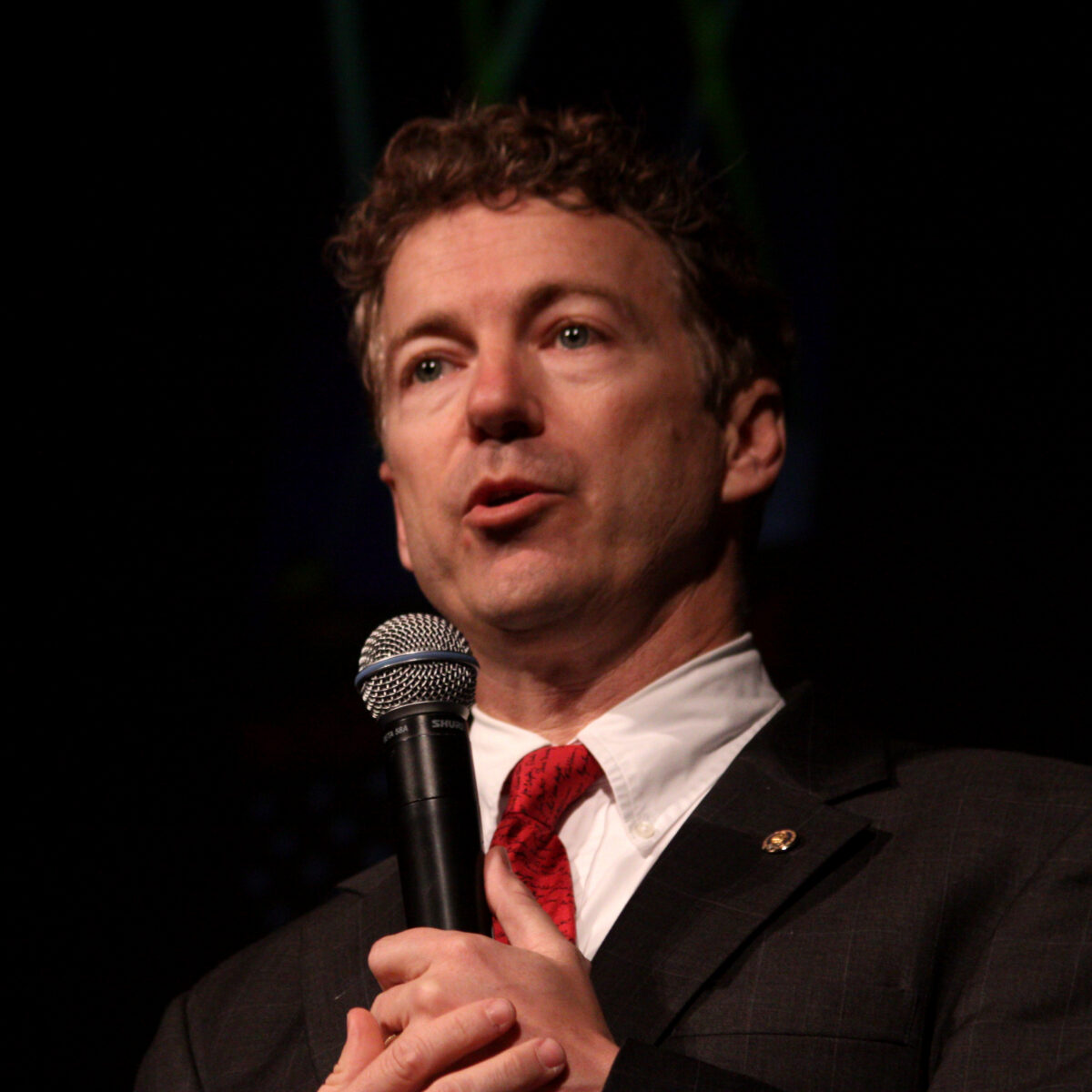
Official portrait of United States Senator (R-KY).
Official portrait of United States Senator (R-KY). (Photo credit: Wikipedia)

Paul acknowledged his idea would be politically unpopular. But his suggestion, that a public service as crucial as the Postal Service should be made into a private company, betrays his elitist attitude: Paul thinks that nothing is successful unless it is profitable. To him, unprofitable government spending always equals failure.

But Paul’s profit-first standard is really elitism of the worst kind. Privatizing or charging more for public services on the grounds of saving money is the worst thing a government can do.

For example, if the Post Office were privatized, many people would stop getting mail.

This is because it’s impossible to make a profit delivering mail to poor, rural areas. Costs outweigh the earnings to be had providing small towns or farms with this service. No private company would do it unless the residents of those places paid a fee to cover the costs. Requiring the Post Office to make a profit would mean extorting some Americans, or else cutting them out of the loop altogether.

If you don’t think a for-profit Post Office would be so cruel to the poor, let me recount the far crueler madness that goes on near South Fulton.

One year the City of South Fulton, Tennessee, was having trouble funding its fire department. The fiscally conservative state government refused to raise taxes to help South Fulton. The city didn’t want to raise taxes on its own people either. Consequently, the city decided that outlying rural areas would have to pay an annual fee if they wanted to keep their fire protection.

Two years ago, a rural man’s house caught fire. He had not paid the year’s fee. South Fulton firefighters showed up—and watched as his house burned.

Yes, really. The firefighters only came to protect the property of neighbors who had paid the fee. Though the poor man begged, the firefighters refused to help him; if they did help, they said, other poor people would stop paying the fee.

The rural man and his family lost their house and everything they owned. Their pets—three dogs and a cat—died in the flames. Another home near South Fulton suffered a similar fate in December last year. There’s no sign South Fulton will put humanity before profit any time soon. One might wonder if Rand Paul ever asks people whether they’d like to buy Kentucky’s unprofitable fire departments.

But let’s pretend for a moment that you don’t feel any empathy for the poor. What has profitless government spending done for you?

You’re a Mason student. Did you apply for any cheap federal loans? Be careful with your answer. According to a 2008 Cornell University study, 53% of students given low-interest student loans from the government claimed they have never benefitted from a federal program. Unless you were born into the Paul family and have thousands of dollars for an up-front payment every semester, you probably did.

Next time your economics-majoring friend complains about government spending, ask him if his family took out any federal loans. If he says no, ask him which iPhone app he invented to cover his $4,000 tuition.

The next time Rand Paul complains about government spending, remember that he’s really annoyed that poor and middle-class people are being helped without a concern for profit.

To be fair, not all government spending is helpful. The grossly inflated defense budget is one such expense. However, most fiscal conservatives aren’t complaining about this years’ $1.4 trillion defense budget.

Maybe the Libertarians are complaining, but they seem to think post offices, fire departments, and student loans are as wasteful as foreign wars. They measure success in dollars, so it’s probably hard for them to see a difference.

Enhanced by Zemanta

Is Obama Ready to go Against His Supporters on an Auto Bailout?

According to a poll earlier this month, 61 percent of Americans oppose an auto bailout, 70 percent believe that a bailout would be unfair to taxpayers and another majority of those surveyed did not believe that the bailout would help the economy. Only 15 percent believe that bankruptcy in the auto industry would immediately affect them. Considering the wide majority by which President-Elect Obama won the popular vote, a significant number of those polled had to have voted for him.

That means that if Obama were to put the full force of his administration behind an auto bailout in January, he would be going against a significant number of his supporters, not to mention the 52-35 Senate vote. The bailout in the Senate may have failed because of the Republicans, but the American people seem to be against the Democrats on this issue.

If Obama were to enact economic policies that he considers necessary against the inclination of many who voted for him he may face backlash in the early days of his presidency. I know that among the young voters I know, most of whom voted for Obama, I’ve yet to meet one who supports giving money to the automakers.

Why should they? As the government digs itself deeper and deeper into debt, it’s the young voters who will have to cough up the dough. It’s no wonder everyone is hesitant about handing out billions more dollars, in the short time since the first $350 billion in rescue funds were allocated in October, the Treasury has spent $335 billion, leaving a mere $15 billion left. The proposed auto bailout was $14 billion. The amount is barely enough for Treasury Secretary Henry Paulson Jr. to pay up, should Bush follow through with his apparent change of heart on using Troubled Assets Relief Program to help the auto industry.

Paulson is likely wary of using the funds for automakers, It doesn’t look like the other half of the money will be coming down the pike any time soon. Already, Sen. Christopher J. Dodd (D-Conn.) and a number of his fellow congressmen have said that they would likely oppose signing off on the second $350 billion, leaving most to speculate that the Treasury won’t see a dollar more until Obama has been sworn in.

President-elect Obama needs to take a step back and consider what’s going to happen to his man of the people image when he goes against his own voters and members of his party. Detroit is not worth the trouble.

The Big Three (GM, Chrysler and Ford) don’t innovate, can’t do good business, and work against their customers. In fact, they sometimes work against innovation and their customers.

GM alone is losing 4.4 billion each month and the rest of the automakers are not far behind. Throwing money on the fire isn’t going to help them. Either they are going to shrink down, restructure, and come out as completely different companies or they are going to fail. To innovate their business they need incentive, and if they go down, they shouldn’t take the taxpayers with them. Giving them more money would just allow them to prolong the pain.

Most commentators seem to be looking at this issue in black and white, as if a failure to pour taxpayer cash into Detroit would mean every auto worker would loose their job and end up on the public dole forever. Talk about fear-mongering… Do we really expect that 2,201,955 people would just throw their arms in the air and give up?

Yes, if we don’t bailout auto industry now it will be hard on the economy, but it would only be worse later on. On the other hand, if The Big Three go down in flames, as they claim they will without public subsidization, it creates precisely the type of environment in which competition and innovation thrives.

If a big hole were to open up in a field that has been locked in by a small number of large companies for years, some of those out-of-job workers will start thinking about going into business for themselves. These businesses will be smaller, with less fat, more agile, and better able to innovate. As a result we will end up with a competitive field that is friendly to exactly the type of green technology Obama supports and better for consumers.

To quote Senate Minority Leader Mitch McConnell (R-Ky.): “We simply cannot ask the American taxpayer to subsidize failure.”

Originally posted on UPI’s The Voice of Young Voters Presidential Transition Forum.