
Mason Votes

WATCH: LIVE 2021 Election Night Coverage!

Students from Mason Cable Network and Mason Votes Collaborated to Create a LIVE 2021 Election Night Broadcast

WATCH NOW:

_______________________________________________

Watch MCN’s 2020 election night broadcast below:
 

VIDEO: COMM 145 Election Interviews

Mason Students Share What’s Motivating Them in 2021

The students of COMM 145 (Newspaper Workshop I) were assigned to interview their peers on why voting is important and which issues were influencing their vote in 2021.
Here is what they found…

Special thanks the students of COMM 145: Luke Black, Reem Jamil, Matthew Link, Tristen Shaefer, Garrett Glatz, and Haseed Chowdhury.

Video edited by: Garrett Glatz

Virginia Reports Dramatic Surge in Early Voting

Democrats Have an Apparent Lead, but Nothing Is Set in Stone

By: Jack Houston, Mason Votes 2021 Online Editorial Team

Early voting in Virginia’s 2021 election is now over and we have the results…kind of.

To stress why early voting is so important this year, let’s look at the numbers from previous years. In 2017, Virginia’s total early votes amounted to 195,643. This year, according to the Virginia Public Access Project, over 1,142,155 voters have voted early (as of 10/30/2021).

This is a dramatic increase and may indicate an increase in overall voter participation in 2021. We won’t know what the total turnout rate will be until polls close on Election Day (you can vote from 6am-7pm on Tuesday, November 2nd) but this is leading to an abnormally high turnout, which is unusual for off-year elections.

For context, over two million Virginians cast early ballots in 2020, but turnout is expected to be much higher in presidential elections vs. off-year cycles, and the global COVID-19 pandemic had an anomalous impact on voting habits across the board.

While we have detailed numbers about how many voters have chosen to vote early, predicting who they’re voting for is more difficult because Virginia doesn’t require voters to register with a political party. This makes it somewhat difficult to use early votes as a metric for measuring enthusiasm or total turnout. Knowing this, there are methods for predicting which candidate is benefiting the most from early voting.

According to a recent Washington Post article, “About a third of the early ballots cast have been in heavily Democratic and voter-rich Northern Virginia.” However, there are two important things to note when processing this statement. The first is that these are simply votes from a traditionally Democratic region of the state (we don’t know for sure who these voters are voting for). Additionally, much of the electorate that votes early is also more enthusiastic and involved in elections in the first place (they were going to vote for their party no matter what). This doesn’t tell us much in an election likely to be decided by independents and swing voters. We won’t know for sure whether or not this enthusiasm translates to the general electorate until the votes are counted on Election Day.

While Democrats are likely happy with the large number of early votes in parts of the state that are friendly to them, it’s also important to note that this increase has extended to GOP-friendly territory as well. Republican candidate Glenn Youngkin has been traveling to all parts of the state (including Northern Virginia) and has seen large crowds everywhere he goes. Large crowds don’t directly translate to votes though, and this could again be made up primarily of voters who are extremely loyal to the GOP and would vote for him anyway.

The only thing we know for sure is that the number of early votes has risen sharply when compared to previous state elections. Democrats appear to have the edge, but that lead could disappear rapidly if this turns out to be a Republican wave election that the polls haven’t picked up on. Even though early voting is high, its total will still be significantly less than the total of votes made on Election Day.

If you haven’t voted already, you’re encouraged to do so on Tuesday, November 2nd, as nothing in this race is set in stone. Some are even predicting that it could come down to a significantly small number of votes, which means that EVERY vote matters!

_____________________________________________________________

Election Day is Tuesday, November 2nd!

If you haven’t already done so, make a plan to VOTE!

Click here to learn more about voting in 2021 >

Faculty Q&A with Char Miller

“The voters did their job last time, they got people elected.“

By: Jacob Pritchard, Mason Votes 2021 Online Editorial Team
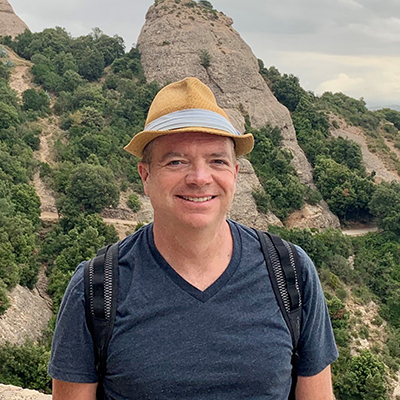
Char Miller’s work focuses on political aesthetics, sovereignty, and disciplinary technologies. Photo: schar.gmu.edu

Mason Votes sat down with Char Miller, an associate professor at Mason’s Schar School of Policy and Government, to get his views on the state of democracy, the 2021 election, and more:

Q: In what ways do you think Democracy has changed in the United States and Virginia in recent years?

A: I think one thing that I should note here is that I live in D.C., so it’s hard to say what’s changing, to me, in the state moment by moment. One thing that was on my mind this morning in watching the election play out in Virginia was the attention to Toni Morrison, and that a candidate would make banning Toni Morrison a central component of their program was kind of alienating. It’s very disconcerting because, if I had to name the most important American novelist, Toni Morrison would be an easy pick. Its about race and questions about race in America. Toni Morrison has an ability to portray race in a very stark and terrifying way, and the slavery and post-slavery experiences of African Americans. In that way it seems like a recent development, but also a traditionally American hesitancy to confront the crime of slavery. The more it’s changed, the less its changed.

Q: How do you believe people’s personal perceptions about Democracy have changed?

A: The things that have been on people’s front-burner may in fact be traditional. The thrust to change voting, and the rules governing voting, is surprisingly tolerated in our sense that democracy should be expanded and not contracted. It is also a very familiar response to voting. People have become more democratic in a lot of ways. If you pick the right place to look, there’s a lot of democratic moments happening. Black Lives Matter, for me, is a very important moment in demanding democracy, not in terms of voting, but in terms of equal representation in front of the law, in that everyone should be treated the same. That’s certainly an important aspect of democracy that I would want to apply and say here are public pronouncements of valuing democracy to be hitting the streets. Things like constraints in voting rights is a less optimistic story, it seems like there are forces mobilizing to limit democracy deliberately. There’s very valuable moments of demand and articulation for greater democracy that produces, or is a response to, very powerful attempts to reduce it.

Q: How do you think that politicians and parties running for office are reflecting on these changes?

A: As not a Virginia resident, I can’t vote, and maybe that’s a point to underscore in an article about Democracy. The people who live in the District of Columbia, the nation’s Capital, don’t get the right to vote in Congress. Given the stalling of Biden’s program in Congress, if maybe D.C. had the vote, that would be very different. You see a place here where anti-democratic exclusion of a portion of the population from voting has real consequences for the majority of Americans who voted for something, such as Biden’s agenda. I saw Obama’s speech for Terry McAuliffe. On one level, it seemed perfectly fine. If you want the things that the left leaning part of the Democratic Party want, then you got to be voting. I’m troubled by the speech, as it came out in a kind of shaming way of “this is why you have to get out to vote.” My response was that this failure is within the Democratic Party, they’re in charge of Congress and the Executive right now, they can’t deliver this. The voters did their job last time, they got people elected. I’m not sure that continuing to blame the part for being tired and not getting out to vote for their candidates is accurate. I think this rhetoric distracts from the failure of leadership within the Democratic party. There’s a comfort in the failure if it sounds good here, without being held accountable for said failures. Its not the voters that have failed here.

Q: What are some ways you think citizens or lawmakers can mobilize themselves to ensure that democracy stays strong?

A: Get the vote for D.C. In this moment, that would really matter with the stalling of Congress. Giving D.C. state-like representation in Congress would cause a very different dynamic. That would be a place to talk to politicians. Speaking specifically to the Democratic party, why wouldn’t you be working hard for that? That’s a real win. They already work hard to get out the vote, why not work equally hard to get the right to vote for people who are explicitly denied the right? There’s a lot of arguments you could make here, and I don’t see them working hard enough to do that. In doing this, you would have to be making democratic arguments. What we want from the government is not a representation of the land that makes up a state, but of the people that make up that state. D.C. is a city, but in terms of population, that’s the important thing. In terms of democracy, that’s the important thing. It’s an easy answer for “How do you make the nation more democratic?” You can give the “colonies” representation, like D.C. and Puerto Rico. That goes in that direction.

Q: Are there any resources you would like to share?

A: There’s a lot of resources, and groups to join. Shutdown D.C. is one of them, and so is Black Lives Matter. These tend to be people who know how protests are going to be organized, and where they’re going to show up. If students at Mason want to be active in that form of democratic politics, those are good resources.

_____________________________________________________________

Photo: schar.gmu.edu

Where Can Mason Students Vote on Election Day?

Only Students Registered at Their Current Campus Address Can Vote at the University Precinct in Merten Hall

By: Meg Thornberry, Mason Votes 2021 Online Editorial Team
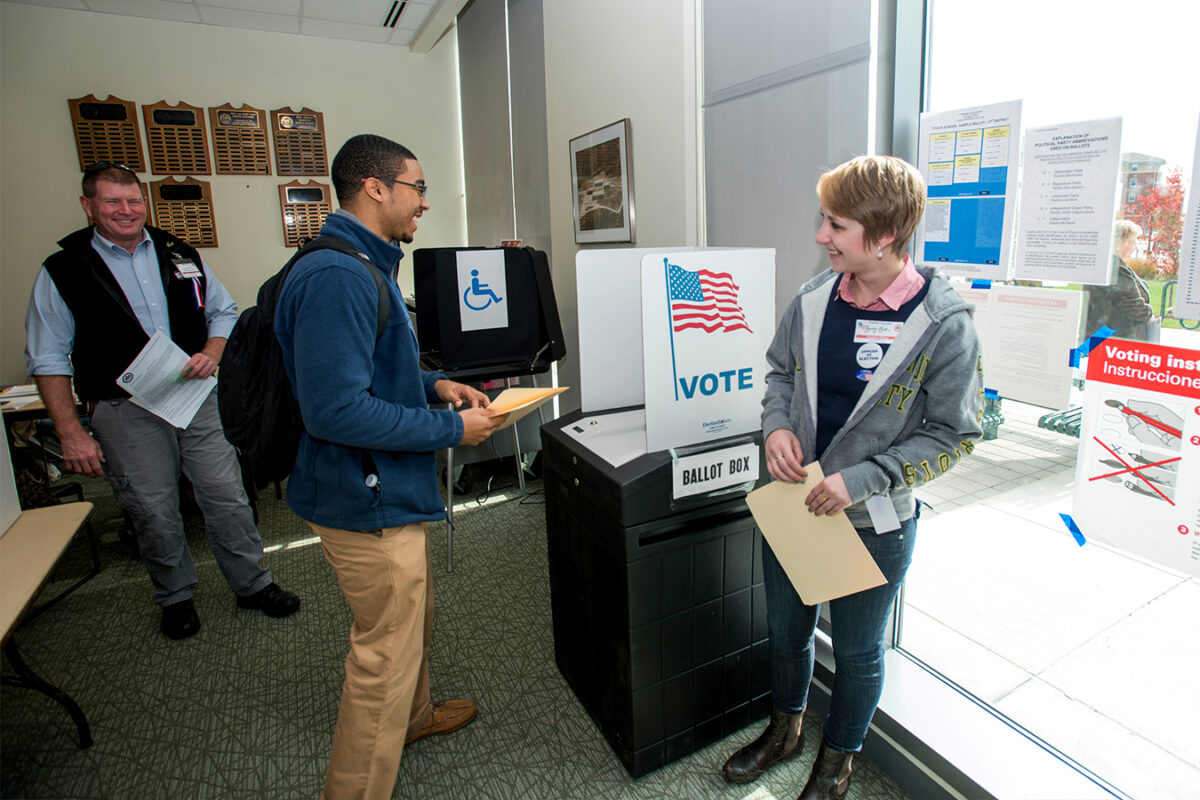
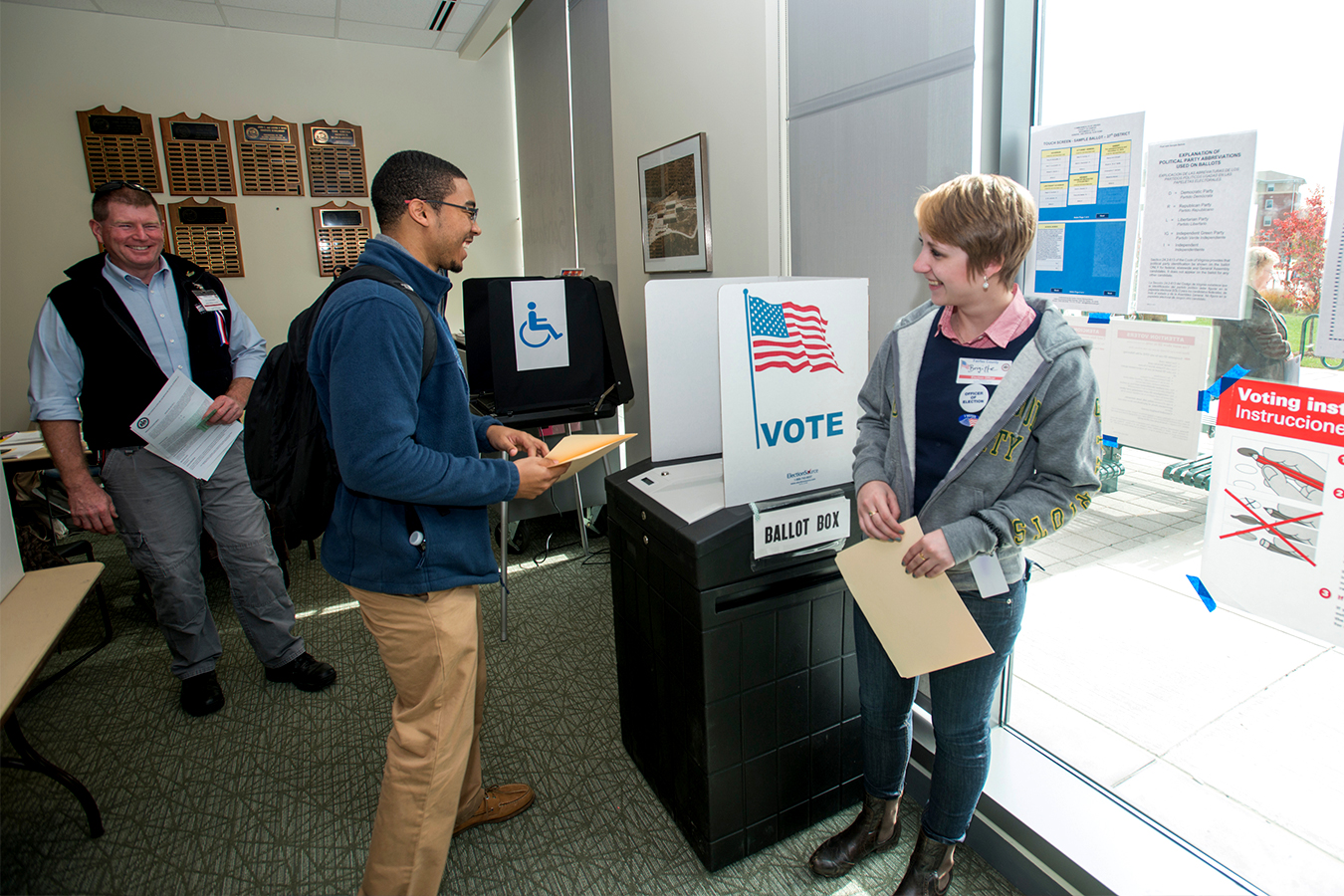
Mason students who are registered at their current campus address may vote on-campus at Merten Hall in Fairfax. Photo by: Alexis Glenn/Creative Services

In 2020, 71.8 percent of Mason students voted, significantly more than the 66 percent national average, according to a recent study conducted by the National Study of Learning, Voting and Engagement (NSLVE).

However, 35 of those students found themselves casting provisional ballots, used to record a vote whose eligibility is in question, because they tried to vote at Merten Hall despite not being registered to vote there.

Provisional ballots are provided to voters whose name doesn’t appear on the rolls when they show up to vote or are unable to provide identification. All provisional ballots are counted in Virginia, but take longer to be processed because they are reviewed by local election boards to confirm eligibility.

“It’s always been an issue for students, because they often forget where they are registered to vote. And the only place that they can vote is where they’re registered,” said Scott Konopasek, Fairfax County’s general registrar. “Students are often still registered at their parents’ address, even if they may not be there, or they may be registered on campus.”

Verify Your Assigned Polling Location Before Election Day

Only students registered at their current campus address may vote at the University Precinct located in Merten Hall on Mason’s Fairfax campus. All other Mason students and faculty must vote at their registered home precincts, either inside the county, within the Commonwealth, or in their home state.

Konopasek stressed that students should look up their voter registration on the Virginia State Board of Elections website to be absolutely certain they are voting somewhere they know their ballot will be counted.

Students who are registered to vote in another state can still drop off their absentee ballot on Election Day, but it is too late to apply for one. Mail-in ballots can also be dropped off at any polling place.

Click here to verify your assigned polling location in Virginia >

What to Expect on Election Day

After in-person voters confirm they are at the right place, they are checked in by a poll worker and given a ballot permit, which they take to another table to get the ballot itself.

“Marking a ballot is just like a Scantron—bubbling in the ovals for your choices. After marking their ballot, the voter takes it to the DS200 ballot scanner, where another poll worker is available to help them,” Fairfax County election official and Mason public administration student Jean Thoensen said in an email.

“The ‘I Voted’ stickers are back, much to the voters’ delight!” Thoensen said in an email.

Who Are All Those People Outside My Polling Place?

Political campaigns often hand out sample ballots showing voters what they would like them to check on their ballots. Virginia law requires that anyone trying to convince people to vote for a specific candidate, or electioneering, must stay at least 40 feet away from the entrance to any polling place, so voters may bring these sample ballots inside with them, but no other campaign or promotional materials.

“Nobody outside is part of my office. They’re political parties, so I have no control over what they tell you, or what they ask you, or how they use any information that they’re given. Or the accuracy or dependability of any information they provide you,” Konopasek said.

Voters are allowed to bring cell phones into polling places, and they can take photos of their own ballots, but of nothing else inside of the polling location. Still, it might be better to wait until after voting to snap a selfie.

_____________________________________________________________

Election Day is Tuesday, November 2nd!

If you haven’t already done so, make a plan to VOTE!

Click here to learn more about voting in 2021 >

_____________________________________________________________

Photo by: Alexis Glenn/Creative Services

Meet the Candidate: Glenn Youngkin (R)

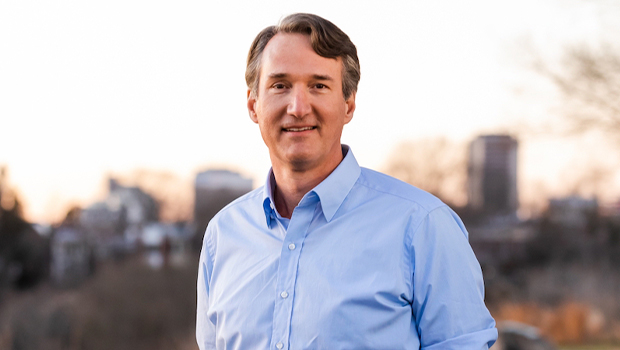
Glenn Youngkin, Republican Candidate for Virginia Governor

Learn more about the candidate by visiting Youngkin’s campaign website: youngkinforgovernor.com

Meet Glenn:

• Born: December 9, 1966 in Richmond, VA

• First job: “washing dishes and frying eggs at a diner in Virginia Beach”

• Education: Earned a bachelor’s degree in engineering from Rice University and an MBA at Harvard Business School

• Family: “married for 26 years to his amazing wife Suzanne, Glenn is a dedicated father of four wonderful children”

• Career Highlights: Spent 25 years working at private-equity firm The Carlyle Group and has served on the boards of several non-profits including the Virginia Ready Initiative, Virginia Tech’s Innovation Campus Advisory Board, the Museum of the Bible, and the Meadowkirk Retreat Center. Later served as Church Warden at Holy Trinity Church in Northern Virginia and is a member of the Business Council and the American Enterprise Institute’s National Council.

• Full campaign website bio: youngkinforgovernor.com/meet-glenn

Campaign Statement:

“Glenn will make sure Virginia has better-paying jobs, the best schools, the safest communities, and a government that works for you. His game plan will create 400,000 jobs and make sure every student graduates career or college ready. Glenn will cut exploding costs for families and relieve the burdens of inflation and taxes. He will cut regulations to create jobs and make it easier for innovators and entrepreneurs to get small businesses moving again. He will restore our high standards for schools and our students, ban critical race theory, invest in our teachers and schools, and empower parents with real choices.”

Read more about “Day One Game Plan” on his campaign website: youngkinforgovernor.com/game-plan

_____________________________________________________________

Photo and campaign logo: https://www.youngkinforgovernor.com/

Meet the Candidate: Terry McAuliffe (D)

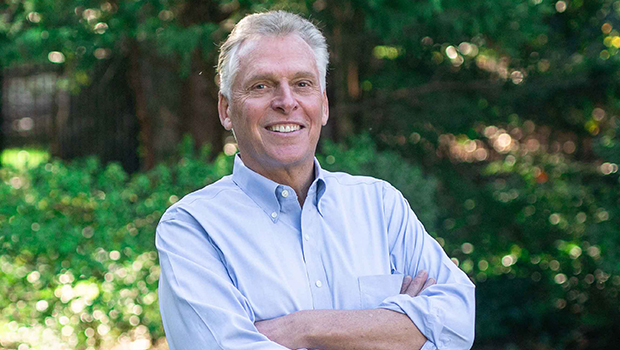
Terry McAuliffe, Democratic Candidate for Virginia Governor

Learn more about the candidate by visiting McAuliffe’s campaign website: terrymcauliffe.com

Meet Terry:

• Born: February 9, 1957 in Syracuse, NY

• First job: “started a business paving driveways for neighbors and local businesses at age 14”

• Education: Earned a bachelor’s degree from Catholic University and a JD from Georgetown University Law Center

• Family: “Terry and Dorothy have been married for over 30 years and have five children”

• Career Highlights: Served as the 72nd Governor of Virginia from 2014-2018 and got his start in politics working on the campaign of President Jimmy Carter. Later served as chairman of the Democratic National Committee and ran presidential campaigns for both Bill and Hillary Clinton. Since leaving office, McAuliffe has campaigned for Democratic candidates across Virginia and helped “build the party infrastructure that led to flipping and keeping the Commonwealth blue.”

• Full campaign website bio: terrymcauliffe.com/about

Campaign Statement:

“Terry believes that now is the time to push Virginia forward to build a stronger and fairer post-COVID economy. As Virginia’s next Governor, Terry will continue the fight for civil rights and voting rights, attract businesses to create the best jobs and raise wages, ensure all Virginians have access to quality affordable healthcare, build a clean energy economy to address climate change, and address the affordable housing crisis our communities are facing. Most importantly, Terry will make an unprecedented investment in education.”

Read more about “Terry’s Vision” on his campaign website: terrymcauliffe.com/issues

_____________________________________________________________

Photo and campaign logo: https://terrymcauliffe.com/

Kamala Harris Campaigns for Terry McAuliffe in Dumfries, VA

Top Democrats Join Virginia’s 2021 Gubernatorial Race

By: Alex Russell, Mason Votes Alumni Contributor
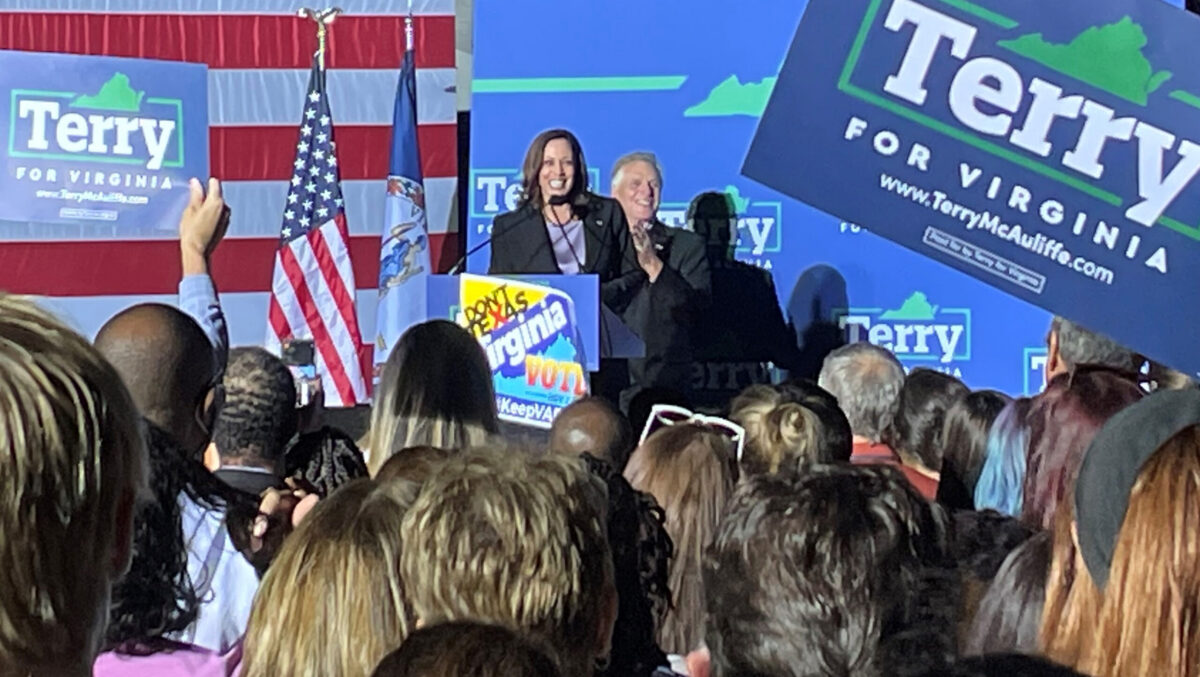
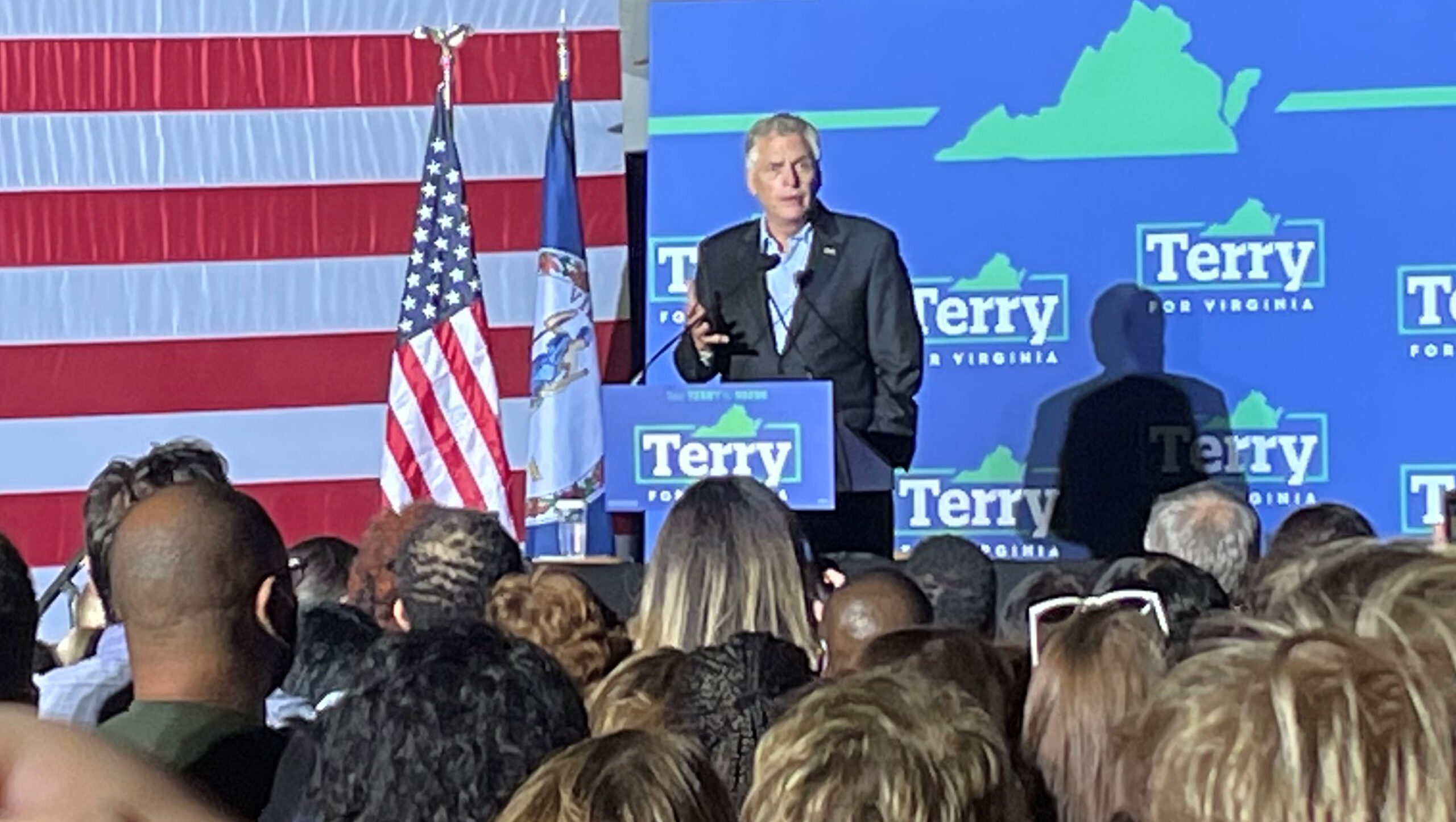
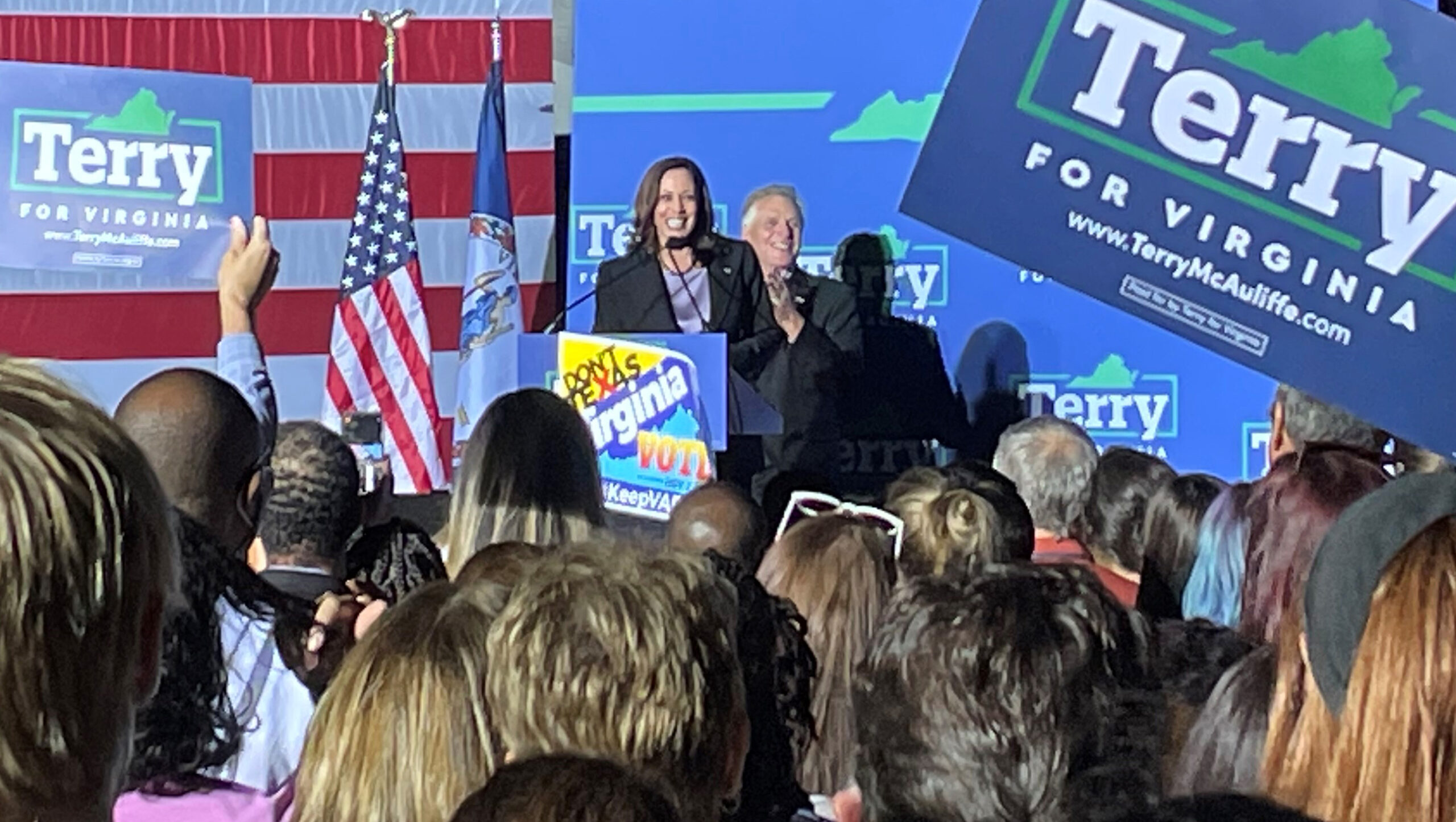
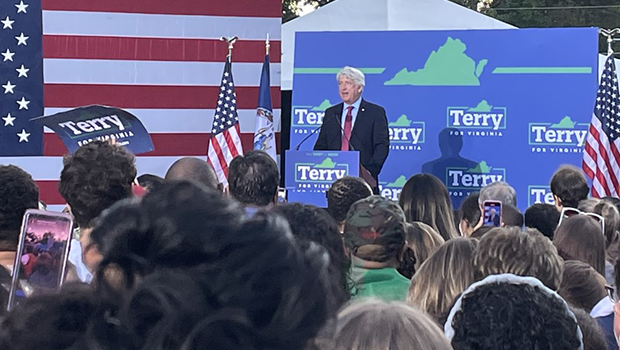
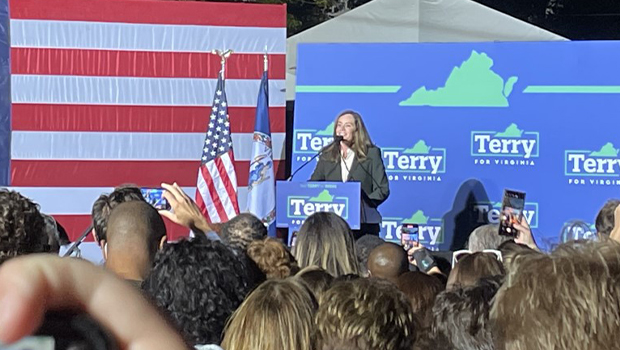
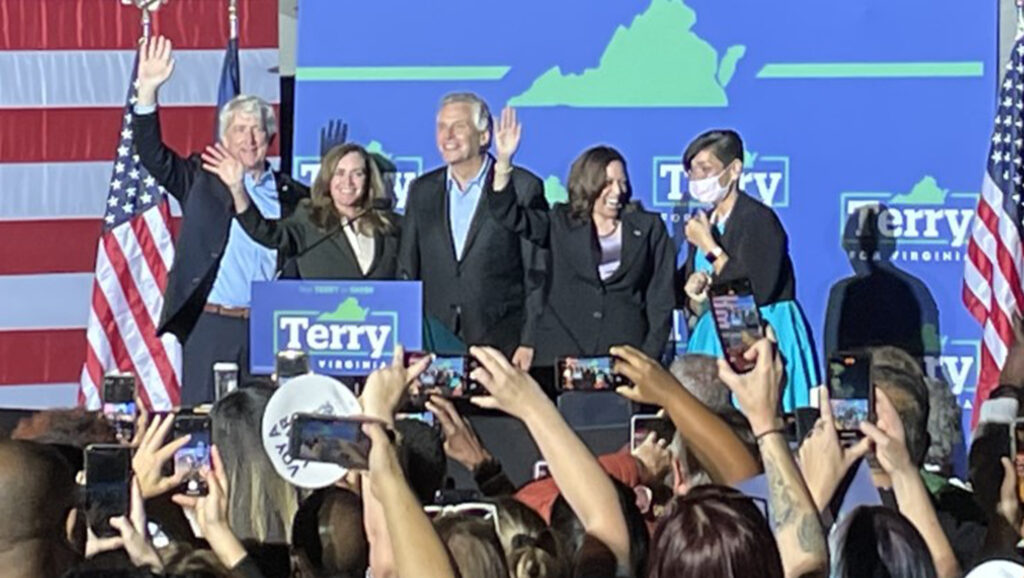
Vice President Kamala Harris campaigns on behalf of Democratic gubernatorial candidate Terry McAuliffe in Dumfries, VA. Photos by: Alex Russell

DUMFRIES, VA — Recent polling data shows support for Democrat Terry McAuliffe and Republican Glenn Youngkin split almost down the middle in the final week of the campaign. As national scrutiny of the Commonwealth’s high-stakes gubernatorial contest increases by the day, both sides are looking for any advantage they can get, calling in key surrogates to inspire enthusiasm among voters ahead of Tuesday’s election.

Top Democrats, including Vice President Kamala Harris and U.S. Senator Tim Kaine (D-VA), spoke at a campaign rally and “get out the vote” drive in the town of Dumfries, VA in support of Terry McAuliffe, the Democratic candidate for governor in the upcoming November 2nd gubernatorial election.

Billed as a “grassroots event,” the rally took place on Thursday, October 21st near Quantico Marine Corps Base in Prince William County at a fire station that once housed the recently-disbanded Dumfries-Triangle Rescue Squad.

The hundreds of supporters that had gathered were excited and, by showing of hands, many had already cast their votes as part of the ongoing early in-person voting happening in Virginia until October 30th. Click here to learn more about early voting in 2021 >

Harris opened up with humor and energy, stating, “You know what I want for my birthday? I want this man to be elected as the next governor of the Commonwealth of Virginia.” She then quickly altered her tone, remarking how “[in] four years, a whole lot can either be created or destroyed…four years can be a very long time for a lot of bad things to happen.” She stressed to the crowd that it is the responsibility of those present, the voters, to “ensure” that Terry McAuliffe is elected as Virginia’s next governor.

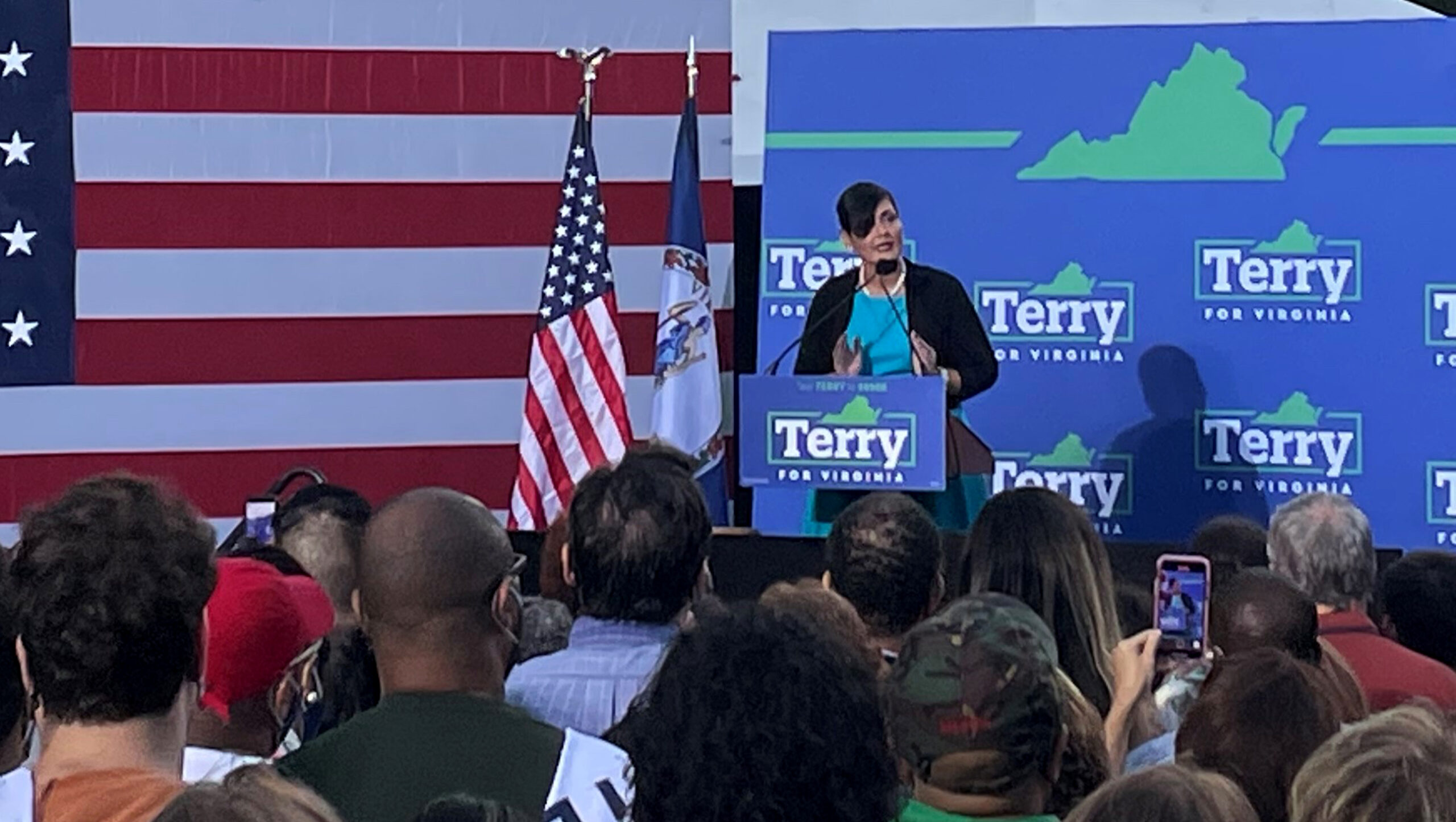
One of the preceding speakers, Hala Ayala, Democratic candidate for lieutenant governor, expressed many of the same themes as the Vice President, highlighting how the upcoming election “will say everything about who we are and what we stand for.”

Regarding her own campaign, candidate Ayala stated that “as lieutenant governor, I will preside over the [state] senate to advance and protect…the progresses we have made and keep Virginia moving forward,” stressing that, “in order to do that, it is essential we keep this state blue.” In closing, Ayala reiterated that “everything is on the line November 2nd.”

Delegate Luke Torian, who has served in the Virginia House of Delegates since 2010, representing the 52nd district in Prince William County and who is running for re-election this November, incumbent attorney general candidate Mark Herring (D), Senator Tim Kaine (D), and Dorothy McAuliffe, former First Lady of the Commonwealth of Virginia from 2014 to 2018, also made remarks.

When candidate McAuliffe took the stage, he quickly made the larger issues of the race clear, echoing the sentiments of that night’s previous speakers. He touched on his career, his track record, and his plans upon election to office, focusing on some of the biggest, pertinent, and unfortunately controversial issues on the ballot, like women’s reproductive rights.

“Folks, we’ve got an election coming up in a few days. We need your help. Everything is a risk that we fought for over the last eight years,” McAuliffe said, connecting his previous four-year term as governor (2014-2018) with the current campaign:

“My message was clear. We are an open, we are a welcoming state, and look what happened. Our economy took off… Income went up 14 percent and we reduced unemployment in every city and county in the Commonwealth of Virginia. That’s what you get with good Democratic leadership.”

“I am ready to take Virginia to the next level.”

Since the event featuring Vice President Harris, President Joe Biden spoke at a Virginia rally on behalf of McAuliffe the following week and former President Barack Obama cut a television ad supporting the Democratic candidate.

Hala Ayla, Democratic candidate for VA lieutenant governor.
Terry McAuliffe, Democratic candidate for VA governor.
Vice President Kamala Harris.


Mark Herring, Democratic candidate for VA attorney general.
U.S. Senator Tim Kaine (D-VA).
Former VA First Lady, Dorothy McAuliffe.


From left to right: Mark Herring, Dorothy McAuliffe, Terry McAuliffe, Kamala Harris, Hala Ayala.


_____________________________________________________________

Want to hear directly from the candidates? Attend a 2021 election rally!

Upcoming Terry McAullife (D) campaign events: mobilize.us/terryforvirginia

Upcoming Glenn Youngkin (R) campaign events: youngkinforgovernor.com/events

_____________________________________________________________

Election Day is Tuesday, November 2nd!

If you haven’t already done so, make a plan to VOTE!

Click here to learn more about your options >

_____________________________________________________________

Photos by: Alex Russell

Interview with Jean Thoensen

A Passion for Voting Inspired This Mason Student to Become a Fairfax County Election Officer

By: Meg Thornberry, Mason Votes 2021 Online Editorial Team
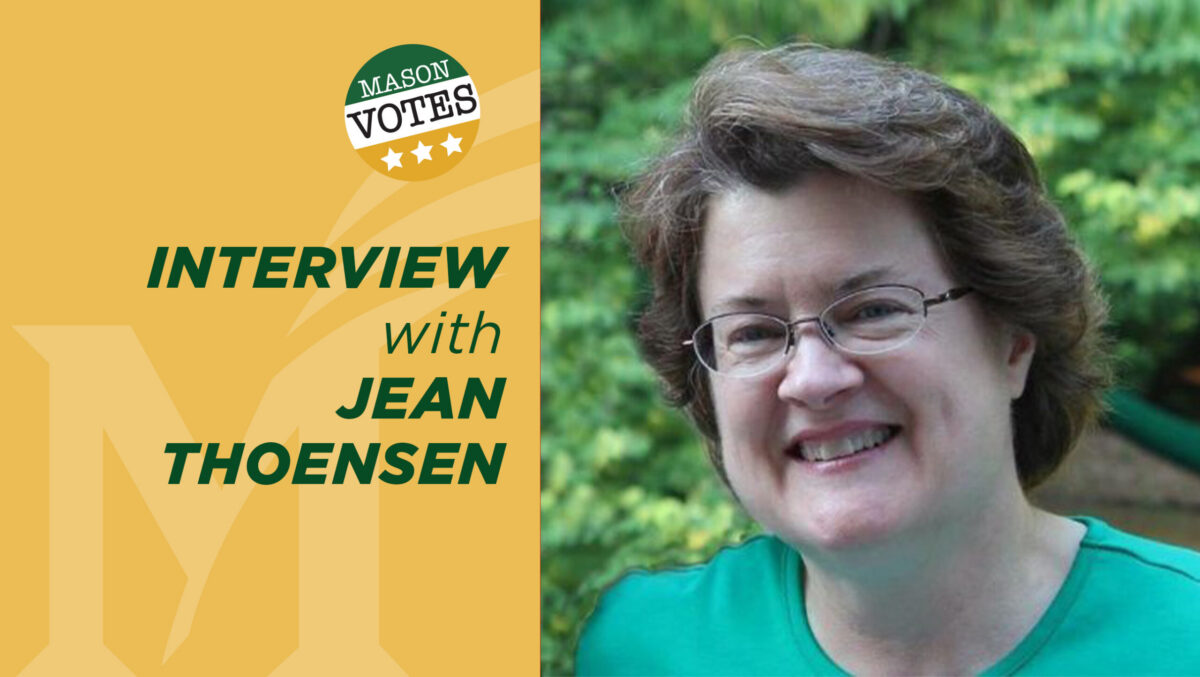
Mason student Jean Thoensen has served as a Fairfax County election officer for the past eight years and is pursuing a bachelor’s degree in public administration with a minor in government analytics. Photo courtesy of: Jean Thoensen

Jean Thoensen started working as an election officer because a neighbor invited her to. The next year, she took over from that neighbor as chief election officer. Eight years later, she is finally leaving her precinct. She’s been promoted, and agreed to sit down with Mason Votes to describe her new position and what she’s learned along the way.

A self-described “life-long college student,” the 60-year-old Thoensen is getting her bachelor’s in public administration with a minor in government analytics at Mason. She says that even after eight years as an election official, she’s still learning a lot from her classes, and that only increases her passion for voting.

“I am far more aware of the stratification of our society and how barriers were put in place to keep certain groups of people from voting,” Thoensen said in an email. “That has only strengthened my resolve to support the widest possible access to voting. Mason professors are always gracious about allowing me 10 minutes to speak in class each fall about voter registration and early voting/absentee voting by mail.”

This year, anyone registered to vote in Virginia can vote early if they want to, no excuse or approval needed. In-person early voting lasts until Saturday, October 30th. The number of early voting locations and their hours have expanded this year (fairfaxcounty.gov/elections/early-voting).

However, Thoensen predicts that the voter experience on Election Day will be “pretty much the same as it was last year.”

Click here to learn more about early voting in 2021 >

On Election Day, voters will be able to both vote in-person and drop off completed mail ballots. Those voting in person will need to check in with their full name, residential address and some form of photo ID.

“Virginia greatly expanded the IDs that are valid for voting in 2020,” Thoensen said in an email. “In fact, a Mason student or employee [photo] ID is valid for voting! If they don’t have any ID with them, they can sign an ID confirmation statement, which is a legal affirmation that they are who they say they are, and vote normally.”

Thoensen served as chief election official for her precinct in Centreville, VA through the 2021 primary elections. She has also worked at a number of early polling locations. This November, she is working as a “rover,” someone who helps at multiple locations, rather than staying at one all day. They also test and configure voting machines, taking crucial security and documentation actions every step of the way.

A poll worker’s day starts at 5:00 am, and doesn’t end until they’ve prepared a statement of results and shut down the polling station after voting closes at 7:00pm, often a two-hour process. Rovers will be on hand to solve any problems all of the stations along their assigned routes have at any point during this minimum 16-hour day.

“I work some grueling hours and am nearly ready to drop from exhaustion, but it is worth it to see as many people vote as possible, regardless of their political affiliation. Fairfax County has the best run elections office in the state, [in my honest opinion],” Thoensen said in an email.

_____________________________________________________________

Interested in becoming a Fairfax poll worker ? Click here to learn more >

_____________________________________________________________

Photo courtesy of: Jean Thoensen

Does Terry McAuliffe Have an Incumbency Advantage?

Serving Two Terms as Virginia’s Governor is a Rare Phenomenon

By: Jacob Pritchard, Mason Votes 2021 Online Editorial Team
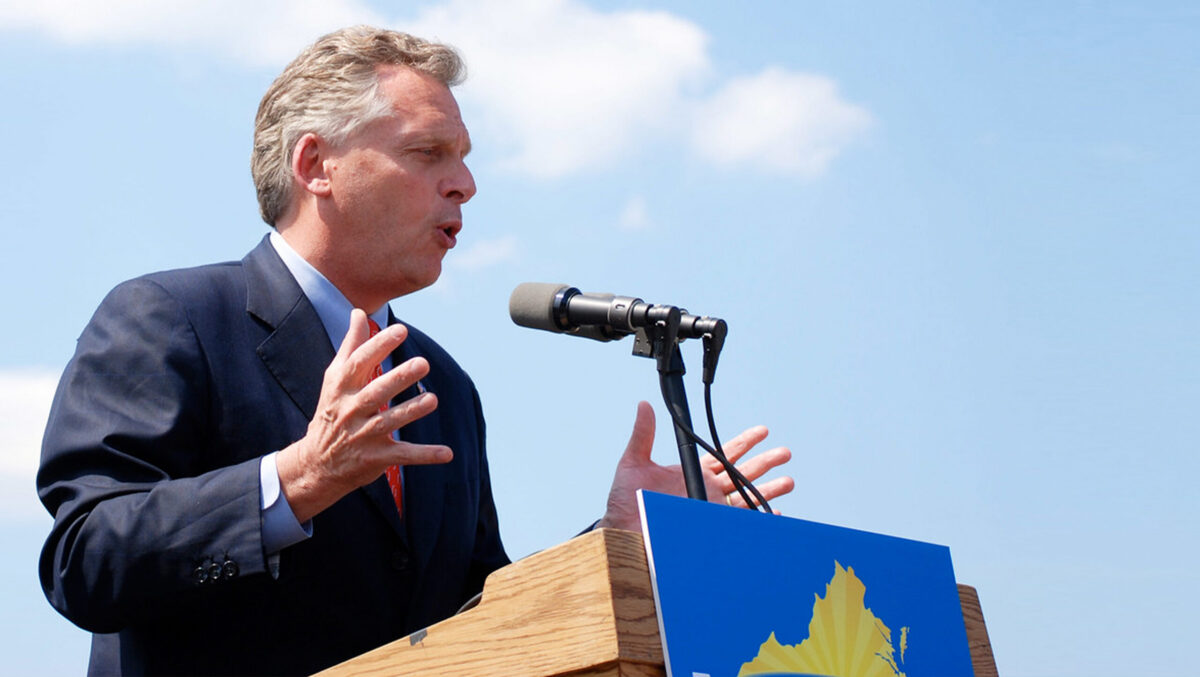
Virginia is the only state in the nation who limits their governors to only one consecutive term in office, making incumbent governors serving or running for a second term a rare phenomenon. Photo by: Kate Wellington (CC BY 2.0)

Terry McAuliffe holds a strong and unique advantage coming into Virginia’s 2021 gubernatorial election. This is because he served a previous term as governor from 2014-2018. Two things of note arise from this fact.

There is a well-documented phenomenon among political scientists called “incumbency advantage.” This is where an incumbent politician who runs again is overwhelmingly likely to win re-election. Incumbency advantage arises from many different factors. Most notably, a strong name recognition advantages the incumbent. There is no better press than having your name already widely known. They also have a tangible track record to run on, which can help prop them up during the campaign as a “proven and tested” leader. Outside challengers often have a hard time gaining either of these advantages due to their lack of experience actually holding the office they are running for when compared to their opponent. In 2018, the U.S. House of Representatives had an 91% reelection rate, and the U.S. Senate had an 84% reelection rate. Overall reelection rates from 2008-2018 was 92.1%.

While a gubernatorial candidate like Terry McAuliffe being an incumbent in an election may seem ordinary in any other state, in Virginia it is extremely abnormal. This is due to Virginia being the only state in the nation who limits their governors to only one consecutive term in office, making incumbent governors serving or running for a second term a rare phenomenon. Essentially, once you serve once, you must wait another 4 years to run again. This discourages re-election campaigns in the state, as evidenced by how extraordinarily uncommon they are. The last time this happened was with former Governor Mills Godwin, who served from 1966-1970 as a Democrat and 1974-1978 as a Republican. Aside from this example, there is a very slim handful of Virginia governors who have run and served for two terms.

These two facts are substantial for Terry McAuliffe. His name is widely known throughout the state as a former governor. Since he is interconnected within state and national government due to his time in office, he naturally has a far higher networking reach than Glenn Youngkin, which provides him greater opportunity for exposure and fundraising efforts.

According to Real Clear Politics polling aggregates, McAuliffe had a spread of +11.2 job approval as governor, a starkly high number that potentially has risen over time as his term of office has elapsed and political fervor around him has subsided. Much of his track record is deemed as positive within the state, examples being net positive job growth and a reduction of homelessness rates by 27% during his tenure. His overwhelming victory in the Virginia Democratic gubernatorial primary can be seen as further evidence of his overwhelming popularity, as well as his wide name recognition when compared to other state politicians.

In short, McAuliffe has ridden the wave of incumbency so far, but his overall incumbency advantage may not be as potent as Democrats hope.

To toss his advantage, some may point to the case of Mills Godwin’s second term being a slim majority victory in 1973. Godwin won by a mere 1.4%, meaning his incumbency advantage was not entirely fierce or absolute. This slim victory can be attributed to other reasons, such as his switching of parties in between his terms, yet it points to a wider potential rejection of preferential treatment of former incumbents in Virginia. This is a worrying fact for McAuliffe, as it means that his former track record and tenure may not be enough to carry him to victory.

There is also the question of time elapsed between his terms. McAuliffe has been out of office for 4 years, an eternity in the political world. The American political landscape has drastically changed since he left office, with questions of isolationism and democracy being put under a new spotlight with the election and events of President Donald J. Trump. While McAuliffe has a largely positive track record, he is entirely untested in this new political landscape. To many new voters, who have gained the ability to vote from either moving here or coming of age, McAuliffe may be an entirely new face to them. Incumbency advantage typically works its ways stronger when the incumbent is running for a directly consecutive term for the same office they initially served in. McAuliffe only has one of these factors, and it may come to harm him.

With these facts in mind, does McAuliffe have an incumbency advantage? Has too much time elapsed? Has the landscape changed too much? Is it even possible to have incumbency advantage in Virginia? On November 2nd, these questions will be answered by Commonwealth voters as they head to the polls to elect the next governor.

_____________________________________________________________

Photo by: Kate Wellington/sharedferret (CC BY 2.0)