Mason Votes

Lack of Choice Leads to a Search for Solutions

Voters Want More Third Party Options

By: Jack Houston, Mason Votes 2021 Online Editorial Team
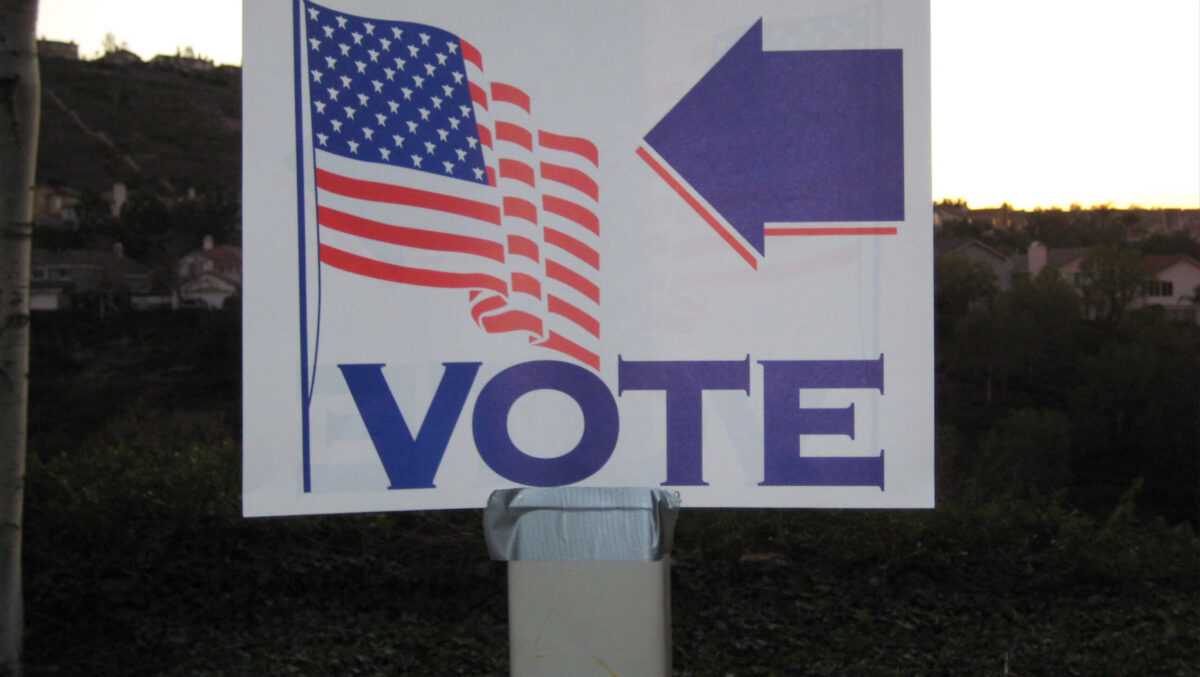
A growing number of American voters, including 71% of millennials, think more third party candidates are needed. Photo by: kgroovy (CC BY-SA 2.0)

In 2017, the year of the last Virginia gubernatorial election, an NBC News/GenForward Poll showed that 71% of millennials believed that at least a third major political party was needed in the U.S. Current polls suggest that that trend hasn’t just sustained itself among young people, it’s expanded to both the younger Gen Z demographic as well as older populations.

So, four years later, has anything changed for this election cycle? The answer isn’t quite so simple. In one aspect of the electoral process, partisan primaries, the answer is yes.

In 2017, Republicans had three candidates to choose from and Democrats had two. In the 2021 Primaries, Republicans had seven and Democrats had five. This is a significant increase, especially given the ideological differences among the candidates within each primary. However, the choices in the general election remain the same: one Democrat, one Republican, and one third party candidate.

Considering participation in partisan primaries is historically much lower than that in general elections, why hasn’t this increased choice advanced to November? Put simply, the answer lies in how we count the votes and administer elections.

Currently, most elections decide winners based on which candidate receives a plurality of the vote, not a majority. This means that a candidate isn’t required to secure an overall majority of voters in order to proceed to the Governor’s Mansion (or whichever seat they’re seeking). In an election with two candidates, this isn’t much of an issue. But when more candidates get involved, it can get messy.

This is where the phrase “spoiler candidate” comes into play as a way to describe how a third candidate’s entry into a race can pull like-minded voters away from either side and ultimately elect an unwanted opponent. Candidates with somewhat similar platforms risk splitting their shared voter base and allowing another candidate with a minority of the overall vote to win the entire election.

Realizing this, most voters choose to vote strategically for the candidate most likely to win, even if they’re not their preference. This applies to multiple elections in Virginia this cycle, including the gubernatorial election.

There are a variety of unique solutions to this issue, but one such solution already has significant support from both major parties and some third parties. Ranked choice voting seeks to eliminate so-called spoiler candidates through its process of ballot tabulations based on how a voter ranks various candidates. If no candidate receives a majority of support in the first count, the candidate with the lowest vote count is eliminated and their votes are redistributed to their voters’ second choice until a candidate reaches the 50% threshold.

Given the elimination of the spoiler candidate in a ranked choice voting model, voters are more likely to vote for their actual preference instead of voting strategically, which could lead to more viable third party or independent choices on the ballot. In this case, a more diverse group of candidates could compete in general elections without fear of “spoiling” their sides’ vote. Ranked choice voting has already been used in the Virginia Republican Primary, New York Democratic Primary, as well various national elections.

Is ranked choice voting the best solution to public opinion favoring more choices? Maybe, maybe not. It has its own disadvantages including “exhausted ballots”. Knowing this, readers should also keep in mind other choices such as proportional representation, star voting, or approval voting.

While no system is perfect, a growing number of Americans are looking for a solution that gives them more choices on the ballot and one of these models might be the answer.

_____________________________________________________________

Photo by: kgroovy (CC BY-SA 2.0)

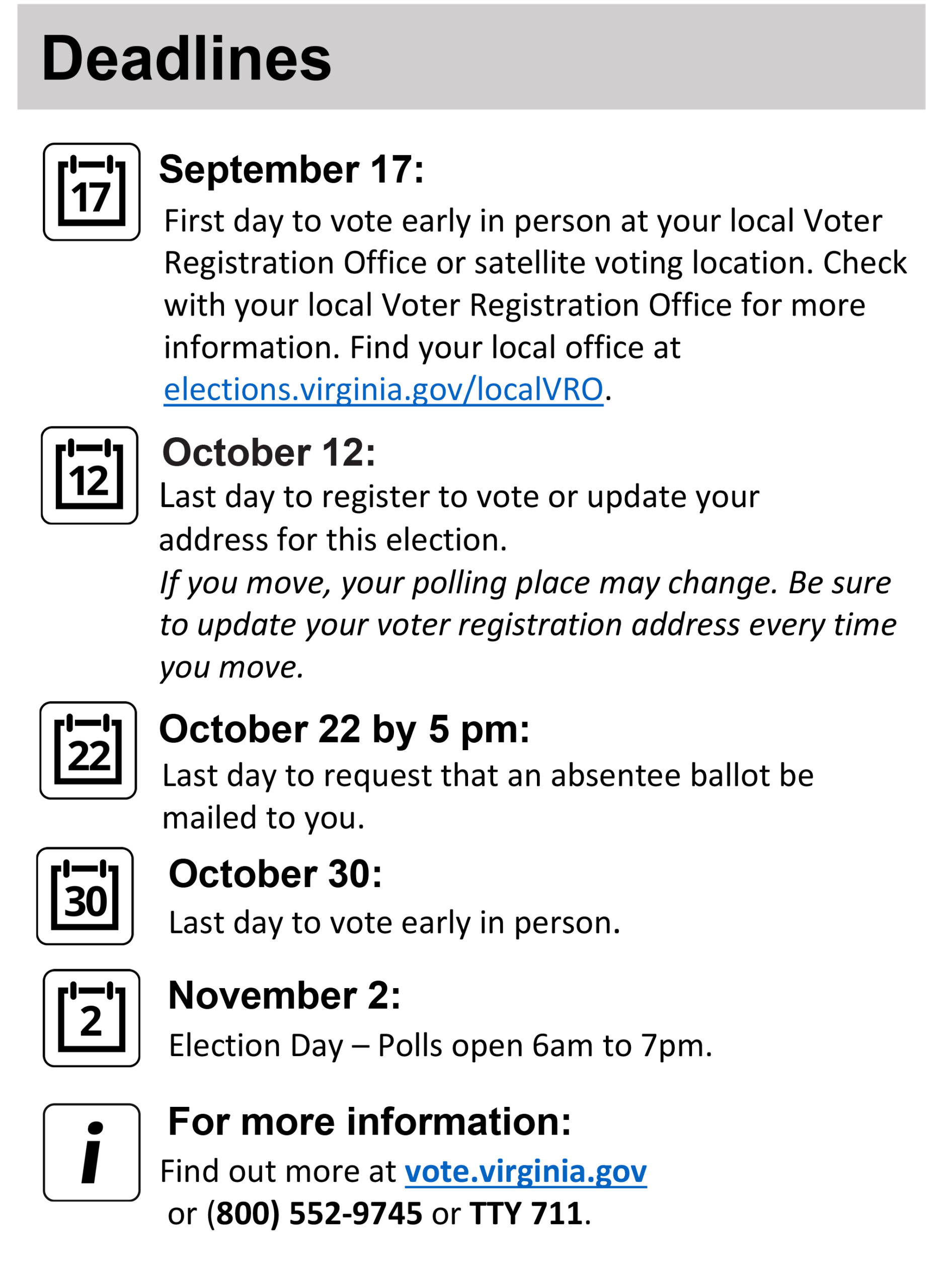
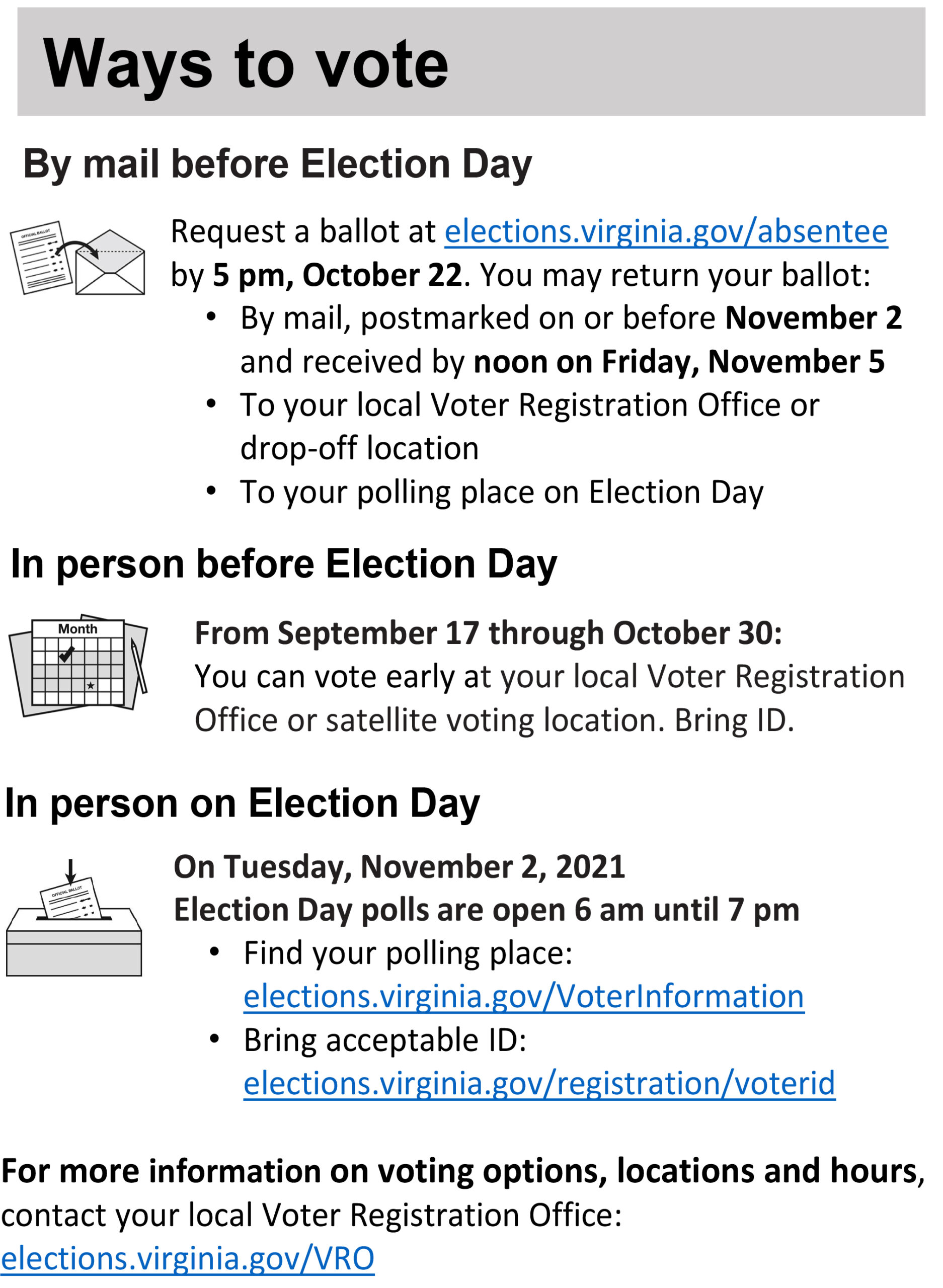
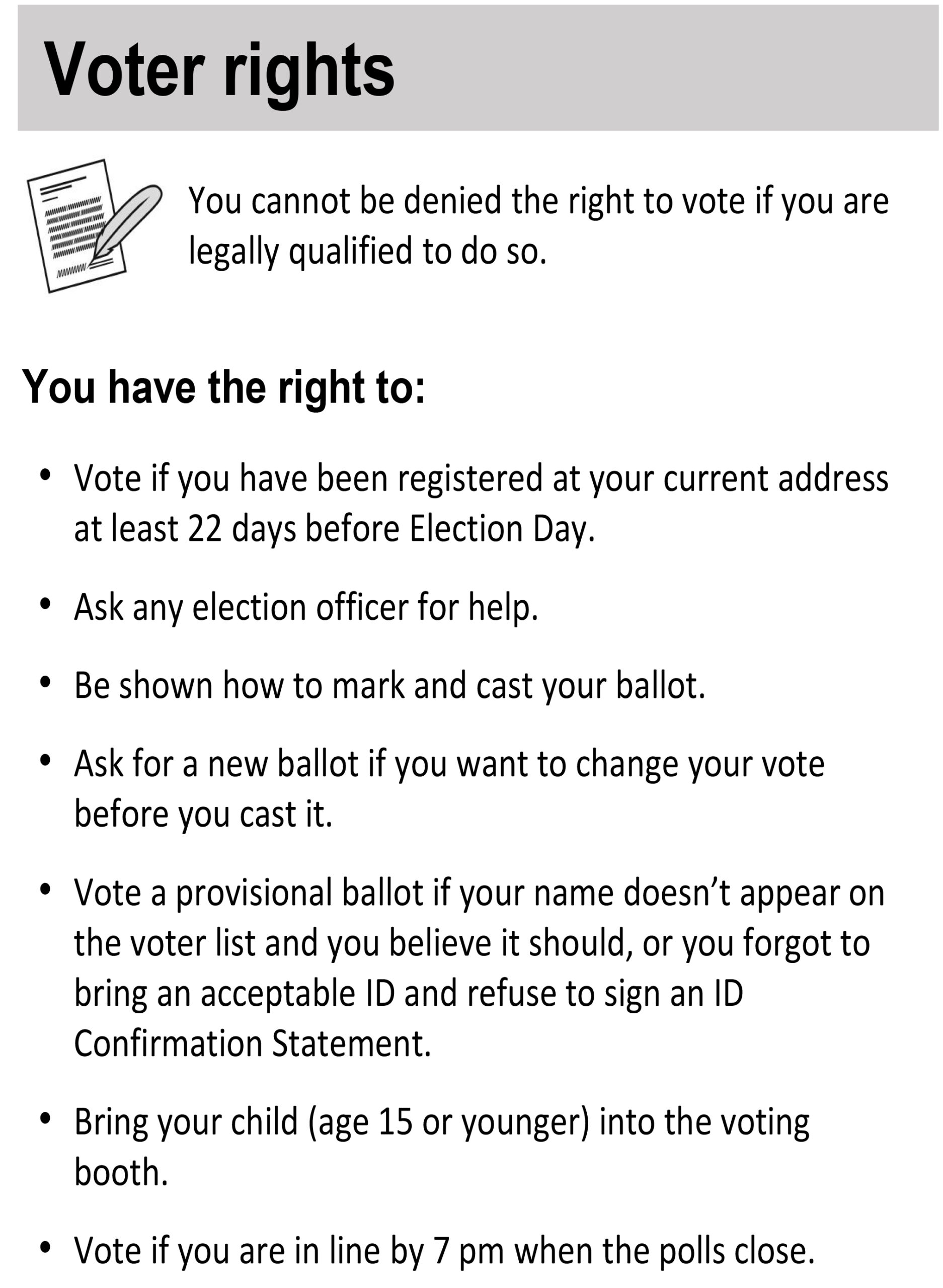
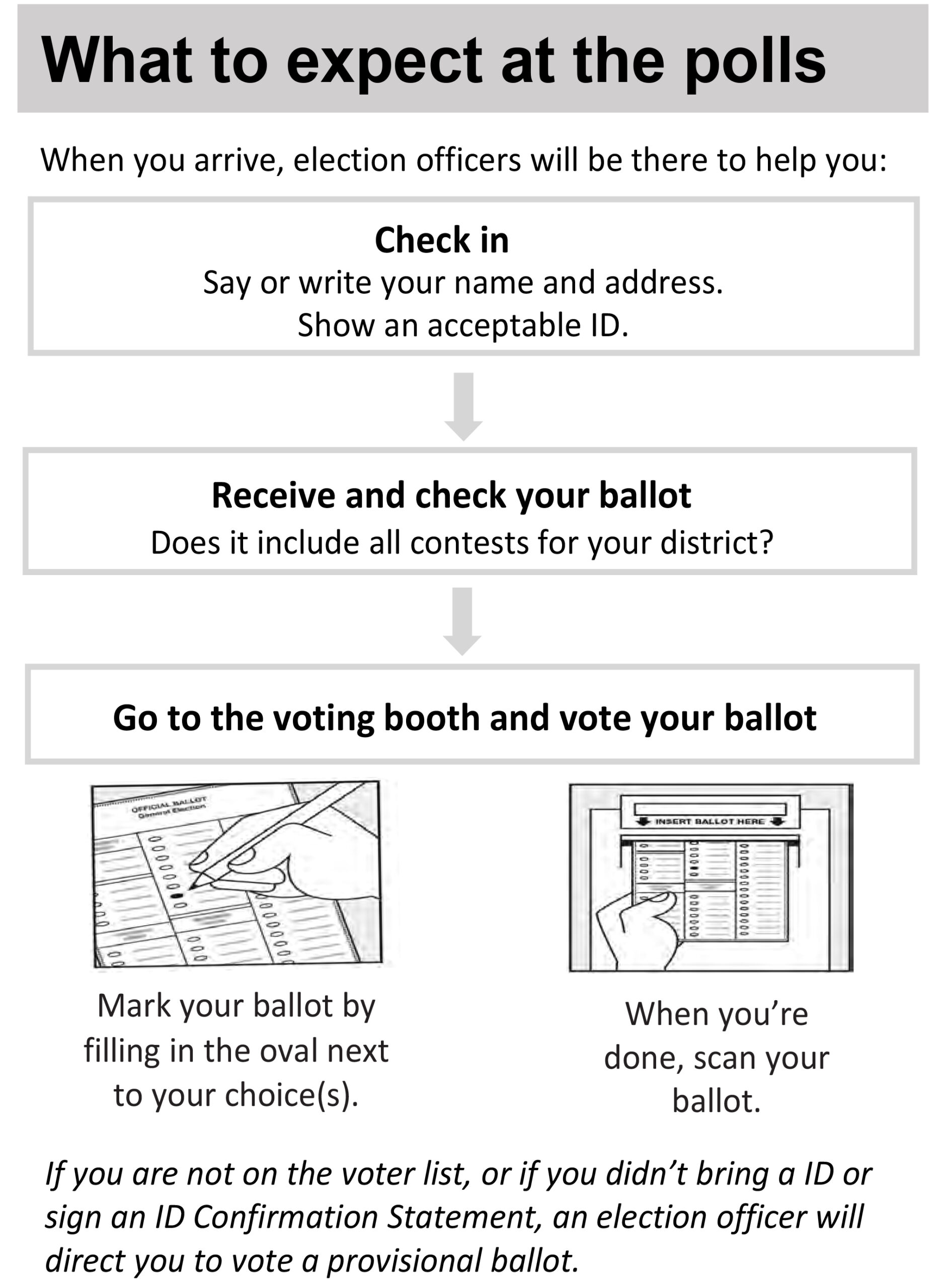
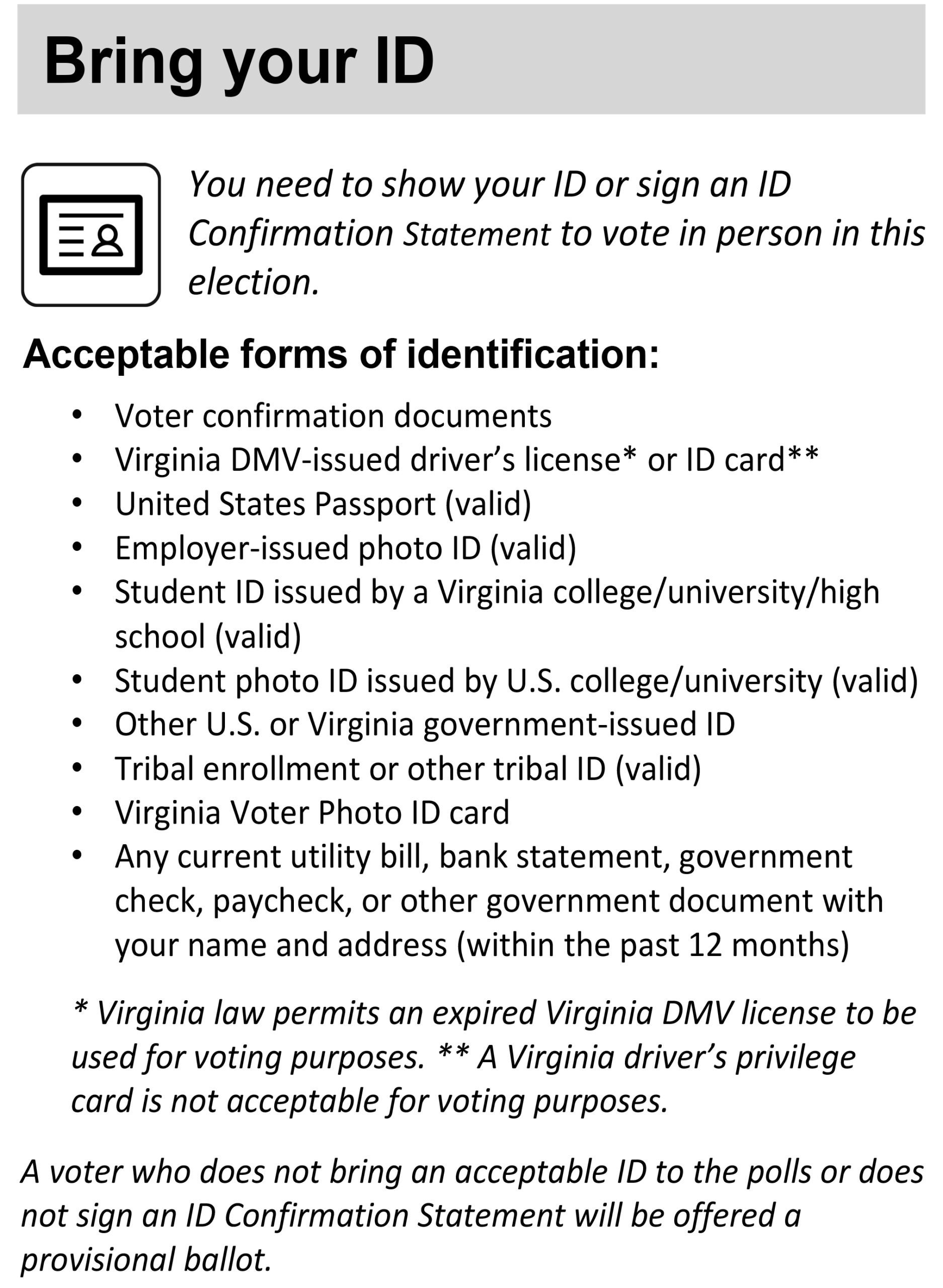
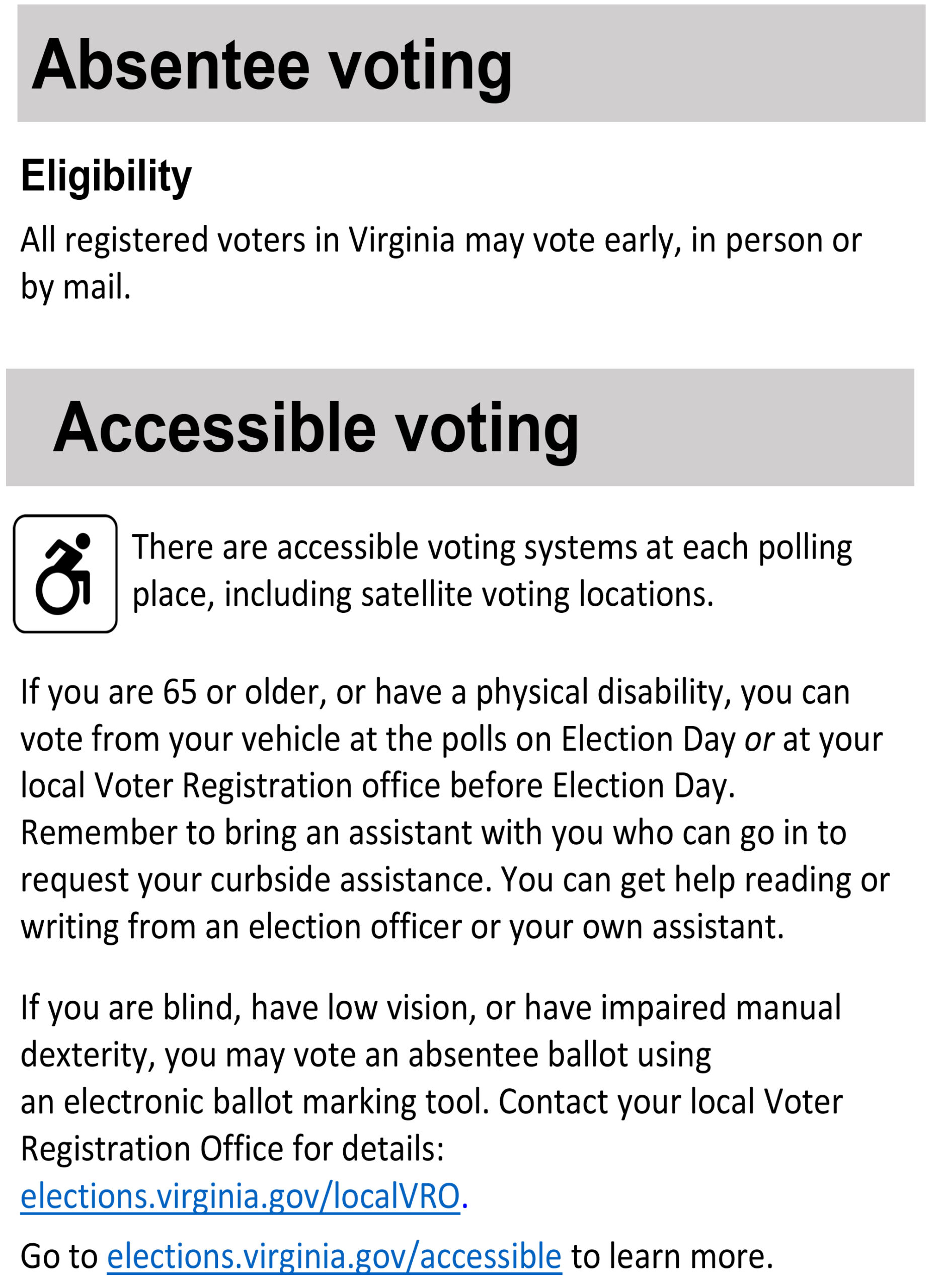
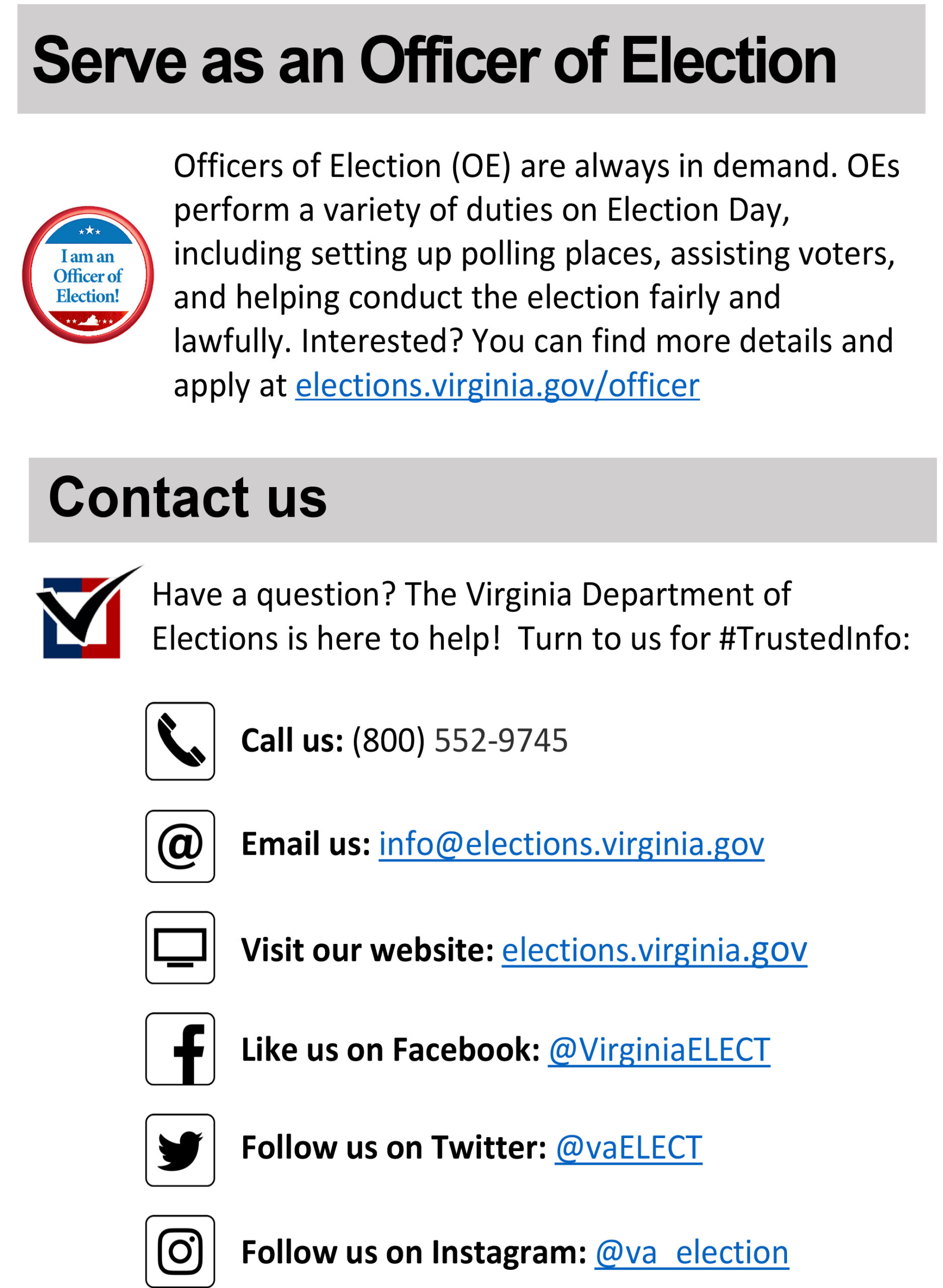
2021 Pocket Guide for Virginia Voters

2021 Pocket Guide for Virginia Voters

Courtesy of the Virginia Department of Elections. Learn more: vote.virginia.gov

Click here to download the 2021 “Pocket Guide for Voters” as a PDF >

Click the images below to enlarge.

What Does the Lieutenant Governor Do? (and Who’s Running?)

Two Women of Color Vie for Lieutenant Governor in Historic Race

By: Alex Russell, Mason Votes Alumni Contributor
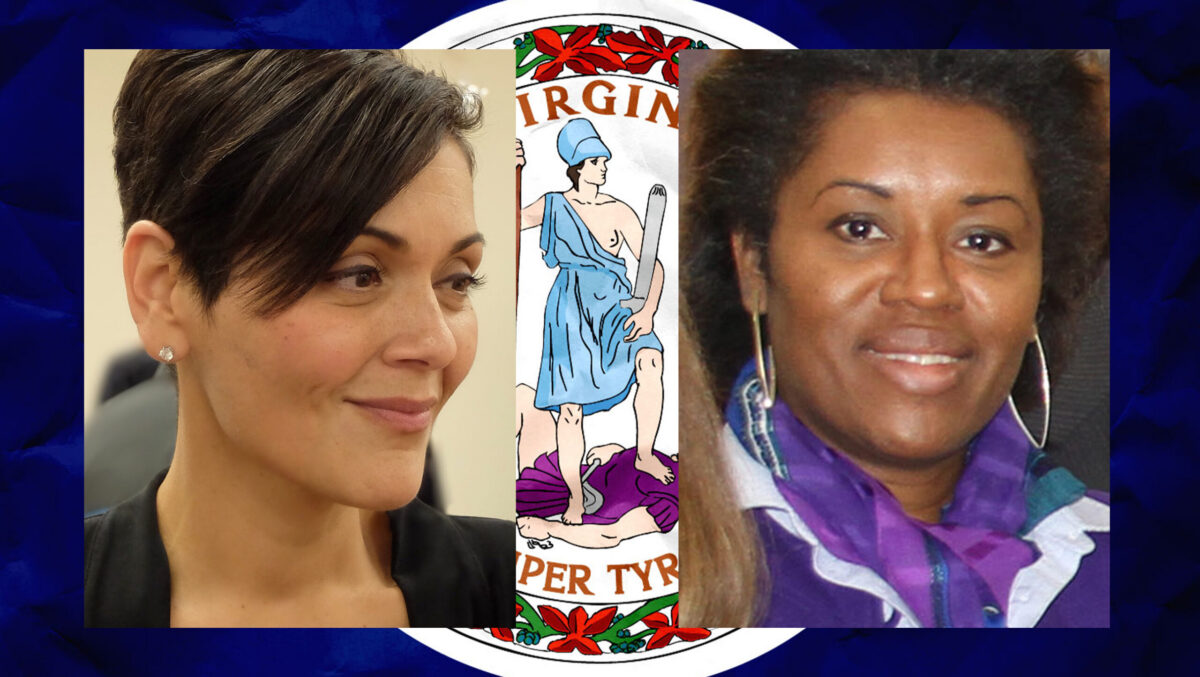
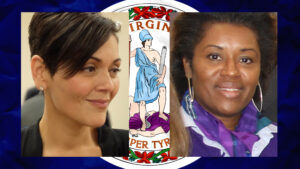
Hala Ayala (D), left, and Winsome Sears (R), right, are running to be Virginia’s next lieutenant governor.

The 2021 Virginia General Election will take place on Tuesday, November 2, but in-person early voting is already underway in the Commonwealth (September 17th was the first day of early voting). The last day for early, in-person voting is Saturday, October 30.

The deadline to register, or to update existing voter information and registration, is Tuesday, October 12th. To vote “absentee” (through the use of a mail-in ballot), voters must send their request to a local voter registration office by 5pm on Friday, October 22nd. Since July 2020, Virginia voters do not need an excuse to vote absentee.

The last day to vote in the Virginia General Election will be November 2nd, between the hours of 6am and 7pm. For more information and to check your registration status, visit elections.virginia.gov/registration.

Click here to read our handy Guide to Voting as a Mason Student >


What’s on Virginia’s Ballot in 2021?

The offices on the ballot this election are governor, lieutenant governor, attorney general, members of the House of Delegates, and some local offices and referenda, which vary by locality.

Terry McAuliffe, a former Virginia governor, is the Democratic Party nominee. Incumbent Governor Ralph Northam (D) is unable to run for re-election due to specific term limits that bar governors from serving consecutive terms.

Glenn Youngkin, the Republican Party nominee, is a former co-CEO and president of the Carlyle Group, a global investment firm. Former President Donald Trump has endorsed Youngkin’s candidacy.

Janet Hook of the Los Angeles Times referred to Virginia’s gubernatorial race as “the first big test of strength between parties since Biden was elected,” adding that it “could set the tone for the 2022 midterm election.”

With so much local, state, and national attention focused on the race for Virginia’s next governor, candidates for lieutenant governor risk getting overlooked. However, Virginia is set to make history in 2022 no matter who wins, when the first woman of color will be sworn in to serve in a  statewide elected office.

The Lieutenant Governor’s Role

The role of lieutenant governor is outlined in Article V of the Virginia Constitution and his or her duties include serving as President of the Virginia Senate (“but shall have no vote except in case of an equal division.“) In addition, the lieutenant governor is the first in the line of succession: “in the case of the removal of the Governor from office or in the case of his disqualification, death, or resignation, the Lieutenant Governor shall become Governor.

While the lieutenant governor is elected at the same time as the governor, in Virginia the two candidates do not run on the same ticket, making it possible to have a governor and a lieutenant governor of different political affiliations and beliefs. The Virginia Constitution limits the governor to one four-year term; there is no limit on the number of terms for lieutenant governor.

The 41st and current lieutenant governor in Virginia is Justin Fairfax (D). Lieutenant Governor Fairfax assumed office in 2018; his term ends in January of next year.

Meet the 2021 Candidates

Photo by: Mark Hanzel (CC BY-SA 4.0)

Hala Ayala (D)

A native of Alexandria, Virginia, with a family background stemming from El Salvador, North Africa, Lebanon, and Ireland, Hala Ayala (D) has been a member of the Virginia House of Delegates since 2018, representing the 51st district.

Before entering politics, her professional experience included working as a cybersecurity specialist with the U.S. Department of Homeland Security. With 18 years of work within the field of information technology and cybersecurity, Ayala made this a focus of her political efforts, introducing bills that concentrated on creating a state interagency cybersecurity task force and increasing the security of network-connected devices across the Commonwealth.

During Terry McAuliffe’s (D) tenure as Governor between 2014 and 2018, Ayala served on his Advisory Council on Women. In 2017, Ayala and Elizabeth Guzman (D) were the first Hispanic women in Virginia’s history to be elected to the House of Delegates. Her committee assignments include the Science and Technology Committee and the Finance Committee. She is endorsed by Governor Ralph Northam (D) for the position of lieutenant governor.

Photo by: Virginia Department of Education (CC BY 2.0)

Winsome Sears (R)

Winsome Sears (R), a naturalized citizen originally hailing from Kingston, Jamaica, served as an electrician in the United States Marine Corps before entering politics. Sears served in the Virginia House of Delegates from 2002 to 2004; in 2004, she ran unsuccessfully for the United States House of Representatives from Virginia’s 3rd congressional district.

Sears was the first black female Republican, the first female veteran, and the first naturalized citizen delegate to serve in the House of Delegates. In addition, she has served as vice president of the Virginia Board of Education and has received presidential appointments to the Department of Veterans Affairs and the U.S. Census Bureau. The Virginia Police Benevolent Association endorses Winsome Sears for lieutenant governor.

Where Do They Stand?

Below is a summary comparing where each candidate stands on the following topics: jobs and the economy, education, racial equity in Virginia, and law enforcement. Excerpts have been taken directly from the candidates’ public campaign websites, with additional information provided from public statements and news sources regarding the topics of COVID-19 and abortion — two pressing, important issues both nationally and in Virginia.

Jobs and the Economy

Candidate Hala Ayala’s focus is on building an “inclusive economy” for Virginia, acknowledging the adverse effects that COVID-19 has had on the economy, especially on Black and Brown residents. Ayala’s stance also highlights the importance of investing in affordable housing.

Candidate Winsome Sears’ priorities focus on maintaining low taxes, reducing regulations, and promoting small businesses. Some of her proposed plans include enacting “a 12-month small business tax holiday” and cutting “unnecessary regulations by 25 percent.”

Education

Ayala’s outlook on the issue of education highlights the topic’s ever-changing dynamics. In view of an increasing reliance on technology, as well as the effects of COVID-19 on schools and colleges over the past year and a half, if elected, Ayala promises to “work with the Administration and General Assembly to expand Pre-K, reduce overcrowding in classrooms, and invest in school infrastructure.” With higher education proving to be increasingly important in regards to acquiring work and building a professional career, Ayala “will support measures to make colleges more affordable for all Virginians as well as lead the charge to create and improve training programs for those who choose not to attend a four-year college.”

Sears’ stated plan has many similarities to Ayala’s, in that, if elected, she will “champion investments in public schools, empower parents with choices, and raise standards in education.” Outlined in a brief plan are the following steps: “Keep schools open safely 5 days a week; raise teacher pay & recruit more teachers to end the teacher shortage; restore high standards for school accreditation” and focus on promoting “choice by creating more opportunities, especially in failing school districts.”

Racial Equity

Ayala’s focus on improving racial equity in Virginia spreads across several topics, with healthcare being one of the major focuses. Her plan features the following building blocks: “Implementing required implicit bias training for…healthcare providers in Virginia…establishing pregnancy medical homes to connect high-risk women with health and social services,” and “increasing access to doula care.” (Doulas are medical professionals and advocates specializing in pregnancy and labor assistance; they provide physical and emotional support to those giving birth during pregnancy as well as during the postpartum period.) Ayala believes that this type of healthcare work needs increased funding and would greatly help people of color.

Sears’ approach to racial equity highlights how “data shows…Black Virginians are disproportionately failed by our government, whether it’s in education or when it comes to job opportunities.” A brief outline of her plan to combat the disparages in education and economic status includes creating a “Black Virginians Advisory Cabinet to the Governor,” establishing a “once-in-a-generation investment in historically Black colleges & universities” and making ten “‘Legacy Wealth Startup Incubators’ in Black communities to promote Black entrepreneurship.”

Law Enforcement

Ayala’s platform acknowledges both the recent racially-motivated police violence and injustice against people of color as well as the long history of slavery in the Commonwealth. Her approach to the subject of law enforcement highlights the need for “accountability and transparency,” while working to “prevent uses of excessive force that have led to the unjustified deaths of Black and Brown men, women, and children.” Ayala supports reforming the justice system and the creation of alternatives to the “school to prison pipeline.” Some of the core ideas that Ayala cites, in the fight to improve and reform law enforcement conduct and procedures in Virginia, is the “banning of no knock warrants,” the creation of “civilian review boards, establishing a statewide code of conduct for police officers, and mandating racial bias, de-escalation, and crisis intervention training for police.”

Sears’ approach to the issue of law enforcement states that, as lieutenant governor, she will “defend our law enforcement heroes, crack down on violent criminals and preserve truth-in-sentencing.” Her plan underscores “promoting commonsense criminal justice reforms that give nonviolent offenders a path to redemption.” The steps listed in her rationale are as follows: “Fire the parole board and preserve truth in sentencing; raise pay for Virginia state police troopers, sheriff’s deputies, corrections officers, and police officers” and “reduce law enforcement interactions by increasing the use of handheld photo speed enforcement.”

COVID-19 & Abortion

Based on public remarks made by both candidates, Hala Ayala supports the administration of the COVID-19 vaccine, is vaccinated, and has urged her opponent, Winsome Sears, to share whether or not she herself has taken the vaccine. In an interview with CNN, Sears declined to discuss her vaccination status, adding that “if we’re not careful, we’re going to start asking for other things, because we have already determined that this is everybody’s business.”

While candidate Ayala’s campaign website features a section on women’s healthcare, candidate Sears’ website does not. Ayala’s focus highlights the importance of expanding “access to birth control and contraception,” as well as defending “a woman’s right to choose.” 19thnews.org, an independent and nonprofit newsroom that focuses its reporting on the issues of gender, politics and policy, in a September 14 article, cited candidate Sears’ anti-abortion views which were posted in a statement on her website. Candidate Sears’ websites featured comments like “The baby in the womb wants to live! God creates life: whether by test-tube or natural means. As a mother, I understand the importance of protecting life. As the next Lt. Governor of Virginia, I will fight to protect life, not devalue it.” According to 19thnews, this anti-abortion rhetoric has since been removed. The American Independent, a progressive news website, in an article from September 13, also cited Sears’ extreme position on healthcare for women and how her campaign website “no longer highlights her most extreme positions.”

_____________________________________________________________

Hala Ayala photo by: Mark Hanzel (CC BY-SA 4.0), 2017, cropped

Winsome Sears photo by: Virginia Department of Education (CC BY 2.0), 2012, cropped

VP Kamala Harris Visits Mason on National Voter Registration Day

Vice Presidential Visit Spotlights Student Civic Engagement

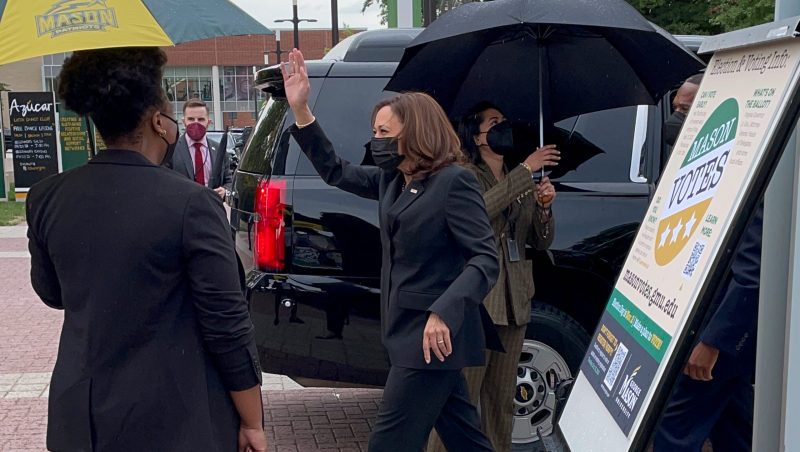
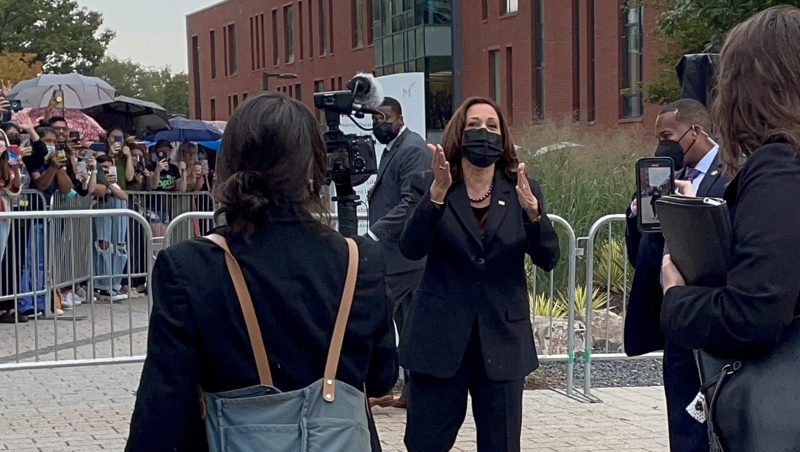
Vice President Kamala Harris greets Mason students at a National Voter Registration Day event on Wilkins Plaza. Photo by: Bryan Childers

FAIRFAX, VA — Vice President Kamala Harris visited George Mason University’s Fairfax campus on Tuesday, September 28th to commemorate National Voter Registration Day and encourage students to vote:

“Democracy is at its strongest when everyone participates.”

“Elections matter. Your organizing ability and your power really matters.”

Watch video of VP Harris’ visit to Mason on C-SPAN: https://www.c-span.org/video/?515012-1/vice-president-harris-commemorates-national-voter-registration-day

Harris began her visit by sitting in on Dr. Samuel Frye’s “Community, Culture, and Change” course (SOCI 395), where she discussed the need to protect voting rights, the history of voter discrimination in America, and the importance of community empowerment through coalition building. “When you vote, it matters, and you get things done…but we need you to stay active because there are so many big issues at play right now and so many rights that are at risk,” Harris told students. “We all have something at stake in this issue…and it’s not about telling people how to vote, it’s just saying that your vote is an expression of your voice and we should never support anything that stifles somebody’s voice or takes their power.”

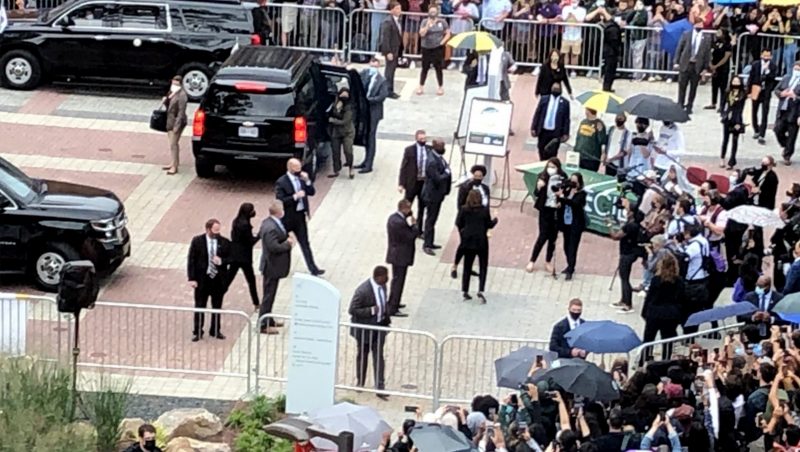
Following the indoor class discussion, Harris made a brief appearance at a National Voter Registration Day event taking place on Wilkins Plaza. “Are you all registered to vote?” she asked the crowd after emerging from her motorcade, holding up a sign promoting voter registration and receiving loud cheers and applause in response.

During an interaction with student leaders at one of the voter registration tables, Mason Votes’ own Bryan Childers asked the vice president for a quote about the importance of voting on behalf of Fourth Estate, Mason’s student-run newspaper:

“It is critically important that everyone registers to vote as an expression of your power as an individual in the context of the collective, to make things happen or not happen in your life. The issues that are at play include whether we are going to support public education, are we going to respect a woman’s right to make decisions about her own body, are we going to have leaders who respect the sanctity of the right to vote and pass the laws that make it easier for people to vote, not more difficult? This is the power of your vote, to determine the outcome of those issues depending on how you vote. But we can’t talk about how you vote unless you register to vote, so let’s start there!”

______________________________________

Are YOU registered to vote?

Virginia’s deadline for registering to vote or verifying/updating an existing registration is Tuesday, October 12, 2021.

Visit elections.virginia.gov/registration to learn more.

Click here to learn more about voter registration and voting as a Mason student >

Click here to learn more about National Voter Registration Day >

______________________________________

Overhead event photo by: Rodger Smith

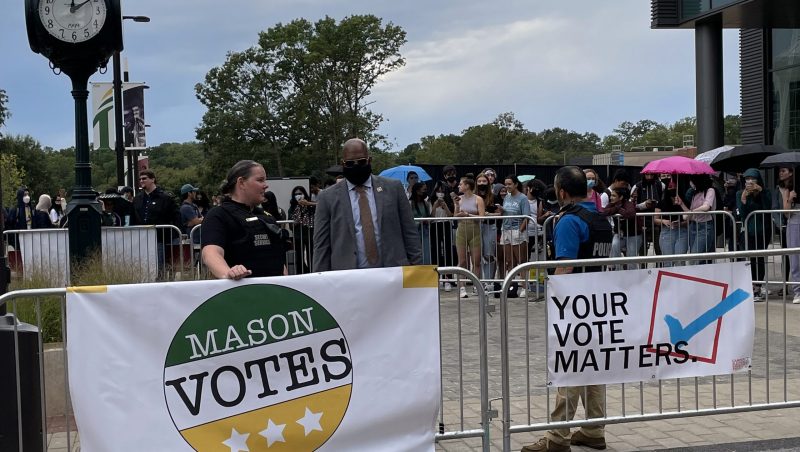
All other photos by: Bryan Childers

Now Recruiting: 2021 Mason Votes Online Editorial Team!

Scan the code above to apply!

Are you a journalist or writer interested in politics, policy, and civic engagement?

Student Media is currently recruiting student journalists to serve on the Mason Votes Online Editorial Team and cover the 2021 election.

Training will be provided and students will receive a $500 scholarship* for their participation if selected.

APPLY NOW: bit.ly/MasonVotesF21

DEADLINE: Friday, September 24th @ 10pm


Questions? Email [email protected]

*Scholarships funded by the Harvey S. Lowe Jr. and Susan Hitchcock-Lowe Foundation.

___________________

2021 Online Editorial Team Scholarship Flyer:


Constitution Day 2021

Constitution Day is Friday, September 17, 2021!

Each year, Americans celebrate the signing of the U.S. Constitution by the founders on September 17, 1787.

Learn more about the Constitution: studentmedia.gmu.edu/constitutionday

___________________

Constitution Day Event Info:

Date: Friday, September 17, 2021

Time/Location: 1-3pm in The Hub 1201 (lower level)

Host: Student Media

RSVP via Mason360: There are now two sessions for this event (1 hour each) to limit capacity and follow safety protocols.

Session 1 (1-2pm): cglink.me/2d7/r1145734

Session 2 (2-3pm): cglink.me/2d7/r1244518

Event Description: Join Student Media as we help the Mason community celebrate the signing of the U.S. Constitution by our founders on September 17, 1787. This annual event features free food, giveaways, games and trivia, and the chance to meet our student leaders and learn more about our student-run media groups!

Check out the Constitution Day resource page to learn more and watch a video of Mason students, faculty, and staff sharing what “We the People…” means to them: https://studentmedia.gmu.edu/constitutionday/

National Voter Registration Day 2021

#NationalVoterRegistrationDay is Tuesday, September 28, 2021!

Are you registered?

Tuesday, October 12, 2021 is the deadline to register to vote or update an existing registration. Learn more: elections.virginia.gov/registration

There’s no time like NOW to make sure you are registered to vote or to update your voter registration with your current address. Visit vote.gov to find out how.

“Every year millions of Americans find themselves unable to vote because they miss a registration deadline, don’t update their registration, or aren’t sure how to register. National Voter Registration Day wants to make sure everyone has the opportunity to vote.”

Virginia residents can learn more and register via elections.virginia.gov/registration

Non-Virginia residents can find guidelines for their state via usa.gov/election-office

2021 qualifications for voter registration in Virginia: US Citizen, resident of Virginia, and 18 years old on or before November 2, 2021 (born on or before November 2, 2003).

Learn more about 2021 election deadlines: https://www.elections.virginia.gov/casting-a-ballot/calendars-schedules/upcoming-elections.html

More info about #NVRD from nationalvoterregistrationday.org: National Voter Registration Day is a national holiday celebrating our democracy. It was first observed in 2012 and has been growing in popularity every year since. Held on the fourth Tuesday of September, National Voter Registration Day will take place on September 28, 2021. The holiday has been endorsed by the National Association of Secretaries of State (NASS). It is further supported by the National Association of State Election Directors (NASED), the U.S. Election Assistance Commission (EAC), and the National Association of Election Officials (The Election Center).

#MasonVotes #VOTE #NationalVoterRegistrationDay

Mason Recognized As “Voter-Friendly Campus”

Strong Student Voter Turnout Earns Mason ‘Voter-Friendly’ Campus Recognition

By: Jeanene Harris, Communication Officer/Mobile Journalist, Office of Communications

This story was originally published on March 17th, 2021.

George Mason University, the largest and most diverse public research university in the Commonwealth of Virginia, was named a “Voter Friendly Campus” as the result of a campus-wide strategy to increase voter turnout. Mason is one of more than 231 colleges and universities across 37 states and the District of Columbia to earn this designation.

“Mason has experienced steady increases in student voter participation over the past decade, so I view this designation as a recognition of that progress and validation that campus-wide initiatives like Mason Votes actually do have a positive impact on civic engagement,” said Jason Hartsel, assistant director of Student Media and communication and marketing faculty member.

Mason students living and registered on campus vote at the University Precinct in Merten Hall, which is in the 11th Congressional District. In November 2020, 347 people voted in the presidential election in the University Precinct.

According to Tufts’ National Study of Learning, Voting and Engagement (NSLVE), Mason voting rates in midterm elections, which typically see much lower turnout than presidential cycles, more than doubled from 2014 to 2018, from 24.6% to 52.4%, respectively, and Mason’s presidential voting turnout exceeded the national average by about 15 percentage points in both 2012 and 2016.

“Voting is so important because we elect individuals who potentially have the power to change our own lives or the lives of other communities,” said Mason Student Body President Shelby Adams. “Being a Voter Friendly campus shows that, as students, we recognize a change needs to come, and we are willing to be a part of that change.”

The Center for Information and Research on Civic Learning and Engagement reports that 52% to 55% percent of voting-eligible young people, ages 18-29, cast a ballot in the 2020 presidential election.

The Voter Friendly Campus designation aims to showcase efforts that help students overcome barriers to participating in the political process and develop a culture of democratic engagement on campus and in the local community. The initiative is led by the national nonpartisan organizations Fair Elections Center’s Campus Vote Project (CVP) and NASPA–Student Affairs Administrators in Higher Education. The designation is valid through December 2022.

Despite the global pandemic, Mason increased its academic collaborations, with the additions of members from the Office of Community Engagement and Civic Learning and Coalition Building and Diversity Education, and partnered with the League of Women Voters and the Fairfax County Board of Elections.

Student Media received a grant from the Parents Fund in Fall 2020 to offer experiential learning scholarships to students serving on the 2020 Mason Votes Online Editorial Team. As a result of more original content offerings, masonvotes.gmu.edu saw a significant increase in web traffic during the 2020 election.

“Students feel passionate about issues like social justice, immigrant rights, gender equality, ballot access, and many others, but implementing positive change in those spaces is only possible through meaningful participation in the political process,” said Hartsel.

Mason Cable Network’s 2020 Live Election Coverage, which was live for about eight hours on Election Day and through 3:30 a.m. the next day, also proved to be successful.

“Not only did we have a successful broadcast that provided meaningful content to the Mason student body, but we blew everyone’s expectations out of the water,” said Mason News Network General Manager Cruz Sanchez.

To encourage long-term civic engagement, Mason established a post-election committee to ensure a safe place to discuss the results of the election and people’s reactions to it.

“No matter the outcome, the committee found it pertinent to establish post-election events to cater to student’s needs,” said Noah Mack, a first-year student in the Schar School of Policy and Government.

Learn more about the “Voter Friendly Campus” initiative at www.voterfriendlycampus.org.

_____________________________________________________________

Click here to read the original article on the George Mason University website.

2021 Dr. Martin Luther King, Jr. Celebration

Join Us for an Evening of Reflection

Mason’s celebration of Rev. Dr. Martin Luther King, Jr. will take place on Thursday, January 28, 2021 from 6-8:30pm with an Evening of Reflection hosted by Coalition Building and Diversity Education.

The keynote speaker will be our very own Dr. Gregory Washington, University President.

The 2021 theme, “The Burning House” represents the current times in our nation of social inequality and unrest. Dr. King stated:

“I’ve come upon something that disturbs me deeply. We have fought hard and long for integration, as I believe we should have, and I know we will win, but I have come to believe that we are integrating into a burning house…”

This theme acknowledges that in some spaces, many voices are often silenced, identities overlooked, and racial and social healing are not sought after. Now, more than ever, it is important that we come together while embodying the values of Dr. King, Jr.

George Mason University is committed to diversity excellence, inclusion and to addressing the hard questions of where we are as a people and nation.

Click here for RSVP links & event details >

This virtual event will also be screened in the Johnson Center Atrium on the Fairfax campus.

Northam Says “Yes” to Marijuana Legalization in Virginia

Racial Justice Advocates Call for Equitable Distribution of Tax Revenue 

By: Zoe Hundertmark, Guest Contributor, COMM 145 (Newspaper Workshop I) Student
Gov. Ralph Northam speaks at a press conference about COVID-19 in April 2020. Photo by: VCU CNS (CC BY-NC 2.0)

November’s election included big wins for the legalization of marijuana and decriminalization of drugs, with a host of ballot measures passing in multiple states.

New Jersey, Arizona, South Dakota, and Montana all passed legislation to legalize marijuana. Mississippi passed legislation to legalize medical marijuana. Oregon legalized psilocybin mushrooms for therapeutic purposes and decriminalized possession of all currently illicit drugs, and Washington, D.C. decriminalized the possession of a wide range of psychedelics.

Following the wave of drug reforms that passed on November 6th, Virginia Governor Ralph Northam announced that he is in full support of the legalization of marijuana in Virginia and is going to propose legislation during next year’s legislative session.

“It’s time to legalize marijuana in Virginia,” said Northam in a November 16th press release. “Our Commonwealth has an opportunity to be the first state in the South to take this step, and we will lead with a focus on equity, public health, and public safety. I look forward to working with the General Assembly to get this right.”

Earlier this year, Virginia passed legislation to decriminalize marijuana, but not to legalize it. Northam made it clear that one of the reasons he is now supporting legislation to legalize marijuana is due to the unequal punishments for marijuana-related crimes among people of color.

When looking at nationwide statistics, white and Black Americans use marijuana products at very similar rates. However, when comparing white and Black Americans in the number of arrests, the number is vastly different. In fact, Black Americans are arrested for cannabis offenses at a rate of nearly 4:1, compared to white Americans.

The ACLU supports the notion that marijuana legalization is a racial justice issue, citing hundreds of thousands of people, the majority of whom are Black or Latinx, impacted by marijuana arrests each year. Furthermore, they stress that the legalization of marijuana needs to also include reparations for the damage the targeted criminalization caused, including the negative stigma, and economic impact that can result from a marijuana conviction.

In addition to increased public support and the economic benefits from potential tax revenue, Northam noted the benefits of marijuana-derived substances in treating children with epilepsy and other disorders he experienced during his time as a pediatric neurologist as a factor that led him to publicly support legalization.

Although the process of legalization could take up to two years before a marijuana market is fully operational, from what Northam has stated, it will eventually take effect. When it does, how will the new source of tax revenue generated from the marijuana market impact Virginia communities?

According to a study conducted by the Joint Legislative Audit & Review Commission, legalization could generate more than $300 million per year in tax revenues by the fifth year of operations and create more than 11,000 jobs.

Mark Gribbin, an analyst with the Joint Legislative Audit & Review Commission, stated that “Virginia could use tax revenue from marijuana sales to further existing community assistance programs.”

Delegate Lee Carter, representing Virginia’s 50th District in the House of Delegates, believes all tax revenue generated from the legalization of marijuana should go towards reparations for Black and Indigenous Virginians: “The impending legalization of cannabis presents an opportunity for Virginia’s government to begin making amends for its complicity and active participation in some of the most horrific human rights abuses in this nation’s history.”

State Senator Jennifer McClellan, representing Virginia’s 9th District, echoed Carter’s comments: “Legalization in Virginia must redress past disproportionality in marijuana enforcement and ensure Black/Brown Virginians have an opportunity to benefit from the new commercial market.”

Olivia Naugle, a legislative analyst for the Marijuana Policy Project (MPP) explained that other states with legalized marijuana reform have used the tax revenue to fund and improve the development of community programs. These programs include public education, mental health and drug abuse prevention services, and dropout and bullying prevention programs.

“MPP strongly urges that states invest a substantial portion of cannabis tax revenue in communities that have been disproportionately impacted by marijuana prohibition and the broader war on drugs,” Olivia said.

It appears that both prominent Virginia politicians and legal experts agree that the revenue generated from the marijuana market should be used to benefit those that were targeted by the criminalization of marijuana and subsequently negatively impacted.

Legislation to legalize marijuana in the Commonwealth will be introduced sometime next year according to Governor Northam, but only time will tell if the Virginia government can create equitable policy on this issue that will benefit the individuals hurt most by years of criminalization.

_____________________________________________________________

Photo by: VCU CNS (CC BY-NC 2.0) cropped