Election 2020 Interviews with Mason Students
By: Nadia Faour, Mason Votes 2020 Online Editorial Team
Video edited by: Zach Hamilton
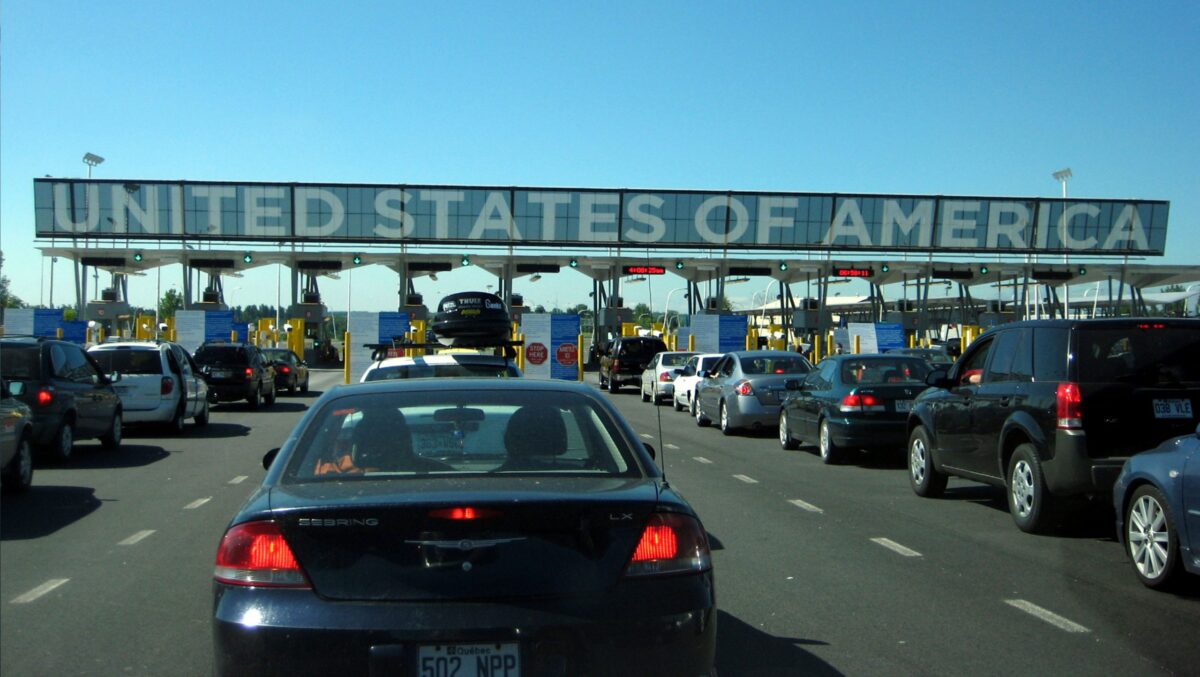

With November 3rd coming up in just 4 days, a key issue shaping voter preferences in the 2020 presidential election is immigration. President Trump and Vice President Biden have a vastly different view on immigration policy in regard to paths to citizenship, ICE, and overall views of immigrant’s place in the United States economy.
President Trump is known to put great emphasis on immigration and has been speaking on his immigration policy goals since the day he announced his first presidential campaign. Nearly four years later, President Trump still intends to crack down hard on immigration and limit the number of immigrants coming to the United States, particularly through the southern border.
Biden puts less emphasis on strict border laws and wants to transition into a less restrictive agenda than that of Trump.
A signature issue in the Trump administration has been strenuous border security. The implementation of a southern border wall is one of president Trump’s central policies goals in hopes of lowering the number of undocumented immigrants crossing the border.
Neither Biden nor Trump are in favor of decriminalizing illegal crossing of the border, although Biden has promised to lower the number of border related criminal prosecutions.
Vice President Biden opposes a wall at the southern border, instead supporting “screening procedures at our legal ports of entry and investing in new technology.”
During the second and final presidential debate, President Trump heavily criticized the ‘catch and release’ policy. Vice President Biden pointed out that the ‘catch and release’ was beneficial for immigrant families seeking a hearing on their case. President trump called ‘catch and release’ a “disaster.”
The two candidates also differ immensely on their views of the Deferred Action for Childhood Arrivals (DACA) program. This program began accepting applicants under the Obama/Biden administration back in 2012. In 2017, President Trump announced his strong opposition to DACA and announced plans to terminate the program. Trump has said he would reject the acceptance of DACA applicants, while the Biden campaign has discussed reinstating and expanding the DACA program to include protections for parents of Dreamers and eligibility for student financial aid. Biden has emphasized the positive impact that the DACA program has had on the economy and wants to invest in the future by further continuing the program.
Access to asylum in the United States is another big factor in immigration policy. The Trump administration has implemented ‘migrant protection protocols’ which limit the number of immigrants seeking asylum. Biden has stated he will end that practice and expand the number of immigrants able to enter the country to seek asylum.
The COVID-19 pandemic has necessitated changes to immigration policy to prevent international virus spread. The Trump administration has eliminated many immigration programs and terminated many cases of new immigrants seeking entry or asylum. The long-term economic effects of these actions are unknown and a point of disagreement among the two presidential candidates. Biden’s campaign has constantly put an emphasis on the importance of immigrant’s role in the U.S. economy, but has not explicitly stated how they plan to tackle the spread of COVID-19 while being able to keep immigration a key factor of the economy.
_____________________________________________________________


The COVID-19 pandemic, otherwise known as the coronavirus, has quickly become the dominant issue of Election 2020 and a perpetual cause of argument and tension among everyday Americans.
The fight over face masks, conflicting reports from White House officials, xenophobic finger-pointing during a global a health crisis (President Trump repeatedly refers to COVID-19 as “the China virus”), and a general politicization of the pandemic underscores an increasingly troubling divide not just in U.S. politics, but in the country’s cultural marrow.
A stark example occurred last May, when a heavily armed group of men stormed the Michigan State Capitol to retaliate against Democratic Governor Whitmer’s state-wide lockdown, a public health measure which inspired rallies across the country where many (if not most) of the participants refused to wear masks or to practice safe social distancing as an act of protest.
As the number of nationwide cases is again steadily increasing, President Trump is doubling-down on rhetoric that seeks to underplay the dangers of the virus, discredit health care and infectious disease professionals who have been working to curtail its spread, and highlight overly-optimistic promises of an imminent COVID-19 vaccine without citing data to reinforce his claims. Most scientists, including CDC Director Dr. Robert Redfield, caution that the earliest a vaccine might be available to the general public is “the second or third quarter” of 2021.
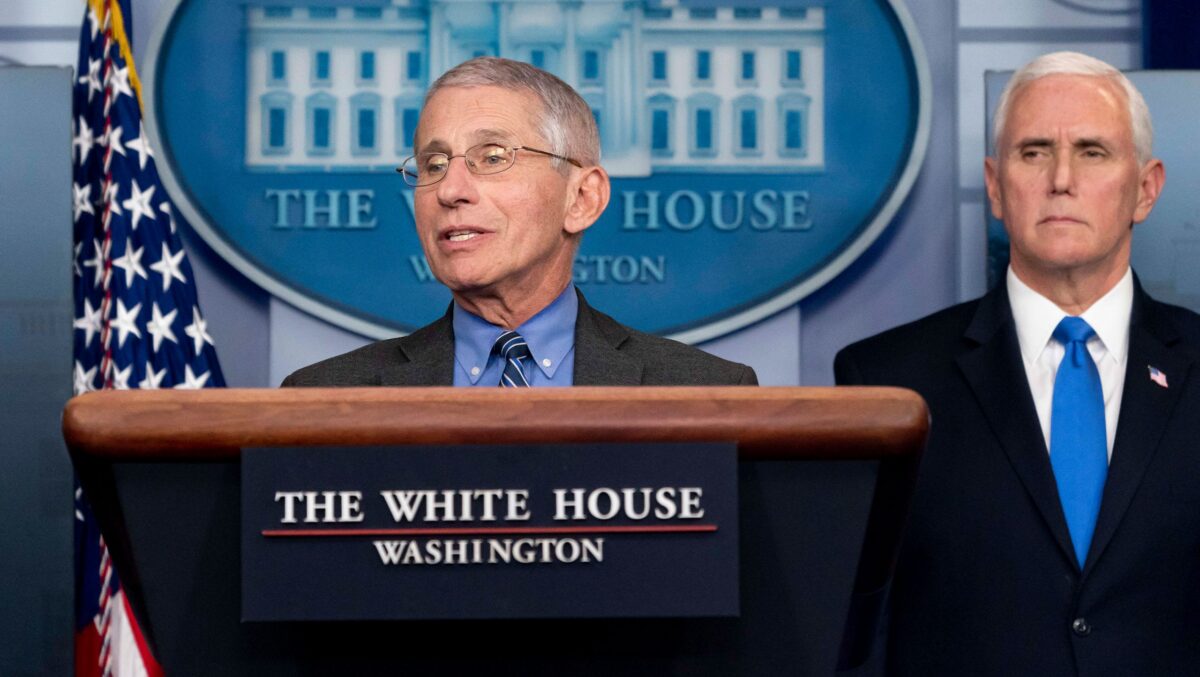
Dr. Anthony Fauci, a physician and immunologist who has served as the director of the National Institute of Allergy and Infectious Diseases for decades, was recently interviewed by Dr. Jon LaPook for a “60 Minutes” segment during which several topics were discussed, almost all of them tying into the country’s struggle with the pandemic.
One recurring thread throughout the “60 Minutes” interview appeared to be, as Dr. Fauci put it, the growing theme of “anti-authority” across the world, adding that, “Science has an air of authority to it. So people who want to push back on authority tend to…push back on science.”
Specifically, he believes that the overarching conflict between the White House and health care professionals has less to do with the President being “anti-science” and more to do with his desire to create an outward display of strength and resilience (which tends to happen at honesty’s expense).
Dr. Fauci pointed out how, historically, the President “sometimes equates wearing a mask with weakness.”
What makes this rift in perspective even more apparent and immediate is a political ad run by the Trump campaign in early October which used Dr. Fauci’s words out of context and without his consent. In the ad Dr. Fauci can be heard saying, “I can’t imagine that anybody could be doing more,” but Dr. Fauci has since shared his side of the story, stating that he was referring to the work the Coronavirus Task Force was doing earlier this year and that it was not an endorsement of the President’s response to the pandemic. According to CBS, the Trump campaign continued to broadcast the ad throughout key swing states, including Michigan, despite Dr. Fauci’s clarification.
Public health policy grounded in science is the only way to successfully combat a pandemic, but months of political gamesmanship has undermined trust in Dr. Fauci and science itself, leaving the nation divided on which recommendations to follow and vulnerable to an invisible enemy that respects neither ideology nor party affiliation.
Since the COVID-19 pandemic was declared a national emergency in March of this year, over 225,000 American lives have been lost, with the current number of confirmed cases nearing nine million.
Currently, there is no approved vaccine.
_____________________________________________________________
Official White House Photo by D. Myles Cullen (Public Domain 1.0)
As the election draws near, Americans are voting early in record numbers.
Kimberly MacVaugh (Policy and Government Librarian, Arlington Campus Library) and Christopher Lowder (Online Learning Assistant, University Libraries) co-hosted an online workshop on Thursday, October 22nd to inform Mason students on how to engage with their government through “everyday advocacy.”
From the workshop description: “Continue engaging with your elected officials. From local, to state and national leaders, make sure they know what issues matter to you…through everyday advocacy methods such as contacting your representatives, following developing policy, and joining community organizations.”
_____________________________________________________________
Q: For the students who attended your workshop, were they more interested in discussing or learning more about being activists after the election?
A: [Christopher] The workshop was focused on identifying issues that students care about and concrete ways that students can engage with officials who can influence these issues. Of course, we gave information about how Virginia is organized politically and how to find your members of Congress; you have to know how a system works before you can be active in it.
Q: Are there any upcoming election-related events sponsored by the Library that students should know about?
A: [Kimberly] If there’s interest we may revisit this workshop on how to get involved in your community after the election. The slides from our two-part October series: “Guide to Voting” and “Beyond the Ballot Box” are available for review on our site: infoguides.gmu.edu/vote/workshop
Q: We are 11 days away from the election and many students have already voted. What should students reading this article do next?
A: [Christopher] First off, we think it’s wonderful that so many students are interested in voting in this election cycle. So, cheers to those who have voted already. For those reading this article, I would suggest taking time for themselves and paying attention to their local environments. Thanksgiving is coming up, and a lot of organizations need volunteer support.
A: [Kimberly] We are so proud of the Mason community and its high rates of voting and civic engagement! Christopher and I want students to know there are plenty of important ways to stay involved in your community, state, and country “beyond the ballot box.” You can see my library guide for some links to local and national options to get started: infoguides.gmu.edu/vote/civic
Q: What advice would you give students who feel their voices do not matter after the results of the upcoming election?
A: [Christopher] My first advice would be to take care of yourself. I was an undergraduate student during the 2016 election, emotions were high the day after the election. Then, I would say that elections are not one and done. If you want change, you continue to vote every year and you get involved. Look at history and look around you, people can make a change.
A: [Kimberly] Please try hard not to despair—action happens in your own community and we’ve seen recent examples of students having a big impact on their campuses and well beyond, on issues like climate change, racial injustice, police reform, immigration, and higher education, to name just a few. Electing leaders is just a small part of the process and important volunteering and community activism happens year-round.
Q: Why is it important for students to continue to engage with their government after this election?
A: [Christopher] Even when elections are not happening, students have a chance to make change and lend their voices to action. We have seen this happen around the country and around the globe. Voting is such an important right, but involvement does not end there. Students are affected by governmental decisions, and they should let their officials know what they care about.
A: [Kimberly] Exactly what Christopher said—decisions are being made locally as well as nationally, and they happen day in and day out. The Virginia General Assembly, for example, passes laws that affect George Mason University’s budget and students. The Fairfax City Council makes ordinances that affect students’ housing. Elected leaders are our “representatives” and it’s important to hold them accountable to represent you once they’re in office.
Q: What tips would you give students reading this article about 1) contacting their representatives, 2) following developing policies, and 3) joining community organizations.
A: [Kimberly] Elected officials and community leaders want to hear from you! Your voice is really critical and I would recommend thinking about some issues that affect you and/or are important to you particularly. Figure out what bills and proposed policies are being put forward by your representatives and let them know how you feel. An email, call, or letter goes a very long way, especially at the local level.
A: [Christopher] My tip would be that even the small things matter. Politics can be confusing, but civic engagement does make a difference. Kim made a great guide to sort out the clutter of information, but the biggest challenge is often taking the first step.
Q: Anything else that you would want to tell students about the upcoming election or becoming an activist that was not answered above?
A: [Christopher] I would encourage students to make a plan to vote or remember to turn in their ballots first and foremost. Also, students need to know that they can do things to affect change. Even something as simple as writing a personal email to a city representative can make a change.
A: [Kimberly] You might not be aware that the library has so many great resources to help you learn more about your elected representatives and government and to help research policy issues that matter to you personally. You don’t need to have a paper due to check out our tools and databases and use them for your own advocacy! And I’m here to help, so be in touch anytime.
_____________________________________________________________
Contact Kimberly ([email protected]) or Christopher (clowder[email protected]) if you’d like to learn more about the resources offered by University Libraries!


President Trump and his challenger, former Vice President Joe Biden, wrapped up the final debate of the 2020 general election season in Nashville, TN on Thursday night.
Moderator Kristen Welker of NBC News, in a welcomed change from the previous debate, kept the debate stage orderly and civil, ensuring each candidate respected the other’s time to speak.
Welker’s strong moderation, combined with the introduction of a backstage mute button in case either candidate broke the rules and interrupted, allowed each to go further in depth with some of their proposals and plans.
The COVID-19 pandemic, a topic that has dominated this campaign, was once again discussed by both of the candidates. With cases rising in over 30 of 50 states, and no sign of another relief bill in Congress, this was the opening topic and an opportunity for both candidates to lay out their plans for the nation to navigate a potential rise in cases throughout the winter months and beyond.
Pressed on his response to the pandemic, Trump reaffirmed his message that the administration has done its best against the virus and worked to make the case that Americans have to continue on with their lives and not remain in isolation.
In a rare reversal, however, Trump walked back some of his early comments on the pandemic after being pressed on them by both the moderator and Biden, saying, “Excuse me, I take, I take full responsibility. It’s not my fault that it came here,” while in the same breath doubling down on his anti-China rhetoric: “It’s China’s fault. And you know what? It’s not Joe’s fault that it came here either. It’s China’s fault.”
Biden countered this response, emphasizing the death toll and its impact on American families: “Number 1, he says that we’re, you know, we’re learning to live with it. People are learning to die with it.”
The battle over healthcare resumed again in this debate. With each candidate possessing very different views on healthcare solutions for Americans, they both wanted to highlight the differences each administration would have when it comes to enacting policies in this area.
Trump opened by emphasizing his administration’s accomplishment of rolling back the individual mandate of the Affordable Care Act (ACA), labeling it as “no good” and reaffirming his commitment to protecting Americans with preexisting conditions. Trump chose not to go into any further detail on what a healthcare plan would look like in his administration, despite multiple promises of one over the past four years of his term. He instead used the rest of his time to contrast himself with Biden on healthcare, claiming that Biden supports Medicare-for-All, a proposal championed by Biden’s primary challenger Senator Bernie Sanders (I-VT).
Biden countered saying “I support private insurance” and said of the improvements he would propose to the ACA, “it’ll become Bidencare. Not one single person with private insurance would lose their insurance under my plan.” He also discussed his plans to build on the ACA and strengthen it with a public option for those who do not qualify for state Medicaid.
_____________________________________________________________
Read a full transcript and watch clips from the debate from USA Today: www.usatoday.com/story/news/politics/elections/2020/10/23/debate-transcript-trump-biden-final-presidential-debate-nashville/3740152001/
_____________________________________________________________
Virginia is offering early voting from now until 7pm on Election Day, Tuesday, November 3rd. Click here to learn more about early voting locations and more >
_____________________________________________________________
As election night looms a mere eleven days away, we were able to sit down with Dr. Jennifer Nicoll Victor from the Schar School of Policy and Government and hear her perspective and predictions regarding election night and the integrity of the election:
Q: What do you think will be the biggest issue between election day and finding out the actual winner of the presidential election?
A: I suspect the election results will be finalized within 1-3 days of the election. Some concerns have been raised about election result being long delayed, but I think this is unlikely because although the number of voters using mail-in voting this year is quite high, most states will begin processing and/or counting their ballots received before Election Day. The only instance in which the results would be long delayed is if the election outcome hinges on a state whose vote counting process is very slow, or if many absentee ballots are received late (it takes much longer to process absentee ballots than those cast in-person). Most states are making preparations for the vote count, and polls are suggestion the election may not be all that close. If this is the case, the result will be known not too long after polls close.
Some have expressed concern that if Democrats tend to vote by mail, and Republicans tend to vote in person, and in-person returns are reported first, then it might appear that Donald Trump is ahead or a projected winner, but that Joe Biden may be the declared winner when all votes are tallied.
Folks with the concern have suggested that Trump supporters may struggle to accept a Biden win if their candidate appeared, at first, ahead. While I think we should all be concerned about Americans’ tendency to accept election results, the country has a long history of generally doing so, even in close or upset elections. Should many people express distrust in the election outcome it would be a destabilizing situation, but I don’t think that’s likely.
Even if those disappointed in the outcome organize, protest, or demonstrate, they may ultimately accept the outcome.
Q: Do you think there is anything that can be done now to prevent it or make it better?
A: Note that there is a difference between a projected outcome, on election night, and actual vote results. Projected results are based on exit polls and algorithms. Media outlets use them to make calls but use conservative criteria. It is possible but not likely for actual results to differ from these. Actual results are reported by secretaries of states’ offices and are publicly available.
Q: How do you think the news media will affect election results and the process compared to citizens on social media?
A: Information flying on social media will be largely drawn from the mainstream media sources. Misinformation is more likely to spread on social media.
Q: Even before Covid-19 and the current economy, this election was going to be very contentious especially after 2016’s election where Clinton won the popular vote by 3 million people. How do you think the pandemic and multiple current crisis the US is facing right now will affect the election and it’s integrity?
A: Voting is more difficult because of the pandemic, but many states have made adjustments to their election administration to account for added health precautions and to making voting easier.
_____________________________________________________________
Dr. Victor is moderating a virtual discussion of potential outcomes of the 2020 election on Tuesday, October 27th at 6:30pm. Click here to RSVP and learn more about this upcoming event >

_____________________________________________________________
Photo by Ron Aira/Creative Services
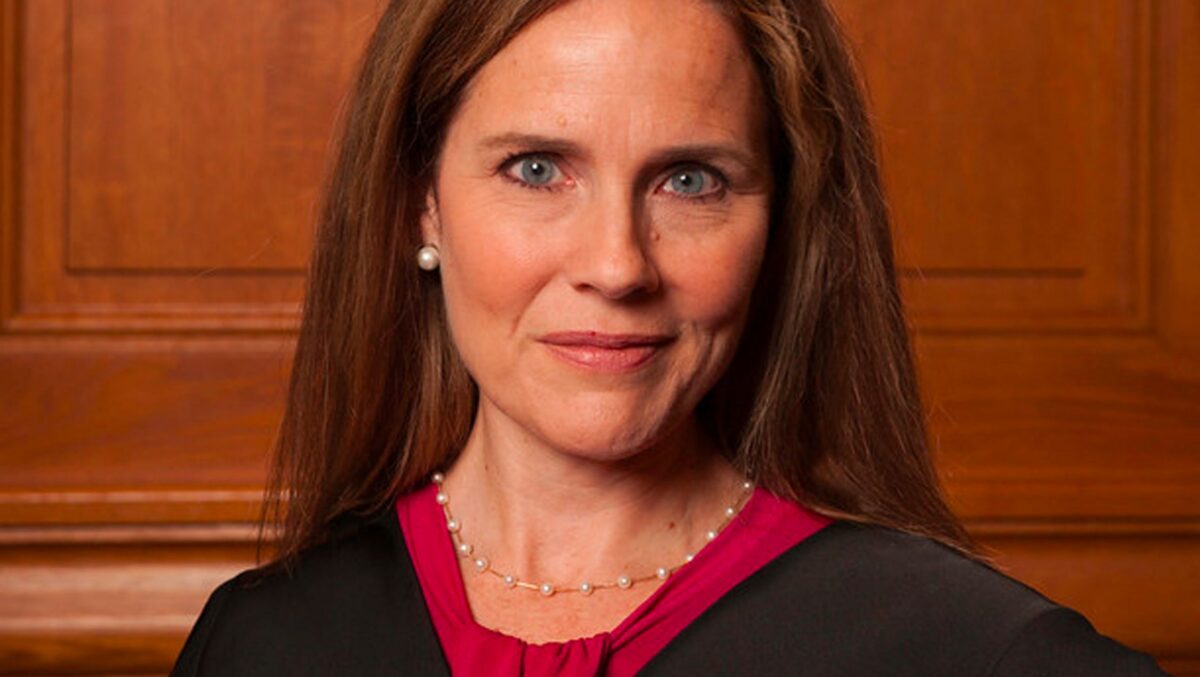

Amy Coney Barrett’s confirmation vote to join the Supreme Court got one step closer today as Democrats boycotted the Judiciary Committee’s voice vote to send her nomination to the floor of the Senate. Even though the final day of Barrett’s testimony before the Republican-led committee was last week, it is important for the Mason community to get as much insight into the process as possible.
The third day of hearings for Justice Kavanaugh two years ago was contentious as a scandal surrounding his previous conduct became the center of his nomination, but historically Barrett’s final day of questioning was more true to form. Though conducting hearings on her nomination was a clear flip-flop by the GOP Senators on the committee, a point made by Democrats throughout this process and on the first day of hearings, things were notably calmer than the Kavanaugh process.
Judge Barrett had a few rough moments on the dais, particularly with Senator Ben Sasse (R-NE) during questioning about the first amendment. When the junior senator from Nebraska asked the appellate judge to list the five freedoms protected under the first amendment, she hesitated twice:
“Speech, religion, press, assembly… Speech, press, religion, assembly…,” she answered, counting them off with her right hand. “I don’t know. What am I missing?”
“Redress or protest,” Sasse answered.
Sasse was attempting to throw the nominee a softball question, but the issue that he was addressing was on how the first amendment is made of interconnecting freedoms. Nevertheless, the fleeting moment was brushed off by Republicans immediately and became an attack line for Democratic pundits as the day continued.
It was a telling moment, however, for many as a constitutionalist nominee from a school of thought so dominated by the text of the constitution and played into later questioning about the nominee’s judicial philosophy.
Democrats made an effort to discuss the environment, healthcare, and the upcoming election. In recent days, this has become a particularly salient line of questioning as Judge Barrett has been particularly vague on her judicial styling; only saying that she was an independent mind aligned with the late Justice Antonin Scalia. The judge has expressed her independence repeatedly throughout the hearings, but has been notably sheepish on positions or contrasts between herself and Justice Scalia.
Beyond that philosophical question, the judge was also sheepish on her stance regarding the court’s role in elections. Judge Barrett was an associate on the 2000 Supreme Court case, Bush v. Gore and, if confirmed, would be the third justice on the highest court to have served as counsel to President Bush in that polarizing election. Similarly, she would not answer questions on the separation of migrant children from their families from Senator Booker (D-NJ).
Other questions are still unanswered about Barrett, who, prior to her initial nomination to the Seventh Circuit Court of Appeals, was only in private practice for two years and never tried a case nor argued an appeal.
Mason Votes will continue to follow this nomination as it leads to certain confirmation in the next week.
_____________________________________________________________
