Mason Votes

2014 Voter Guide for Virginia Senate Race

Follow the link to download the voter guide from Campus Election Engagement Project to find out more information on the 2014 Virginia senate candidates: 2014 Virginia Senate Race

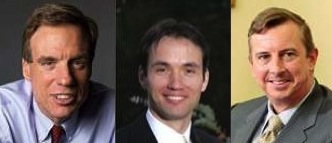
The Virginia senate candidates include:


Santorum Drops Out of Republican Primary Race

In a surprise announcement, Rick Santorum dropped out of the race for the Republican primary bid today at an event in Gettysburg, Pa.

Santorum had previously pledged to continue through the primaries until the Pennsylvania primary, which will be held on April 24, but reconsidered today after poll numbers show that he was not ahead in the polls in his home state. His daughter Bella’s ailing health was also cited as a reason for his withdrawal from the race.

According to Yahoo News, Santorum called Mitt Romney to inform him of his decision to pull out.

With Santorum gone, Romney, Newt Gingrich and Ron Paul are the only three candidates left in the primaries. Gingrich, who is millions of dollars in debt from his campaign, said that Romney is “far and away the most likely” Republican nominee.

Paul, who has trailed behind in the polls, is adamant that he will stay in the race until the end. In an interview with Piers Morgan, Paul reiterated his stance.

Uninformed Consent: The other Republican plan to give Mason students the shaft

Nasty stuff happens when you let other people think for you. Especially if those people happen to be House Speaker John Boehner and his allies, who are still mourning the death of a bill this month that would have let them approve the Keystone Pipeline XL.

But every Mason student should be dancing on the bill’s grave.

The Keystone Pipeline XL is an anti-green project, and when I say “green” I mean your money.

According to an independent study by Cornell University, if Keystone XL is ever built, your gas could cost you between 10 and 20 cents more per gallon.

Speaker Boehner would prefer you didn’t know that.

“We can’t wait for this project to get started,” Boehner wrote in a recent letter to President Obama.

Boehner is happy to let the public think that this project is a brand new pipeline and a solution to high gas prices.

What Mr. Boehner isn’t telling you is that the Keystone Pipeline already exists.

The Keystone Pipeline was built almost two years ago. As you read this, it’s moving oil cheaply from a source in Canada to refineries in Illinois and Nebraska. Without that oil, your gas would be even more expensive.

Boehner doesn’t want you to know that, because he’s part of a plan to ship that oil overseas.

This plan is called, “The Keystone XL project.” If approved, the project will allow the pipeline’s owner, TransCanada Corp., to extend the already-built Keystone Pipeline all the way to Texas. Oil once bound for refineries in the heartland will end up in two major ports, Houston and Port Arthur.

Then it’s just a short boat ride through the Gulf of Mexico and/or the Panama Canal, and suddenly we’re paying a lot more for gas here in Fairfax.

Keystone XL demonstration, White House, 8-23-20
Keystone XL demonstration, White House,8-23-2011 Photo Credit: Josh Lopez (Photo credit: Wikipedia)

Canadian oil companies don’t like that the Keystone has made your gas cheaper. Extending the pipeline to ports means they can sell the gas to other countries instead, creating an artificial shortage here that will only end when you’re willing to devote whole paychecks to your fuel tank.

The oil will be exported, it’s a free market.

American corporations find it profitable to export 1.6 million barrels of oil out of the country every day. Canadian oil companies aren’t going to feel guilty doing the same.

John Boehner and company won’t feel guilty either: I’ll close by clarifying their motives.

By reading this article, you know more about The Keystone XL project than most Americans. If Boehner exploits that ignorance carefully, it could translate into a Republican victory in a tough election year.

Let’s not forget the money. TransCanada and the oil companies who use Keystone are publicly traded corporations.

If you’re a wealthy politician like John Boehner, you could make a fortune buying stock now and selling it after you help approve the Keystone XL scheme.

But what if you’re a regular Mason student? All Keystone XL offers you is higher gas prices.

Join the fight to keep your gas affordable. This issue will resurface and the pro-Mason side needs to refortify its defenses. Call Jim Webb, the VA Senator who joined Boehner on this issue. Tell him you know what’s up, that you’re not fooled. Tell him that Mason students think with their brains, and not with their Boehners.

Enhanced by Zemanta

Students less excited about upcoming presidential election

At a politically charged school such as Mason, the excitement for the 2012 election should be visible.

For the 2008 election, there was an increase of young voters. Many Mason students were excited to vote, many for the first time.

This election may not attract the same attention.

“No one’s talking about it,” said Mallory Wuhrer, a Mason senior and communication major. “I’m sure people will talk about it in the fall when it kicks into gear, but not now.”

Some students appear to be frustrated with the entire election process.

“The American public has so little trust in our government,” said Kate Gohari a senior and government major. “We’re in gridlock right now. Nobody is coming together.”

Other students already know who they will vote for, regardless of the Republican nominee.

“I will be voting for Obama in the upcoming election,” said Alyssa Rajabi, a junior and communication major. “It seems like there isn’t a Republican candidate worthy enough of holding office.”

Mason strives to help students stay informed about the election, regardless of their political affiliation.

“Mason Votes provides a platform for student opinion and commentary on political issues,” said Colleen Wilson, a sophomore and communication major.

Wilson is an editor at Mason Votes, a student organization that updates students about election news.

“The point is less on how Mason Votes will get students out to the polls, and more on a reflection of the young perspective on political issues.”

To stay informed about election news, visit masonvotes.gmu.edu.


Profile: Rick Santorum

Born in Great Falls, Virginia, Rick Santorum is a former U.S. Senator for Pennsylvania. He was first elected to the House of Representatives in 1990 and won a Senate seat four years later.

Since losing his bid for a third term in office in 2006, he has worked as a Fox News correspondent and written for The Philadelphia Inquirer. He also served for eight years on the Senate Armed Forces Committee.

He is a rising star in the Republican Party and a favorite among social conservatives.

With his wife Karen, he has seven children.

Sources: New York Times, RickSantorum.com

Enhanced by Zemanta

Profile: Ron Paul

Born in Pittsburgh, Pennsylvania, Congressman Ron Paul of Texas is making his third bid for president. He got his B.S. from Gettysburg College and his M.D. from Duke University in 1961. After graduating from college, he served as a flight surgeon in the U.S. Air Force. Before being elected to Congress during a special election in 1976, he worked as an obstetrics and gynecology physician.

He worked in Congress from 1976-77 and 1979-85 before leaving to return to his medical practice. In 1997, he returned to Congress, where he now serves. He has announced his intentions to retire from Congress after his current term.

In his first campaign to become President of the United States in 1988, Paul ran as the Libertarian presidential nominee, but he has run under the Republican party for both of his subsequent attempts.

He and his wife Carol have five children, eighteen grandchildren and four great-grandchildren.

Sources: MSNBC, RonPaul2012.com

Enhanced by Zemanta

A History of Virginia in Votes

By Student Media Technology Manager Aram Zucker-Scharff

Virginia, as one of the original 13 colonies, has had a long history when it comes to presidential elections.

At its peak, 1792, Virginia controlled 15.9 percent of the nation’s total electoral votes. With a count of 25 electoral votes, Virginia had more than any other single state.

From the formation of the modern Democratic Party in 1828 until 1856, Virginia’s declining number of electoral votes went blue. Then in 1860, Virginia voted for John Bell of the Constitutional Union party. That would be the last time the state would vote for a US president until 1872. During that time, the commonwealth was embroiled in the Civil War.

After the war, the race was between Ulysses S. Grant, general, and Horace Greeley, editor of the New York Tribune. In 1872, Virginia, now with 11 electoral votes, down from a Pre-Civil War count of 15, fell to Grant, a Republican, who solidly beat out Greeley’s self-formed Liberal Republican Party.

For the next 13 elections, Virginia was once again a Democratic mainstay. However, in 1928, the Republican candidate from California, Herbert Hoover, won Virginia along with 58.2 percent of the popular vote. The state would fall from 12 to 11 electoral votes. It would be another 24 years before Virginia voted Republican again.

In 1952, Virginia, now back at 12 electoral votes, hitched itself to a winner, America’s star general Dwight “Ike” Eisenhower, a Republican. For the next 56 years, except for a flirtation that helped Democrat Lyndon “LBJ” Johnson win the 1964 election, Virginia fell solidly in the corner of the Republican Party.

Since 1992, Virginia has had 13 electoral votes, and in 7 out of the last 10 elections Virginia has been on the winning side.

In the 2004 presidential election, 54 percent of Virginia voted Republican, for George W. Bush. However, this election, it seems that nothing is certain. Three out of the four major polls list Barack Obama ahead in Virginia, but none by more then 5 percentage points, with the greatest estimate of Obama’s lead being 50 percent, in a Sept. 29th poll. NBC’s latest poll, from Sept. 25th, gives a 3 point lead to John McCain and none of the polls are definitive, with a significant enough percentage of swing voters to move the state to McCain’s column in all but the two Rasmussen polls.

This year may mark the end of a trend of almost a half-century of a red Virginia, but at this point, nothing is certain. As the race continues, one thing is sure, Virginia’s status as a battleground state in this election makes it a valuable prize for either side, be sure to expect plenty of courting.