Mason Votes

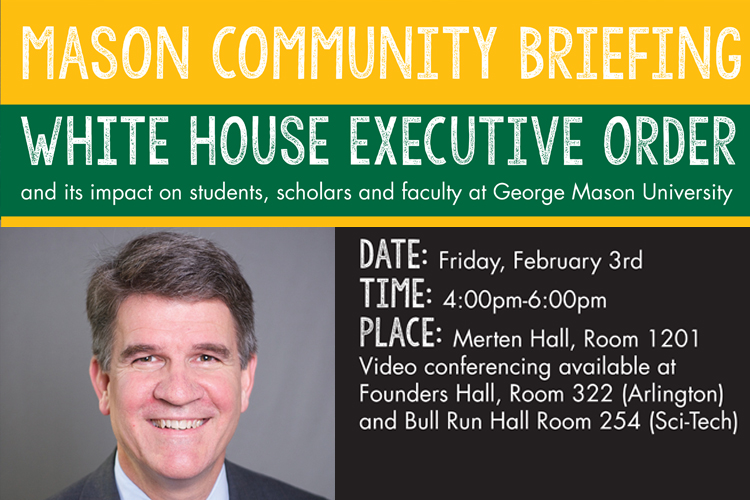
Mason Community Briefing: White House Executive Orders

Mason Community Briefing: White House Executive Orders and the Impact on Students, Scholars and Faculty at George Mason University

Friday, February 3, 2017  |  4-6pm  |  Merten Hall 1201

Video conferencing available at Founders Hall, Room 322 (Arlington) and Bull Run Hall Room 254 (Sci-Tech)

RhoadsGuest Presenter: Mark B. Rhoads
Attorney at Law and Member, American Immigration Lawyers Association
McCandlish Holton Law Firm

The briefing will be followed by a Q&A period.

Please join us, all are welcome.


Executive Order Summary:

On January 27, 2017, the new administration issued an Executive Order which suspends “entry into the United States” of individuals who hold passports from Iran, Iraq, Libya, Somalia, Sudan, Syria and Yemen for 90 days (and possibly longer) . The affected individuals include the following:

  • Individual who hold passports from these listed countries and who have or want to apply for nonimmigrant visas to enter the US;
  • dual citizens who hold passports from one of the listed countries, and refugees from these listed countries

The Executive Order specifically does not bar travel for those traveling on diplomatic visas (A visas), NATO visas, C-2 visas for travel to the United Nations, and G-1, G-2, G-3 and G-4 visas; they may, for the time being, continue to travel and to return to the United States without restriction.

There are a number of lawsuits already filed which challenge the legality of the Executive Order, and several federal courts have issued Temporary Restraining Orders ruling that the Executive Order appears to violate constitutional principles as well as the Immigration and Nationality Act.  The situation is fluid, and subject to change at any time.

For additional help, a resource in Washington, D.C.:

Simon Sandoval-Moshenberg, Director of Immigration Advocacy, Legal Aid Center in Washington, D.C.

703.778.3450, [email protected]

Global Inauguration Conversation

16114369_10154634128263429_7723236725585954170_n

Global Inauguration Conversation
Thursday, February 2nd | 5-7pm | Dewberry Hall

Join Women & Gender Studies, INTO Mason, Office of International Programs and Services, and University Life for a conversation on the implications of the inauguration on international students and the globe. Refreshments will be served.

Learn more: www.facebook.com/events/357752164611650/

How Did Mason Vote?

trump-electedIn case you haven’t heard, Donald J. Trump is officially President-Elect and will take office on Friday, January 20, 2017.

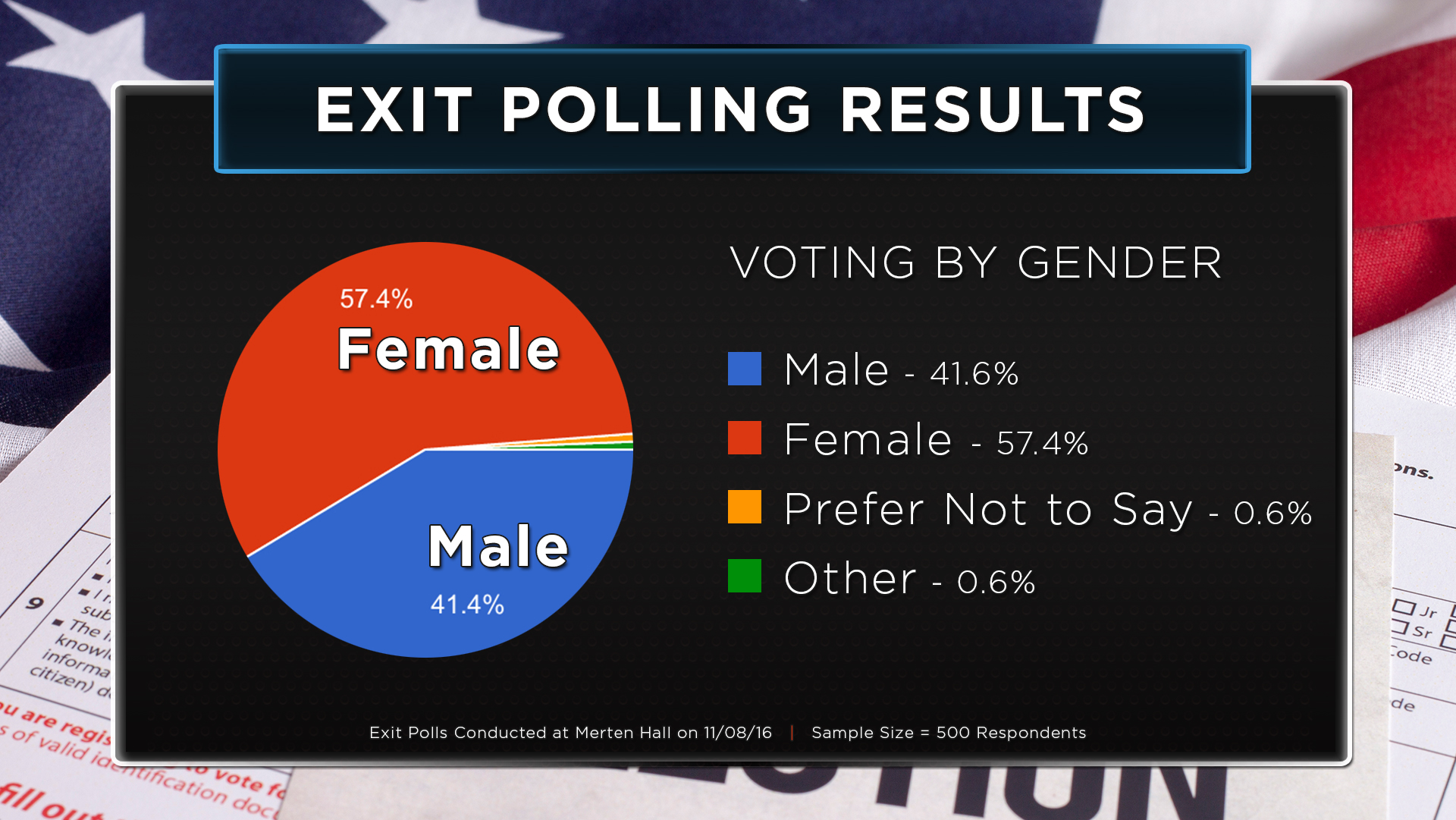
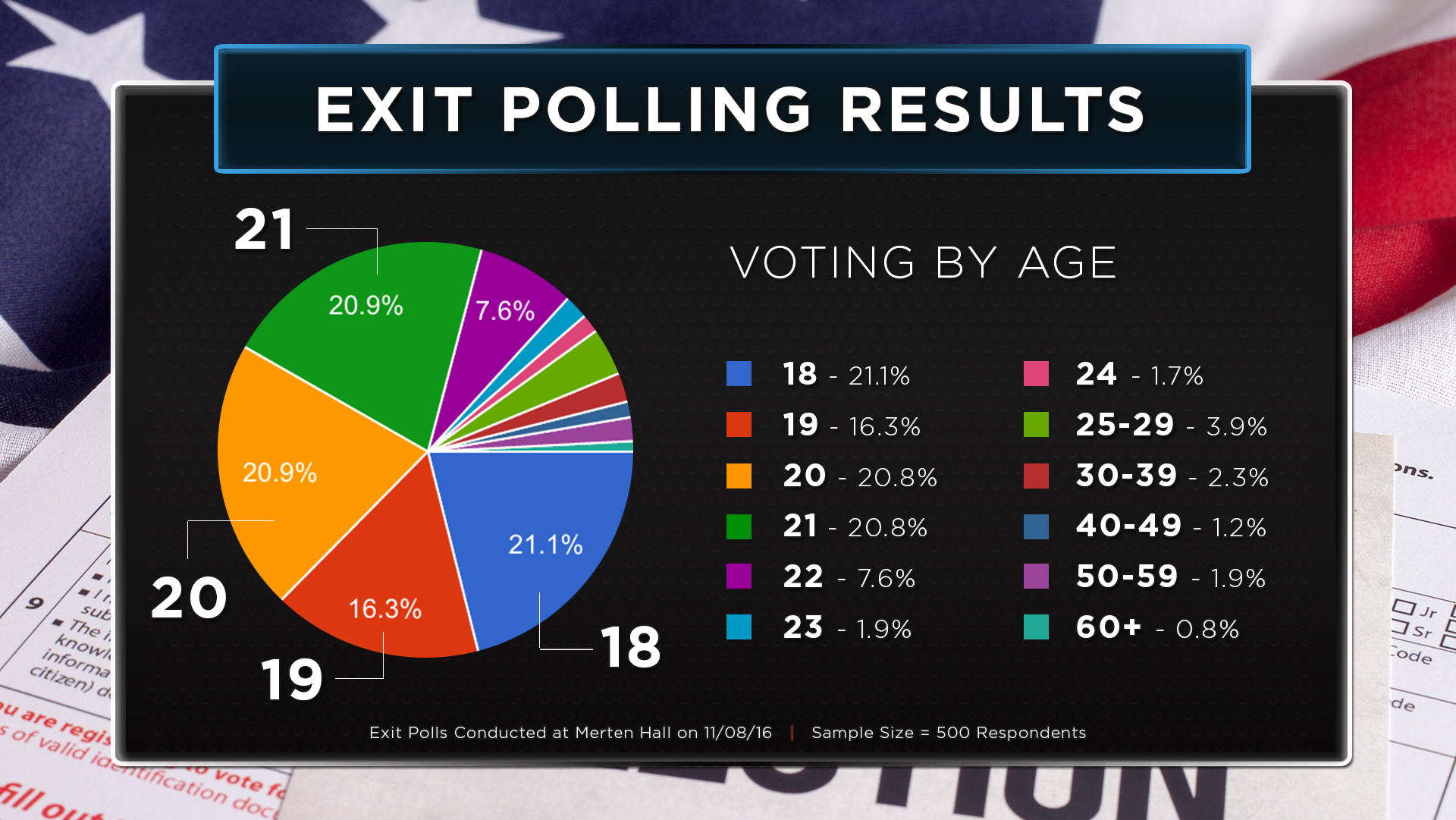
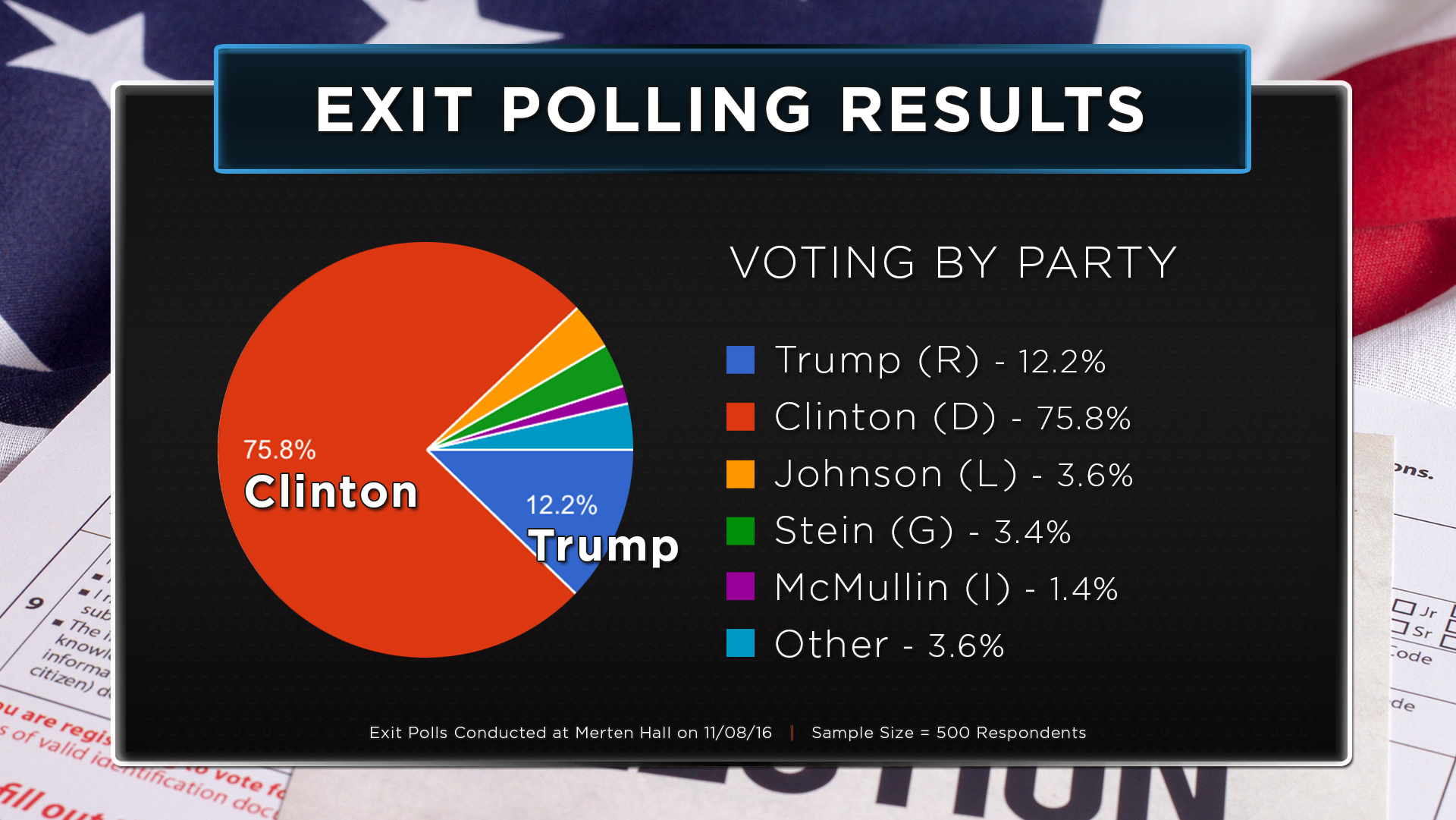
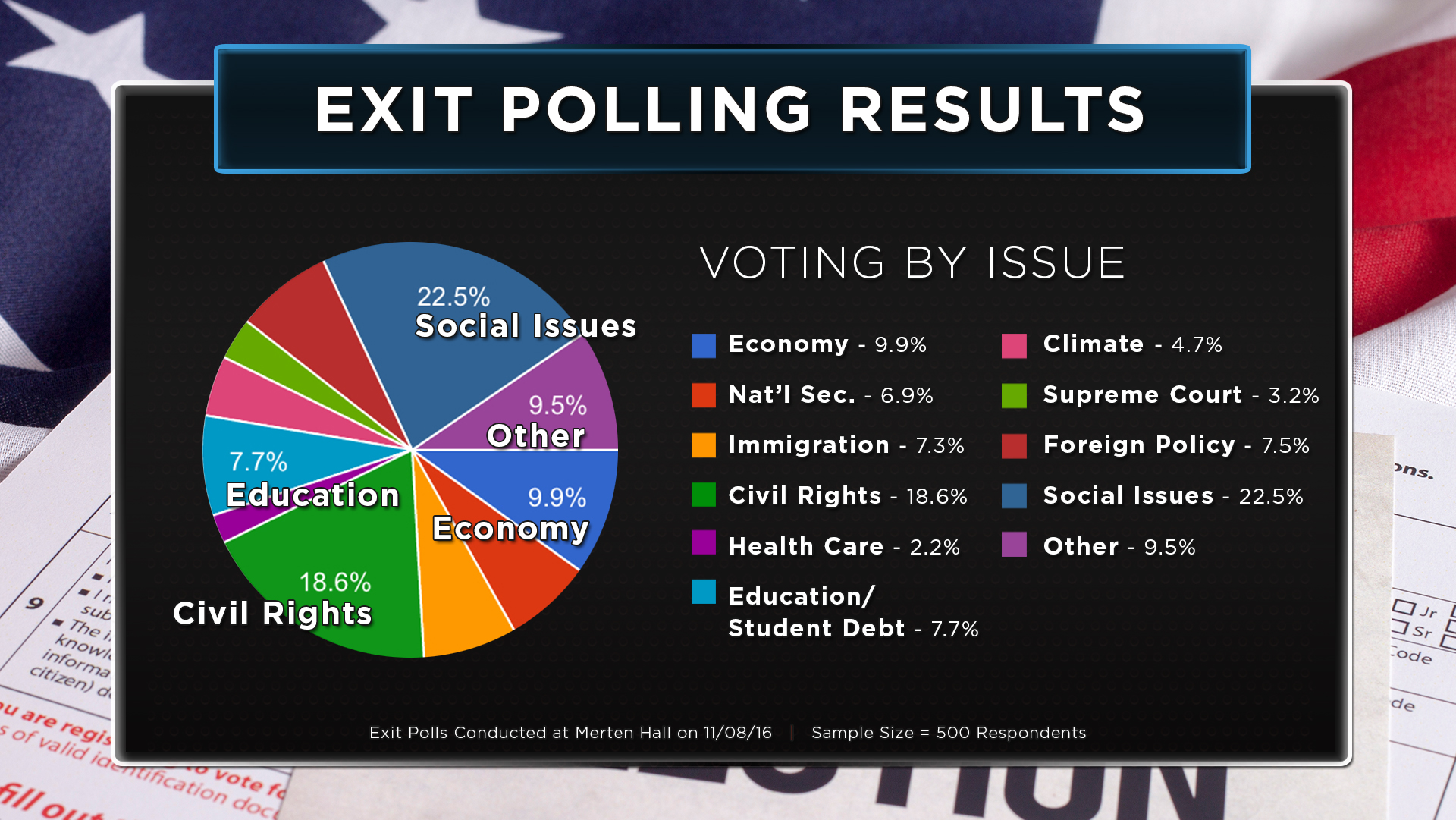
Curious about how George Mason University students voted in Election 2016? Check out Student Media’s exit polling data below.

We surveyed 500 students outside the Merten Hall polling place on Election Day, November 8, 2016.

gender_2016

age_2016class_2016party_2016issues_2016Candidate Illustration by: Mary Jane DeCarlo

Biden, Kaine Rally Voters At Mason

biden_2

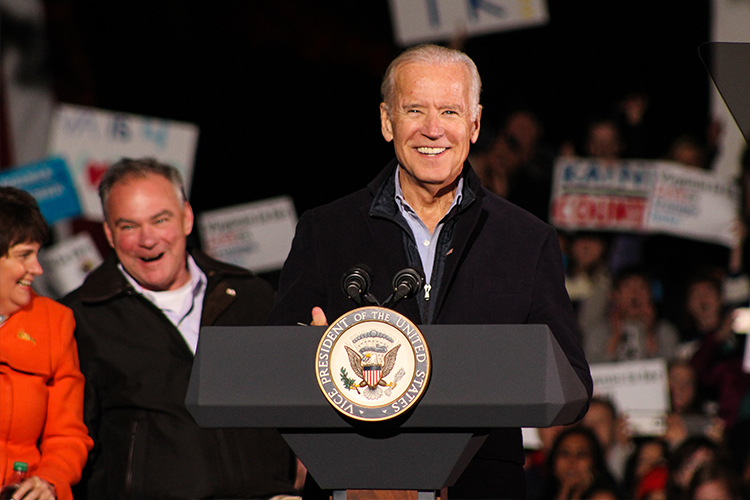
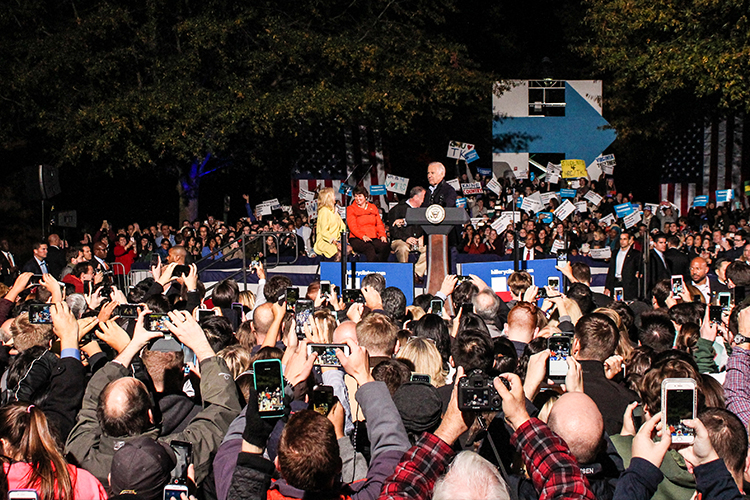
Tim Kaine and Joe Biden: Stronger Together on North Plaza

By: Victoria David

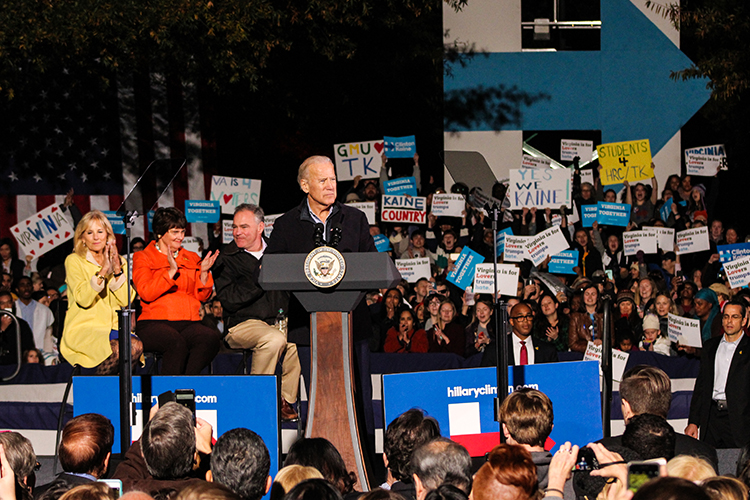
Tim Kaine and his wife, Anne Holton, chose Mason as the place to rally voters one last time in his state of Virginia on the eve of this historic election. Vice President Joe Biden and his wife, Dr. Jill Biden, joined the Kaine’s on their visit to Mason’s Fairfax campus. The Democratic vice presidential candidate delivered a strong speech, as did Vice President Biden, affirming their belief that Hillary Clinton is the best choice for America’s future and highlighting the importance of Virginia in the presidential race.

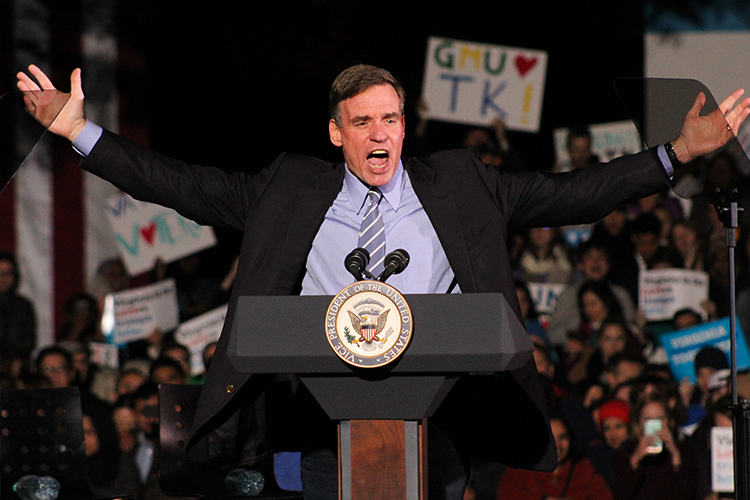
Former VA Governor and current U.S. Senator Mark Warner greets the crowd on North Plaza.

People started lining up in the cold three hours before the doors opened. Dozens of people were not able to make it in. Although this event was not sponsored by Mason, the line appeared to be made up of a great number of students. The supporters we met – mostly registered democrats – were all very excited to see Tim Kaine and Joe Biden speak “live.”

It was the first rally for many of them, like Louise Alliver, who had been supporting Hillary Clinton for 12 years. “I expect to lose my voice for cheering so much,” she told us.

After three hours and numerous speakers – among them former Virginia Governor and current Senator Mark Warner, congressional hopeful Lu Ann Benett, and incumbent Congressman Gerry Connolly – Joe Biden and Tim Kaine finally arrived on stage with their wives in front of a cheering and impatient audience.

The current Vice President opened the show, reminding the audience that he ended the 2012 campaign with Tim Kaine. In a speech focusing on unity and respect, Joe Biden took a realistic stance, stressing “the hard truths that this election tells about our country.”

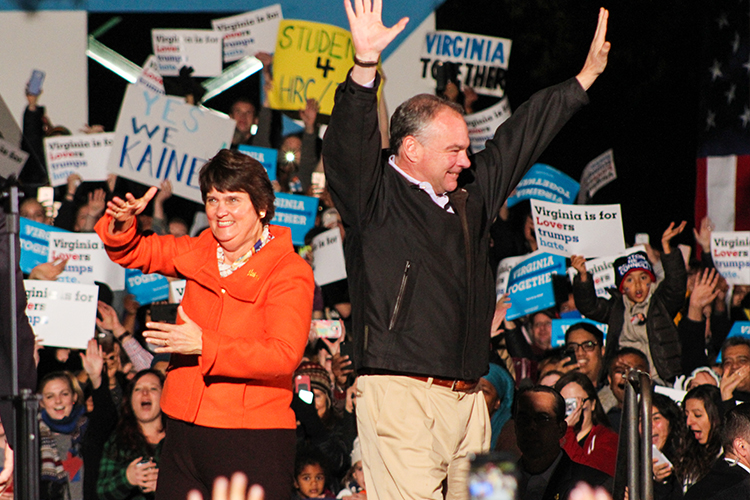
VP nominee Tim Kaine and wife Anne Holton wave to supporters at Monday night's rally.
VP nominee Tim Kaine and wife Anne Holton wave to supporters at Monday night’s rally.

“We have to bring this country together when tomorrow is over. We are going to treat each other with respect, we can’t keep tearing each other apart. We have to take a look at what drove the other side. We have to start seeing each other again.”

He also insisted on “the power of our example,” saying that “we have to send this signal to the world, we never bend, we never bow, we never break.”

“We’re America, there’s nothing that can stop us,” he repeated, before letting Tim Kaine step in, as in a move to pass the torch.

The vice presidential Democratic candidate started off saying how glad he was to be at George Mason to finish his campaign. “Anything I am good at, you all have taught me,” he told his fellow Virginians.

After praising Joe Biden, he went on to explain his excitement to be Hillary Clinton’s running mate. “I was also a Civil Rights lawyer, like her. We are pro-equality people. We have got to be stronger together,” he said.

Tim Kaine used her fight for a comprehensive health care when she was first lady to prove her resilience. “She wouldn’t back down, she wouldn’t go away and give up. Don’t you want this in the office?” he asked the cheering crowd. He then tackled the importance of Virginia in the race, recalling Virginia history and the state’s “scar tissue”.

“Women right to vote was ratified in spite of Virginia. In 2008, a lot of people thought Virginia wouldn’t be there. We surprised them. Tomorrow we have a chance to do that again. The moment she will win, women will say ‘I can do the same.’”

“Let’s make history Virginia,” he concluded, in a last effort to stress the Virginia’s significance and get out the vote in his home state.

kaine-crowd_1All of our interviewees, without exception, said it has been a “rough” campaign. Among them, Gabby, Cameron, and their friends. Although they were high schoolers, they had been following the campaign closely. A campaign Cameron saw as “negative” with “so many negative attacks and lots of racist and misogynistic language.” “We’re waiting for all to be over,” he added. When asked about Hillary Clinton’s email controversy, none of them seemed really impacted by it. Hailey May said it has never been a reason why she “didn’t support her.” “I’m tired of the emails to be honest,” she claimed, echoing the thoughts of many people in the audience.

Lauren Short, Noelle McCutcheon, and Michelle Kelly have all been long-time supporters of Hillary Clinton. Lauren has been “supporting her since she was First Lady.” “We all knew she’d be President one day,” she said, “because she is extremely intelligent, determined and has proven that what’s important to her is important to me.” “She is willing to unite people instead of dividing them, and I think this is important at a time when people are angry,” Noelle explained. Michelle, for her part, told us that “when Obama won in 2012, [she] knew [she] was ready for Hillary.” Why? “Because she stands for sound policies that are aligned with my beliefs”, she answered. All of them felt confident about the results and Lauren was even on her way “to go buy champagne so [she] has it ready to pop tomorrow night.”
Jonathan Garcia Calderon is a Mason student who used to support Bernie Sanders and endorsed Hillary Clinton after she got the nomination, which was the case for quite a number of people in the audience. “The fact that Bernie Sanders supported her helped. I think he should have been the Democratic nominee, he admitted, but I still believe in her because her policies tie in with my values.” When asked about this election, Jonathan said he was amazed by the involvement of (young) people this year: “it’s awesome that we’re all getting involved, it’s our civic duty.”

Supporters fill North Plaza to hear Democrats rally in support of Hillary Clinton.

For Camron Fareedi, a 16-year-old American whose parents were born in Pakistan, it is crucial to beat Donald Trump because of his “Islamophobia”. “I was supporting Bernie Sanders but she’s the democratic nominee and Trump’s policies against Muslims are terrible,” he told us holding a “Pakistanis for Hillary” sign.

Theodore – seven years old – and Zachari – ten years old – did not seem to mind waiting for hours in the cold as long as it was to support the Democratic ticket and attend their first political rally. “It’s going to be cool to have a first woman President, she is a good person. I am very excited about tonight, I followed the campaign, it was very interesting,” Zachari told us. Mark, their father, is a registered democrat: “It’s been a historically strange and crazy campaign but I am excited about her. I think she is going to be a better President than a lot people expect her to be,” he explained.

Supporters seemed delighted when they finally exited North Plaza. “We loved it. We could’ve dressed a little warmer but apart from that our expectations were fully met,” Dagon and Sarah Shaldon told us. Caren McDonald thought it was “wonderful.”

This last rally on-campus closed out an unprecedentedly rough and negative campaign that will see its final conclusion tonight as America renders its decision on Campaign 2016.

Photos by: Mimi Albano

On-Campus Political Groups Ready for Election Day

young-polsBy: Victoria David

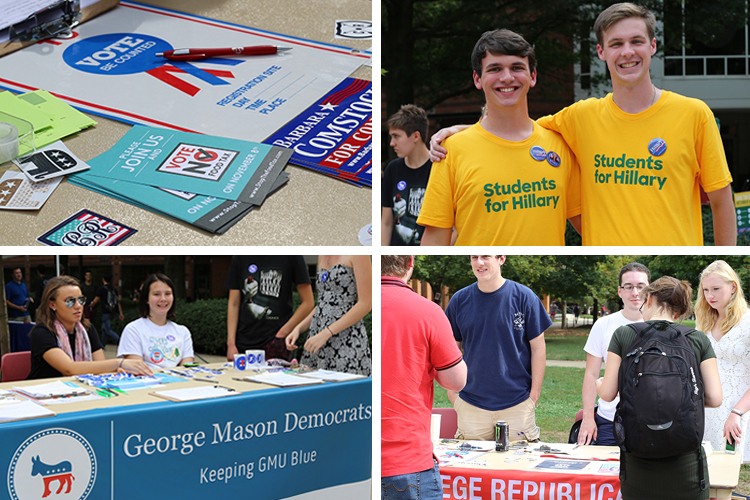
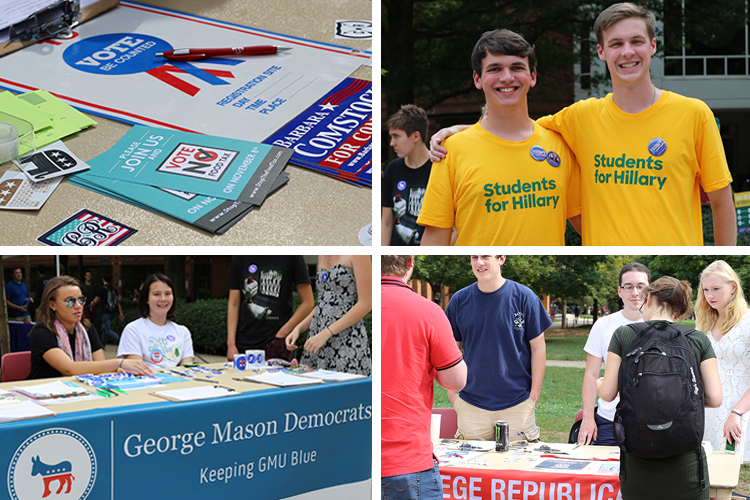
The 2016 Elections are not just on playing out on TV. They are also happening right here, on Mason’s campus. The two major party-affiliated student-run political organizations on campus, Mason Democrats and College Republicans, have been working for months to promote their candidates, share their ideas, and, above all, encourage people to vote on November 8th.

We interviewed Danni Gonyo, Field Director of the Mason Democrats, and Colin Sapko, President of the College Republicans, to learn more about their respective groups and opinions on this historic election.

“It is not up to one of us to tell.”

Junior Colin Sapko
Junior Colin Sapko

When asked about the campaign so far, Colin Sapko says it has been “an exciting time on both sides.” Although he emphasizes that Donald Trump didn’t even make the top three student choices in the Mason precinct’s mock primary, he thinks that the on-campus organization is “ready to move forward.”

“We want to focus on what matters for students, what is going to have a big impact on them, like the meals tax and the right to work laws,” Sapko says.

But the issue of the presidential election cannot be avoided. When it comes to Republican nominee Donald Trump, their position is as clear as it can be given the delicate context they find themselves in: “His personality definitely takes away a lot from the issues. But it is important that we elect a conservative candidate, especially given the impact it will have on the Supreme Court.”

He acknowledges the current controversies and the fact that it was not their “number one choice” while making clear that people are going to make their own decision in the end. “It is not up to one of us to tell.”

Sophomore Danni Gonyo

On the Democratic side, Danni Gonyo thinks Hillary Clinton is running a “fantastic” campaign focused on “positivity and civility.” When asked about Clinton’s perceived lack of appeal among young voters, she thinks that there has been a large increase in support recently, especially since Trump’s “nasty woman” comment made during the final debate.

Although the on-campus organization leans more towards progressive side of the party than the official Democratic platform, it claims to represent a wide range of opinions. “We had members who supported all the candidates during the primary season, even Martin O’Malley!” Gonyo says. The same goes for the College Republicans, which wants everyone to “feel welcome”.

Both organizations have from 50 to 60 active members that come to their weekly meetings.

“We have the same goal: make sure that college students are heard.”

For this very special election year, both organizations have been busy conducting voter registration drives, canvassing, calling local voters, and hosting events on campus. But the heart of their activities remains networking and providing crucial opportunities for students who want to get involved.

Despite the fierce partisanship of this election cycle, both student organizations — Democrat and Republican — were able to work hand in hand to encourage students and community members to register to vote in a non-partisan manner.

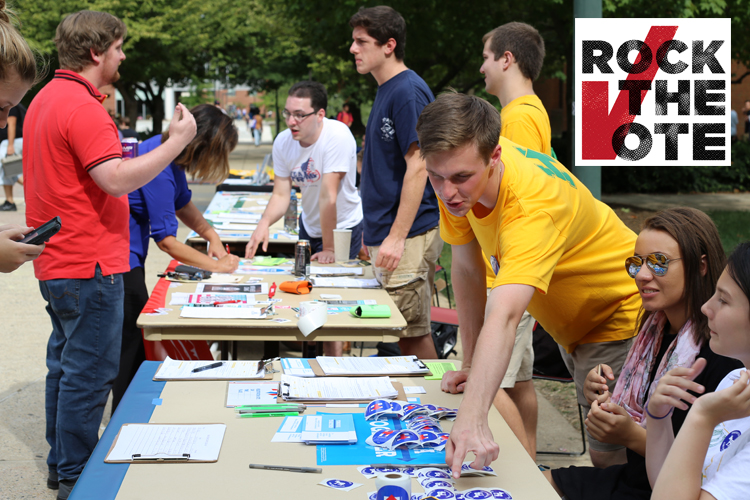
Both organizations worked together to host a Rock the Vote event in October.
Democrats and Republicans worked together to host a Rock the Vote event in October.

The two groups came together for a Rock the Vote event in October, an example of the bipartisan work that is getting done on campus. “We have the same goals, we want to make sure that college students are heard. We understand where each side is coming from and we try to create a good and positive atmosphere,” says Sapko. Gonyo agrees on this point, saying that the Democrats strongly believe that who someone votes for doesn’t matter, all that matters is that they vote.

Both organizations have planned a lot of events on Election Day, especially with Get Out the Vote efforts that are completely non-partisan. They will, for instance, be handing out sample ballots to inform students on the issues that are on the ballot this year. The Fairfax Meals Tax referendum especially matters for both groups, although their positions diverge.

The proposed Meals Tax referendum that will appear on ballots in Fairfax is a measure that would, if passed, have concrete consequences on the daily lives of students. The measure would authorize the Board of Supervisors to levy a meals tax “at a rate not to exceed four percent” on prepared food and beverages.

Looking ahead, the on-campus elephants and donkeys are beginning to shift their focus towards the gubernatorial election that will take place next fall. They are also trying to partner with other organizations on campus. College Republicans are in the process of signing up a philanthropy partnership with CUFI. Mason Democrats are looking to partner with other RSOs and will be joining the Roosevelt Institute and other organizations for a Jeffersonian Dinner the weekend before Election Day.

Mason Votes reached out to third party organizations on campus but did not get a response before deadline.

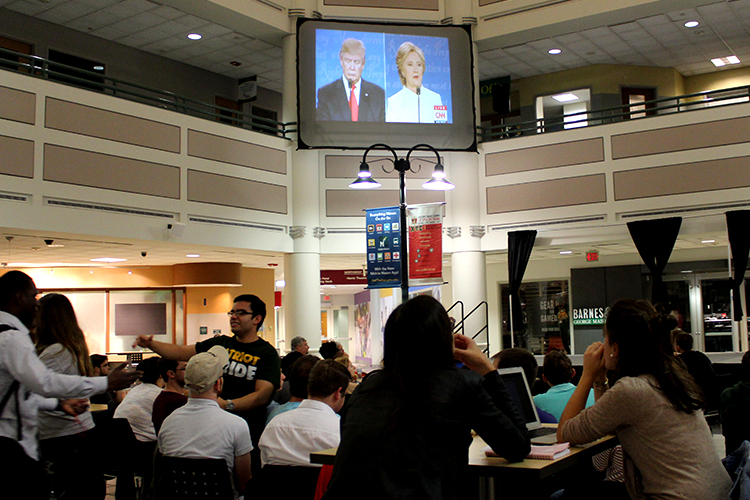
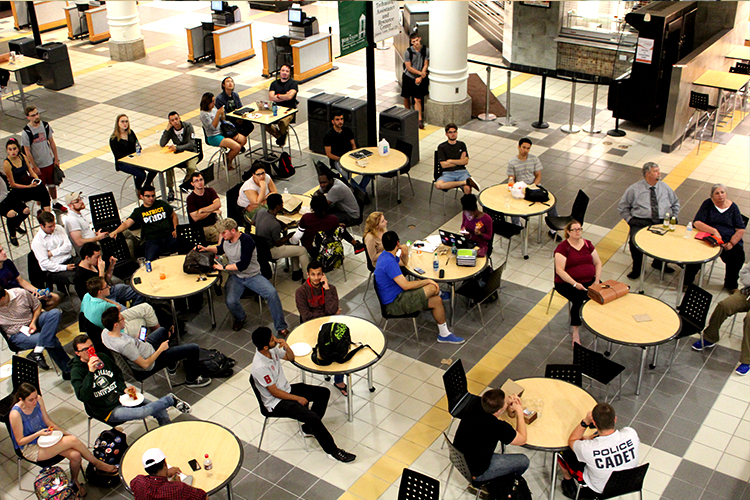
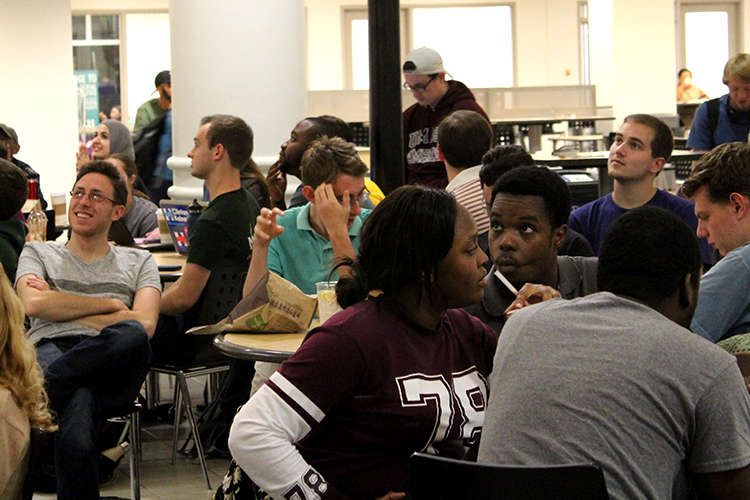
Campus Debate Watch #3

Photo Gallery: Mason students gather in the Johnson Center Atrium to watch the final presidential debate of 2016 on Wednesday, October 19th.

Photos by: Mimi Albano

How Much Do You Know? Take Our 2016 Policy Quiz

By: Victoria David

Last Wednesday’s third and final Presidential Debate Watch Party hosted by Mason Votes was the perfect opportunity to interview the Mason community to find out how much they knew about the candidates and issues of Election 2016. Scroll down for the Mason Votes’ Election 2016 Policy Quiz.

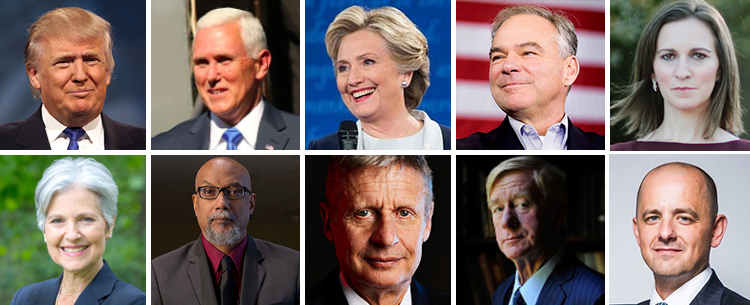
The Candidates:all-candidates


Top Row: Trump, Pence, Clinton, Kaine, Finn. Bottom Row: Stein, Baraka, Johnson, Weld, McMullin.

Donald Trump (R) and Hillary Clinton (D) are two of the most recognizable people on earth, but what about the vice presidential and third party candidates?

Most students knew about vice presidential candidates Tim Kaine (D) and Mike Pence (R), although some were confused about which party’s ticket each was associated with.

However, when it came to third party candidates Jill Stein (Green) and Gary Johnson (Libertarian), nearly half of the students we interviewed had no idea who they even were.

Not to mention independent conservative presidential candidate Evan McMullin (I), whose name recognition was roughly one in ten. If you’re not sure who I’m talking about, McMullin is a former CIA operative and House GOP Chief Policy Director who announced his independent candidacy back in August, pitching himself to voters as an alternative to the main party candidates intent on bringing “a new generation of leadership to Washington.”

The third party running mates fared even worse. No one was able to identify Stein, Johnson, or McMullin’s vice presidential running mates (Ajamu Baraka, Bill Weld, and Mindy Finn respectively).

Now you’ll be able to shine the next time your family’s dinnertime discussion gets political!


The Issues:

With most of the media coverage and debates overwhelmed by outsized personalities and the “state of the race,” it can be difficult for voters to keep track of where each candidate stands on the actual issues that are facing our country. To learn more, check out Mason Votes’ recent post on third party candidate platforms and CEEP’s nonpartisan policy guide.

On the issues, all of the students I interviewed knew Donald Trump’s plan to deal with illegal immigration. Most of them were also able to articulate his position on taxes.

However, Trump’s views on the Transpacific Partnership, as well as Hillary Clinton’s stance on Obamacare and illegal immigration were more than obscure to a great number of the Patriots I met.

Think you can do better? Whether you can recite the candidates’ positions and platforms by heart or you have no idea what I’ve been talking about, take our Election 2016 Policy Quiz to find out how much you actually know!


Mason Votes’ Election 2016 Policy Quiz

1. How does Donald Trump plan to deal with illegal immigration coming from Mexico?

(a) Give U.S. citizenship to all Mexican immigrants.

(b) Negotiate a treaty with Mexico establishing quotas.

(c) Build a wall.


2. How is Hillary Clinton planning to grow the economy?

(a) Reducing taxes.

(b) Investing more in infrastructure.

(c) Injecting money in the government through her foundation.


3. According to Jill Stein, should the death penalty be allowed?

(a) Yes, and every single state should resort to it.

(b) No, the death penalty should be abolished.

(c) It should be up to the states to decide.


4. Does Donald Trump think human activity is causing climate change?

(a) No.

(b) Yes.

(c) Only Chinese activity is causing climate change.


5. How would Gary Johnson create jobs?

(a) By investing in renewable energies.

(b) By increasing the government’s investment in small businesses.

(c) By eliminating corporate income tax.


6. What does Hillary Clinton want to do with Obamacare?

(a) Repeal it.

(b) Defend, fix, and expand it.

(c) Replace it with another set of reforms.


7. What is Donald Trump position on gay marriage?

(a) A constitutional amendment should be passed in order to ban gay marriage.

(b) Now that the Supreme Court has spoken, it is better to leave it that way.

(c) He would appoint justices that would reverse the Supreme Court’s decision and let states decide for themselves.


8. Regarding guns, Evan McMullin thinks that:

(a) The right to bear arms is a crucial right, but guns should be kept out of the wrong hands.

(b) The Second Amendment should be repealed and Americans should not be allowed to have guns.

(c) There should be no gun control whatsoever. Every single person, without exception, should be able to buy a gun.


9. What is Hillary Clinton’s stance on Marijuana?

(a) Legalize it nationwide through federal legislation.

(b) It is up to the states to decide whether or not they want to legalize it.

(c) It should be illegal in every single state.


10. “If I want to knock a story off the front page, I just change my hairstyle.” Who said this?

(a) Donald Trump.

(b) Gary Johnson.

(c) Hillary Clinton.


Answers: 1-C; 2-B; 3-B; 4-A; 5-C; 6-B; 7-C; 8-A; 9-B; 10-C

Miley @ Mason: A (Democratic) Party In the USA

miley_1A (Democratic) Party In the USA

By: Taylor Wichtendahl, Fourth Estate Staff Writer

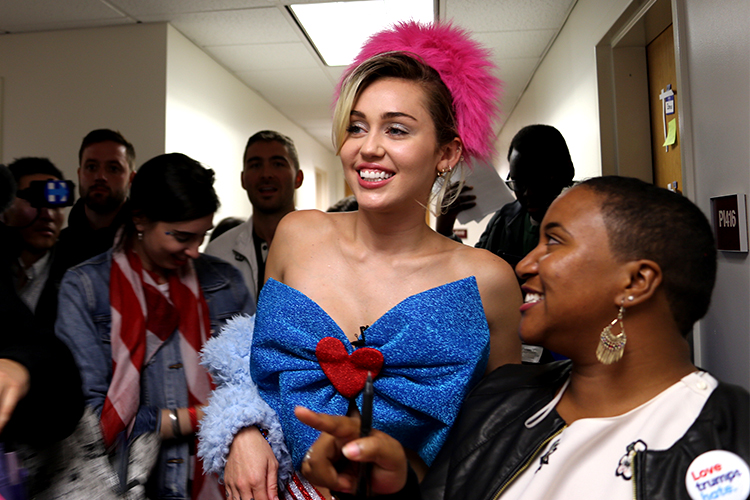
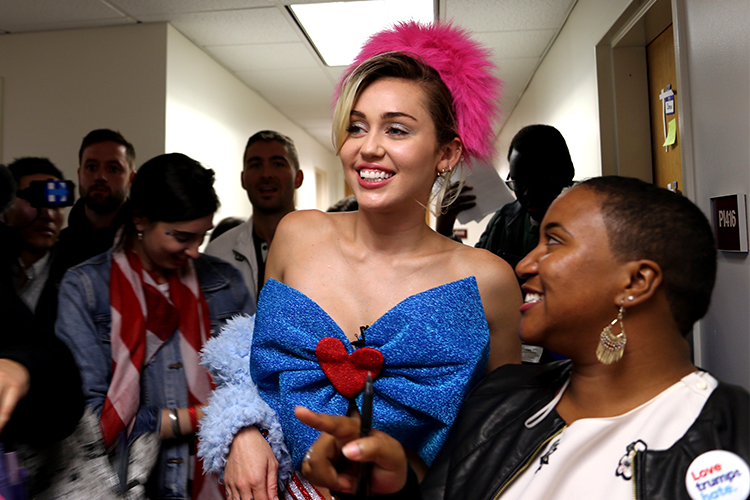
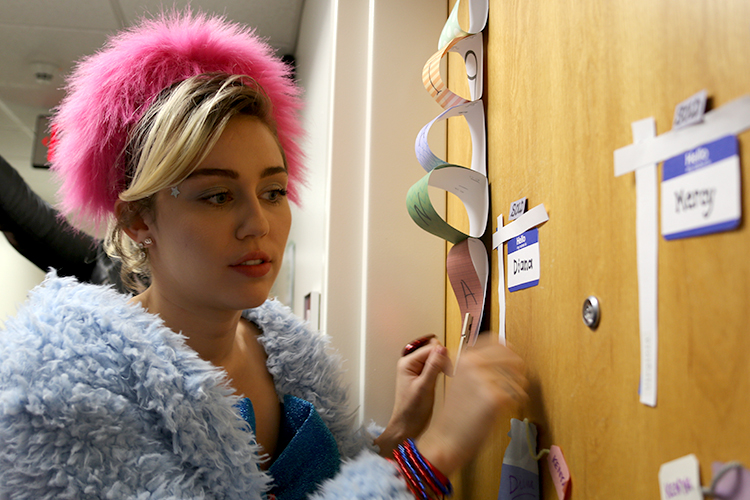
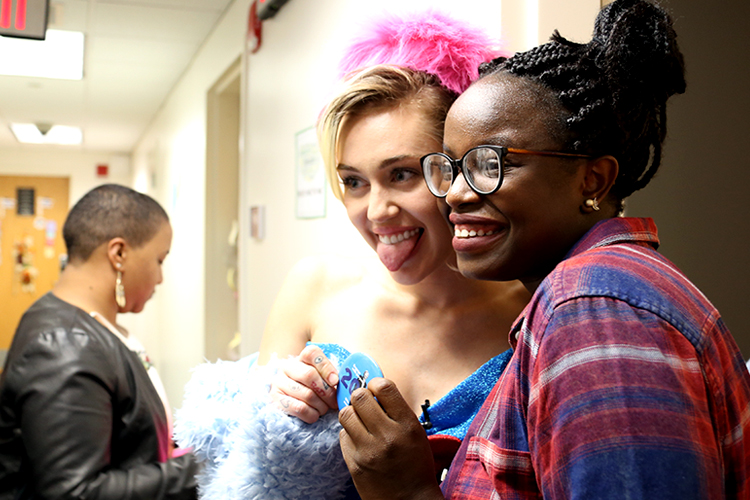
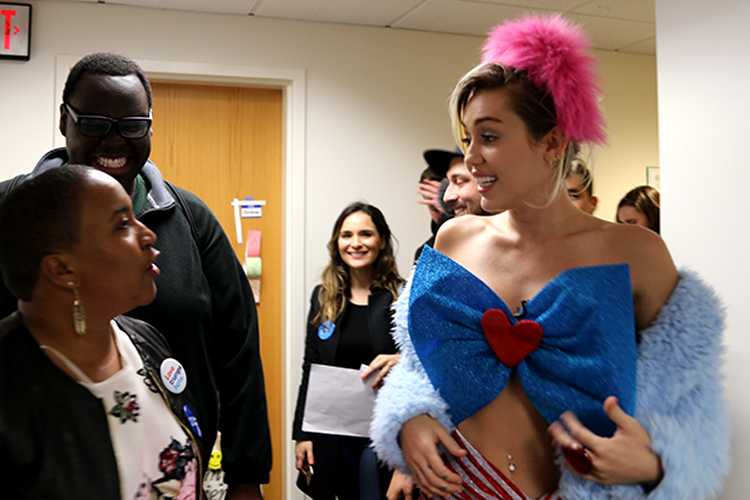
“Open up! You’re in big trouble! I’m kidding, it’s just me,” Miley Cyrus yelled as she pounded on the door of students in the Piedmont residence hall on Saturday. The singer/actress/activist came to campus to campaign for Hillary Clinton.

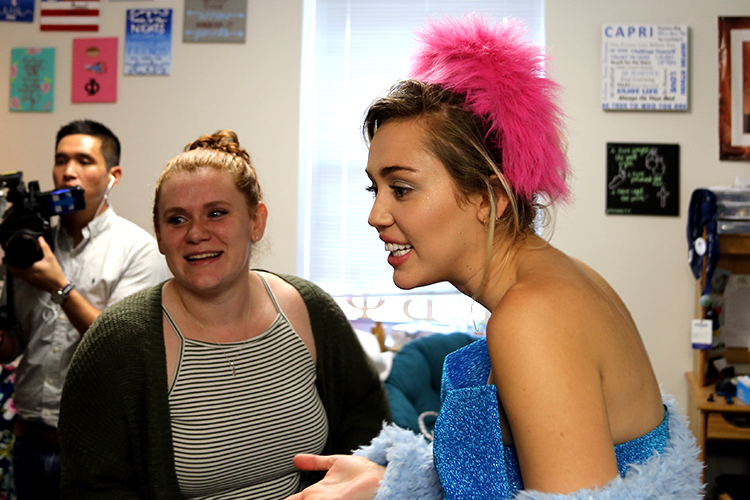
Cyrus went door to door on the fourth floor of Piedmont. She spent her afternoon conversing with students, introducing herself enthusiastically with a “Hi! I’m Miley,” despite most students recognizing her immediately. She asked students if they were excited to vote and if they would support Clinton.

“I’m from Nashville, I grew up in a small, small town and I just went home recently and I saw one Hillary poster and this sea of terrifying Trump-supporting posters and I live in [Los Angeles], so I never see those. It was a wake-up call for me,” Cyrus said.

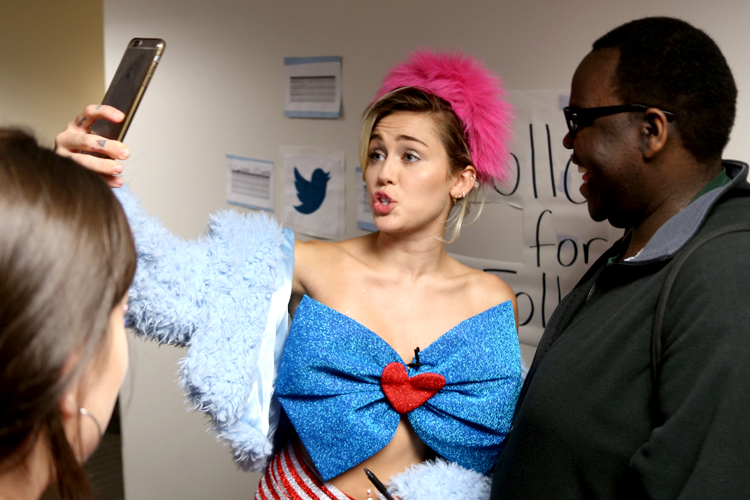
She interacted with students on a personal level, playing video games, posing for her signature tongue-out selfies and discussing her personal life. She told stories about her boyfriend, her family, her home and her pets.

Cyrus supported Bernie Sanders in the primaries but shifted her support behind Clinton after she became the Democratic nominee. Cyrus is outspoken about her socially liberal beliefs; she’s an ardent supporter of the Happy Hippie Foundation, which supports “homeless youth, LGBTQ youth and other vulnerable youth populations,” according to its website.

Halfway through her visit, Cyrus stopped to sign the “Follow for Follow” sign on the floor, tagging all her social media accounts and posting her first Instagram Story video with the floor’s Resident Advisor, Gary Hooker, encouraging students to “keep GMU blue.” She continued to joke with students, complimenting their dorm rooms and their décor.

Cyrus mentioned that she recently switched her voter registration to Los Angeles after moving from Nashville so that she could physically go to the polls on election day and get the coveted “I voted” sticker.

Cyrus praised Clinton — a “superhero woman in a pantsuit” — and her performance in the debates, saying that Clinton “meant business.” Cyrus also said she felt that the former secretary of state understands “the female pressure to look a certain way” and have to be a particular way.

“It’s not fair that all the dudes get to go up there and be a certain way but she has to go up there and be all smiling,” Cyrus said.

Junior Veronica Canada, an athletic training major, said, “I think it’s great. Having celebrities more aware of what’s going on… saying get out there and vote, it’s important for you to vote. I feel like that’s a really positive influence on this campus.”

Overall, Cyrus spent nearly two hours talking on campus. She shared her passion for voting and activism, trying to encourage Mason students to get out and vote, and reminded them that Election Day is Nov. 8.

If you’re registered to vote on campus, your polling place is Merten Hall and your address is 4450 Rivanna River Way. Polls are open from 6 a.m. to 7 p.m.

Photos by: Taylor Wichtendahl. Courtesy of: Fourth Estate

Click here for more information about voting as a Mason student.


This story appears courtesy of Fourth Estate, Mason’s official student newspaper.

Visit gmufourthestate.com to read more.


Court Order Extends VA Voter Registration Deadline

BREAKING NEWS — Federal District Court Judge Claude Hilton has issued a ruling that extends Virginia’s voter registration deadline until midnight on Friday, October 21 following a crash of Virginia’s online voter registration portal over the weekend that reportedly blocked thousands of Virginians from submitting their registration forms in time to comply with the previous deadline of Monday, October 17th.

The ruling is the result of a lawsuit filed by civil rights groups and was supported by Governor Terry McAuliffe who told The Washington Post: “Let’s let them get in to vote. I think it’s a great thing for democracy.”

The Post is reporting that the Commonwealth’s brand new electronic registration system had been experiencing “recurring glitches and severe slowdowns” over the past few months: “Problems resurfaced Sunday, after Facebook and Google alerted Virginians to the state’s looming registration deadline. The system became overwhelmed Monday, as the deadline came and went.” (Click here to read the full article)

ABC News is reporting that: “State officials wanted to extend the deadline through Monday. But Hilton said he wanted an extension just long enough to make up for computer glitches that occurred in the hours leading up to the original Oct. 17 deadline.” (Click here to read the full article)

For more information about how to register to vote, visit elections.virginia.gov/registration

Meet the Third Party Candidates

gary-and-jillIllustration by: Mary Jane DeCarlo

Mason Votes has interviewed many students on campus who expressed their desire to vote for a candidate other than Donald Trump (R) or Hillary Clinton (D). Libertarian Party candidate Gary Johnson seems to have the most support, but Green Party candidate Jill Stein is not far behind.

But how much do you know about the third party candidates running in 2016? Here is a quick primer on the Libertarian and Green candidates hoping to provide Americans with an alternative to the R/D binary.


What is the platform of the Libertarian Party? (from www.lp.org/introduction)

“The Libertarian Party is your representative in American politics. It is the only political organization which respects you as a unique and competent individual. Libertarians believe in the American heritage of liberty, enterprise, and personal responsibility. Libertarians recognize the responsibility we all share to preserve this precious heritage for our children and grandchildren. Libertarians believe that being free and independent is a great way to live. We want a system which encourages all people to choose what they want from life; that lets them live, love, work, play, and dream their own way.”

libertarianWho are the Libertarian Party’s 2016 candidates?

Presidential Candidate: Gary Johnson

Vice Presidential Candidate: Bill Weld

5 Key Points from Gary Johnson’s Election Platform: (Full plan: www.johnsonweld.com)

1. Wasteful Spending: By 2017, the national debt will be $20 TRILLION. That is not just obscene, it is unsustainable — and arguably the single greatest threat to our national security.

2. The Economy: Governors Johnson and Weld believe that we must allow a regulatory and tax environment that incentivizes fairness. Not one that picks winners and losers. Regulation should not be used to manipulate the economy, to manage private lives and businesses, or to place unnecessary burdens on those who make our economy work. As governors, both Gary Johnson and Bill Weld supported policies that incentivized job growth. In 2012, Gov. Johnson was praised as having the best “job creation” record of all presidential candidates. 

3. The Environment: The environment is a precious gift and must be protected. Governors Johnson and Weld believe strongly that the first responsibility of government is to protect citizens from those who would do them harm, whether it be a foreign aggressor, a criminal — or a bad actor who harms the environment upon which we all depend. Is the climate changing? Probably so. Is man contributing to that change? Probably so. But the critical question is whether the politicians’ efforts to regulate, tax and manipulate the private sector are cost-effective – or effective at all.

4. Immigration: Having served as Governor of a border state, Gary Johnson knows the complex issues associated with immigration reform first hand. Solving immigration problems is not as easy as building a wall or simply offering amnesty. We should appreciate and respect the diversity of immigrants that come to the United States to be productive members of society. But we also need to recognize that everyone who comes here is not so well-intentioned.

5. War on Drugs: The Federal government should not stand in the way of states that choose to legalize marijuana. Governors Johnson and Weld would remove cannabis from Schedule I of the federal Controlled Substances Act, which will allow individual states to make their own decisions about both recreational and medical marijuana – just as they have done for decades with alcohol.


What is the Green Party of the United States? (from www.gp.org/platform_2014)

“The Green Party of the United States is a federation of state Green Parties. Committed to environmentalism, non-violence, social justice and grassroots organizing, Greens are renewing democracy without the support of corporate donors. Greens provide real solutions for real problems. Whether the issue is universal health care, corporate globalization, alternative energy, election reform or decent, living wages for workers, Greens have the courage and independence necessary to take on the powerful corporate interests.”

green-party-2016Who are the Green Party’s 2016 candidates?

Presidential Candidate: Jill Stein

Vice Presidential Candidate: Ajamu Baraka

5 Key Points from Jill Stein’s Election Platform: (Full plan: www.jill2016.com/plan)

1. Racial Justice Now: End police brutality and mass incarceration. Create a Truth and Reconciliation Commission to understand and eliminate the legacy of slavery that lives on as pervasive racism in the economy, education, housing and health. Ensure that communities control their police rather than police controlling our communities, by establishing police review boards and full time investigators to look in to all cases of death in police custody. Demilitarize the police.

2. Health Care as a Right: Establish an improved “Medicare For All” single-payer public health insurance program to provide everyone with quality health care, at huge savings.

3. Education as a Right: Abolish student debt to free a generation of Americans from debt servitude. Guarantee tuition-free, world-class public education from pre-school through university. End high stakes testing and public school privatization.

4. A Just Economy: Set a $15/hour federal minimum wage. Break up “too-big-to-fail” banks and democratize the Federal Reserve. Reject gentrification as a model of economic development. Support development of worker and community cooperatives and small businesses. Make Wall Street, big corporations, and the rich pay their fair share of taxes. Create democratically run public banks and utilities. Replace corporate trade agreements with fair trade agreements.

5. A Green New Deal: Create millions of jobs by transitioning to 100% clean renewable energy by 2030, and investing in public transit, sustainable agriculture, and conservation.