Mason Votes

Santorum Drops Out of Republican Primary Race

In a surprise announcement, Rick Santorum dropped out of the race for the Republican primary bid today at an event in Gettysburg, Pa.

Santorum had previously pledged to continue through the primaries until the Pennsylvania primary, which will be held on April 24, but reconsidered today after poll numbers show that he was not ahead in the polls in his home state. His daughter Bella’s ailing health was also cited as a reason for his withdrawal from the race.

According to Yahoo News, Santorum called Mitt Romney to inform him of his decision to pull out.

With Santorum gone, Romney, Newt Gingrich and Ron Paul are the only three candidates left in the primaries. Gingrich, who is millions of dollars in debt from his campaign, said that Romney is “far and away the most likely” Republican nominee.

Paul, who has trailed behind in the polls, is adamant that he will stay in the race until the end. In an interview with Piers Morgan, Paul reiterated his stance.

The 2012 Republican Presidential Primaries

The presidential primary season is reaching its halfway point. On April 4 Mitt Romney swept the GOP presidential primaries in Maryland, Wisconsin and the District of Columbia, bringing him another step closer to securing the Republican nomination and the general election in November.

With another three primaries now over, it’s a good time to look at the race for the Republican presidential nomination as it stands now.

Who won which states so far:

  • Mitt Romney – New Hampshire, Florida, Nevada, Maine, Michigan, Arizona, Wyoming, Washington, Alaska, Ohio, Virginia, Vermont, Massachusetts, Idaho, Northern Marianas, Guam, Hawaii, American Samoa, Puerto Rico, Illinois, Maryland, Wisconsin, District of Columbia
  • Rick Santorum – Iowa, Missouri (non-binding primary), Minnesota, Colorado, Oklahoma, Tennessee, North Dakota, Kansas, Alabama, Mississippi, Louisiana
  • Newt Gingrich – South Carolina, Georgia
  • Ron Paul – Virgin Islands

Latest delegate tally:

  • Mitt Romney – 655
  • Rick Santorum – 278
  • Newt Gingrich – 135
  • Ron Paul – 51

Though Romney boasts a clear lead, he still needs a total of 1,144 delegates to secure the nomination.

Also on Tuesday, President Obama formally clinched the Democratic nomination.

The next primaries will be held on April 24 with Pennsylvania, New York, Connecticut and Delaware.

Sources:

The Washington Post, “Mitt Romney wins Wisconsin, Maryland, D.C. primaries”

Fox News, “Romney sweeps 3 primary contests, eyes general election battle”

2012 Presidential election schedule


Profile: Ron Paul

Born in Pittsburgh, Pennsylvania, Congressman Ron Paul of Texas is making his third bid for president. He got his B.S. from Gettysburg College and his M.D. from Duke University in 1961. After graduating from college, he served as a flight surgeon in the U.S. Air Force. Before being elected to Congress during a special election in 1976, he worked as an obstetrics and gynecology physician.

He worked in Congress from 1976-77 and 1979-85 before leaving to return to his medical practice. In 1997, he returned to Congress, where he now serves. He has announced his intentions to retire from Congress after his current term.

In his first campaign to become President of the United States in 1988, Paul ran as the Libertarian presidential nominee, but he has run under the Republican party for both of his subsequent attempts.

He and his wife Carol have five children, eighteen grandchildren and four great-grandchildren.

Sources: MSNBC, RonPaul2012.com

Enhanced by Zemanta

Paul wins University precinct, more than doubles 10 votes for Romney

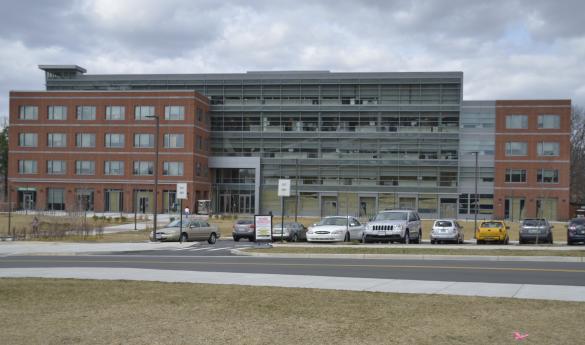
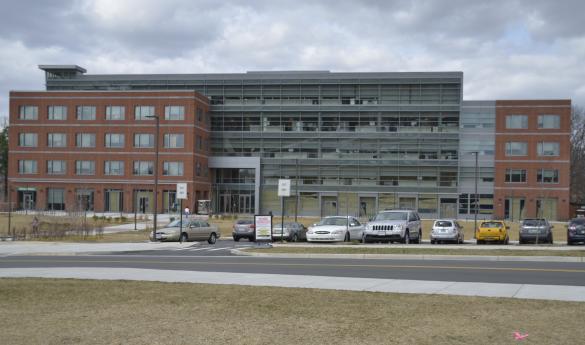
University Hall
Photo of University Hall, where the University precinct is located, taken one day following the election. (Jake McLernon)

Ron Paul won the new University precinct on Super Tuesday with a total of only 22 votes.

Mitt Romney, who was declared the state-wide Virginia winner on Wednesday, received 10 votes in the precinct in which registered on-campus students can cast their ballot. The two GOP rivals were the only candidates on the March 6 ballot.

The total of 32 ballots means roughly 3 percent of registered voters in the precinct participate in the Republican Primary. A total of 1,144 people had registered to vote in the precinct as of March 3, according to the State Board of Elections registrant counts.

“We’re very ecstatic about the results [of Paul winning],” said Sonia Jeffers, events coordinator for Mason’s Youth for Ron Paul group. “We can see how much his popularity and message has spread.”

Prior to Tuesday’s vote, Youth for Ron Paul helped organize advertising and carpooling to get students to Springfield, VA for the Feb. 29 Ron Paul “Leap Day” rally. The group also worked with Mason’s College Republicans to register voters on campus and set up a kiosk in Johnson Center to hand out pocket Constitutions and Ron Paul fact sheets, according to Jeffers.

But Jeffers was surprised by the overall turnout.

“Those numbers are shockingly low,” Jeffers said.

A lack of awareness of the University precinct among on-campus residents, according to some in the Mason community, could have been a factor.

Approximately 6,000 students live on-campus who would be eligible to vote at the precinct’s polling location in University Hall, as long as they are registered at their campus address. The rest of the university’s 33,320 students include a majority commuter population whose precincts would differ based on where they reside. Additionally, a portion of the campus’s residents, could have voted absentee and mailed in their ballot.

Jeffers, who said she hadn’t been politically active until her involvement with Youth for Ron Paul this year, didn’t know about the on-campus precinct until Election Day.

“I had no idea [the University precinct] existed,” said Jeffers. “I was surprised because I didn’t know there was a polling location on campus.”

Tuesday’s primary is the second time ballots have been cast in the University precinct. Established in summer 2011, the precinct was first functional for the Nov. 8 general election, where 76 ballots were cast.

A commuter student herself, Jeffers voted off-campus near her home and said she hoped that other students who didn’t vote on-campus had cast absentee ballots or voted at off-campus precincts. She said she also heard of at least four students who tried to vote at the University precinct but were unable to meet eligibility requirements.

Darren Kessler, a junior at Mason, said he didn’t vote on Tuesday at least In part because he couldn’t identify a candidate that he really liked.

“There’s not really a candidate that stands out that I like,” said Kessler. “[But the vote total] is kind of a crazy thing to hear.”

College of Health and Human Services Professor Naomi Gerber said she notices a big difference between students’ political engagement during this year’s election cycle versus 2008.

“Many [faculty members] have talked at the water cooler about the difference between now and four years ago,” said Gerber. “I walk around and I don’t see fliers or kiosks opening.”

In addition to a lack of student activity, no GOP candidate, in a field which also includes former Senator Rick Santorum and former House Speaker Newt Gingrich, has held a rally on campus since the election cycle began. Obama, the Democrat incumbent in November’s general election, last held a large event at Mason in the spring of 2010 addressing students on his health care initiative.

Although Jeffers said Paul’s rally in nearby Springfield drew great support —around 2,000 attendees according to reports—she hoped Paul would come to the Fairfax campus and speak at the Patriot Center where more students and community members might attend.

“We were trying really hard to get him to campus,” said Jeffers.

Former Massachusetts Governor Mitt Romney, who holds the most delegates in the GOP field, came to Fairfax in late October. His rally, less than a mile from Mason’s main campus, was held to support Virginia state legislators prior to the Nov. 8 general election.

Calling voter turnout at the University precinct “pathetic,” Gerber said she is concerned because she considers the issue of engagement an important one.

A Maryland resident, Gerber said she recently received an email from a Maryland campaign person who was attempting to gather Marylanders to help “stimulate” voter registration in Virginia. She said this might suggest that voting apathy is a statewide issue.

“It seems like Virginia has been identified as a place where a lot of people don’t vote,” said Gerber, who added that she would love to see campus enthusiasm return to where it was in 2008 when both Democratic candidates, Senator Hillary Clinton and then-Senator Barack Obama, came to Mason’s campus prior to the election.

“There was so much energy and enthusiasm,” Gerber said. “It was palpable.”

This article was originally published on 3/9/2012 on Connect2Mason, George Mason University’s student online news source. It is by Adam Sylvain, C2M Managing Editor. The photo is of University Hall and is by Jake McLernon.


Enhanced by Zemanta

Mid-day Report: Super Tuesday Primaries

Today, March 6, is Super Tuesday. The polls are underway but, at least in the state of Virginia, voter turnout has been on the low side.

According to The Washington Post, counties like Loudoun are not even expected to reach the projected 10 percent voter turnout, noticeably down from the 2008 presidential primary, which saw numbers closer to 32 percent. In some counties, the numbers are currently as low as 1.5 percent.

One significant factor behind the lack of enthusiasm among Virginia voters for the 2012 Republican presidential primary is the absence of any apparent suspense or competitiveness. Only two candidates, Mitt Romney and Ron Paul, qualified for the Virginia ballot, and Romney is expected to win by a large margin.

The other states holding primaries or caucuses today are Alaska, Georgia, Idaho, Massachusetts, North Dakota, Ohio, Oklahoma, Tennessee and Vermont.

Ohio is one of the most-watched states on Super Tuesday, and The Washington Post reports that Santorum and Romney appear to be in a virtual tie there.

Newt Gingrich must win Georgia, his home state, in order to still be considered a genuine candidate. Though he had a head start and was polling with a double-digit lead over Romney and Santorum, few people believe that he has an real chance at winning the nomination, let alone beating President Obama. Polls in Tennessee and Oklahoma both showed Santorum with the lead over Romney.

Enhanced by Zemanta